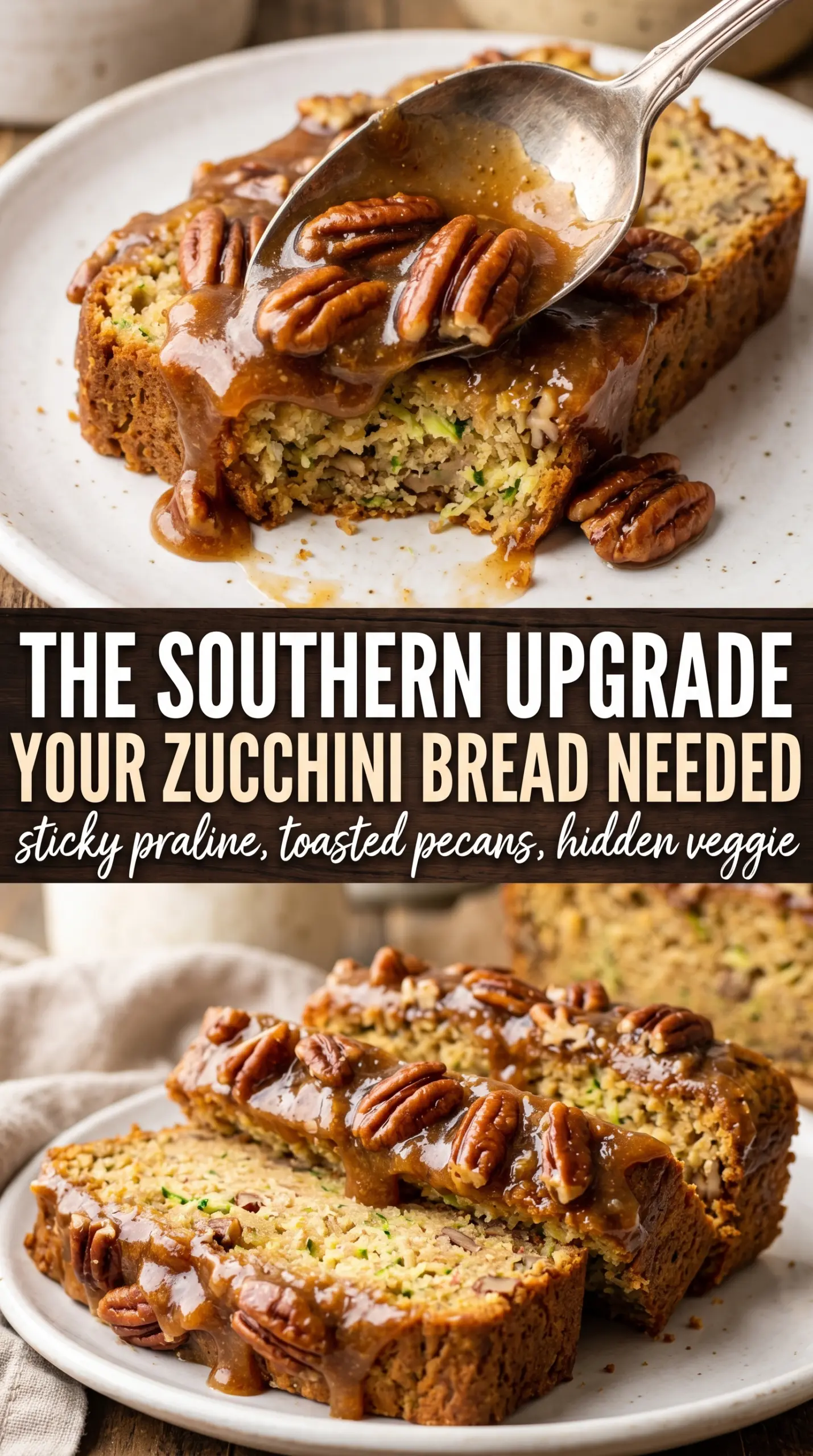
Pecan praline zucchini bread bakes up with a tender, moist crumb and a glossy pecan crown that crackles when you slice into it. The zucchini keeps the loaf soft without making it heavy, and the brown sugar batter brings just enough warmth to support that sticky praline topping without turning the whole thing into dessert territory. It’s the kind of loaf that disappears one slice at a time, usually while it’s still warm on the counter.
What makes this version work is the timing. The loaf gets a head start in the oven so the crumb can set before the praline goes on, which keeps the topping from sinking into the batter. Squeezing the zucchini dry matters here too; too much moisture can leave the center gummy and dull the crunch you want on top. The result is a bread that tastes rich and bakery-style, but still has the homey comfort of a classic zucchini loaf.
Below, I’ll show you how to keep the topping glossy instead of grainy, how to get the zucchini texture right, and what to change if you need to swap the buttermilk or pecans.
The praline topping set up with a perfect crunch, and the loaf stayed moist all the way through without getting soggy in the middle. My husband asked me to make it again the next day.
Love the sticky praline crown on this zucchini bread? Save it to Pinterest for the days when you want a bakery-style loaf with crunchy pecans on top.
The Batter Stays Tender Only If the Zucchini Stays Dry
Most zucchini breads go wrong in the same place: too much moisture sneaks into the batter, and the loaf bakes up dense or gummy in the middle. Grating the zucchini fine and squeezing it dry changes the texture completely. You still get the softness zucchini brings, but not the water that keeps the crumb from setting.
The praline topping has its own trap. If you add it too early, the sugar sinks into the loaf and you lose that glassy finish. Waiting until the bread is almost baked gives the top enough structure to support the topping, which means the pecans stay on the surface and the sugar can bubble into a crisp shell instead of disappearing into the crumb.
- Zucchini — Use it fresh and grate it finely. After squeezing, it should look damp, not wet. That extra step is what keeps the loaf from steaming itself into a heavy center.
- Buttermilk — This adds a slight tang and helps keep the crumb soft. If you don’t have it, mix 1/4 cup milk with 3/4 teaspoon lemon juice or vinegar and let it sit for 5 minutes.
- Brown sugar — Packed brown sugar gives the loaf and topping that deep caramel note. Light or dark both work, but dark brown sugar makes the praline taste more molasses-heavy.
- Pecans — Chopped pecans go into the batter for texture, and pecan halves belong on top for that classic praline look. If you use pieces on top, they won’t give you the same finished look or crunch.
What Each Ingredient Is Actually Doing in This Recipe
- Primary ingredient (the star) — Quality matters most. Choose the best you can find.
- Cooking medium (oil, butter, or broth) — This carries flavors and prevents dryness.
- Seasonings (salt, pepper, spices, herbs) — Layer flavors so nothing overpowers. Build depth gradually.
- Aromatics (garlic, onion, herbs) — Cook with fat to bloom flavors. Become the foundation.
- Supporting ingredients — Complement the main ingredient without overpowering it.
- Sauce or liquid (if applicable) — Brings flavors together. Balance richness with acid.
- Acid (lemon, vinegar, wine, or other) — Brightens and prevents flat-tasting results.
- Final finish (garnish, glaze, or sauce) — Prevents one-dimensional taste and adds visual appeal.
How to Layer the Loaf and Praline So the Top Sets Instead of Melting In
Mix the Dry Base First
Whisk the flour, baking soda, baking powder, salt, and cinnamon together before anything else. That keeps the leavening evenly distributed, which matters in a quick bread where you don’t get a second chance to fix a streaky batter. If you see clumps of baking soda, break them up now or you’ll taste them later. The dry mix should look uniform and airy.
Build a Smooth Batter Before the Flour Goes In
Beat the brown sugar, eggs, oil, buttermilk, and vanilla until the mixture looks smooth and glossy, then stir in the zucchini. The batter won’t be fluffy like cake batter, and that’s fine. Once the dry ingredients go in, fold just until you stop seeing flour. Overmixing here makes the loaf tough and can push the crumb toward tunnels instead of a tight, tender slice.
Give the Bread a Head Start in the Oven
Pour the batter into a greased 9×5-inch loaf pan and bake it until it’s nearly done, about 50 to 55 minutes depending on your oven. You’re looking for a loaf that has set edges and a center that’s almost firm but still has a little give. If you add the topping while the middle is too loose, the whole thing can slump under the weight. A toothpick near the center should come out with a few moist crumbs, not wet batter.
Cook the Praline Until It Turns Syrupy
Melt the butter, brown sugar, and cream in a saucepan and cook just until it turns glossy and syrupy, 2 to 3 minutes. Stir in the pecan halves right away so every nut gets coated. If the mixture looks sandy, it hasn’t cooked long enough to dissolve the sugar. If it gets too thick, pull it off the heat and stir; it will tighten fast once it starts cooling.
Finish With the Topping While the Loaf Is Still Hot
Pour the praline over the partially baked loaf and return it to the oven until the topping is set and bubbling. This is the moment that gives you the crunchy crown instead of a sticky glaze. Don’t wait for the loaf to cool first or the topping won’t adhere properly. Let it rest for 15 minutes before removing it from the pan so the praline has time to firm up without tearing the top.
How to Adapt This for a Smaller Slice, a Dairy-Free Loaf, or Extra Crunch
Dairy-Free Version
Swap the buttermilk for a dairy-free milk mixed with lemon juice, and use a plant-based butter in the praline topping. The loaf still bakes up tender, but the topping may set a little softer than the butter version because plant fats don’t firm the same way. Let it cool fully before slicing so the top has time to settle.
Walnut Swap for the Pecans
Walnuts bring a slightly more bitter edge and less buttery sweetness, but they still work well if pecans aren’t in the pantry. Use the same amount, and keep the larger halves on top if you want the crown to look intentional instead of rustic. The praline will taste a little earthier, which pairs nicely with the cinnamon.
Extra Caramelized Top
If you want a thicker praline shell, add a few extra pecan halves on top after pouring the topping over the loaf so some of them stay higher on the surface. Don’t increase the sugar much beyond the recipe or the topping can harden into a shard-like crust that’s hard to slice cleanly. What you’re after is crunch, not candy.
Storage and Reheating
- Refrigerator: Keep the loaf covered for up to 4 days. The topping softens a little in the fridge, but the crumb stays moist.
- Freezer: Freeze slices tightly wrapped for up to 2 months. The praline topping loses some crunch after thawing, but the flavor holds up well.
- Reheating: Warm slices in a 300°F oven for 8 to 10 minutes. The microwave softens the topping too much and can make the crumb rubbery.
Answers to the Questions Worth Asking
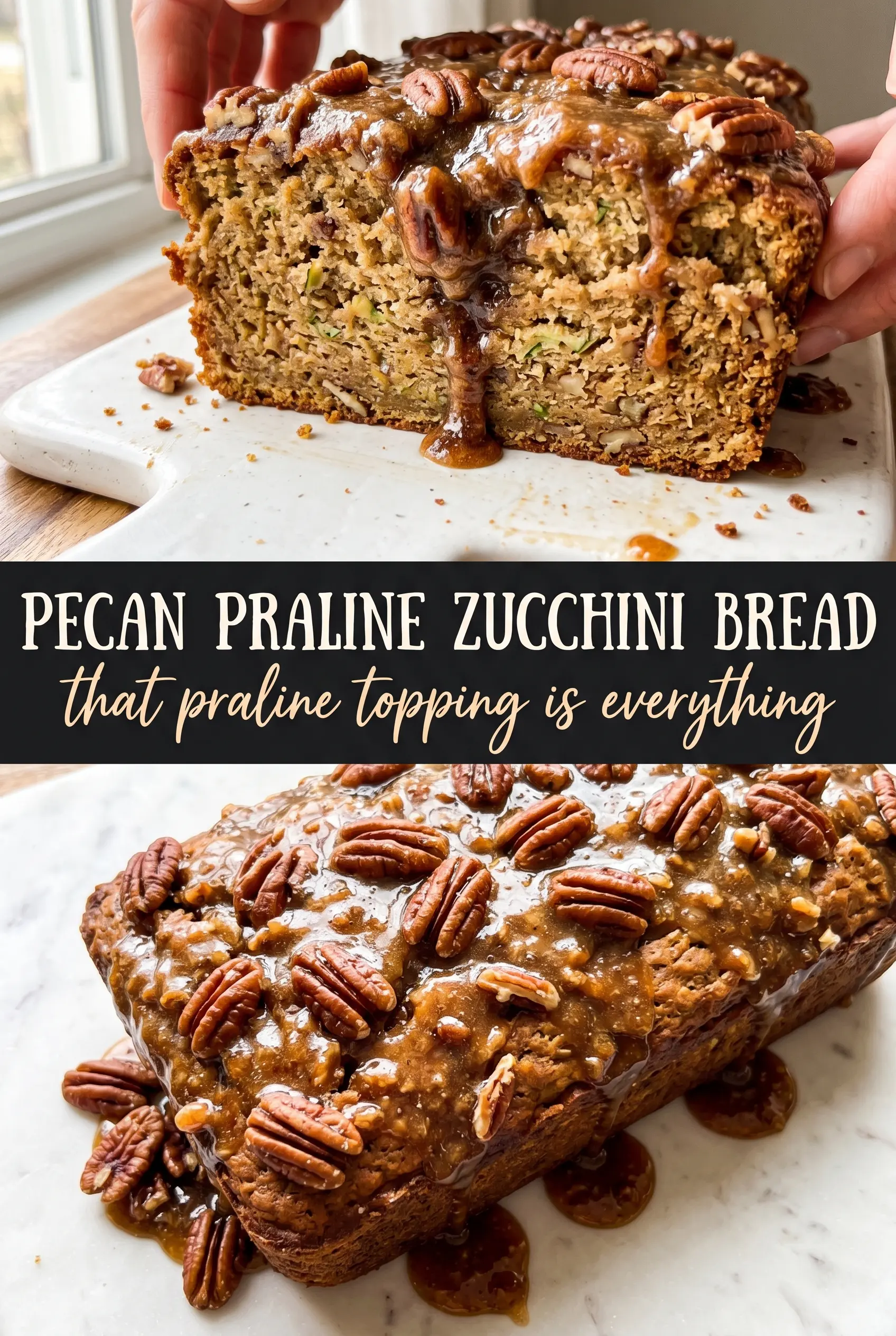
Pecan Praline Zucchini Bread
Ingredients
Equipment
Method
- Preheat the oven to 350°F and grease a 9x5 loaf pan, ensuring the corners are coated. This prevents sticking and helps the loaf release cleanly.
- Whisk all-purpose flour, baking soda, baking powder, salt, and cinnamon together in a mixing bowl. Continue until evenly speckled, with no visible clumps of baking soda or spice.
- Beat brown sugar, eggs, vegetable oil, buttermilk, and vanilla extract until smooth. Stir in the grated zucchini (squeezed dry) until evenly distributed, with no dry pockets.
- Fold the dry flour mixture and chopped pecans into the wet batter until just combined. Stop when the flour is no longer visible to avoid an overmixed, dense loaf.
- Pour the batter into the prepared loaf pan and bake for 50–55 minutes until nearly done. Look for the center to be set but still slightly soft and a toothpick to come out with only a few moist crumbs.
- Melt butter, brown sugar, and heavy cream in a saucepan over medium heat for 2–3 minutes until syrupy, then remove from heat. The mixture should look glossy and thicken slightly as it coats a spoon.
- Stir pecan halves into the syrupy mixture until they’re coated. Keep the pecans visible so they form a topping layer rather than sinking.
- Pour the praline topping over the partially baked loaf and return to the oven for 10–12 minutes until set and bubbling. Watch for golden caramel bubbling at the edges and a glossy surface over the pecans.
- Cool the loaf for 15 minutes before carefully removing. The topping will harden as it cools, forming a crunchy, glassy crown.