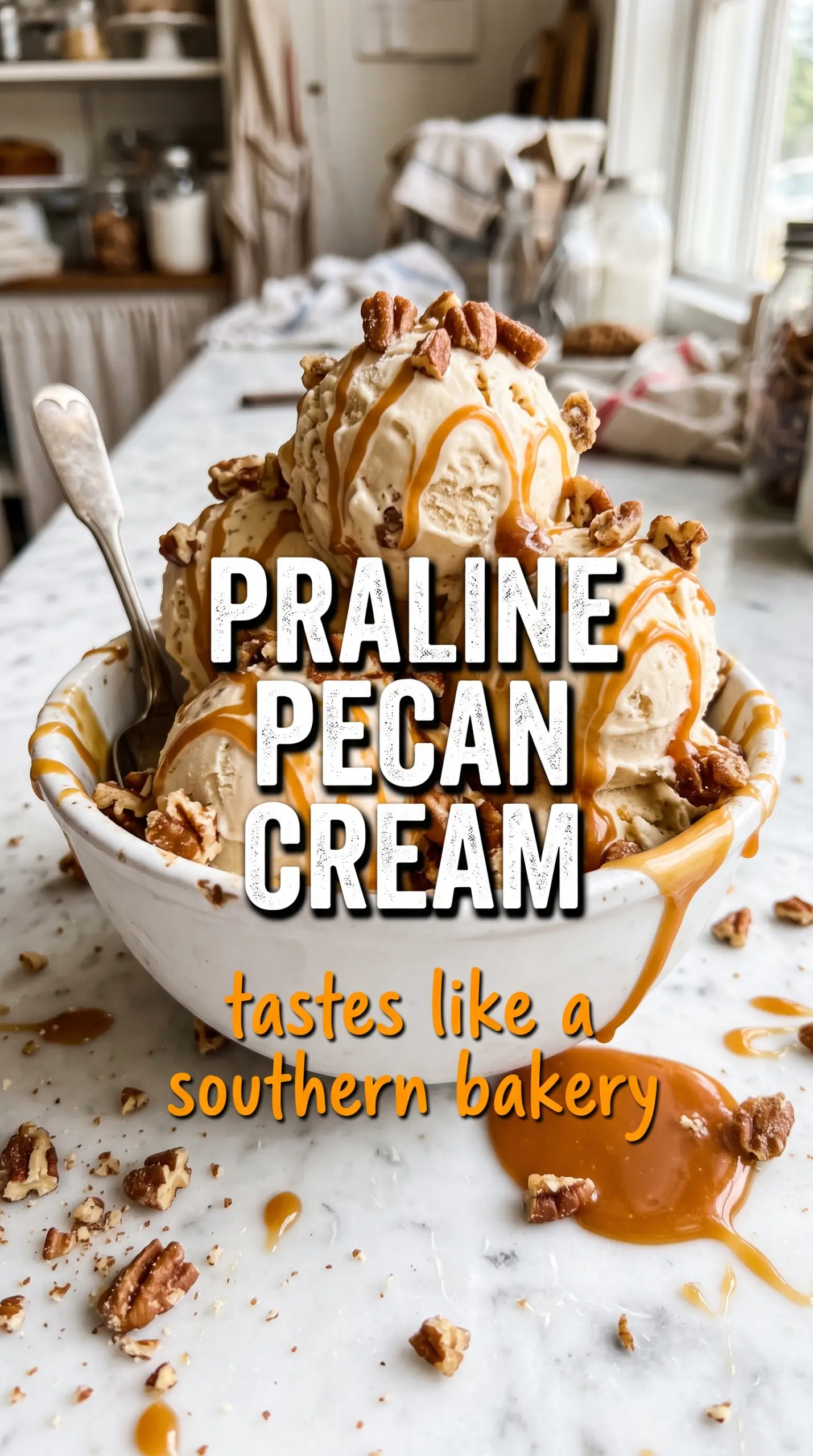
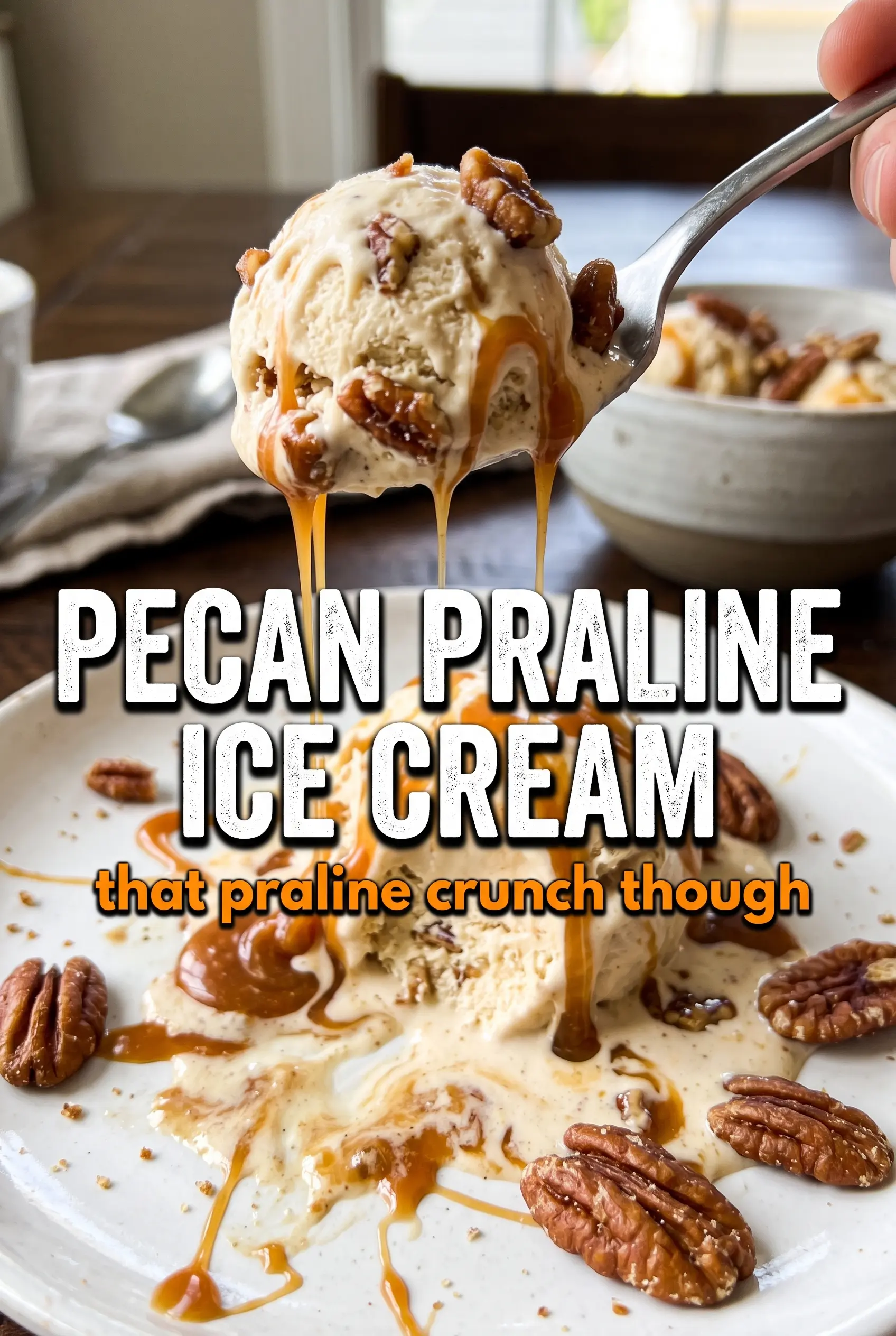
Pecan praline and cream ice cream hits the sweet spot between buttery caramel candy and old-fashioned custard ice cream. The praline pieces stay crisp enough to give you that crackly bite, while the base stays smooth and rich instead of icy or overly sweet. It’s the kind of homemade ice cream that disappears fast because every spoonful gives you cream, vanilla, and those toasted pecan shards all at once.
What makes this version work is balance. The pralines are cooked to soft ball stage, which gives them enough structure to harden into breakable candy without turning glassy and tooth-shattering. The custard base uses brown sugar instead of white, so the ice cream carries a deeper caramel note that matches the pralines instead of fighting them. Chilling the base fully before churning matters here, too; warm custard won’t freeze with the same body, and it can leave the finished ice cream loose and grainy.
Below, I’ve included the timing that matters most, the easiest way to keep the praline chunks crisp, and a few swaps that still keep the spirit of pralines and cream intact.
The praline pieces hardened into perfect little shards, and the custard churned up ultra-creamy. I loved that the brown sugar carried through the whole scoop instead of just tasting like vanilla with nuts.
Love the crunchy praline pecans and creamy custard? Save this pecan praline and cream ice cream for the next time you want a Southern-style frozen dessert with real texture.
The Praline Candy Has to Cool Before It Hits the Churn
The praline pieces are the part that can make or break this ice cream. If they’re still even a little warm when you fold them into the custard, they’ll melt into streaks and turn the base sticky instead of giving you those crisp, candy-coated bites. Spread them out on parchment and let them harden completely before breaking them into chunks.
Cooking the sugar mixture to 235°F matters for the same reason. Below that temperature, the pralines stay soft and tacky; much higher and they lean hard and brittle. You want clusters that snap cleanly, not shards that shatter into dust or candy that clumps into a sticky mass.
- Pecans — Halves give you the best mix of crunch and visual appeal. Chop them only if you want smaller, more even pieces scattered through every scoop.
- Brown sugar — This brings the caramel note that defines the recipe. White sugar will still sweeten the pralines, but it won’t give them the same depth.
- Heavy cream and butter — These soften the candy just enough to keep the praline from turning hard and tooth-rattling. There isn’t a clean substitute here if you want the same texture.
- Egg yolks — They build the custard’s body and keep the ice cream rich. If you skip them, the base will freeze lighter and less velvety.
Building a Custard That Stays Silky After Freezing
- Heavy cream — This is the backbone of the smooth texture. Use the full amount if you want the ice cream to scoop cleanly after freezing.
- Whole milk — It keeps the base from becoming too dense or greasy. Lower-fat milk makes the finished ice cream less luxurious and more prone to ice crystals.
- Brown sugar — It sweetens and deepens the custard at the same time. Stir until it fully dissolves before tempering the yolks, or you’ll end up with a gritty base.
- Vanilla and salt — Vanilla rounds out the caramel notes, and salt keeps the sweetness from flattening. The salt isn’t loud, but you’d notice if it was missing.
The Custard Tempering and Churn That Keep It Smooth
Making the Praline Clusters
Cook the brown sugar, cream, and butter over medium heat until the mixture reaches 235°F. It should look glossy and a little thicker, and you’ll notice the bubbles slow down as it approaches the right stage. Stir in the pecans, vanilla, and salt, then spread everything out quickly on parchment before it sets in the pan. If the candy seizes in the saucepan, it usually means the heat was too high or it cooked too long.
Tempering the Egg Yolks
Heat the cream, milk, and brown sugar until the sugar dissolves and the mixture is steaming but not boiling. Whisk the hot liquid into the yolks slowly so they warm without scrambling. If you dump it in all at once, you’ll get bits of egg instead of a smooth custard. A thin stream and constant whisking are enough.
Cooking to the Right Nap
Return the custard to the pan and cook it until it reaches 175°F. It should coat the back of a spoon and leave a clean line when you run a finger through it. Go past that point and the yolks can curdle, which gives the finished ice cream a grainy texture. Strain the custard, then stir in the vanilla and salt after it comes off the heat.
Chilling, Churning, and Folding
Chill the custard completely and let it rest in the refrigerator for 4 hours before churning. Cold base churns faster and freezes with a finer texture, while warm base stays loose and can taste icy. Fold in the praline chunks during the last 5 minutes so they stay suspended instead of sinking. Freeze the churned ice cream until firm enough to scoop cleanly.
How to Adapt Pralines and Cream Ice Cream Without Losing the Point
Dairy-Free Version
Use full-fat coconut milk in place of the milk and cream, then expect a faint coconut note and a slightly softer set. The praline clusters still work well, but the custard won’t have the same dairy richness.
No Egg Custard Shortcut
If you want a simpler base, skip the yolks and churn a Philadelphia-style mixture of cream, milk, sugar, vanilla, and salt. It freezes a little lighter and less silky, but the praline pieces still carry the dessert.
Gluten-Free by Default
This recipe is naturally gluten-free as written, which makes the texture details even more important. Focus on fully cooling the pralines and fully chilling the custard so the finished ice cream stays smooth instead of icy.
Storage and Freezing
- Refrigerator: Keep the custard base covered for up to 2 days before churning. Stir before using if it has separated slightly.
- Freezer: The finished ice cream keeps well for about 2 weeks. After that, the praline pieces can start to soften and the texture gets a little denser.
- Reheating: Not applicable. Let the container sit at room temperature for 5 to 10 minutes before scooping so the praline pieces don’t tear the ice cream.
Questions I Get Asked About This Recipe
Pecan Praline and Cream Ice Cream
Ingredients
Equipment
Method
- In a saucepan over medium heat, combine brown sugar, heavy cream, and butter. Cook, stirring, until it reaches 235°F (soft ball stage), watching for thick caramel and a syrupy sheen.
- Stir in pecan halves, vanilla extract, and salt. Continue cooking briefly until the pecans look fully coated in glossy caramel.
- Spread the hot praline mixture onto parchment to cool and harden. Let it set until firm, then break into crunchy chunks.
- Heat heavy cream, whole milk, and brown sugar until the sugar dissolves. Stop when steaming and smooth, but not boiling.
- Slowly whisk the hot dairy mixture into the egg yolks. Keep whisking so the custard stays smooth and thickens evenly.
- Return the mixture to the saucepan and cook until it reaches 175°F. The custard should coat the back of a spoon and look glossy.
- Strain the custard, then whisk in vanilla extract and salt. Cool completely to room temperature, then refrigerate for 4 hours.
- Churn the chilled custard in an ice cream maker until it reaches soft-serve thickness. During the last 5 minutes of churning, add the praline pecan chunks so they distribute through the base.
- Transfer the ice cream to a container and freeze until firm. It will become scoopable with a dense, creamy texture as the praline pieces stay crunchy.