Custardy bread, bursts of blueberry, and a buttery cinnamon streusel make this overnight blueberry French toast casserole the kind of breakfast that disappears fast. The bread turns soft in the center while the top bakes into a golden, lightly crisp lid, and every spoonful gives you that mix of creamy, sweet, and tart that makes brunch feel special without turning into a project.
The trick is letting the bread soak long enough to absorb the egg custard all the way through. French bread holds its shape better than soft sandwich bread, so you get structure instead of mush, and the blueberries stay tucked into the casserole instead of sinking into one heavy layer at the bottom. The streusel goes on right before baking, which keeps it crumbly and gives the top its best texture.
Below, I’ve included the small details that matter most: how to keep the casserole from baking up wet, why the bread choice matters, and a few easy variations if you want to adjust the sweetness or make it dairy-free.
I loved that the bread stayed custardy without getting soggy, and the blueberry syrup made it taste like bakery brunch. The streusel browned up perfectly after 45 minutes and my kids asked for the leftovers the next morning.
Save this blueberry French toast casserole for brunch mornings when you want a custardy make-ahead breakfast with a crisp cinnamon streusel.
The Part That Keeps This Casserole Custardy Instead of Soggy
The difference between a good baked French toast casserole and a wet, eggy pan of bread comes down to absorption. The bread needs enough time to soak up the custard, but it also needs enough structure to hold that custard once it bakes. That’s why a sturdy loaf like French bread works so well here. It softens without collapsing.
If the bread is too fresh, the center can turn dense because it hasn’t had time to dry out a little and open up. Day-old bread is ideal, and if yours is very soft, cube it and leave it out for a bit before assembling. The other place people go wrong is baking too hot or pulling it too early. The center should look set with only a slight jiggle when you tap the pan, not slosh in the middle.
- French bread — This gives the casserole structure. Brioche will make it richer and softer, but it can bake up heavier and more dessert-like. If you only have sandwich bread, dry it out first so it doesn’t collapse.
- Whole milk — The fat helps the custard bake up creamy instead of thin. Lower-fat milk works in a pinch, but the texture will be less lush.
- Eggs — These are what set the custard. There isn’t a real swap if you want the same texture, so this is one place to keep the recipe as written.
- Fresh blueberries — Fresh berries hold their shape best and give you little pockets of juice instead of streaking the whole casserole purple. Frozen berries work, but don’t thaw them first or they’ll bleed more and add extra moisture.
How the Bread, Custard, and Streusel Work Together
The flavor here is simple, but each part has a job. The custard brings the soft, almost pudding-like center. The blueberries add bright bursts that cut through the richness. The streusel sits on top and gives you a sweet, crunchy finish so the whole dish doesn’t feel one-note.
The syrup matters too, and not just as decoration. Heating the maple syrup with blueberries makes it taste fresher and a little more layered, and it gives the finished casserole enough moisture that every serving feels complete. If you like your breakfast less sweet, reduce the honey slightly and keep the syrup on the side instead of pouring it over the whole pan.
- Honey — This sweetens the custard and helps the top brown. Maple syrup can replace it, but the flavor will be deeper and a little less delicate.
- Cinnamon and nutmeg — These are the background spices that make the casserole taste like French toast instead of plain baked bread. Nutmeg can overpower fast, so keep it measured.
- Brown sugar streusel — Brown sugar gives the topping a caramel note that white sugar won’t match. The oats add crunch, and the cold butter is what keeps the mixture crumbly instead of pasty.
- Blueberries in the syrup — This is the easiest way to make the sauce taste homemade. Fresh or frozen both work here because they’re being warmed into syrup, not baked into the custard.
Building the Layers So Everything Bakes Evenly
Setting Up the Pan
Grease the baking dish well, then spread the bread in an even layer so the custard can reach every piece. If the bread is piled up in the center, the edges will overbake before the middle is set. The goal is a loose, level layer with enough air between the cubes for the custard to move through.
Pouring the Custard
Whisk the milk, eggs, honey, vanilla, cinnamon, and nutmeg until the eggs are fully blended and no streaks remain. Pour it slowly and evenly over the bread so the liquid has time to sink in. If you dump it all in one spot, some bread pieces will soak too much while others stay dry.
Letting It Rest Overnight
Cover the dish and refrigerate it for at least 8 hours. This rest is what turns the bread from dry cubes into a cohesive casserole. If you rush it, the top can bake before the center has absorbed enough custard, and you’ll end up with dry pockets under a wet middle.
Adding the Streusel and Baking
Mix the streusel until it looks like coarse crumbs, then sprinkle it over the cold casserole right before it goes in the oven. Cold butter is important here because it melts in the oven and leaves little pockets of crunch. Bake until the top is deep golden and the center no longer looks loose when you nudge the pan.
Finishing With Blueberry Maple Syrup
Warm the maple syrup with the blueberries just until the berries start to soften and release a little juice. You’re not cooking jam here. You want a loose syrup that can spoon over the casserole without soaking it into mush. Serve it warm so the streusel stays crisp as long as possible.
How to Adapt This for Different Mornings
Dairy-Free Version
Use an unsweetened milk with some body, like almond, oat, or soy milk. Oat milk gives the closest creamy texture, while almond milk makes the custard a little lighter. The casserole will still set, but it won’t taste quite as rich as the whole-milk version.
Less Sweet, More Breakfast-Forward
Cut the honey back a little and serve the blueberry syrup on the side instead of drizzling it over the whole pan. You’ll still get sweetness from the berries and streusel, but the finished dish will taste more like classic French toast and less like dessert.
Using Frozen Blueberries
Frozen blueberries are fine in both the casserole and the syrup. Add them straight from the freezer so they don’t leak too much juice into the custard while the dish rests. Expect a little more color streaking in the baked casserole, which is normal.
Make-Ahead and Leftover Storage
Refrigerator: Store leftovers covered for up to 3 days. The streusel softens a bit, but the flavor holds up well. Freezer: Bake, cool completely, then freeze individual portions tightly wrapped for up to 2 months. Reheating: Warm in a 325°F oven or toaster oven until heated through; the microwave works, but it softens the topping and can make the bread rubbery if you overdo it.
Answers to the Questions Worth Asking
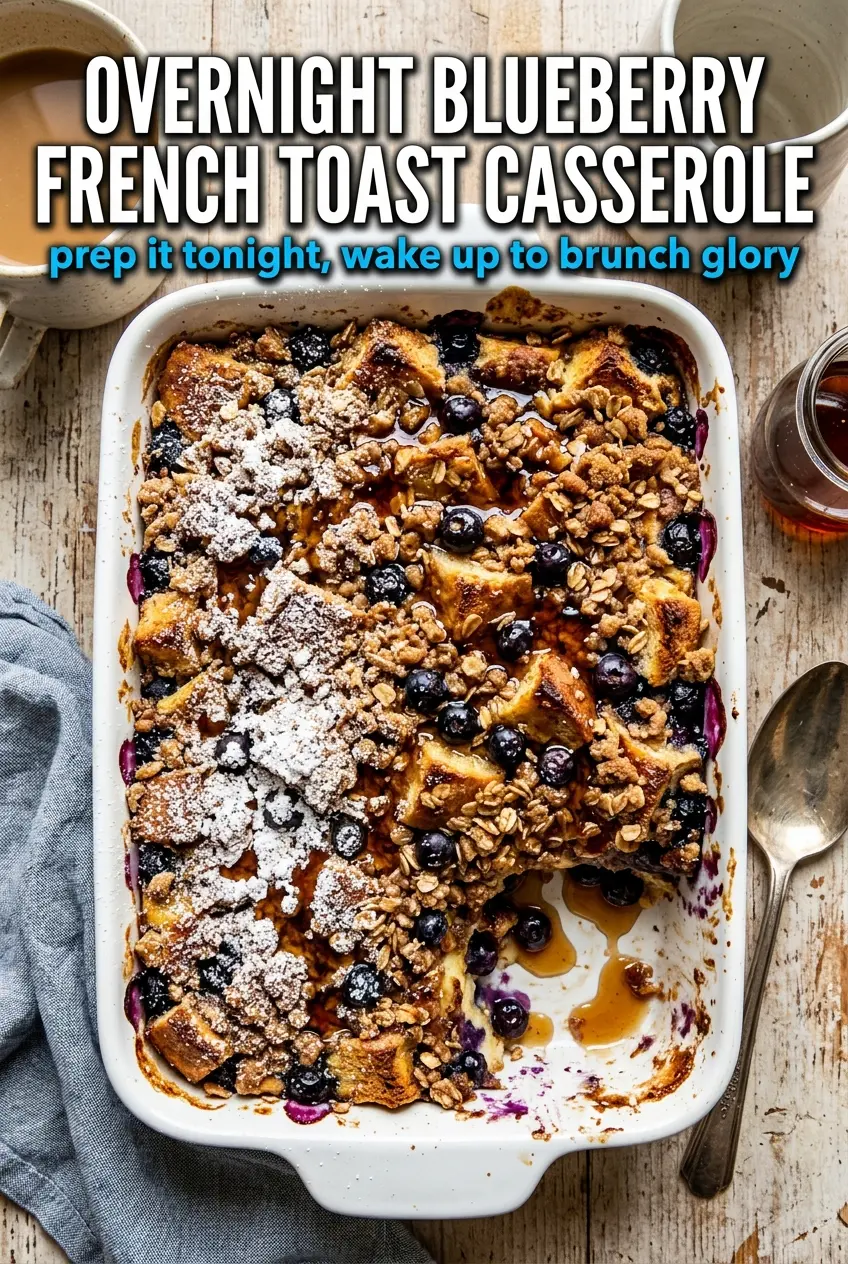
Overnight Blueberry French Toast Casserole
Ingredients
Equipment
Method
- Grease a 9x13 baking dish, then spread the bread cubes evenly in the dish so they form an even layer.
- Whisk together whole milk, eggs, honey, vanilla extract, cinnamon, and nutmeg until smooth, then pour evenly over the bread.
- Scatter fresh blueberries over the top in an even distribution, then press them lightly into the custard for better coverage.
- Cover the dish and refrigerate overnight (or at least 8 hours) until the bread fully absorbs the custard and looks swollen.
- Preheat the oven to 350°F, then set the chilled casserole on a sheet pan for easier handling.
- For the streusel topping, mix brown sugar, flour, oats, and cinnamon, then cut in cold butter until the mixture resembles coarse crumbs.
- Sprinkle the streusel over the casserole so the entire surface is covered with a light, even crumble layer.
- Bake for 40-45 minutes at 350°F until the center is set and the top is golden-brown.
- Warm maple syrup, then stir in blueberries until glossy and heated through.
- Serve the casserole warm with blueberry maple syrup so each slice shows custardy layers and visible blueberries.