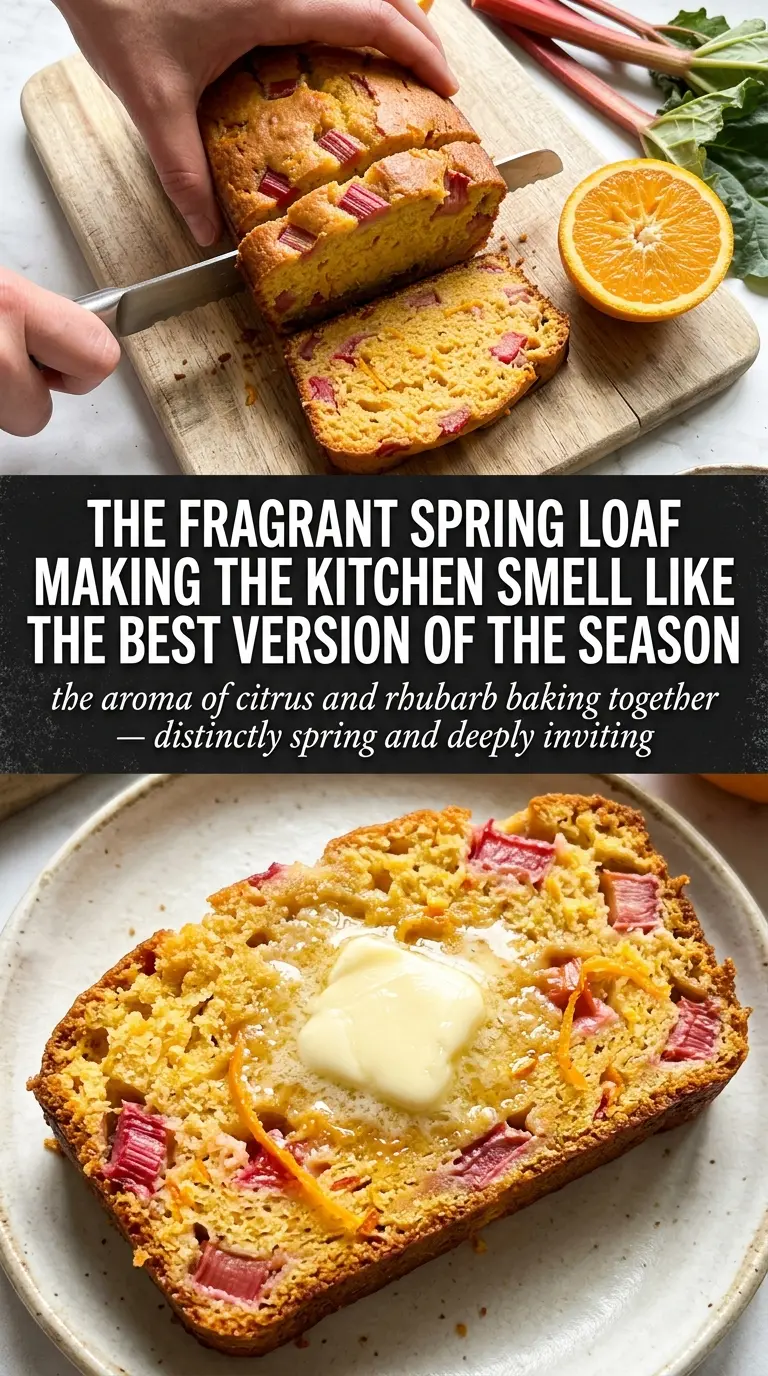
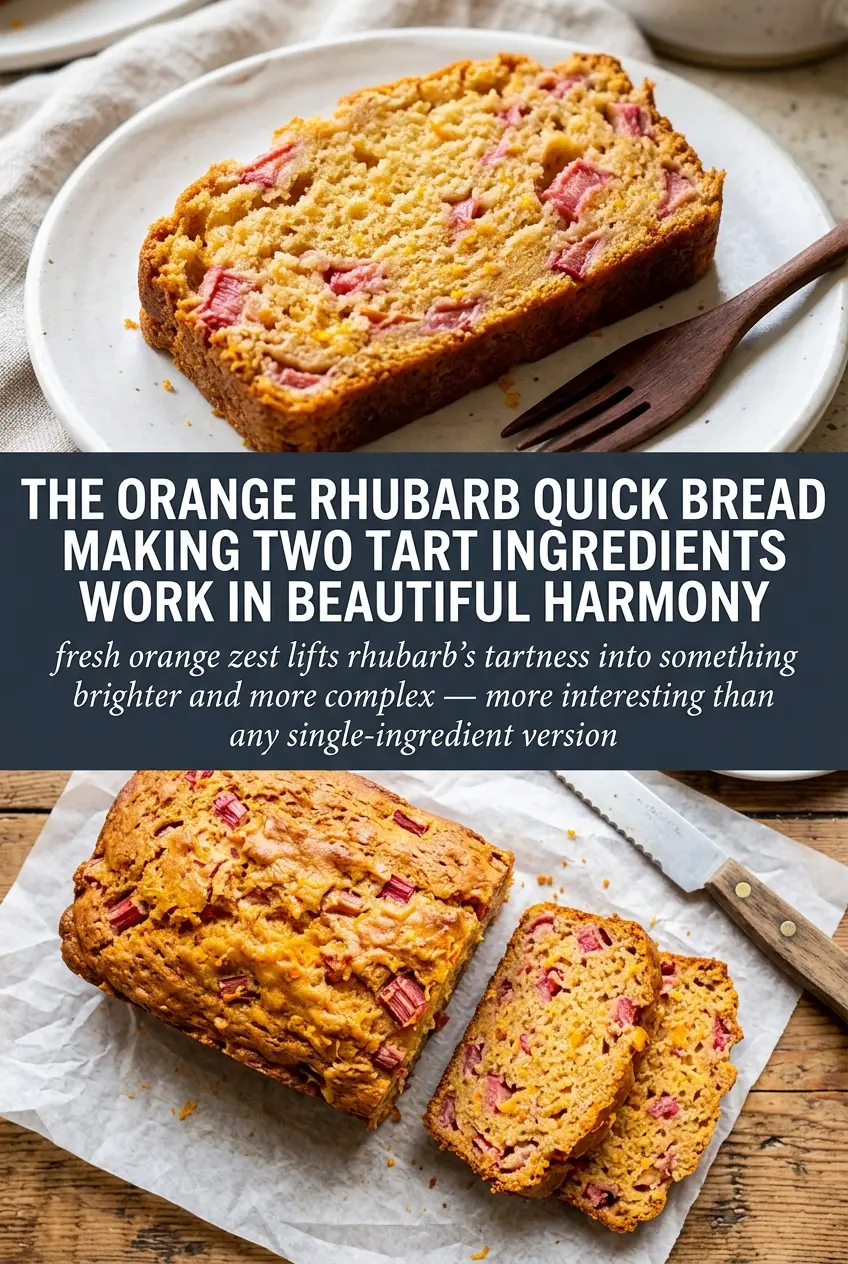
Orange rhubarb bread bakes into a tender loaf with a bright citrus scent and little pockets of tart rhubarb running through every slice. The crumb stays moist from the oil and orange juice, while the glaze on top adds just enough sweetness to balance the fruit without turning it into cake that feels heavy.
What makes this loaf work is the way the rhubarb is handled. Finely dicing it keeps the pieces from sinking and helps them soften evenly as the bread bakes. Orange zest carries the flavor through the whole loaf, not just the glaze, and that matters here because rhubarb brings sharpness while the citrus keeps everything lively.
Below, you’ll find the one mixing rule that keeps quick breads tender, the best way to keep the rhubarb evenly distributed, and a few swaps if you need to work with frozen fruit or make it dairy-free.
The loaf came out incredibly moist, and the rhubarb pieces stayed evenly suspended instead of sinking to the bottom. The orange glaze on top gave it the perfect finish, and it sliced cleanly once cooled.
Save this orange rhubarb bread for when you want a tender breakfast loaf with a bright citrus glaze and tart fruit in every slice.
The Trick to Keeping Rhubarb From Sinking to the Bottom
Quick breads fail in a pretty predictable way: the fruit drops, the center turns gummy, or the loaf bakes up dense because the batter was worked too hard. This loaf avoids all three by keeping the batter fairly thick and the rhubarb pieces small enough to distribute evenly before they have a chance to settle.
The other piece that matters is when you stop stirring. Once the wet ingredients hit the dry, the batter should still look a little rough. That’s normal. Overmixing develops the flour and gives you a tighter, tougher crumb, which is the opposite of what you want in a soft breakfast loaf.
- Finely diced rhubarb — Small pieces soften faster and stay suspended more easily than big chunks. If yours is especially juicy, pat it dry before folding it in.
- Orange zest — The zest carries the strongest orange flavor here. Orange juice adds moisture, but the oils in the zest are what make the loaf taste bright instead of flat.
- Vegetable oil — Oil keeps the crumb tender for days. Butter can be used, but the loaf will be a little firmer once cooled.
What Each Ingredient Is Doing in This Loaf
- All-purpose flour — Standard flour gives the loaf enough structure to hold the fruit without turning heavy. I wouldn’t swap in cake flour here; it’s too delicate.
- Sugar — This isn’t just for sweetness. Sugar helps the bread stay moist and soft, and it balances rhubarb’s sharp edge.
- Orange juice — Use fresh juice if you can. Bottled juice works in a pinch, but fresh juice has a cleaner citrus flavor that shows up in both the loaf and glaze.
- Rhubarb — Fresh rhubarb is best because it softens into tender, tart bits without flooding the batter. If you use frozen rhubarb, don’t thaw it first or the batter can turn watery.
Mixing the Batter Without Beating the Crumb Out of It
Start With the Dry Bowl
Whisk the flour, sugar, baking soda, and salt together until the mixture looks even from edge to edge. This keeps the leavening distributed so the loaf rises uniformly instead of doming in one spot. If you see streaks of baking soda later, the bread can taste a little soapy in those pockets.
Blend the Wet Ingredients Smoothly
Beat the eggs, oil, orange juice, and orange zest just until combined. You’re not building volume here, so there’s no need to whip air into it. The zest should be spread through the liquid and smell fragrant the moment it hits the bowl.
Fold, Don’t Stir Hard
Pour the wet mixture into the dry ingredients and stir only until you no longer see dry flour. A few small streaks are better than an overmixed batter. Fold in the rhubarb at the end so the pieces stay intact and don’t break down before baking.
Bake Until the Center Springs Back
Scrape the batter into a greased 9×5-inch loaf pan and bake at 350°F for 50 to 55 minutes. The top should be set and lightly golden, and a toothpick in the center should come out clean or with a few moist crumbs. If the top browns too fast before the middle sets, lay a loose piece of foil over it for the last 10 to 15 minutes.
Glaze While the Loaf Is Still Warm
Let the bread cool in the pan for 10 minutes, then move it to a rack. Stir the powdered sugar and orange juice together and drizzle it over the warm loaf so it melts slightly into the top instead of sitting in a hard shell. If the bread is too hot, the glaze runs off; if it’s fully cool, it stays thicker and more decorative.
How to Adapt This When You Need a Different Version
Make it dairy-free without changing the texture
This recipe is already dairy-free as written, which is one of the reasons the crumb stays so soft. Keep the oil and orange juice base as-is, and you won’t lose the tender texture that butter-based loaves sometimes miss.
Use frozen rhubarb when fresh isn’t available
Add the rhubarb straight from frozen and toss it with a spoonful of the flour before folding it in. That helps prevent extra liquid from pooling in the batter. Don’t thaw it first or the loaf can bake up wet in the center.
Turn it into a more dessert-like loaf
Add a little extra zest and use the full glaze amount for a sweeter finish. The loaf becomes closer to a quick bread cake, but the rhubarb still keeps it from tasting cloying.
Swap in a gluten-free flour blend
Use a cup-for-cup gluten-free blend that already includes xanthan gum. The loaf will still rise, but the crumb may be a little more delicate, so let it cool fully before slicing.
Storage and Reheating
- Refrigerator: Store in an airtight container for up to 4 days. The glaze will soften a little, but the loaf stays moist.
- Freezer: Freeze the loaf whole or in slices, wrapped tightly, for up to 2 months. Thaw at room temperature before serving.
- Reheating: Warm slices briefly in the microwave or a low oven. Don’t overheat it or the crumb can dry out fast, especially around the edges.
Questions I Get Asked About This Recipe
Orange Rhubarb Bread
Ingredients
Equipment
Method
- Preheat oven to 350°F and grease a 9x5-inch loaf pan, keeping the pan ready for immediate baking.
- Whisk together all-purpose flour, sugar, baking soda, and salt until evenly combined with no visible dry pockets.
- In a separate bowl, beat eggs, vegetable oil, orange juice, and orange zest until the mixture looks uniform.
- Pour the wet ingredients into the dry ingredients and stir until just mixed, then fold in fresh rhubarb, finely diced to distribute pink pieces throughout.
- Pour batter into the prepared loaf pan and bake for 50-55 minutes at 350°F, until a toothpick inserted in the center comes out clean.
- Let the bread cool in the pan for 10 minutes so it firms up for unmolding.
- Turn the loaf out onto a wire rack and cool until ready to slice, about 30 minutes total resting time.
- Mix powdered sugar and orange juice until smooth, then drizzle over warm bread for a glossy top.