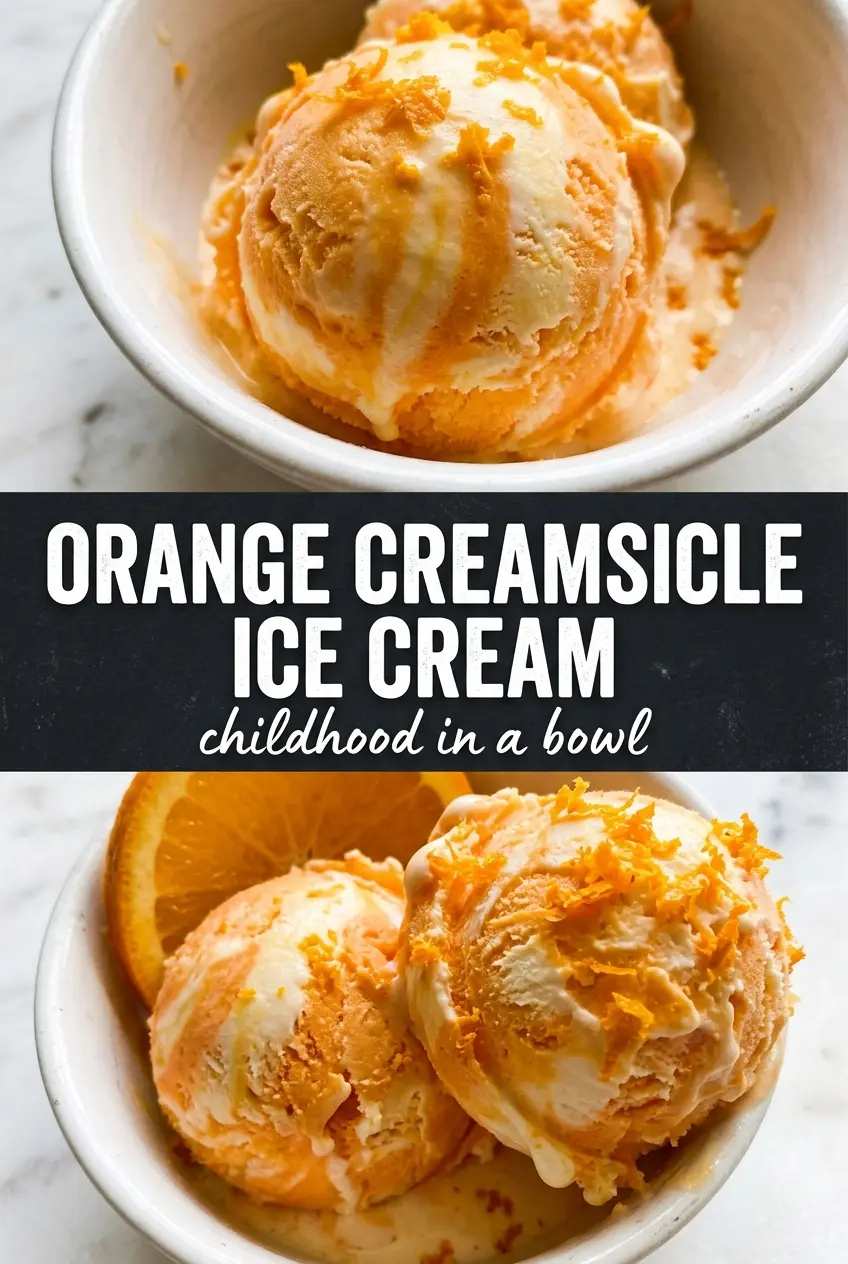
Orange Creamsicle Ice Cream tastes like the frozen treat from childhood, but richer, smoother, and with a cleaner orange finish that doesn’t disappear after the first spoonful. The vanilla custard turns plush and creamy, while the orange syrup adds bright citrus ribbons instead of flattening the base into one note. The result is cold, silky, and striped with that familiar creamsicle contrast: sweet cream first, then orange zest on the finish.
The part that makes this version work is restraint. The orange juice gets cooked down with zest and sugar before it ever meets the churned custard, which concentrates the flavor and keeps the texture from turning icy. The vanilla base is cooked like a real custard, so it freezes with body instead of that thin, airy feel you get from shortcut ice cream recipes.
Below you’ll find the one step that keeps the swirl distinct, plus a few swaps and storage notes that help if you want to serve it later or tweak the sweetness.
The orange syrup stayed swirled all the way through and the custard froze up smooth instead of icy. My kids kept asking for “that creamsicle ice cream” and the vanilla-orange balance was spot on.
Save this Orange Creamsicle Ice Cream for the days when you want bright citrus swirls and a real custard base in one scoop.
The Orange Syrup Has to Be Cooked Down Before It Swirls In
The biggest mistake with creamsicle ice cream is adding straight orange juice to the base and expecting it to taste vivid after freezing. It won’t. Cold dulls citrus fast, and extra liquid makes ice cream harder and icier. Cooking the juice with zest and sugar turns it into a small, concentrated syrup that stays punchy even after the churn and freeze.
That syrup also needs to be cool before it goes into the machine. If it’s warm, it softens the custard at the exact point where you want the ice cream to thicken and hold shape. The goal is a glossy ribbon that streaks through the vanilla, not an orange base that takes over the whole batch.
What the Eggs, Zest, and Vanilla Are Each Doing Here

- Heavy cream — This is what gives the ice cream its dense, lush body. Lower-fat cream won’t hold the same richness, and the finished texture will freeze harder.
- Whole milk — It lightens the custard just enough so the ice cream scoops cleanly instead of tasting heavy. Skim milk won’t do the same job; the fat matters here.
- Egg yolks — They thicken the base into a custard and help keep ice crystals small. If your custard ever turns grainy, it usually means the heat got too high and the yolks scrambled a little.
- Orange zest — This carries the real orange aroma. Fresh zest is worth it, because bottled juice alone tastes flatter and more one-dimensional.
- Fresh orange juice — Use fresh if you can. It gives a brighter finish than concentrate, but the important part is reducing it with sugar so it tastes like orange instead of watery sweetness.
- Vanilla extract — Vanilla is what makes the orange read as creamsicle instead of just orange sherbet. A good extract matters more than fancy add-ins here.
Building the Custard, Then Adding the Swirl at the Right Moment
Heat the Dairy Until It Steams
Warm the cream and milk together until you see steam rising and tiny bubbles around the edges, not a full boil. Too much heat here is unnecessary and can make the custard harder to manage later. While that’s heating, whisk the yolks with 1/2 cup of the sugar until the mixture turns pale and slightly thick.
Temper and Cook the Custard
Whisk the hot dairy into the yolks slowly so the eggs warm up without scrambling. Then return everything to the pan and cook over medium-low heat, stirring constantly, until it reaches 175°F and coats the back of a spoon. If it goes past that point, the custard can turn grainy, so pull it the second it thickens enough to leave a clear trail when you drag a finger through it.
Finish the Base and Chill It Completely
Strain the custard to catch any bits of cooked egg, then stir in the vanilla and salt. Cool it down before it goes in the churn; a warm base takes longer to freeze and can whip up loose. Chill it until it’s fully cold all the way through, not just no longer warm on the outside.
Cook the Orange Syrup Down to a Gloss
Combine the orange juice, orange zest, and remaining sugar in a small saucepan and simmer for about 5 minutes until slightly syrupy. You want it reduced enough to cling to a spoon, but not so thick that it hardens in the freezer. Let it cool completely before churning so it ribbons through the ice cream instead of melting pockets into it.
Churn, Swirl, and Freeze Without Overmixing
Churn the vanilla custard until it looks thick and soft-serve-like. In the last 2 minutes, drizzle in the orange syrup so it streaks through in visible ribbons. Stop the machine before the orange disappears into the base, transfer the ice cream to a container in spoonfuls, and freeze at least 4 hours so the swirl sets in place.
How to Tweak Orange Creamsicle Ice Cream Without Losing the Swirl
Dairy-Free Version
Use full-fat coconut milk in place of the cream and milk, then keep the custard technique the same if you’re using a dairy-free egg-based base. The ice cream will taste a little more tropical and less classic-dairy rich, but the orange still comes through cleanly. If you’re using a completely egg-free base, expect a softer set and a slightly icier finish.
Extra-Bright Orange Flavor
Add another teaspoon of zest to the syrup if you want the citrus to lean sharper and more aromatic. Don’t add more juice without reducing it, or the base will freeze harder and the flavor will still taste thin.
No Ice Cream Maker
Freeze the custard in a shallow container and stir it every 30 minutes for the first 3 hours, then fold in the cooled orange syrup during one of the early stirs. The texture won’t be as smooth as churned ice cream, but the custard base will still keep it much creamier than a straight no-churn method.
Storage and Reheating
- Refrigerator: Not recommended. Ice cream base can be chilled before churning, but the finished dessert belongs in the freezer.
- Freezer: Keeps well for about 2 weeks in a tightly covered container. Press parchment or plastic wrap directly on the surface to help protect the swirl and limit ice crystals.
- Reheating: Not applicable. Let it sit at room temperature for 5 to 10 minutes before scooping so the custard softens at the edges instead of cracking under the spoon.
Answers to the Questions Worth Asking
Orange Creamsicle Ice Cream
Ingredients
Equipment
Method
- Heat the heavy cream and whole milk in a saucepan until steaming, about 3–4 minutes. Keep it just steaming—do not boil.
- Whisk the egg yolks with 1/2 cup of the granulated sugar until smooth and slightly thick. Pour in a little hot dairy slowly while whisking to temper.
- Return the mixture to the heat and cook until it thickens to 175F, about 3–4 minutes. Stir constantly and scrape the bottom so it doesn’t curdle.
- Strain the custard through a fine-mesh strainer into a bowl. Whisk in the vanilla extract and salt, then cool completely.
- In a small saucepan, combine the fresh orange juice, orange zest, and the remaining 1/4 cup sugar. Simmer for 5 minutes until slightly syrupy.
- Cool the orange syrup completely, about 30–45 minutes. If using orange food coloring, stir it in once the syrup has cooled slightly.
- Churn the vanilla custard in an ice cream maker until thick. Follow your machine’s standard churn time for a soft-serve texture.
- In the last 2 minutes, drizzle in the orange syrup to form swirls and do not fully mix. Stop churning when swirls are visible but not blended through.
- Transfer the ice cream to a container, layering spoonfuls if needed to maintain the swirl pattern. Smooth the top lightly without pressing the layers together.
- Freeze at least 4 hours to firm up. For best scoopable texture, let it sit 3–5 minutes at room temperature before serving.