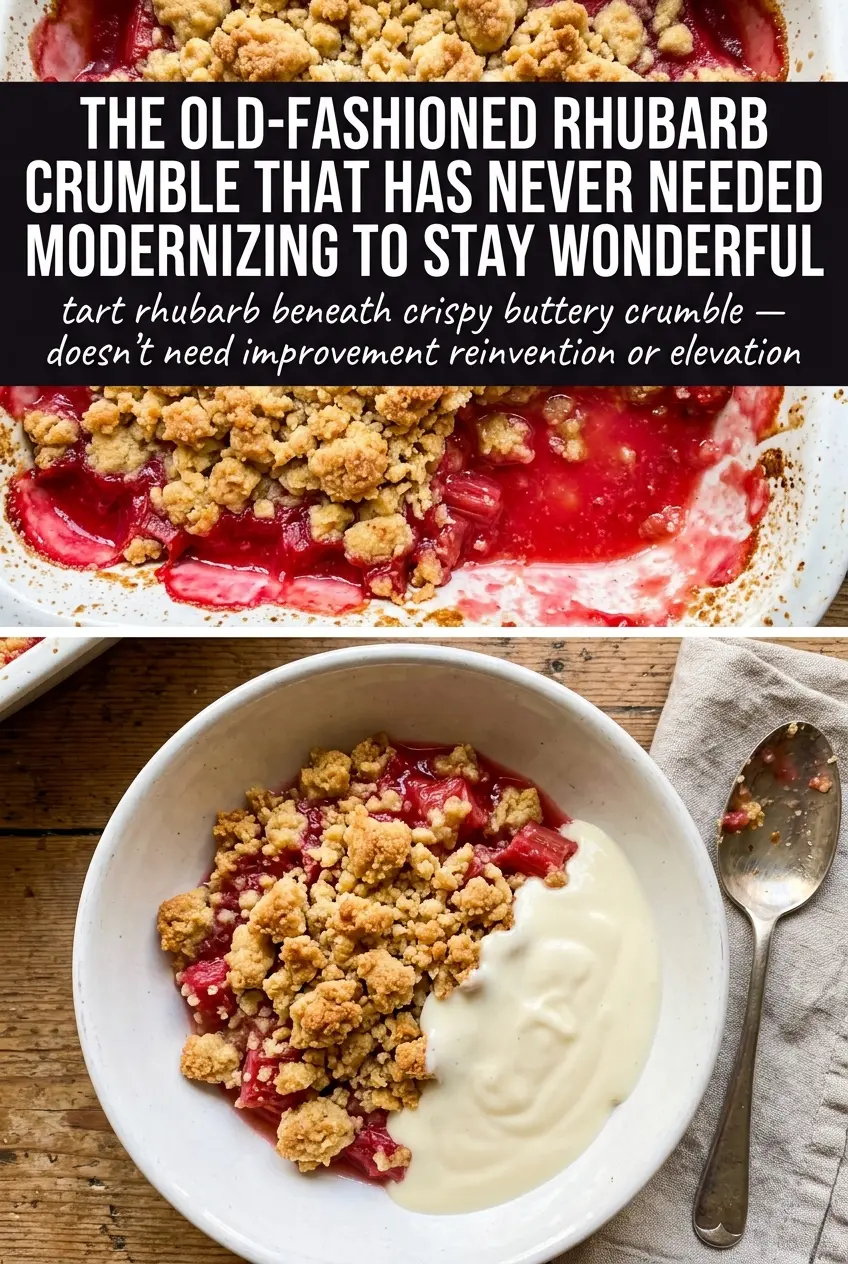
Tender rhubarb under a golden butter crumble is one of those desserts that disappears fast because it gets the balance just right: sharp fruit, syrupy juices, and a topping that stays crumbly instead of turning sandy or greasy. When it comes out of the oven, the filling should be bubbling at the edges and the top should have that deep, toasted color that tells you the butter did its job.
This version leans on a little cornstarch to thicken the rhubarb juices without muting the fruit, and the filling gets a quick toss before baking so the sugar starts drawing out moisture right away. Cold butter matters here. If it softens too much before it goes into the flour, the topping bakes up dense instead of breaking into crisp, buttery clumps.
Below, you’ll find the small details that make this crumble reliable, from how to tell when the filling is ready to the easiest way to adapt it if your rhubarb is especially tart.
The filling thickened into a gorgeous syrup and the topping stayed crisp even after sitting for a few minutes. I served it with custard and everyone went back for seconds.
Save this rhubarb crumble for the nights when you want a tart fruit dessert with a crisp, buttery topping and custard on the side.
The Trick to Keeping the Filling Thick, Not Soupy
Rhubarb gives off a lot of juice as it bakes, and that’s where most crumbles go wrong. If you skip the cornstarch or use too much fruit for the pan, the topping can look done long before the filling has had a chance to thicken. The result is a crisp lid floating over tart syrup instead of a spoonable dessert.
The fix is simple: coat the rhubarb evenly before it goes into the dish, then bake until the juices are actively bubbling around the edges. That bubbling matters more than the clock. It tells you the cornstarch has had enough heat to do its job and the fruit has softened without collapsing into mush.
- Cornstarch — This is what turns the rhubarb juices into a glossy filling instead of a runny puddle. Cornstarch thickens cleanly and doesn’t leave the filling cloudy the way flour can.
- Brown sugar — It brings a deeper caramel note to the topping and helps the crumble bake into those golden clumps. White sugar works in a pinch, but the flavor will be flatter.
- Cold butter — Cold butter is the difference between a crisp crumble and a paste. Keep it chilled until the moment you cut it into the flour so it melts in the oven, not in your hands.
What Each Ingredient Is Actually Doing in This Crumble
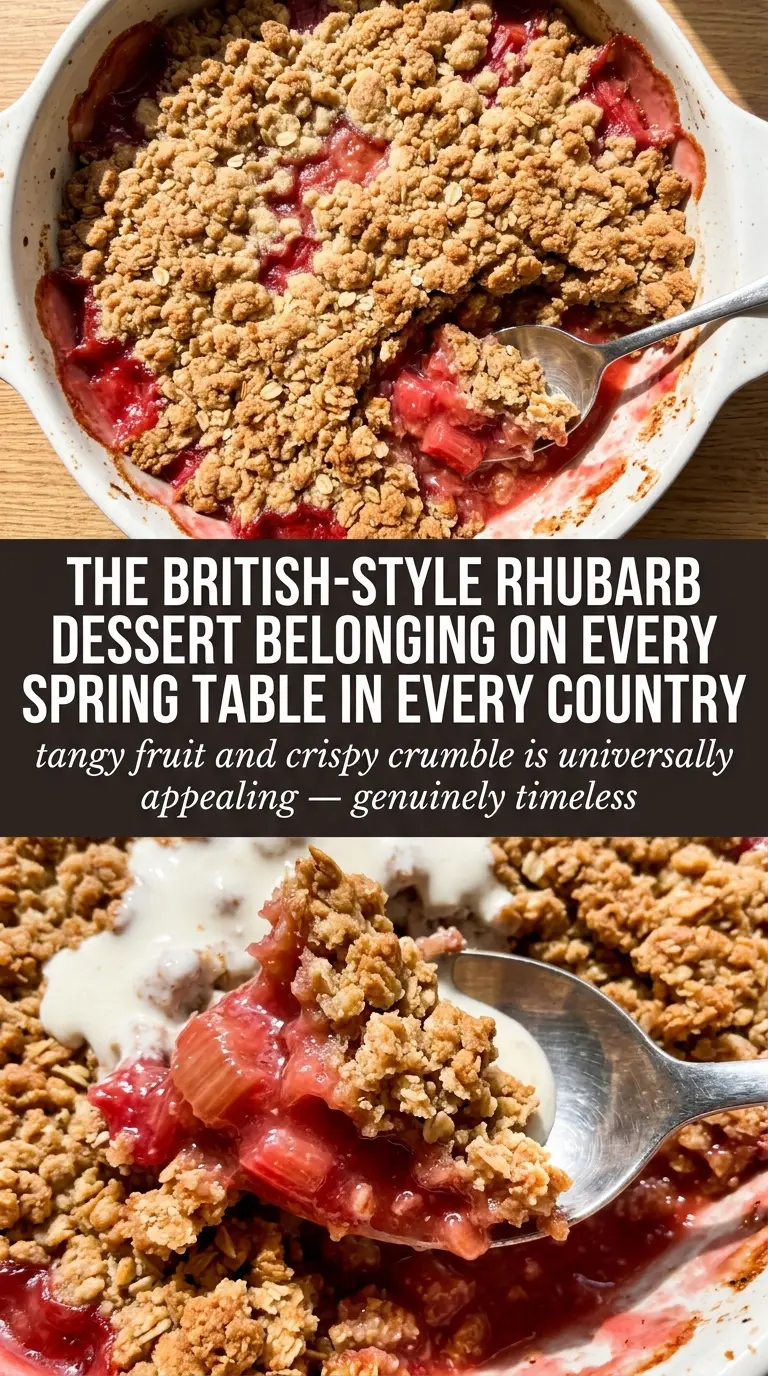
The rhubarb is the whole point here, so use stalks that are firm and brightly colored if you can. Thinner stalks tend to bake down more evenly than very thick ones, which can stay a little stringy at the center. If your rhubarb is extremely tart, don’t cut the sugar too much or the filling will taste sharp even with custard.
Vanilla looks minor on paper, but it softens rhubarb’s edge and rounds out the filling. In the topping, the flour gives structure while the brown sugar and butter create the crumbly, toasted finish. Salt might seem small, but it keeps the topping from tasting one-note and it sharpens the buttery flavor.
Building the Crumble So It Bakes Up Crisp
Coating the Rhubarb Evenly
Toss the rhubarb with sugar, cornstarch, and vanilla until every piece looks lightly coated. You want a thin, even layer, not clumps of dry cornstarch hiding at the bottom of the bowl. Once it goes into the baking dish, spread it into an even layer so the fruit cooks at the same rate across the pan.
Cutting in the Butter
Work the cold butter into the flour, brown sugar, and salt until you have coarse crumbs with a few pea-sized pieces left. Those bigger bits melt into little pockets that bake up crisp and nubby. If the mixture starts looking greasy or pasty, the butter has warmed too much, and the topping will bake dense instead of crumbly.
Baking Until the Juice Bubbles
Sprinkle the topping evenly over the rhubarb, then bake until the top is deeply golden and you can see the filling bubbling through at the edges. That bubbling is the signal you’re waiting for. If the top browns before the filling bubbles, lay a piece of foil loosely over it and give the pan more time so the fruit can finish.
Letting It Rest Before Serving
Let the crumble sit for 15 minutes after it comes out of the oven. The filling thickens as it cools, and if you dig in too soon, it will run across the plate. A short rest gives you clean spoonfuls with defined layers instead of a loose bake.
How to Adapt This for Different Pan Sizes and Dietary Needs
Make it dairy-free
Swap the butter for a firm plant-based baking stick, not a soft tub spread. You’ll still get a crumbly top, though the flavor will be a little less rich and the pieces may brown a touch faster, so watch the oven near the end.
Use frozen rhubarb
Frozen rhubarb works, but don’t thaw it first or it will release too much liquid before baking. Toss it straight from frozen with the sugar and cornstarch, then expect to add a few extra minutes in the oven for the center to bubble.
Make it gluten-free
Replace the all-purpose flour with a good 1:1 gluten-free baking blend. The topping may be a little more delicate and sandy, but it still bakes up with plenty of crunch if you keep the butter cold and don’t overmix.
Storage and Reheating
- Refrigerator: Cover and keep for up to 4 days. The topping softens a little in the fridge, but the flavor stays good.
- Freezer: It freezes well after baking. Cool completely, wrap tightly, and freeze for up to 2 months. Thaw overnight in the fridge before reheating.
- Reheating: Warm in a 325°F oven until heated through. The oven keeps the topping crisp; the microwave will soften it and make the crumble lose its texture.