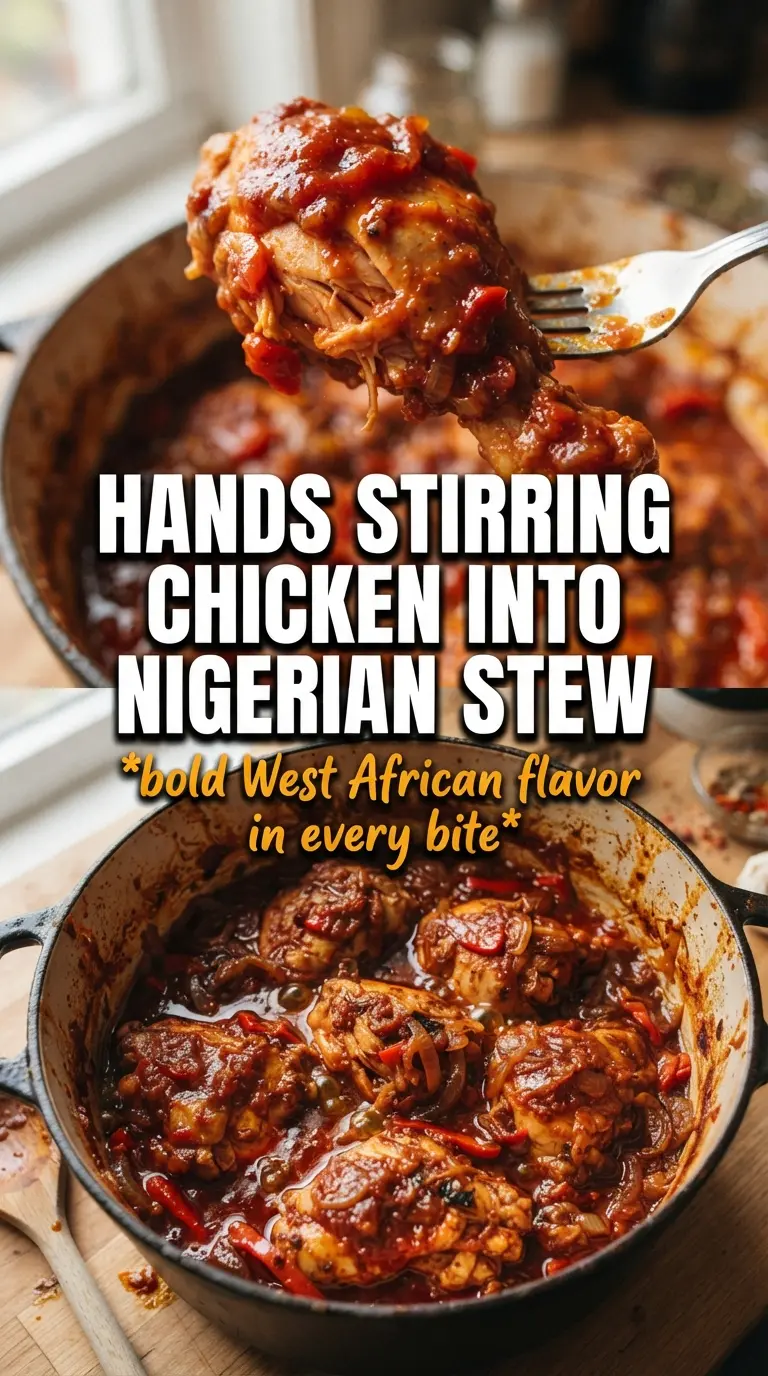
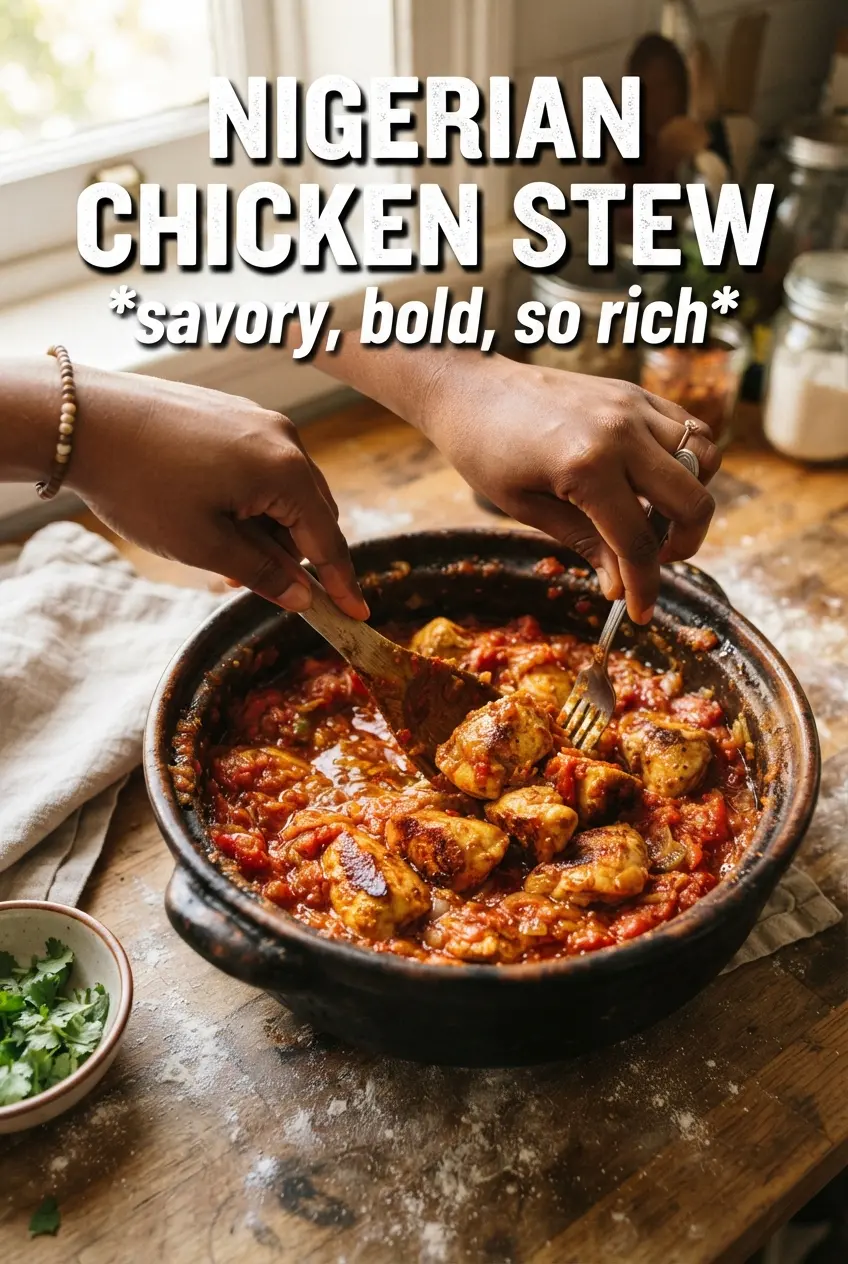
Nigerian chicken stew lands with that deep orange-red color and a sauce that tastes cooked, not raw or rushed. The chicken goes in browned first, so the stew picks up those crisp edges and juices instead of ending up bland and flat. Served over steamed rice, it’s the kind of meal that fills the kitchen with a peppery tomato aroma long before it reaches the table.
What makes this version work is the long fry on the blended pepper base. That step matters. The tomatoes, red bell peppers, onion, and scotch bonnet need time for the water to cook off and for the oil to separate on top; that’s when the sharp, raw taste turns into something rich and rounded. The chicken also gets seasoned before it ever hits the pot, which builds flavor all the way through instead of relying on the stew alone.
Below, I’ve included the small details that keep the stew from turning watery or bitter, plus the best way to balance the heat if you want the flavor bold without overwhelming the pot.
I let the pepper sauce cook until the oil came to the top, and that made all the difference. The stew tasted deep and mellow instead of sharp, and the chicken held up beautifully in the rice.
Save this Nigerian chicken stew for the nights when you want a rich pepper sauce, golden chicken, and rice that soaks up every drop.
The Secret Is in the Pepper Base, Not the Chicken
A lot of chicken stews go wrong because the sauce gets treated like a quick blend-and-simmer situation. That leaves the tomatoes tasting sharp and the pepper mixture loose and watery. Here, the blended peppers need a long fry so the water cooks out and the oil rises to the surface. That’s the point where the sauce stops tasting raw and starts tasting like stew.
The chicken matters too, but not because it needs fancy treatment. Seasoning it before cooking means every piece starts with salt, spice, and onion flavor built in. Frying or oven-baking it first gives you better texture than dropping raw chicken into the pot. The skin and edges hold up in the sauce instead of going soft and pale.
- Tomatoes and red bell peppers — The tomatoes bring acidity, but the bell peppers soften that edge and give the stew its body and color. If you use only tomatoes, the stew can turn too sharp.
- Scotch bonnet or habanero — This is where the heat lives. Use one pepper if you want the sauce warm instead of fiery, but don’t skip heat entirely unless you’re adjusting for children or sensitive eaters, because the stew loses part of its character.
- Chicken pieces with bone — Bone-in chicken gives the broth a deeper taste and stays juicier during the final simmer. Boneless chicken works in a pinch, but it won’t bring the same richness.
- Oil — The oil isn’t just for frying. It helps carry the flavor and tells you when the pepper base has cooked long enough. When you see it floating on top, the sauce is ready for the chicken.
What Each Ingredient Is Actually Doing in This Recipe
- Primary ingredient (the star) — Quality matters most. Choose the best you can find.
- Cooking medium (oil, butter, or broth) — This carries flavors and prevents dryness.
- Seasonings (salt, pepper, spices, herbs) — Layer flavors so nothing overpowers. Build depth gradually.
- Aromatics (garlic, onion, herbs) — Cook with fat to bloom flavors. Become the foundation.
- Supporting ingredients — Complement the main ingredient without overpowering it.
- Sauce or liquid (if applicable) — Brings flavors together. Balance richness with acid.
- Acid (lemon, vinegar, wine, or other) — Brightens and prevents flat-tasting results.
- Final finish (garnish, glaze, or sauce) — Prevents one-dimensional taste and adds visual appeal.
Cooking the Sauce Until the Oil Breaks Through
Seasoning the Chicken First
Grate half the onion over the chicken and mix it with thyme, curry powder, bouillon, salt, and pepper until every piece is coated. Let it sit for at least 30 minutes so the seasoning sinks in instead of just clinging to the outside. If you rush this part, the chicken can taste like it was salted at the last minute rather than marinated. The onion also softens the meat slightly, which helps the chicken stay tender after frying.
Frying or Baking for Better Texture
Fry the chicken until the outside is golden and the pieces are mostly cooked through, or bake it until the skin starts to color and the juices run clear at the thickest part. You want a head start, not fully cooked chicken, because the final simmer finishes the job in the sauce. If the chicken goes into the pot raw, the stew gets greasy and the meat can turn stringy before the sauce is ready. Set the pieces aside while you cook the pepper base.
Cooking Down the Pepper Mixture
Blend the tomatoes, red bell peppers, scotch bonnet, and the remaining onion until smooth, then fry that puree in hot oil over medium-high heat. Stir often and scrape the bottom so it doesn’t catch. At first it will look loose and bright; later it will darken, thicken, and sputter more slowly as the water cooks out. Stop too early and the stew will taste bright and raw, not deep and rounded.
Finishing the Stew
Add the chicken back into the pot and turn it through the sauce so every piece gets coated. Let it simmer long enough for the meat to absorb the pepper base and for the sauce to cling to the chicken instead of pooling around it. Taste near the end and adjust salt only after the stew has had time to reduce, because the flavors concentrate as it cooks. Serve it hot over steamed rice while the sauce is still glossy and thick.
How to Adjust This Stew Without Losing What Makes It Good
Turn Down the Heat Without Flattening the Flavor
Use one scotch bonnet or habanero instead of two, or split the pepper open and remove the seeds before blending. The stew will still taste bright and peppery, just with less burn. Don’t replace the hot pepper with extra bell pepper alone, or the sauce turns sweet and loses the lift that makes it taste like Nigerian chicken stew.
Use the Oven for Less Hands-On Cooking
Bake the seasoned chicken at 400°F until lightly golden instead of frying it in oil. You’ll get a cleaner finish and less splatter, though the skin won’t be quite as crisp. This swap is good when you want the stew to taste rich but don’t want an extra pan of oil on the stove.
Make It Dairy-Free and Naturally Gluten-Free
This stew already fits both needs as written, as long as your bouillon is gluten-free. The only ingredient to check is the stock cube or powder, since brands vary. Serve it with rice, and you’ve got a meal that stays true to the original without any extra work.
Stretch It for a Bigger Crowd
Add one extra can of tomatoes and another bell pepper, then increase the seasoning gradually so the sauce doesn’t turn flat. Keep the long fry time, because a bigger batch still needs to cook down until the oil separates. If you rush a larger pot, you end up with more sauce, but not better stew.
Storage and Reheating
- Refrigerator: Store in an airtight container for up to 4 days. The flavor deepens overnight, and the sauce thickens as it chills.
- Freezer: It freezes well for up to 2 months. Cool it completely first and freeze the stew without the rice for the best texture.
- Reheating: Warm it gently on the stove over medium-low heat with a splash of water if needed. Don’t blast it on high heat, or the sauce can stick and the chicken can dry out.
Questions I Get Asked About This Recipe
The Only Part Left Is Putting It on the Plate
Nigerian Chicken Stew
Ingredients
Equipment
Method
- Season the chicken with half the grated onion, thyme, curry powder, bouillon (or chicken stock powder), salt, and pepper, then massage to coat. Marinate for 30 minutes for better flavor absorption.
- Fry or oven-bake the marinated chicken until golden and mostly cooked through, then transfer to a plate. Keep it aside while you cook the sauce.
- Blend plum tomatoes, red bell peppers, scotch bonnet or habanero peppers, and the remaining onion until smooth. Set the blended sauce aside for the next step.
- Heat 1/2 cup vegetable oil in a large pot over medium-high heat. Carefully add the blended pepper sauce and cook for 30-40 minutes, stirring frequently, until oil floats on top and the sauce turns deeply cooked and darkened with thickened body.
- Add the fried chicken into the pot and coat each piece in the sauce. Simmer for 15-20 minutes, stirring occasionally, until the chicken is fully cooked through and the sauce clings to the meat.
- Taste and adjust seasoning with salt and pepper as needed, then serve the stew over steamed rice. Garnish with fresh parsley before eating and serve hot.