Mushroom zucchini lasagna delivers all the comfort of a baked pasta dish without the heavy noodle layer, and the payoff is in the slices: tender zucchini, a savory mushroom filling, creamy ricotta, and a bronzed cap of mozzarella that holds together instead of sliding apart. The mushrooms bring the meaty depth here, but the zucchini does the important structural work once it’s salted, dried, and briefly roasted before assembly.
The biggest difference between a lasagna that cuts cleanly and one that puddles on the plate is moisture control. Zucchini gives up a lot of water, and mushrooms do the same if they’re cooked gently. That’s why this version asks you to drive off the liquid early, season each layer with intention, and let the finished pan rest before slicing. Those steps are what keep the filling rich instead of soupy.
Below you’ll find the timing that matters most, the ingredient swaps that work without wrecking the texture, and the little details that help every layer stay defined once the casserole comes out of the oven.
I was worried the zucchini would turn watery, but salting and roasting it first made all the difference. The mushroom layer got thick and rich, and the slices held together after resting just like you said.
Like this mushroom zucchini lasagna? Save it to Pinterest for the night you want a hearty vegetarian bake with no noodles and clean layers.
The Step That Keeps Zucchini From Turning the Pan Watery
Zucchini is the part that usually sinks a vegetable lasagna. It looks sturdy going in, then leaks into the pan and loosens everything around it. Salting the planks first pulls out surface moisture, and the short roast gives them enough structure to stay intact without cooking them down to ribbons. That one-two move is what keeps the layers distinct.
The mushrooms need the same kind of attention. If they’re crowded or cooked over medium heat, they steam and dump liquid into the sauce. You want them in a hot pan with room to brown, because that deep caramelized edge is what gives the finished lasagna its savory backbone. The tomato base then finishes the job by thickening around the mushrooms instead of watering them down.
- Salted zucchini — This isn’t just seasoning. The salt pulls out moisture before the pan ever sees the vegetables, which means the lasagna bakes up layered instead of soupy.
- High-heat mushroom cooking — Don’t baby the mushrooms. A hot pan evaporates their liquid faster and builds flavor instead of gray softness.
- Resting time — The 15-minute rest matters more than people think. It lets the ricotta and sauce set so the slices hold their shape.
What Each Layer Is Doing in This Mushroom Zucchini Lasagna
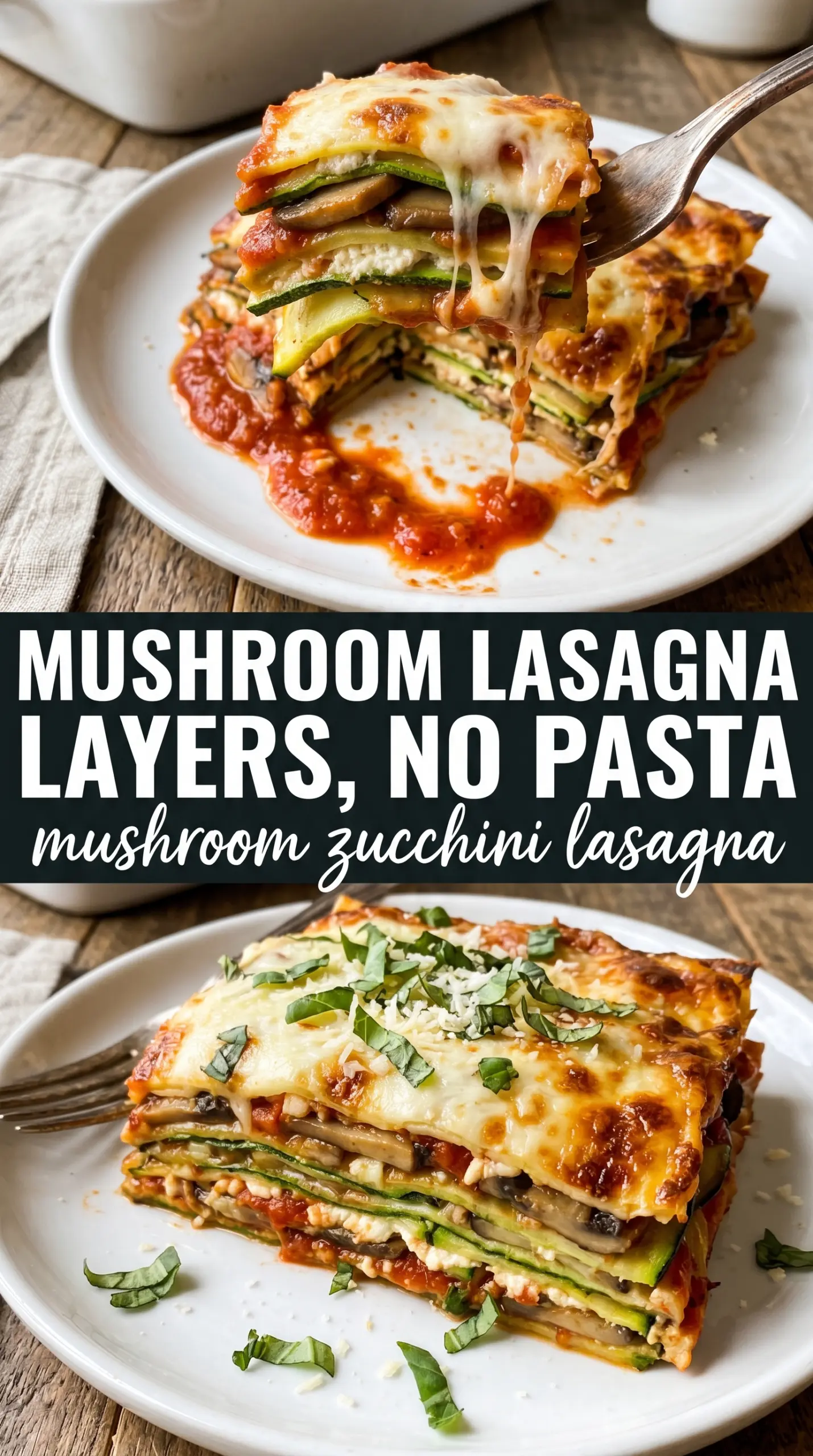
- Zucchini planks — These replace noodles, but they need to be sliced thin and roasted after salting. Thick planks stay watery and make the casserole collapse when you cut it.
- Mixed mushrooms — A blend gives you better texture than one type alone. Cremini bring body, shiitake add depth, and portobello gives the filling that meaty, satisfying bite.
- Dry red wine — This deglazes the pan and lifts the browned bits off the bottom. If you don’t cook it off completely, the sauce can taste sharp instead of rounded.
- Ricotta mixture — The egg and parmesan help the ricotta set into a creamy layer instead of sliding out when sliced. Fresh thyme keeps it from tasting flat against the mushrooms.
- Mozzarella — Use it in two places if you want extra stretch and browning, but keep the top layer generous. That top melt is what gives the finished pan its lasagna feel.
Building the Mushroom Filling and Layering It So It Slices Cleanly
Drying the Zucchini First
Lay the zucchini planks on a towel or paper-lined tray, salt them, and let them sit long enough to bead up with moisture. Pat them dry before they go into the oven. If you skip this, the zucchini will release water in the dish and thin the whole lasagna after baking. The short roast at 425°F gives them a head start so they stay flexible instead of raw and stiff.
Cooking the Mushrooms Until They Brown, Not Steam
Use a large skillet and give the mushrooms room. Let them sit long enough to release their liquid, then keep cooking until that liquid is gone and the pan starts to sound dry again. That’s the point where the mushrooms begin to color. Add the onion early enough to soften, but wait on the garlic until the end so it doesn’t burn and turn bitter.
Putting the Pan Together
Use a greased 9×13 dish and build in even layers: mushroom sauce, zucchini, ricotta, more sauce, and mozzarella. Keep the layers thin and consistent rather than piling on big scoops, because that’s what helps the lasagna settle into neat slices. Finish with mozzarella on top so the surface browns before the center dries out. Covering the dish for most of the bake traps enough steam to finish the zucchini, then uncovering it lets the top turn deep golden.
Make It Gluten-Free Without Changing the Texture
This recipe is already naturally gluten-free as written, which is part of what makes it such a solid vegetable main. Keep the rest of the method the same and focus on moisture control, because the texture problem here is water, not flour.
Go Dairy-Free With a Few Honest Swaps
Use a plain dairy-free ricotta-style substitute and a good meltable plant-based mozzarella. The filling will be a little softer and less rich, but the mushrooms still carry the dish. Choose a brand with some body, not a thin spread, or the layers can turn loose after baking.
Swap the Wine if You Don’t Cook With Alcohol
Use a splash of vegetable broth plus a teaspoon of red wine vinegar or lemon juice to replace the brightness the wine adds. You won’t get the same depth, but you’ll still deglaze the pan and keep the tomato sauce from tasting flat.
Make It Ahead for Easier Dinner
You can assemble the lasagna earlier in the day, cover it, and refrigerate it before baking. Add a few extra minutes to the covered bake if it goes into the oven cold. The only thing that changes is timing; the flavor gets even better once the layers have had time to sit together.
Storage and Reheating
- Refrigerator: Store leftovers covered for up to 4 days. The slices hold together even better the next day once fully chilled.
- Freezer: This freezes well in portions. Wrap tightly and freeze for up to 2 months, then thaw overnight in the refrigerator before reheating.
- Reheating: Warm covered in a 350°F oven until hot in the center. Microwaving works for single slices, but the oven keeps the mozzarella from turning rubbery and helps the zucchini stay tender instead of collapsing.
Answers to the Questions Worth Asking
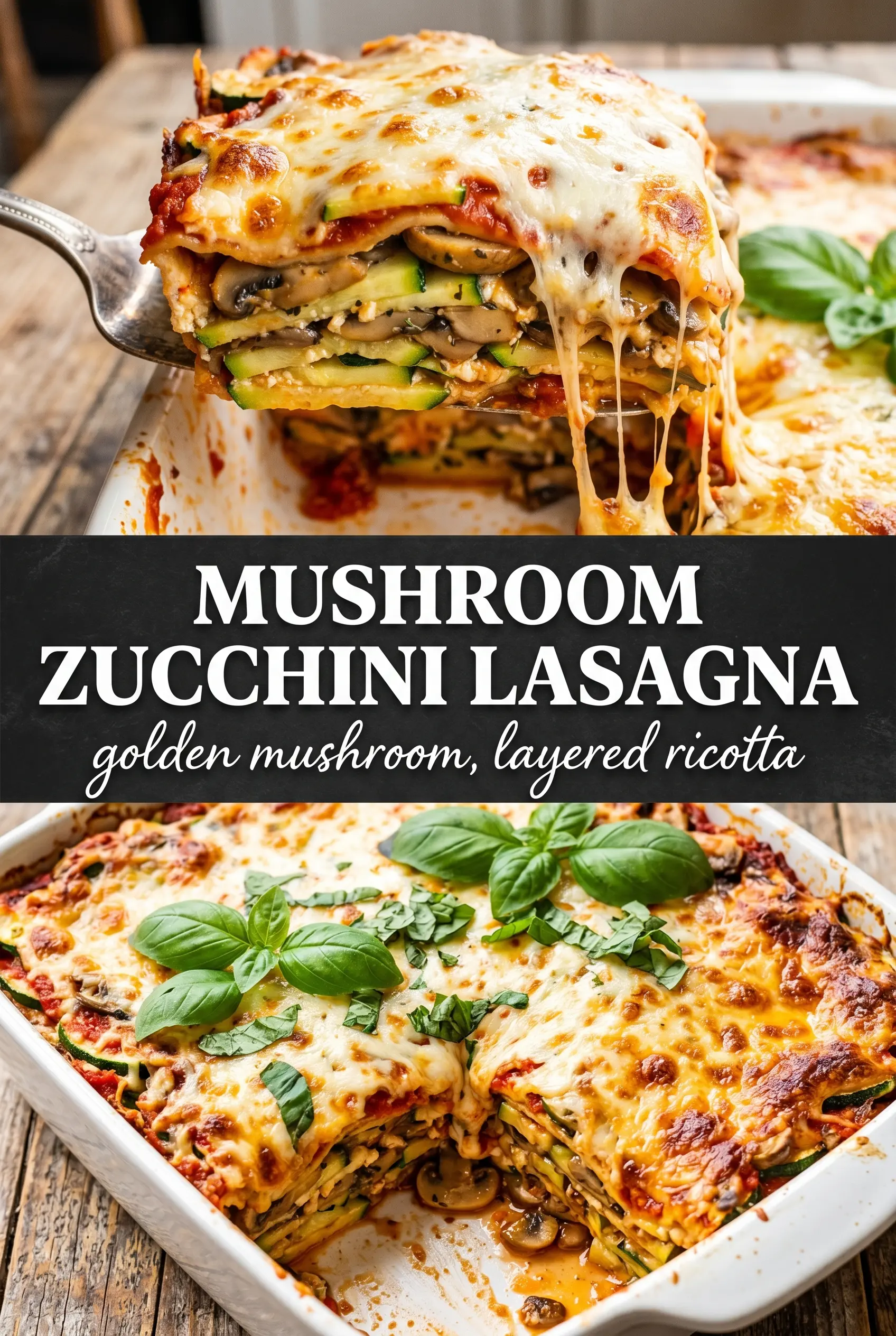
Mushroom Zucchini Lasagna
Ingredients
Equipment
Method
- Salt the zucchini planks and let them sit for 20 minutes to draw out moisture, then pat dry with paper towels for better browning.
- Roast the dried zucchini at 425°F for 10 minutes on a sheet pan, until slightly tender and lightly dried at the edges.
- Heat olive oil over high heat, then cook the diced mushrooms and onion for 8–10 minutes until all liquid evaporates and the mushrooms turn deeply golden.
- Add the minced garlic and cook for 30 seconds, stirring, until fragrant but not browned.
- Pour in the red wine and cook until evaporated, then add the crushed tomatoes, tomato paste, and Italian seasoning.
- Simmer the sauce for 10 minutes, then season with salt and pepper to taste so the flavor is concentrated.
- Stir ricotta with the egg, parmesan, thyme, and salt and pepper until smooth and cohesive for easy layering.
- Preheat the oven to 375°F and grease a 9x13 dish.
- Assemble by spreading a layer of mushroom sauce, adding zucchini planks, dolloping the ricotta layer, then adding more mushroom sauce and mozzarella; repeat and end with mozzarella.
- Cover with foil and bake at 375°F for 40 minutes, then uncover and bake 15 minutes until deeply golden.
- Rest the lasagna for 15 minutes before slicing so the layers set and hold together.