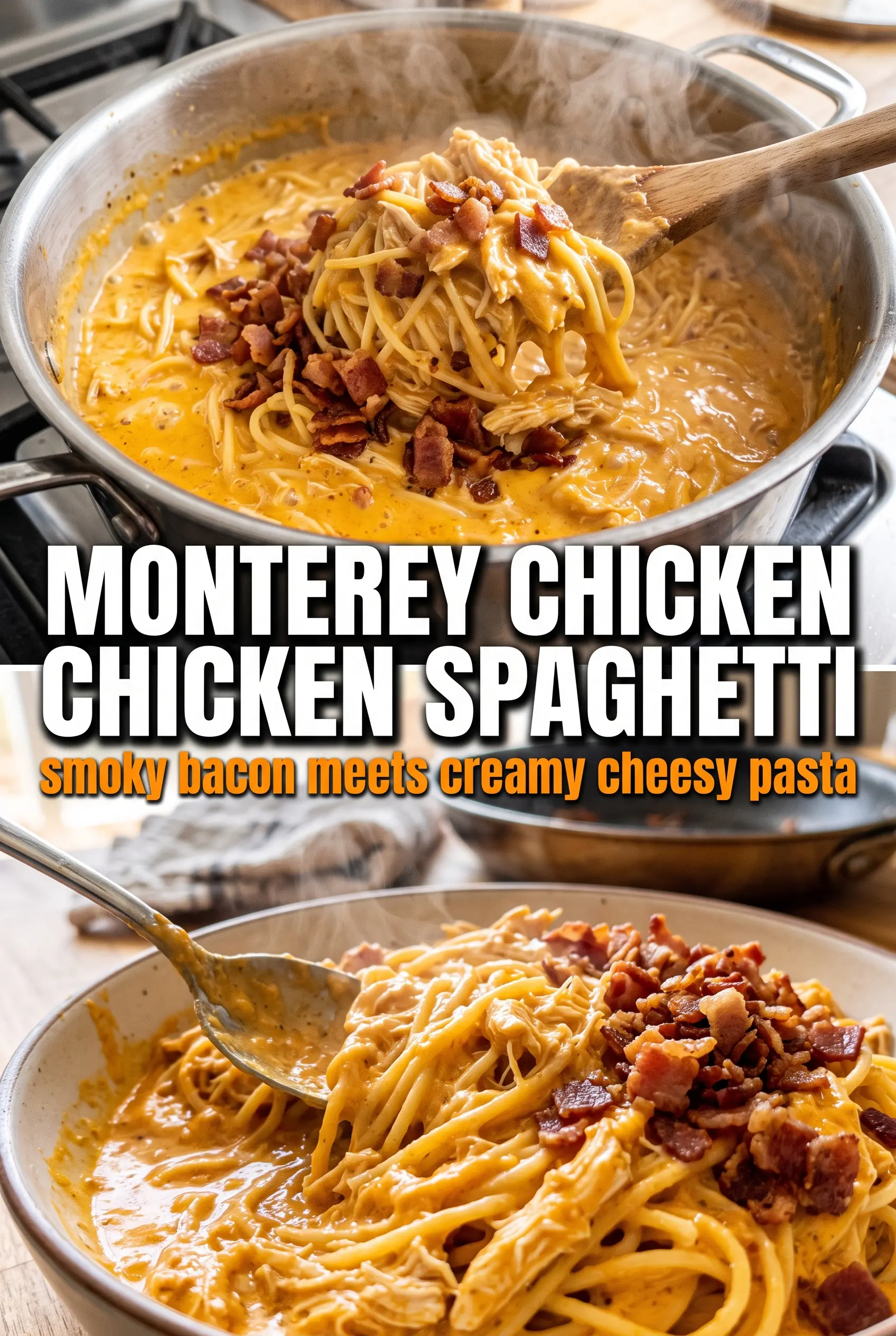
Monterey Chicken Spaghetti bakes into the kind of casserole that disappears fast: creamy, smoky, and covered with a golden cheese crust that gives way to tender noodles underneath. The bacon adds salt and crunch, the green chiles keep the sauce from tasting flat, and the green pepper and onion soften just enough in the oven to blend into the creamy base without losing all their bite.
What makes this version work is the balance in the sauce. The soup, sour cream, and broth make a base that clings to the spaghetti instead of turning soupy, while the cheese goes on top so it browns instead of sinking into the filling. Broken spaghetti matters here too. It’s easier to mix, easier to serve, and it catches the sauce in every forkful instead of piling into one long tangle.
Below, I’ve included the parts that actually change the outcome: how to keep the casserole creamy, what to swap if you’re out of a key ingredient, and the little timing details that keep the cheese from overbrowning before the center is hot.
The sauce stayed creamy after baking and the spaghetti held its texture instead of turning mushy. I used the full amount of bacon and the smoky bite with the Monterey Jack made it taste like something from a family dinner spot.
Save this Monterey Chicken Spaghetti for a creamy baked pasta with bacon, green chiles, and a golden cheese crust.
The Sauce Needs to Coat, Not Flood
The mistake that ruins most chicken spaghetti casseroles is too much liquid. You want a sauce that looks loose in the bowl but clings once it’s mixed with the pasta, because the noodles keep absorbing moisture in the oven. If the mixture seems a little thick before baking, that’s a good sign. It should spread in the pan without pooling around the edges.
Pre-cooked spaghetti also matters here. If the pasta is underdone, it stays chewy in the casserole. If it’s fully soft before baking, it can turn pasty by the time the cheese is browned. Pull it just shy of done, then toss it with the sauce right away so it doesn’t stick into one big clump.
- Cream of chicken soup — This builds the savory base and gives the casserole body. A homemade white sauce can work, but it won’t taste quite as deeply chicken-forward unless you season it hard.
- Cream of mushroom soup — This adds a little earthy depth that keeps the dish from tasting one-note. If mushroom isn’t your thing, another can of cream of chicken works, though the casserole will taste milder.
- Sour cream — This is what gives the sauce its tang and creaminess. Plain Greek yogurt can stand in, but use full-fat yogurt and stir it in off the heat so it doesn’t curdle.
- Broken spaghetti — It’s not just easier to stir. Shorter noodles distribute the sauce and mix-ins more evenly, which means every serving looks and eats like a proper casserole instead of a pasta pile.
What Each Ingredient Is Doing in the Casserole Dish
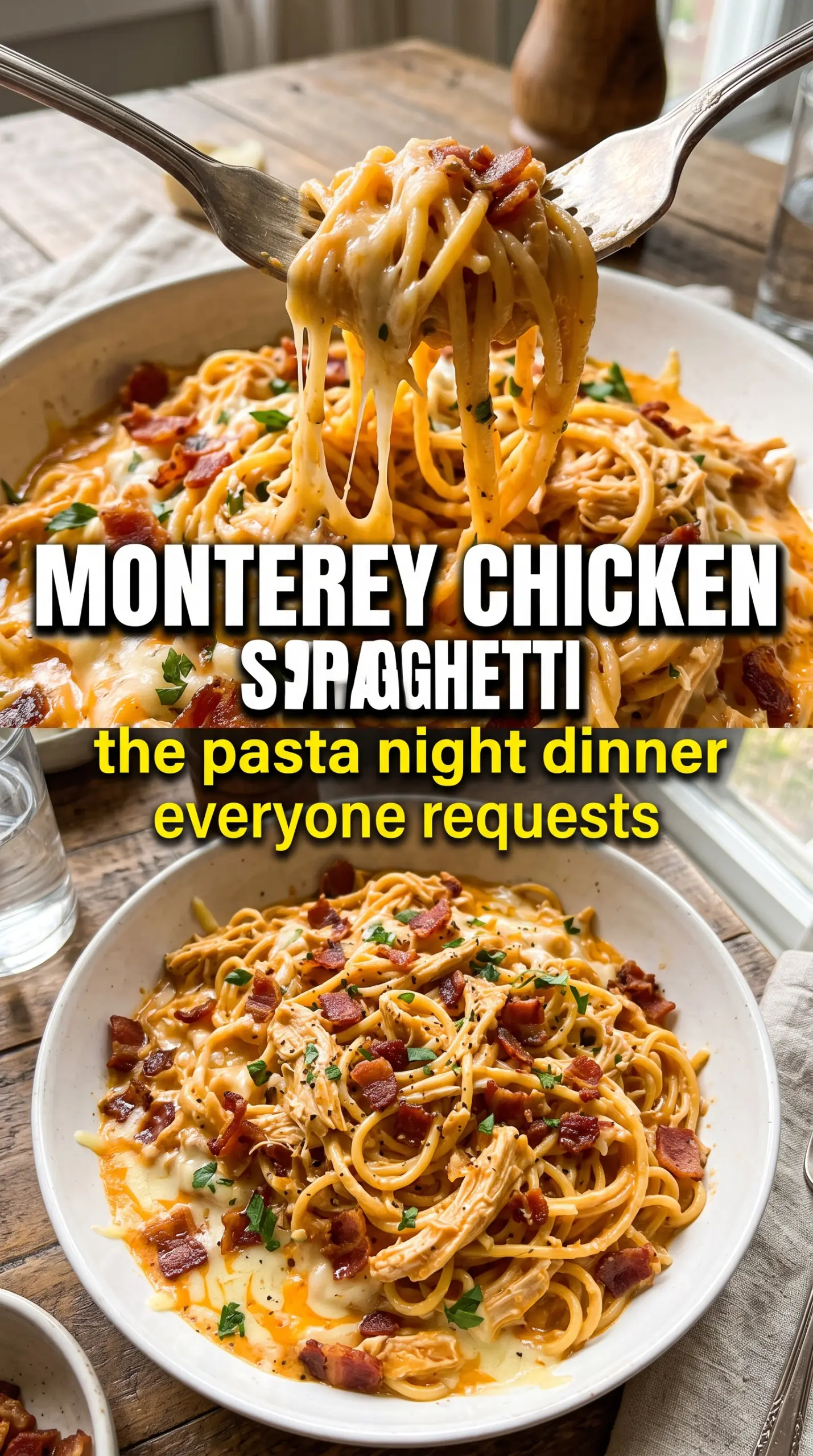
- Shredded chicken — Use cooked chicken that’s already well seasoned if you have it. Rotisserie chicken works beautifully here because it stays moist and saves time.
- Bacon — The crisp bacon gives the casserole its smoky backbone. Cook it until it’s fully crisp before crumbling, or it softens too much in the oven and disappears into the sauce.
- Green chiles — They don’t make the dish spicy; they keep it lively. Drain them well so they don’t water down the filling.
- Green bell pepper and onion — These soften as the casserole bakes and add a little savory sweetness. Dice them small so they cook through evenly instead of staying crunchy.
- Monterey Jack and cheddar blend — The Monterey Jack melts smoothly and the cheddar adds sharper flavor and a better crust. Pre-shredded cheese works, but freshly shredded melts more cleanly and browns more evenly.
Getting the Casserole Hot Without Burning the Top
Building the Base
Whisk the soups, broth, sour cream, and garlic powder until the mixture looks smooth and even before anything else goes in. That step matters because sour cream and canned soup can stay streaky if you rush them together. Once the sauce is smooth, fold in the chicken, pasta, vegetables, and bacon until every noodle is coated. If the filling looks soupy in the bowl, it’s too loose; add a little more cheese or give the pasta a minute to sit so it can absorb some of the sauce.
Pan and Topping
Spread the mixture into a greased 9×13 dish and press it into an even layer without packing it down hard. You want the casserole settled, not compressed, so the sauce can bubble through. Sprinkle the cheese all the way to the edges for full coverage. Those edges turn crisp and golden in the oven, which is part of what makes the top so good.
Baking Until Bubbly
Bake at 350°F until the center is hot and the cheese is melted with browned spots across the top, usually 25 to 30 minutes. If the top browns too fast before the middle is hot, cover it loosely with foil for the last stretch. The casserole is ready when you see steady bubbling around the sides and the cheese no longer looks wet in the center.
The Finish
Let it rest for 5 to 10 minutes before serving. That pause keeps the sauce from running all over the plate and gives the noodles time to settle into the filling. Finish with parsley for a fresh note, especially if you’re serving it straight from the oven while the cheese is still molten.
How to Adapt This for a Bigger Crowd or a Different Pantry
Make It Gluten-Free
Use your favorite gluten-free spaghetti and swap in certified gluten-free condensed soups. Gluten-free pasta can soften faster, so pull it from the pot just before it reaches full tenderness and bake the casserole only until it’s heated through.
Swap the Chicken for Turkey
Cooked turkey works the same way as chicken and is a smart use for leftovers. If the turkey is lean, keep the sour cream in the sauce so the casserole doesn’t dry out during baking.
Make It Bacon-Free
Leave out the bacon and add a pinch of smoked paprika with an extra handful of cheddar for a similar savory edge. You’ll lose the crunchy smoky bite, but the casserole will still bake up rich and satisfying.
Storage and Reheating
- Refrigerator: Store covered for up to 4 days. The pasta will soak up some of the sauce, so the casserole firms up a bit as it chills.
- Freezer: This freezes well, especially in individual portions. Wrap tightly and freeze for up to 2 months, then thaw in the refrigerator before reheating.
- Reheating: Reheat covered in a 325°F oven until warmed through, or use the microwave in short bursts with a spoonful of broth or milk stirred in. The biggest mistake is blasting it uncovered, which dries out the noodles and tightens the sauce too much.