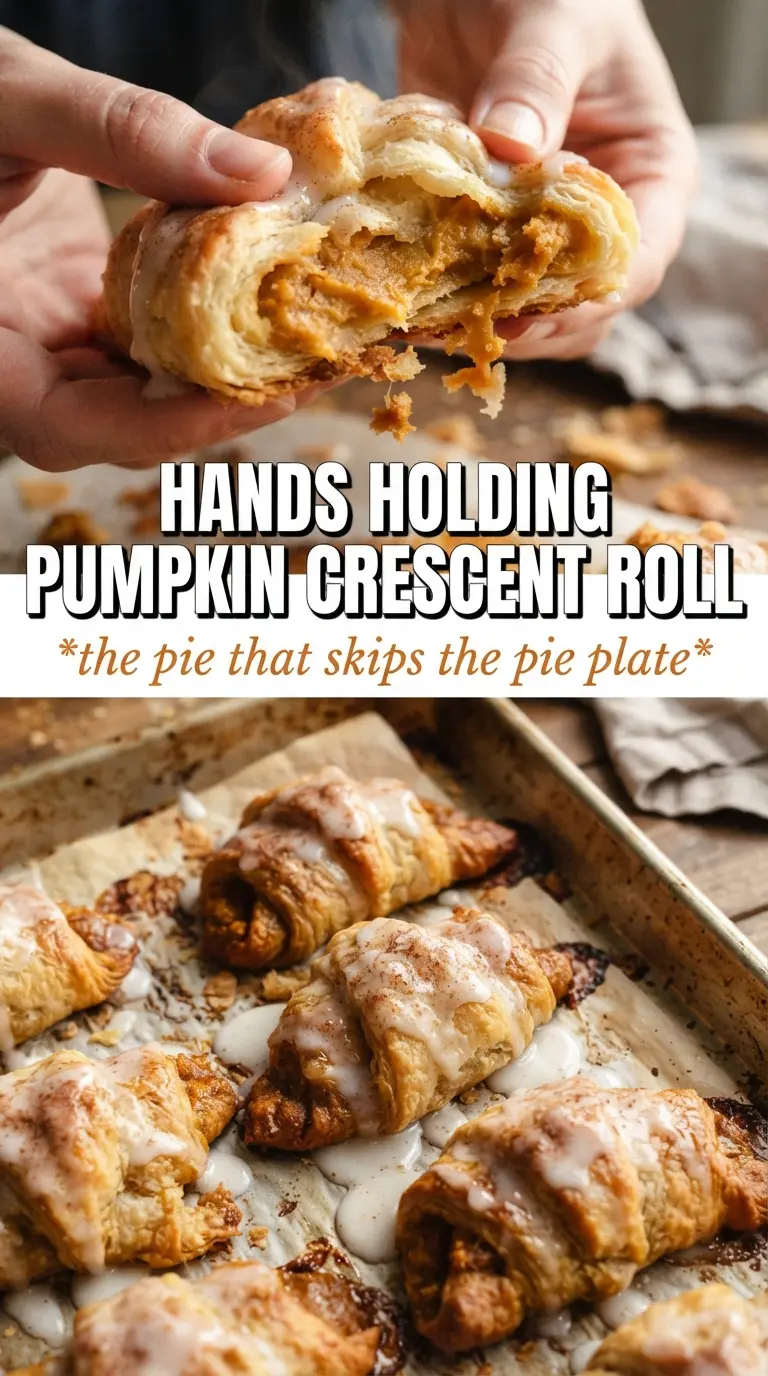
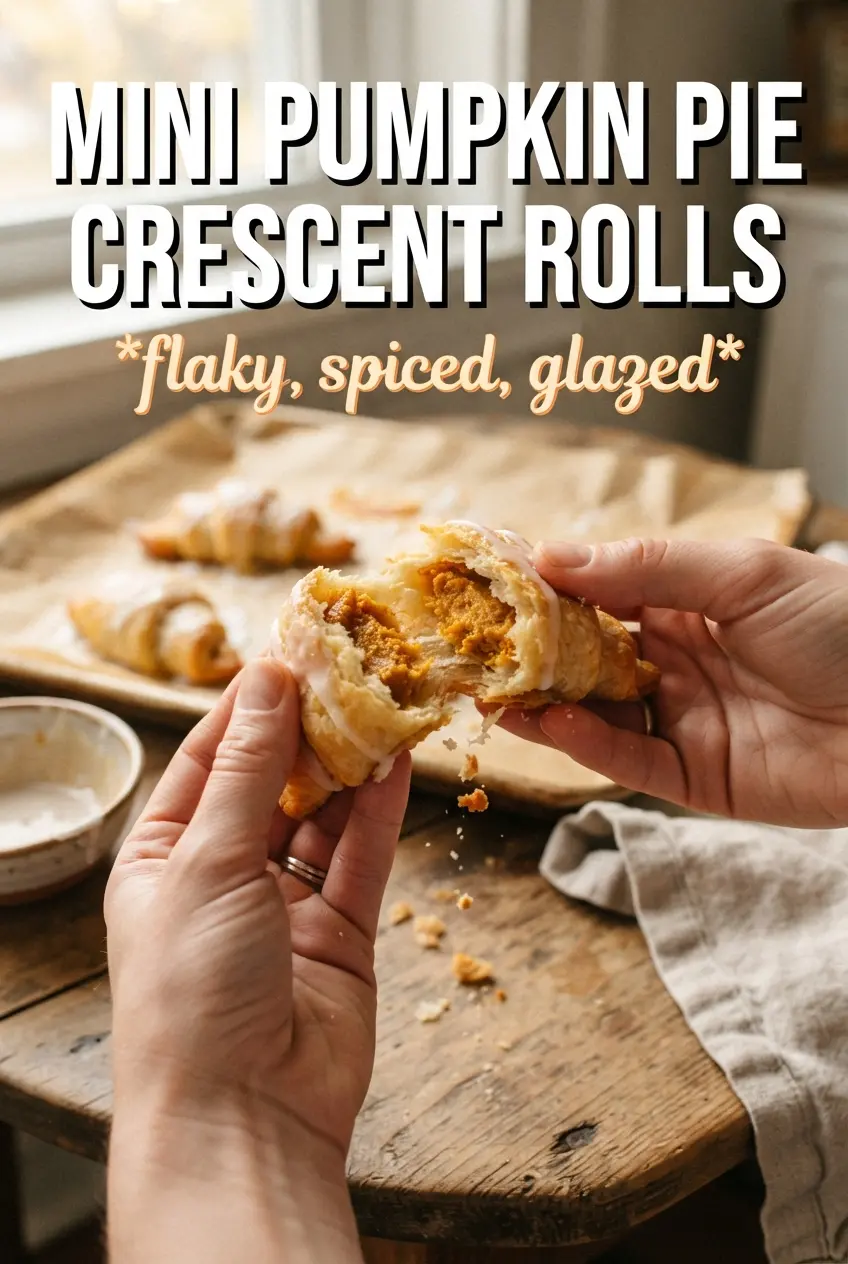
Mini pumpkin pie crescent rolls bake up with crisp, flaky edges, a soft pumpkin cream cheese center, and that warm cinnamon-sugar finish that makes people reach for a second one before the pan cools. They taste like a shortcut version of pumpkin pie and morning pastry all at once, which is exactly why they disappear fast at breakfast tables and holiday brunches.
The filling stays smooth because the cream cheese is beaten first with the pumpkin, sugar, spice, and vanilla until it’s completely lump-free. That matters. If the cream cheese isn’t softened all the way, the filling can leave little pockets instead of baking into a creamy center. The crescent dough also works best cold, straight from the fridge, so it rolls cleanly and puffs into those tender layers in the oven.
Below, you’ll find the small details that keep the filling from leaking, the tops from overbrowning, and the glaze from sliding right off the rolls. These are the kind of fixes that turn a cute idea into a repeat recipe.
The filling stayed put, the crescents baked up flaky, and the cinnamon glaze set just enough to keep them from getting sticky. My kids asked if I could make another batch for the weekend.
Save these mini pumpkin pie crescent rolls for an easy pumpkin breakfast with flaky layers and a cinnamon glaze.
Why the Filling Needs to Stay Thick Before It Hits the Dough
The filling for these rolls has to be thick enough to mound on the dough without running to the edges. Pumpkin puree adds moisture, so the cream cheese does the heavy lifting here by giving the mixture body and keeping it from turning watery in the oven. If the filling looks loose after mixing, it will leak out while baking and leave the centers underfilled.
Softened cream cheese matters more than pumpkin pie spice here. When the cheese is cool, you end up overmixing just to smooth it out, and that can make the filling streaky or thin. Beat everything until it looks like a fluffy pumpkin cheesecake filling, not a pourable batter. That texture tells you it’s ready.
- Cream cheese — Full-fat cream cheese gives the best structure and the richest filling. Reduced-fat versions can work, but they tend to soften more and spread a little faster in the oven.
- Pumpkin puree — Use plain pumpkin puree, not pumpkin pie filling. Pie filling already contains sugar and spices, which throws off the balance and can make the centers too sweet.
- Crescent dough — Refrigerated dough is the shortcut that makes this recipe fast. Keep it cold until you’re ready to fill it, or it gets sticky and hard to shape cleanly.
- Cinnamon sugar topping — The butter helps the sugar cling and gives the tops that lightly crisp finish. Don’t skip it if you want the rolls to taste like pumpkin pie in pastry form.
What Each Ingredient Is Actually Doing in This Recipe
- Primary ingredient (the star) — Quality matters most. Choose the best you can find.
- Cooking medium (oil, butter, or broth) — This carries flavors and prevents dryness.
- Seasonings (salt, pepper, spices, herbs) — Layer flavors so nothing overpowers. Build depth gradually.
- Aromatics (garlic, onion, herbs) — Cook with fat to bloom flavors. Become the foundation.
- Supporting ingredients — Complement the main ingredient without overpowering it.
- Sauce or liquid (if applicable) — Brings flavors together. Balance richness with acid.
- Acid (lemon, vinegar, wine, or other) — Brightens and prevents flat-tasting results.
- Final finish (garnish, glaze, or sauce) — Prevents one-dimensional taste and adds visual appeal.
Rolling, Sealing, and Baking Them So They Don’t Leak
Mixing the Pumpkin Cream Cheese Filling
Beat the cream cheese first until it’s completely smooth, then add the pumpkin, powdered sugar, pumpkin pie spice, cinnamon, and vanilla. The mixture should look light and spreadable, but still hold its shape on a spoon. If you see little bits of cream cheese, keep mixing before you go any further. Those bits soften unevenly in the oven and can leave a mottled filling.
Filling the Crescent Triangles
Separate the dough into triangles and place only about 1 teaspoon of filling on the wide end of each one. That amount matters more than people think. Too much filling is the quickest way to get blowouts and sticky baking sheets. Leave a clean border around the edges so the dough can seal itself as it rolls.
Rolling and Tucking the Point
Roll from the wide end toward the point with gentle pressure, then tuck the tip underneath so it stays in place on the pan. You want a snug roll, not a squeezed one. If the seam sits on top, the rolls can open up and the filling will bubble out. A lined baking sheet helps, but a neat roll helps more.
Butter, Sugar, and the Final Bake
Brush the tops with melted butter before adding the cinnamon sugar. That keeps the topping from falling off and gives the dough a glossy, bronzed finish. Bake until the rolls are puffed and deeply golden at the edges, usually 12 to 15 minutes. Pull them when the centers look set but still soft, because overbaking dries out the filling fast.
Glazing While They’re Warm
Drizzle the glaze over the rolls while they’re still warm, not piping hot. If they’re scorching hot, the glaze melts into the pastry and disappears. If they’ve cooled too much, the glaze sits in thick streaks instead of flowing lightly over the tops. A warm roll gives you that thin, sweet finish that settles in just right.
How to Adapt These Rolls for Different Mornings
Dairy-Free Version
Use a dairy-free cream cheese that’s meant for baking and swap the butter for melted plant-based butter. The texture will be a little softer and the filling may not set as firmly, but the rolls still bake up with the same pumpkin-cinnamon character.
Extra-Spiced Pumpkin Filling
If you like a stronger spice note, add another 1/4 teaspoon of cinnamon or a pinch of nutmeg. Keep the total spice increase small, or it will overpower the cream cheese and make the filling taste dry instead of creamy.
Make-Ahead Assembly
You can mix the filling a day ahead and refrigerate it, then assemble and bake the rolls fresh in the morning. Don’t fill and roll them too far ahead, because the crescent dough softens and the seam stops sealing cleanly.
Storage and Reheating
- Refrigerator: Store leftovers in an airtight container for up to 3 days. The glaze softens the pastry a bit, but the flavor stays good.
- Freezer: These freeze best without glaze. Freeze baked rolls in a single layer, then thaw and glaze after reheating.
- Reheating: Warm in a 300F oven for 8 to 10 minutes or until heated through. The microwave makes the dough rubbery, which is the fastest way to lose the flaky texture.
Questions I Get Asked About This Recipe
Mini Pumpkin Pie Crescent Rolls
Ingredients
Equipment
Method
- Preheat the oven to 375°F and line a sheet pan with parchment or a light layer of nonstick spray as the baking surface.
- Beat the cream cheese, pumpkin puree, powdered sugar, pumpkin pie spice, cinnamon, and vanilla until smooth and creamy.
- Separate the refrigerated crescent roll dough into triangles, then place about 1 teaspoon of pumpkin filling at the wide end of each triangle.
- Roll each triangle up from the wide end to the point, then arrange the mini crescents on the prepared sheet pan with space between them.
- Brush the tops of the crescents with melted butter and sprinkle with the cinnamon sugar (melted butter–glossed surface helps it stick).
- Bake at 375°F for 12-15 minutes, until the crescents are golden brown at the edges and lightly set in the center.
- Drizzle with the cinnamon glaze while warm so it melts slightly and clings to the flaky layers.