Juicy lemon-dill chicken over a warm base of rice or quinoa, topped with crisp vegetables, briny olives, cool tzatziki, and a crumble of feta, is the kind of bowl that disappears fast. The chicken stays bright and savory, the vegetables bring crunch, and the sauce ties everything together without making the bowl heavy. It eats like a full meal, but it still feels fresh enough that you want another forkful at the end.
What makes this version work is the short marinade and the way it’s used. Lemon juice and dill give the chicken its main character, while olive oil keeps the surface from drying out on the grill. The trick is not to marinate forever; a couple of hours is enough. Go much longer and the lemon starts to work against the texture instead of helping it.
Below, I’ve included the details that matter most: how to keep the chicken tender on the grill, which ingredients are worth buying good versions of, and a few easy swaps if you need to adapt the bowls for your table.
The chicken came off the grill juicy and the lemon-dill marinade soaked in just enough without turning it mushy. I loved how the tzatziki and feta balanced the tomatoes and cucumber.
Save these Mediterranean Lemon-Dill Chicken Bowls for an easy dinner with grilled chicken, fresh vegetables, and creamy tzatziki.
The Lemon Marinade Works Because It Stays Short
With chicken breasts, the difference between juicy and dry often comes down to time in the marinade and how hard you cook them. Lemon juice is great here, but it’s acidic enough to start tightening the meat if you leave it too long. Thirty minutes gives you clear flavor on the surface, and two hours is the outer limit I’d use for the best texture.
Grilling over medium-high heat gives you browning before the chicken has time to dry out. If the pan or grill is too cool, the chicken steams and turns pale. If it’s too hot, the outside scorches before the center is done. You want steady sizzle and clean grill marks, not aggressive flare-ups.
What Each Bowl Ingredient Is Doing Here
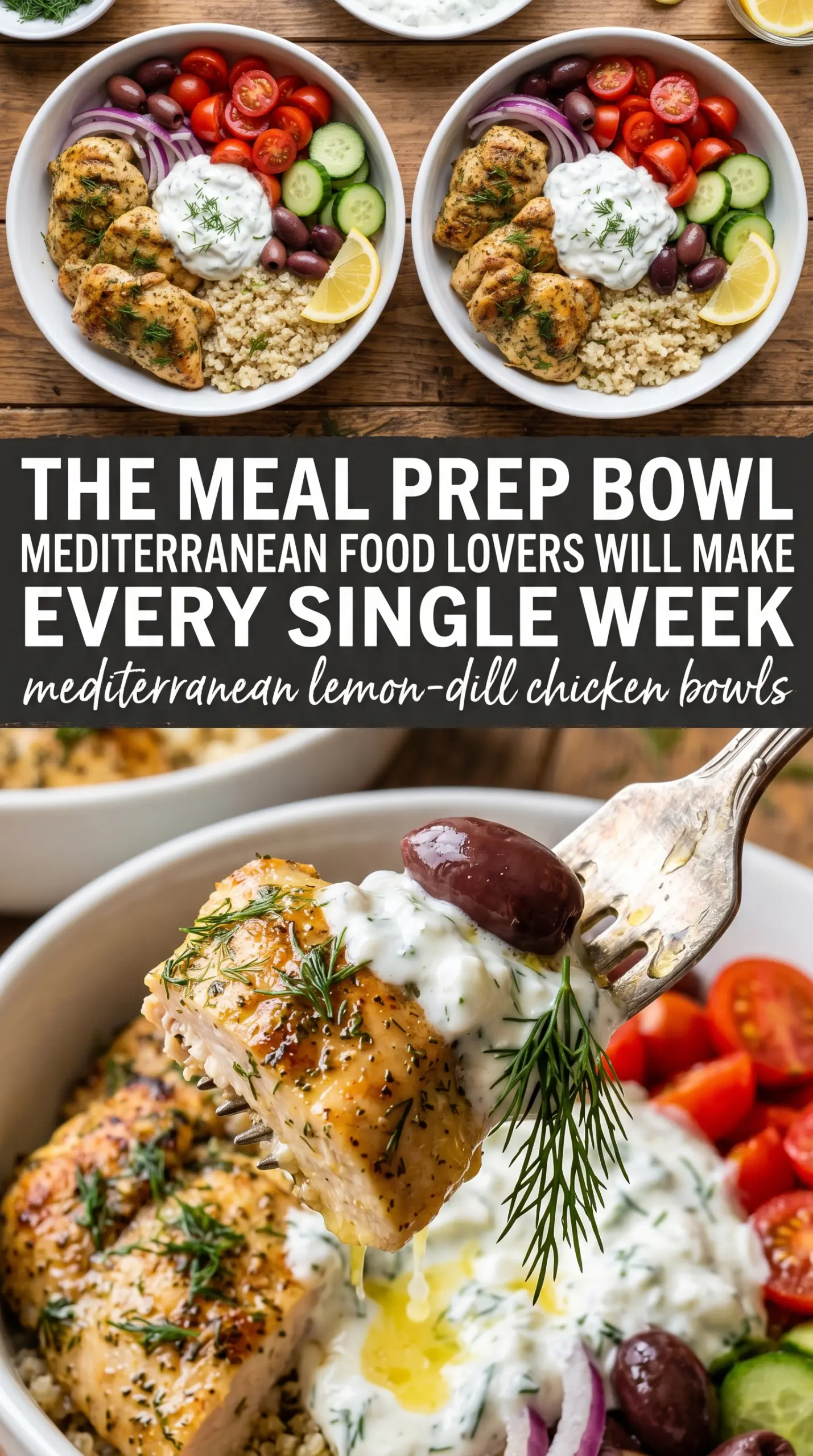
- Chicken breasts — Lean chicken works well because the marinade and grill give it enough character. If you swap in thighs, you’ll get a richer, more forgiving result with a little extra fat and a slightly longer cook time.
- Olive oil — This carries the lemon and dill across the surface of the chicken and helps the grill finish stay juicy. Use a decent extra-virgin olive oil here because you taste it in the final bowl.
- Fresh dill — Dried dill won’t give the same bright, grassy finish. Fresh dill is one of the ingredients that makes the bowl taste Mediterranean instead of just lemony.
- Lemon juice — Fresh lemon juice is worth using because bottled juice can taste flat and sharp in a way that throws off the marinade. Zest is a welcome add if you want even more citrus lift, but the juice alone is enough.
- Tzatziki and feta — These are the cold, creamy, salty elements that balance the grilled chicken. If you need a dairy-free bowl, use a plain dairy-free yogurt sauce and skip the feta, but keep something creamy in the mix or the bowl will feel unfinished.
Grilling the Chicken and Building a Bowl That Eats Well
Mixing the Marinade
Whisk the olive oil, lemon juice, dill, garlic, salt, and pepper until the mixture looks emulsified and no longer separates immediately. That helps the chicken coat evenly instead of sitting in streaks of oil and acid. If your garlic is very finely minced, it spreads flavor faster and more evenly. Larger pieces can scorch on the grill, so keep the mince small.
Marinating Without Overdoing It
Coat the chicken thoroughly and let it sit in the refrigerator for 30 minutes to 2 hours. Shorter than that and the flavor stays on the surface; much longer and the lemon starts to soften the meat in a way that can turn the texture a little chalky. Pull the chicken out while the grill heats so it’s not going onto the grates icy cold. That helps it cook evenly.
Getting Grill Marks and Juicy Centers
Cook the chicken over medium-high heat for 6 to 7 minutes per side, depending on thickness. You’re looking for browned grill marks and firm edges, with the center reaching 165°F. If the outside is darkening too fast, move the chicken to a cooler part of the grill and finish it there. Let it rest before slicing, or the juices will run onto the cutting board instead of staying in the meat.
Assembling the Bowls
Spoon rice or quinoa into each bowl first, then add the sliced chicken while it’s still warm. Arrange the tomatoes, cucumber, onion, and olives around the chicken so each bite gets a mix of hot and cool textures. Finish with feta and a generous spoonful of tzatziki. If the rice is dry, a little drizzle of olive oil or a squeeze of lemon wakes the whole bowl up.
How to Adapt These Bowls for Different Nights
Make It Dairy-Free
Skip the feta and use a dairy-free tzatziki-style sauce or plain dairy-free yogurt with lemon and cucumber. You’ll lose a little saltiness and tang, so add a pinch more salt to the chicken or finish the bowl with extra olives.
Use Chicken Thighs Instead
Boneless thighs give you a juicier, more forgiving result and hold up well if you’re nervous about grilling chicken breasts. They usually need a couple more minutes per side, but they’re harder to dry out and taste a little richer.
Turn It Into Meal Prep
Keep the chicken, rice, and vegetables separate until serving. That keeps the cucumbers crisp and the rice from soaking up all the tzatziki. This bowl works well for lunch containers, and the flavor actually improves after a night in the fridge.
Go Gluten-Free Without Changing the Flavor
Use rice or quinoa and keep the rest of the bowl exactly the same. The grilled chicken and toppings carry the dish, so you won’t lose anything important by skipping grains with gluten. Just check that your tzatziki is made with gluten-free ingredients if you’re buying it packaged.
Storage and Reheating
- Refrigerator: Store the chicken, rice, and vegetables separately for up to 4 days. The cucumbers and tomatoes will soften if they sit in the dressing too long.
- Freezer: The cooked chicken freezes well for up to 2 months. Freeze it sliced or whole, wrapped tightly, and skip freezing the vegetables and tzatziki.
- Reheating: Warm the chicken gently in a skillet with a splash of water or in the microwave at medium power. High heat dries out lean chicken fast, so don’t blast it until it turns rubbery.
Answers to the Questions Worth Asking
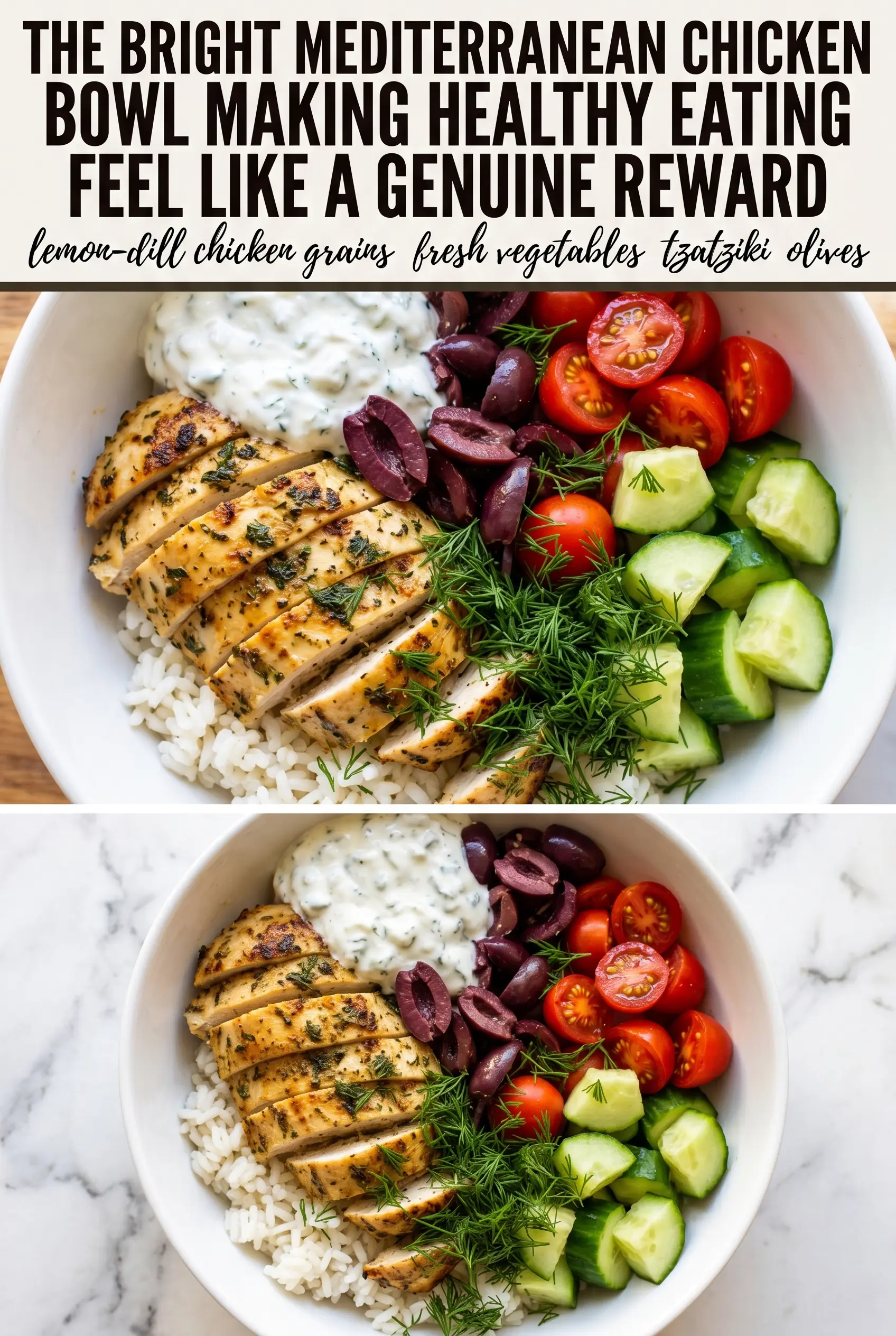
Mediterranean Lemon-Dill Chicken Bowls
Ingredients
Equipment
Method
- Whisk together olive oil, lemon juice, dill, garlic, salt, and pepper until evenly combined, forming a fragrant marinade.
- Marinate chicken for 30 minutes to 2 hours so the flavor penetrates the meat.
- Grill chicken over medium-high heat for 6-7 minutes per side until cooked through, turning once for even browning.
- Let the grilled chicken rest, then slice it so the juices redistribute before assembling the bowls.
- Assemble bowls with cooked rice or quinoa, sliced chicken, tomatoes, cucumber, onion, olives, feta, and tzatziki.