Cold, tangy, sweet, and loud with chile-lime heat, a mangonada hits that perfect slushy middle ground between dessert and drink. The frozen mango base stays thick enough to hold the toppings, while the chamoy and Tajín keep every sip moving between bright, salty, spicy, and fruity. It’s the kind of drink that disappears fast because each layer tastes a little different from the last.
The key is balance. Frozen mango gives body, but the mango juice keeps the blender moving so you don’t end up with a chunky puree. Lime sharpens the sweetness, and just a little honey rounds out fruit that isn’t at peak ripeness. The chamoy should cling to the glass, not pool at the bottom, and the Tajín rim works best when it’s applied right before serving so it stays bold and fragrant.
Below, I’ve included the small details that make a mangonada taste like the real thing: how to keep the slush thick, when to adjust the sweetness, and what to change if your mango is extra tart or your blender needs a little help.
The slush stayed thick all the way to the last sip, and the chamoy running down the glass made every bite of mango taste even brighter. I’ve made mango drinks before, but this one had the perfect balance of sweet, limey, and spicy.
Save this mangonada for the days when you want frozen mango, chamoy, and Tajín in one icy glass.
Why the Slush Has to Stay Thick From the First Blend
The biggest mistake with mangonada is turning it into mango juice with toppings. Once the ice melts too far, the chamoy slides straight to the bottom and the Tajín rim loses the contrast that makes the drink worth making. You want a texture that pours slowly, almost like a milkshake, so the toppings can sit on top and swirl into each sip instead of vanishing immediately.
Frozen mango chunks do most of the work, and the ice is there to sharpen the chill, not to bulk out the drink. If your blender struggles, add the mango juice a splash at a time instead of dumping it all in at once. That keeps the mixture thick enough to hold its shape while still blending smooth.
- Frozen mango chunks — This is the backbone of the drink. Fresh mango won’t give you the same icy body, and the result will taste thinner and less slushy.
- Mango juice or nectar — Use it to get the blades moving, but don’t overdo it. Nectar makes a richer drink; juice keeps it a little lighter.
- Lime juice — This cuts the sweetness and wakes everything up. Bottled lime juice works in a pinch, but fresh juice gives the cleanest finish.
- Chamoy and Tajín — These are the signature flavors, and they don’t really have a true substitute. If you can’t find chamoy, a thin brush of tamarind sauce gives a similar sweet-sour edge, but it won’t taste quite the same.
What Each Part of the Glass Is Doing
The topping order matters here. Tajín on the rim gives the first salty-chile hit before the drink even reaches your mouth, while chamoy inside the glass creates those streaks that mix into the mango as you sip. Fresh mango chunks on top add a little chew, which keeps the drink from feeling one-note.
If your mango is very sweet, use the full lime juice and taste before adding extra honey. If it’s a little flat, the honey fills in the gaps without making the drink taste candied. The cilantro garnish is optional for some people, but a tiny sprig adds a fresh herbal note that makes the whole thing feel brighter.
- Honey — This smooths out tart mango and sharp lime. If your fruit is already sweet, start with less and add only enough to round the flavor.
- Chamoy sauce — Look for one that’s pourable so it can streak the glass. If it’s very thick, loosen it with a few drops of warm water before drizzling.
- Fresh mango chunks — Use ripe mango for the topping so the contrast between frozen and fresh feels intentional, not random.
- Lime wedges and cilantro — The lime wedge is more than garnish; it gives people one more bright squeeze at the end. Cilantro is optional, but it works if you like a subtle fresh finish.
Blending, Rimming, and Pouring Without Losing the Texture
Building the Slush
Add the frozen mango, mango juice, lime juice, honey, and ice to the blender and start on low, then work up only as needed. If the mixture stalls, stop and scrape down the sides instead of adding a big splash of liquid all at once. You’re looking for a thick, spoonable blend that still moves through the blades. If it turns soupy now, it won’t recover later.
Coating the Glasses
Run a lime wedge around the rims, then dip each glass into Tajín so the seasoning sticks in a clean, even band. Drizzle the chamoy down the inside of the glasses after rimming so the red streaks stay visible. If you drizzle first, the rim seasoning can fall into the sauce and look muddy instead of sharp and neat.
Finishing and Serving Fast
Divide the mangonada right away, then top with fresh mango chunks, a lime wedge, and a little cilantro. Serve immediately while the slush is thick and the rim is still dry enough to crunch. If it sits, the ice softens and the chamoy blends into the drink too quickly, which is exactly how you lose the layered effect.
How to Adapt This for a Lighter or Bigger-Batch Mangonada
Dairy-Free and Naturally Vegan
This recipe already fits a dairy-free, vegan pattern as written, which is one reason it’s such an easy crowd drink. Just check that your chamoy and Tajín are the brands you want, since some versions are sweeter or saltier than others.
Less Sweet, More Tart
Cut the honey back or skip it if your mango juice is already very sweet. Adding a little extra lime keeps the drink bright and keeps the chamoy from tasting one-dimensional.
Making It for a Group
Blend the mango base in batches so the texture stays thick and cold. Rim the glasses and add chamoy only when you’re ready to serve, since both lose their impact if they sit too long before pouring.
No Tajín on Hand
Use a chili-lime seasoning blend if that’s what you’ve got, but expect a slightly different salt level and heat. Tajín has a sharper citrus note that really suits mango, so the swap works best when the drink is already plenty tart.
Storage and Make-Ahead Notes
- Freezer: The blended mango base can be frozen in an airtight container for a short time, but it turns icy as it sits. It’s best fresh.
- Make-ahead: Rim the glasses and portion the toppings ahead, but blend the drink right before serving so the texture stays slushy.
- Prep tip: Keep the chamoy at room temperature so it drizzles smoothly instead of clumping on a cold glass.
Questions I Get Asked About This Recipe
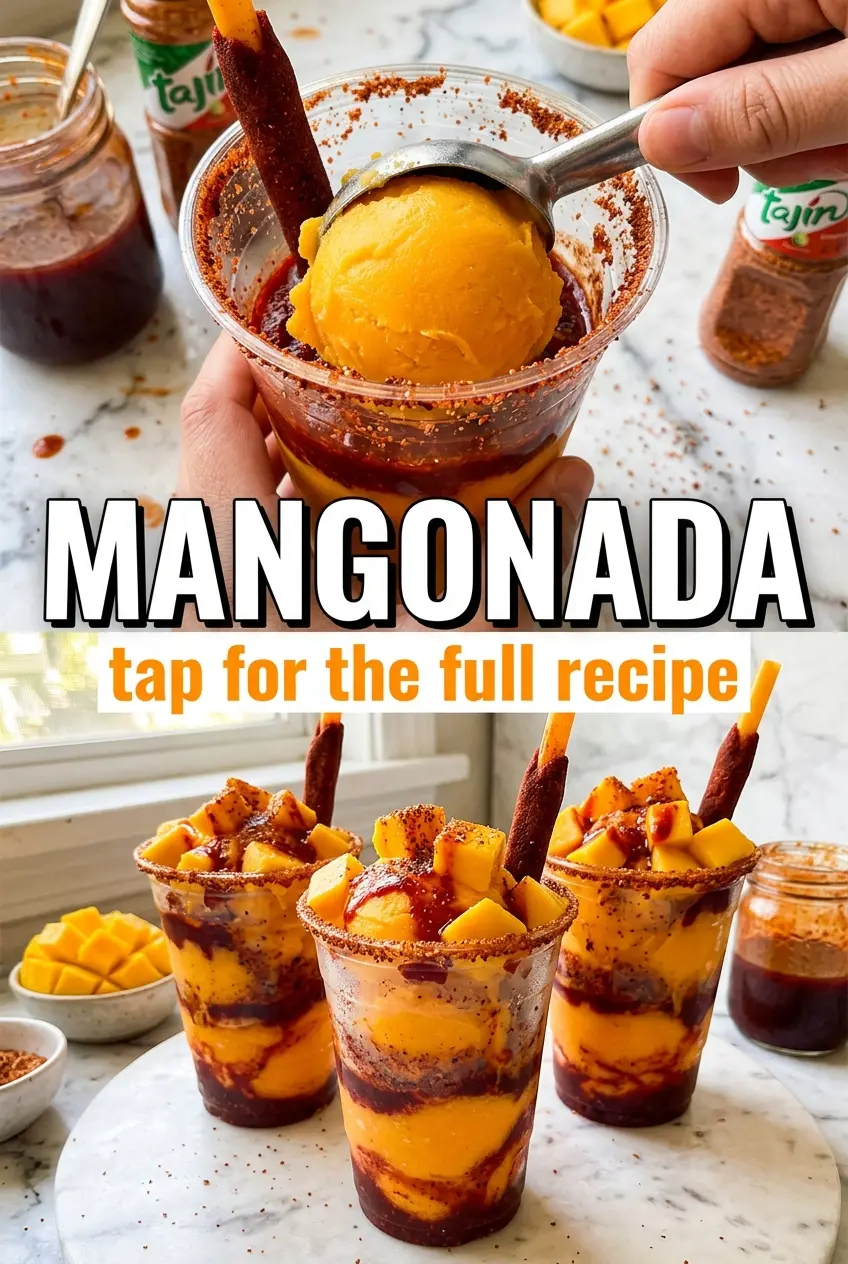
Mangonada
Ingredients
Equipment
Method
- Add frozen mango chunks, mango juice or nectar, lime juice, honey, and ice cubes to a blender. Blend until smooth and slushy, scraping down once if needed.
- Rim two glasses with tajín seasoning by running a lime-wet edge around each rim and pressing into tajín. Keep the rims coated so the seasoning clings.
- Drizzle chamoy sauce down the inside of each glass. Let it streak so each sip gets a tangy-sweet hit.
- Divide the smoothie between the two glasses. Fill all the way to create a thick, icy layer.
- Top with fresh mango chunks. Add enough to show vibrant pieces on the surface.
- Insert a straw into each glass and garnish with a lime wedge and fresh cilantro. Serve immediately so condensation and texture stay at their best.