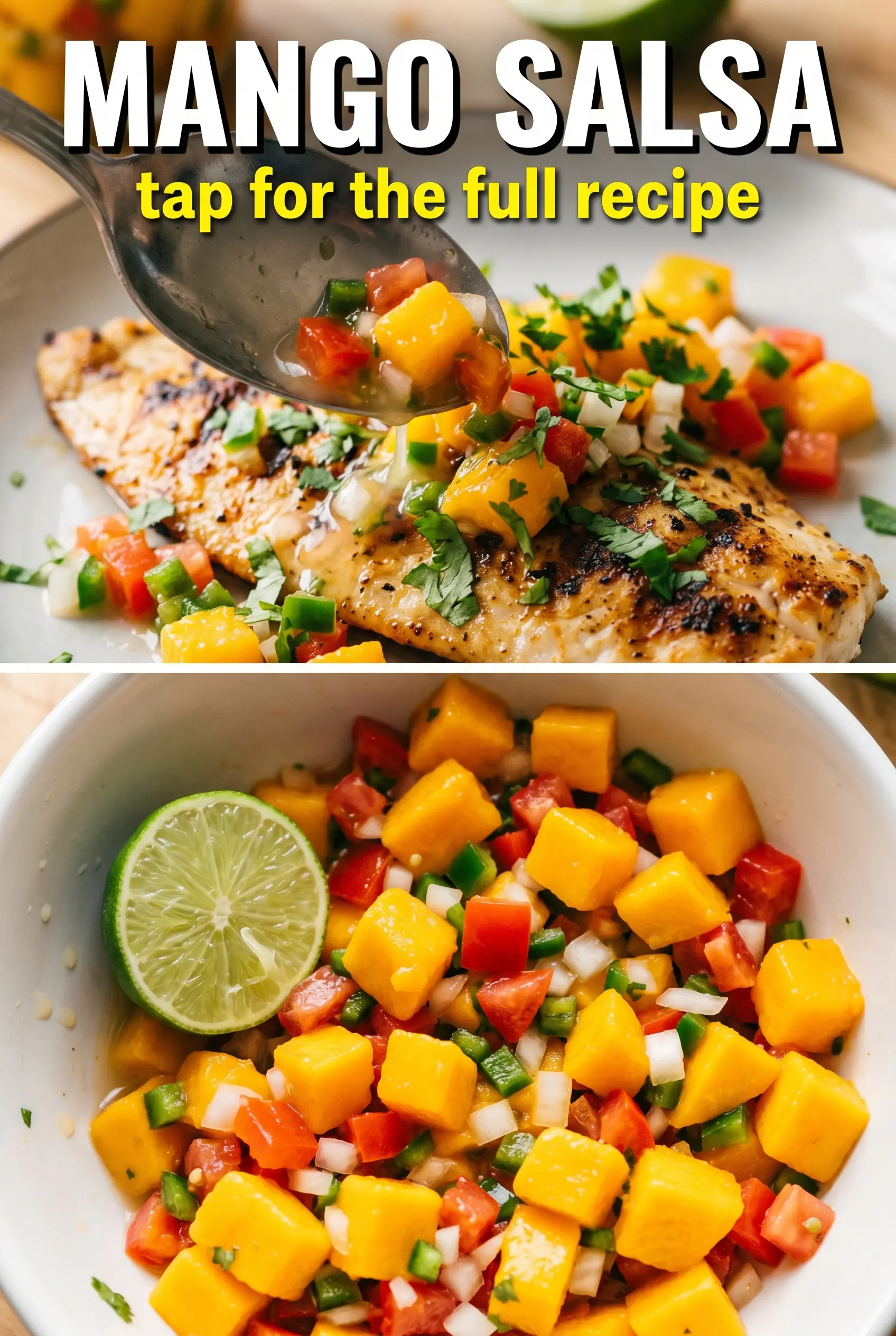
Bright, juicy mango salsa is one of those quick condiments that disappears faster than you expect. The mango stays tender and sweet, the lime sharpens everything up, and the jalapeño gives just enough heat to keep each bite interesting. It works with tortilla chips, spooned over grilled chicken, tucked into fish tacos, or eaten straight from the bowl with a chip in one hand and a napkin in the other.
The trick is keeping the mango in clean little dice instead of turning it into a mushy fruit salad. A ripe mango should yield to the knife without collapsing, and the rest time matters because the lime, salt, and onion need a few minutes to pull the flavors together. If you’ve ever made fruit salsa that tasted flat or watery, it usually needed a little more acid, a little more salt, or a firmer hand when mixing.
Below, I’m sharing the small details that keep the texture bright, plus a few easy ways to adjust the heat, sweetness, or make-ahead timing depending on how you plan to serve it.
The mango held its shape beautifully after chilling, and the lime pulled the whole bowl together. I served it with chips and then used the leftovers on grilled shrimp the next night.
Save this mango salsa for taco night, grilled fish, or the kind of chip-and-dip snack that needs something fresh and bright.
Why the Mango Needs to Stay in Clean, Even Dice
Mango salsa falls apart when the fruit is cut too small or stirred too aggressively. You want distinct pieces that still hold their shape after the lime hits them, because the final texture should feel spoonable, not soupy. That means choosing mangoes that are ripe but not collapsing, then using a gentle hand when everything comes together.
The red onion and jalapeño do more than add flavor. Onion gives the salsa a savory edge that keeps it from tasting like dessert, and jalapeño brings a clean bite that wakes up the sweetness. If your salsa tastes flat, it usually needs one of three things: a little more salt, a little more lime, or a short rest in the fridge so the onion can soften and the flavors can settle.
- Ripe mangoes — Use fruit that gives slightly when pressed but isn’t stringy. Overripe mango turns to pulp fast, which makes the salsa watery.
- Red onion — This is the sharp, crisp backbone of the dish. White onion works in a pinch, but red onion adds better color and a softer bite after resting.
- Jalapeño — Seed it for a milder salsa, or leave some seeds in if you want a little more heat. If you’re sensitive to spice, start with half and taste after the rest time.
- Fresh lime juice — Bottled lime juice tastes flatter and more one-note here. Fresh juice brightens the mango and keeps the salsa tasting clean.
What Each Ingredient Is Actually Doing in the Bowl
The ingredient list is short, which means each piece has a job. Mango brings sweetness and body, lime sharpens the edges, cilantro adds a green, herbal note, and salt ties the whole thing together. Nothing here is extra.
- Mango — The best mangoes for salsa are ripe enough to be sweet but firm enough to cube cleanly. If all you can find are very soft mangoes, cut slightly larger pieces so they don’t disappear when stirred.
- Red onion — Finely diced onion spreads through the salsa without overpowering each bite. If raw onion tastes too harsh to you, soak the diced onion in cold water for 5 minutes, then drain well before mixing.
- Jalapeño — The heat should support the fruit, not bury it. For a milder version, remove the seeds and membranes; for more punch, leave them in.
- Cilantro — Fresh cilantro gives the salsa its bright, savory finish. Dried cilantro won’t do the job here, and parsley changes the flavor completely.
- Lime juice — This is what makes the salsa taste awake instead of sweet. Add it fresh and taste again after resting, because mango can soak up acid fast.
How to Keep Fruit Salsa Bright Instead of Watery
Cut the Mango First, Then Stop Before It Gets Too Soft
Dice the mango into small, even pieces so the salsa scoops cleanly and doesn’t collapse under its own weight. If the fruit is slippery or extremely soft, chill it for 15 minutes before cutting; that makes cleaner cubes and gives you a little more control. Uneven pieces lead to mushy patches, which is usually where watery salsa starts.
Mix Just Enough to Coat Everything
Add the lime juice, salt, and pepper, then stir gently with a spoon or spatula until the ingredients are evenly distributed. Don’t beat the bowl like you’re making potato salad. The mango should stay intact, with the onion and cilantro tucked between the pieces instead of crushed into the juice.
Let the Rest Time Do the Work
The 30-minute chill is part of the recipe, not dead time. During that rest, the onion softens, the lime settles in, and the salt pulls the flavors into one another. If you serve it right away, it can taste a little separate and sharp; after resting, it tastes rounder and more balanced.
Taste Again Right Before Serving
A quick stir before serving helps redistribute the juice at the bottom of the bowl. Taste it then, because mango sweetness changes depending on ripeness. If it needs more lift, add a squeeze of lime. If it tastes flat, it probably needs a pinch more salt, not more spice.
Three Ways to Use the Same Mango Salsa Base
Milder Mango Salsa for Heat-Sensitive Eaters
Remove all the jalapeño seeds and membranes, or use only half the pepper. You’ll still get the fresh pepper flavor without the burn, and the mango stays at center stage.
Cilantro-Free Version
If cilantro isn’t your thing, swap in a small handful of finely chopped flat-leaf parsley. The salsa will taste cleaner and less herbal, but it still keeps the fresh look and balanced bite.
Avocado Added at the Last Minute
Fold in diced avocado just before serving if you want a richer, more substantial salsa. It adds creaminess, but it also shortens the shelf life, so only do this when you’re serving it right away.
How to Make It Work as a Topping
For grilled chicken, fish, or shrimp, leave the salsa a little chunkier so it sits nicely on top instead of sliding off. That thicker texture gives you bright flavor in every bite without turning the main dish soggy.
Storage and Reheating
- Refrigerator: Store in an airtight container for up to 2 days. The mango softens a little as it sits, so the texture is best on day one.
- Freezer: Don’t freeze this salsa. The mango turns watery and loses its fresh bite after thawing.
- Reheating: No reheating needed. Serve it cold or at cool room temperature, and stir before serving so any juices at the bottom get redistributed.
Questions I Get Asked About This Recipe
Mango Salsa
Ingredients
Method
- Combine diced mango, red onion, minced jalapeño, and chopped cilantro in a medium bowl.
- Add fresh lime juice, salt, and black pepper, then stir gently to combine without crushing the mango chunks.
- Let the salsa rest for at least 30 minutes in the refrigerator so the flavors meld.
- Stir again before serving and taste to adjust seasonings if needed.
- Store in an airtight container in the refrigerator for up to two days.