Lemon Pecorino crusted chicken comes out with a sharp, salty crust that turns crisp in the oven while the chicken underneath stays juicy. The lemon zest keeps the cheese from tasting heavy, and the panko gives the topping enough structure to crackle instead of melting into a greasy layer. It’s the kind of dinner that looks fancier than the work it takes.
The trick is pressing the coating onto a thin layer of Dijon and oil, then baking the chicken on a rack so hot air can move around it. That keeps the bottom from getting soggy and helps the crust brown evenly on top. Finely grated Pecorino matters here too — it melts and browns more evenly than a coarse shred, and it clings better to the chicken.
Below, I’ve broken down the one step that keeps the crust crisp, the ingredient swaps that still make sense, and what to do if you want to stretch this into a few different dinners without losing that bright lemony finish.
The crust got deeply golden and actually stayed crisp after resting for a few minutes. The lemon zest made the Pecorino taste bright instead of salty, and my chicken stayed juicy all the way through.
Bright, crispy Lemon Pecorino Crusted Chicken is worth keeping handy for the nights you want a golden crust with barely any cleanup.
The Crust Needs Heat From All Sides, Not Just the Top
The mistake with breaded chicken is usually assuming the oven alone will handle everything evenly. If the chicken sits flat on a pan, the bottom steams while the top browns, and that beautiful Pecorino coating loses its crunch before dinner even starts. A wire rack changes that by letting hot air circulate around the chicken, which keeps the underside dry and helps the crust set into a shattering layer.
Dijon does more than add tang. It gives the coating something to grip, and the thin coat of oil helps the cheese and panko brown instead of drying out pale. If the mustard layer looks heavy, it’s too much; you want a thin sheen, not a pasted-on sauce.
What Each Ingredient Is Actually Doing in This Chicken
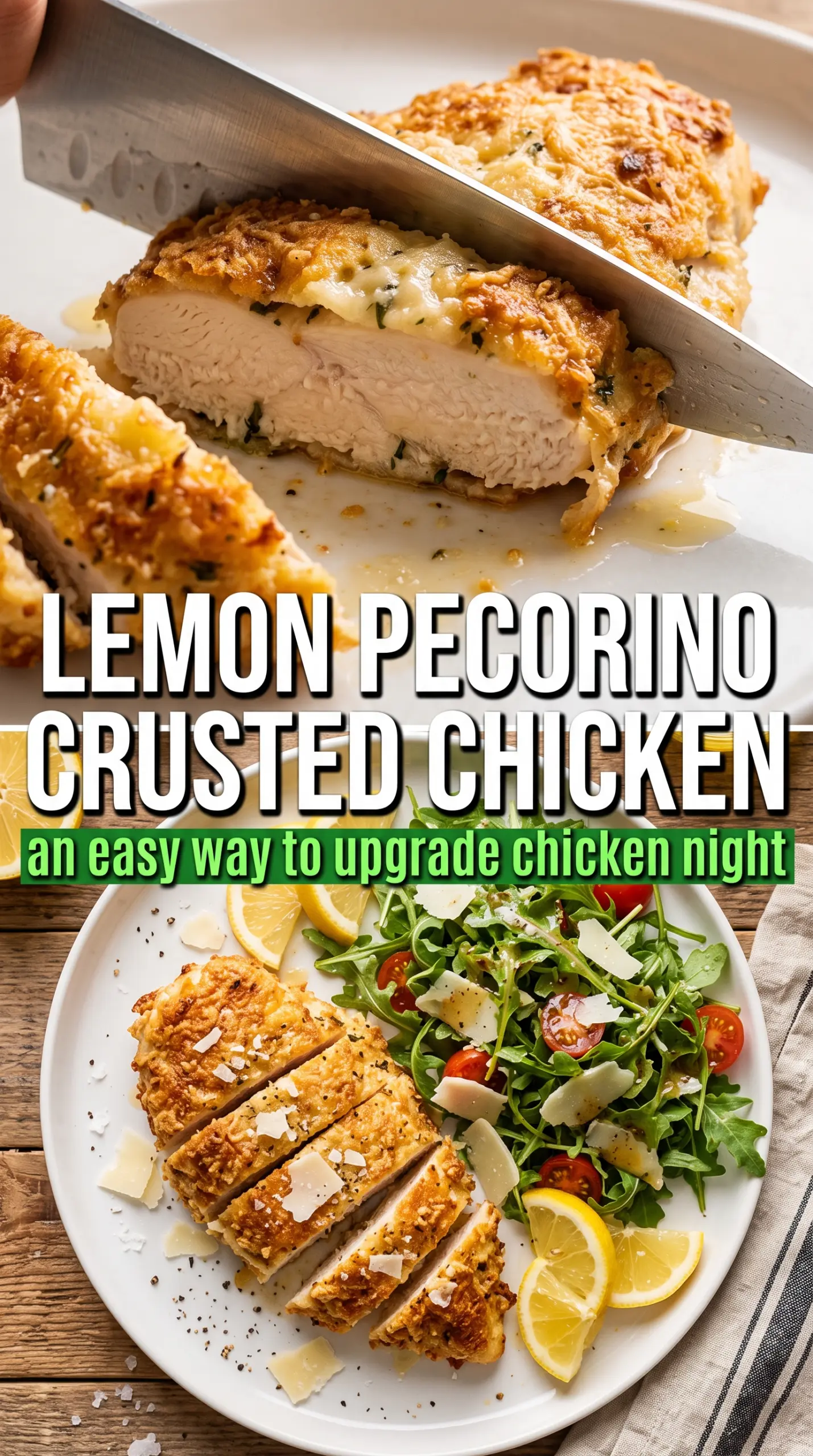
- Pecorino Romano — This is the backbone of the crust. It’s saltier and sharper than Parmesan, which is why the topping tastes bold without needing much else. Finely grate it so it melts into the panko and browns evenly; coarse shreds tend to fall off before they crisp.
- Panko breadcrumbs — Panko keeps the crust light and crackly. Regular breadcrumbs make a denser coating and can turn pasty once the cheese melts. If you need gluten-free, use a gluten-free panko and press it on the same way.
- Lemon zest — Fresh zest is what keeps this from tasting like just salty cheese on chicken. Use a microplane and stop before you hit the bitter white pith. Bottled lemon juice won’t give the same fragrant finish, so skip it here.
- Dijon mustard — Dijon is the glue and the flavor bridge. It helps the crust stick and gives the cheese a little tang underneath all that salt. Yellow mustard tastes flatter and can read sharp in the wrong way, so Dijon is the better swap only if you’re out of it.
- Chicken breasts pounded even — Even thickness is what keeps the chicken juicy and the crust from overbrowning before the center is done. If one end is much thicker, pound it down between sheets of plastic or parchment so the whole breast finishes at the same time.
Pressing the Coating So It Stays Put in the Oven
Season the chicken first
Season both sides of the chicken with salt, pepper, and garlic powder before anything else touches it. That builds flavor under the crust instead of leaving the meat bland beneath a strong topping. If you skip this step, the coating tastes good but the chicken underneath can still come off flat.
Brush on a thin, even layer
Mix the Dijon with the olive oil and brush it over the chicken in a thin layer. You want enough for the coating to cling, not so much that it turns slippery and slides around. If the chicken looks wet, the crust won’t grip; if it looks dry in spots, those areas will bake up bare.
Press, don’t sprinkle
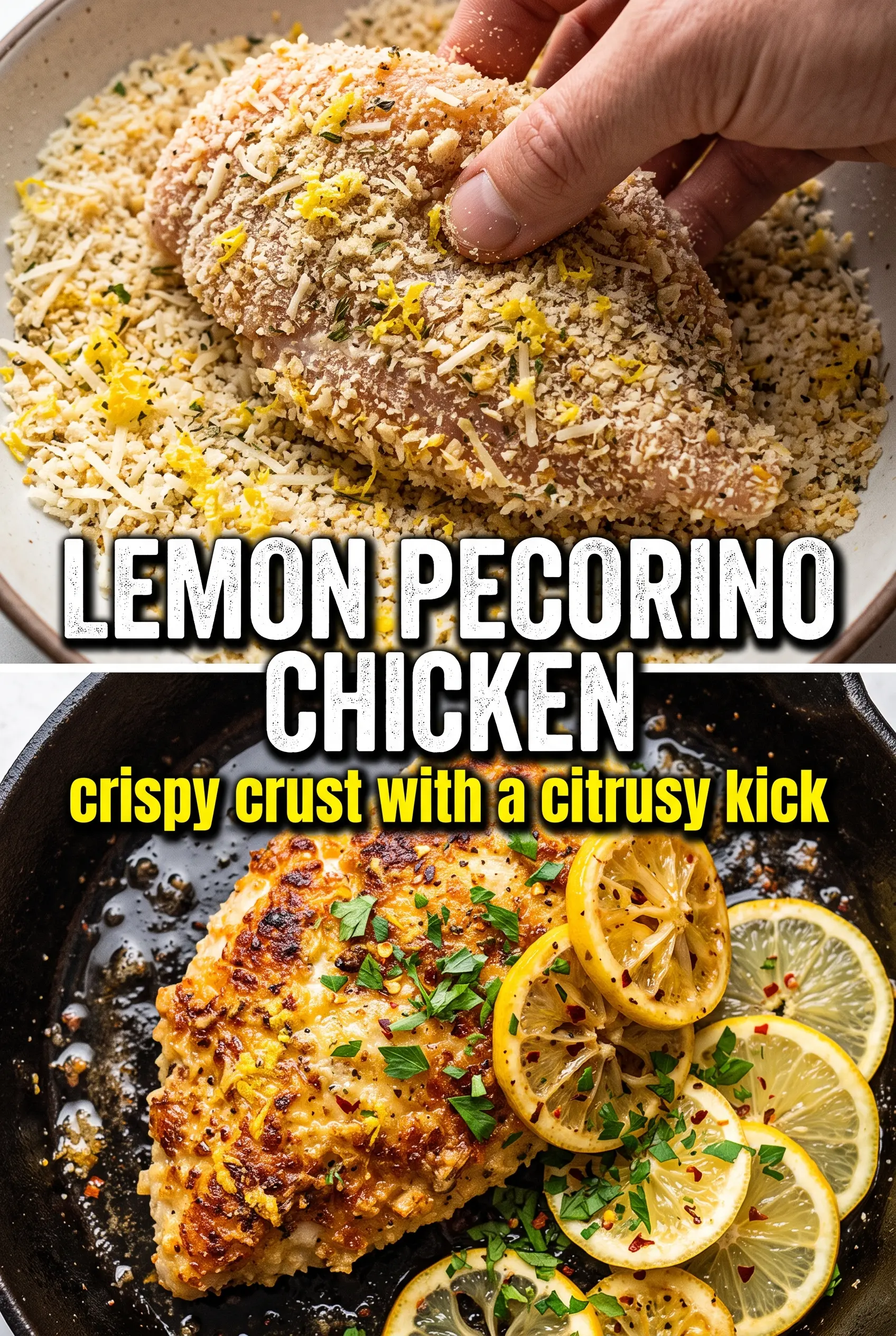
Combine the Pecorino, panko, lemon zest, parsley, garlic powder, and pepper, then press the mixture firmly onto the chicken with your hands. Pressing matters more than piling the topping on. The goal is a packed crust that looks almost thick before baking, because it will settle slightly in the oven while the cheese melts and bonds everything together.
Bake until the crust is deeply golden
Place the chicken on the rack and bake at 425°F until the crust is golden and the thickest part reaches 165°F. The topping should look bronzed and smell nutty and lemony before you pull it out. If it starts browning too fast, the oven is running hot or the rack is too close to the top element, so move it one level lower next time.
Make It Gluten-Free Without Losing the Crunch
Use a gluten-free panko-style breadcrumb and keep everything else the same. The crust still bakes up light and crisp, though it may brown a little faster, so watch the last few minutes closely.
Swap in Parmesan if That’s What You Have
Parmesan will work, but the flavor will be milder and less salty than Pecorino Romano. If you use Parmesan, season the chicken a little more carefully so the finished dish still tastes balanced.
Turn It Into a Dairy-Free Crusted Chicken
For a dairy-free version, replace the Pecorino with a dairy-free Parmesan-style alternative and add an extra pinch of salt plus a little nutritional yeast for depth. You won’t get the same sharp bite, but the crust will still be savory and crisp.
Storage and Reheating
- Refrigerator: Store leftovers in an airtight container for up to 3 days. The crust softens a bit, but the flavor stays good.
- Freezer: Freeze after baking if needed, tightly wrapped, for up to 2 months. The coating won’t stay as crisp after thawing, but it still reheats well enough for a second meal.
- Reheating: Warm in a 375°F oven or air fryer until hot through. Skip the microwave if you want any crunch left, because it turns the crust soggy fast.
Questions I Get Asked About This Recipe
Lemon Pecorino Crusted Chicken
Ingredients
Equipment
Method
- Preheat the oven to 425°F and line a baking sheet with a wire rack.
- Pound the boneless skinless chicken breasts to an even thickness so they cook uniformly.
- Season the chicken with salt, pepper, and garlic powder to taste.
- Mix Dijon mustard with olive oil, then brush over both sides of each chicken breast.
- Combine Pecorino Romano cheese, panko breadcrumbs, lemon zest, fresh parsley, garlic powder, and black pepper.
- Press the crust mixture firmly onto the mustard-coated chicken so it adheres in an even layer.
- Place the chicken on the prepared rack and bake for 20-22 minutes, until the crust is golden and the internal temperature reaches 165°F.
- Rest the chicken for 3 minutes to set the cheese crust before serving.
- Garnish with fresh basil and serve with lemon wedges.