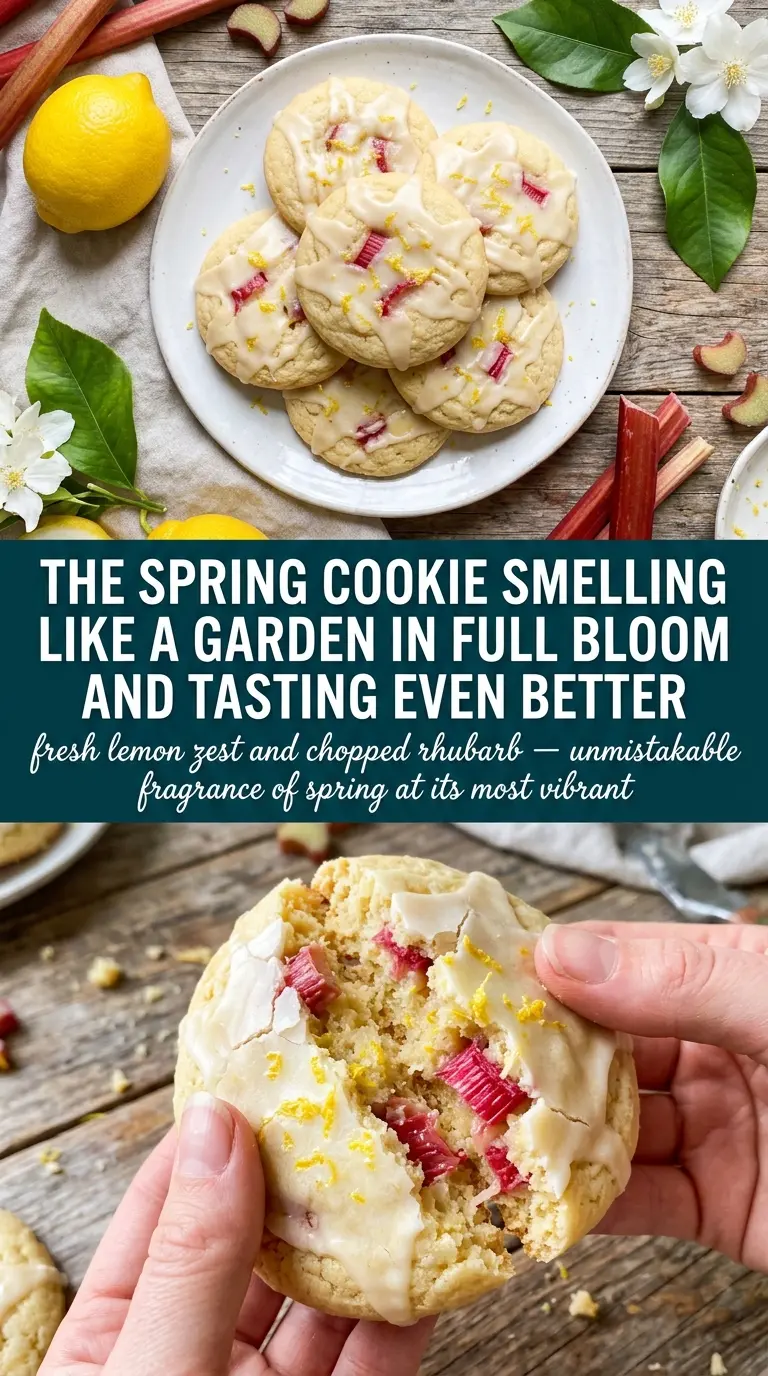
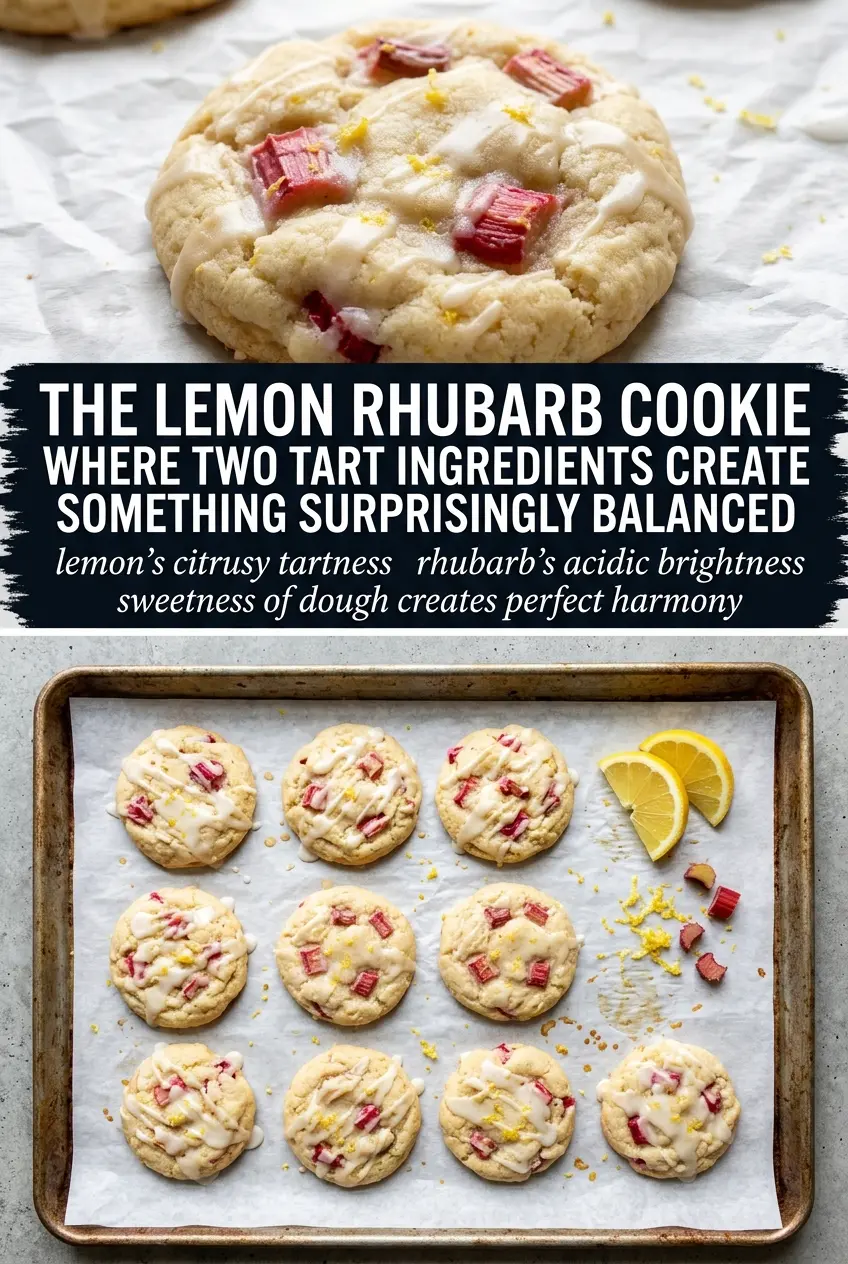
Lemon and rhubarb cookies bake up soft, tender, and bright, with little pockets of tart fruit that keep each bite from feeling plain. The glaze gives them that glossy finish and a clean lemon pop, but the real charm is in the texture: cakey enough to stay plush, yet sturdy enough to hold the fruit without turning wet or heavy.
What makes this version work is the balance between sour cream, lemon zest, and finely diced rhubarb. Sour cream keeps the cookie soft, lemon zest carries the citrus flavor through the dough instead of letting it disappear in the glaze, and the rhubarb is cut small so it melts into the crumb instead of tearing through it. That matters here, because big chunks of rhubarb can leave little pockets of steam and make the cookies spread unevenly.
Below you’ll find the small details that make these cookies behave: how to keep the dough from getting overmixed, why the rhubarb goes in at the very end, and how to get a glaze that drips instead of disappearing into the tops.
The cookies stayed soft for days, and the diced rhubarb baked down just enough to leave little tart bursts without making the centers soggy. The lemon glaze set beautifully after about 20 minutes.
Save these soft lemon and rhubarb cookies for the days when you want a tender cookie with bright citrus glaze and tart fruit in every bite.
The Trick to Keeping Rhubarb Soft Instead of Sharp and Watery
The biggest mistake with rhubarb cookies is treating the fruit like mix-in candy. Rhubarb needs to be finely diced so it softens during the short bake time and blends into the cookie instead of cutting through the dough in hard, juicy chunks. If the pieces are too large, they can leave pockets that bake unevenly and make the centers look underdone even when the edges are set.
The other thing that matters is the batter itself. This dough is soft, more like a thick drop cookie batter than a roll-out dough, which gives the rhubarb room to sit without being crushed. That softness comes from the sour cream and the butter-sugar base, and it’s what keeps the finished cookies tender instead of dry and cakey.
- Finely diced rhubarb — Small pieces cook through fast and distribute tart flavor evenly. Larger pieces can release too much juice in one spot.
- Sour cream — It adds moisture and a gentle tang while keeping the crumb soft. Plain yogurt can work in a pinch, but the cookies will taste a little sharper and may spread more.
- Lemon zest — The zest gives the dough its real lemon flavor. Lemon juice in the dough would add too much liquid and can throw off the texture.
- Butter and sugar creamed together — This step traps air, which helps the cookies rise a little and stay light. If you skip it, they bake up denser.
What Each Ingredient Is Actually Doing in Lemon and Rhubarb Cookies
- Protein (quality, proper thickness) — Good quality protein tastes better. Even thickness ensures even cooking.
- Seasoning (bold, distributed throughout) — Don’t be shy with salt and pepper. Quality seasoning elevates everything.
- Oil or fat (protective and flavorful) — The fat helps develop crust and carries flavors. Use generously.
- Heat management (appropriate temperature for the protein) — Too high and the outside burns before the inside cooks. Too low and it steams.
- Technique (sear, then finish based on thickness) — Proper technique creates flavor. Sear for crust, then cook through gently.
- Aromatics and seasonings (garlic, herbs, spices) — These add complexity and depth. Distribute them throughout the cooking process.
- Resting time (let it rest before serving) — Resting allows juices to reabsorb. This keeps the protein moist and tender.
- Optional: finishing sauce or glaze — A light sauce adds richness without overwhelming. Apply at the very end.
Building the Dough So the Cookies Stay Soft
Mix the Dry Ingredients First
Whisk the flour, baking soda, and salt before anything else so the leavening is evenly distributed. If the baking soda stays in one patch, some cookies will brown too fast and taste flat while others stay pale. This also helps you add the dry ingredients later without overmixing the dough trying to chase pockets of flour.
Cream Until the Mixture Looks Pale and Fluffy
Beat the butter and sugar until the mixture lightens in color and looks a little airy. That texture tells you enough air has been worked in to give the cookies a softer crumb. Stop once it looks fluffy; if you keep going forever, the butter can get too warm and the dough will spread more in the oven.
Fold in the Rhubarb at the Very End
Once the dry ingredients are just combined, add the diced rhubarb and mix only until it disappears into the dough. Overmixing at this stage bruises the fruit and can streak the batter pink while also making the cookies tougher. The dough should be thick enough to scoop, with the rhubarb evenly dotted throughout.
Bake Just Until the Edges Set
Drop rounded tablespoons onto parchment-lined sheets and bake until the edges are barely golden and the centers still look soft. These cookies finish setting as they cool, so pulling them when the middle looks a little underbaked keeps them tender. If you wait for a deep golden color, they’ll end up dry once cooled.
Glaze Only After They’re Cool
Whisk the powdered sugar, lemon juice, and zest until the glaze falls in a slow ribbon from the spoon. If the cookies are warm, the glaze will soak in and disappear instead of sitting on top. A fully cooled cookie gives you that shiny finish and a clean lemon hit on the first bite.
Three Ways to Adjust These Cookies Without Losing the Texture
Make Them Dairy-Free
Use a plant-based butter stick and plain unsweetened dairy-free yogurt in place of the sour cream. The cookies will still be soft, but the flavor will be a little less rich and the edges may spread a touch more, so chill the dough for 15 minutes if it seems loose.
Swap in Frozen Rhubarb
Frozen rhubarb works if fresh isn’t available, but don’t thaw it first. Add it straight from the freezer so it doesn’t dump extra liquid into the dough. The texture will be a little softer and the pink color may bleed more, which is fine in a cookie like this.
Skip the Glaze for a Less Sweet Cookie
The cookies are still good without the glaze, especially if you want the rhubarb to stand out more. You’ll lose the glossy finish and extra lemon punch, but the cookie itself stays soft and bright from the zest in the dough.
Storage and Reheating
- Refrigerator: Store in an airtight container for 4 days. They stay soft, though the glaze may absorb a little into the tops by day two.
- Freezer: Freeze the unglazed cookies for up to 2 months. Thaw at room temperature, then glaze after they’re fully defrosted so the icing doesn’t turn runny.
- Reheating: These are best at room temperature, not warmed. If you want to refresh a day-old cookie, let it sit out for 10 to 15 minutes rather than microwaving it, which can make the rhubarb turn mushy.
Answers to the Questions Worth Asking
Lemon and Rhubarb Cookies
Ingredients
Equipment
Method
- Preheat the oven to 350°F and line baking sheets with parchment paper.
- Whisk together all-purpose flour, baking soda, and salt until evenly combined.
- Cream butter and sugar until fluffy, then beat in the egg, sour cream, and lemon zest.
- Mix in the dry ingredients until just combined, then fold in the finely diced rhubarb.
- Drop rounded tablespoons of dough onto the prepared sheets, spacing them 2 inches apart.
- Bake for 10-12 minutes at 350°F until the edges are lightly golden.
- Cool completely before glazing.
- Whisk powdered sugar, lemon juice, and lemon zest until smooth.
- Drizzle the glossy lemon glaze over the cooled cookies.