Zucchini lasagna earns its place when it comes out with clean layers, a rich meat sauce, and a top that browns instead of turning soggy. The trick isn’t hiding the zucchini; it’s managing its water so the whole dish eats like lasagna, not a pan of vegetables in sauce. When the slices hold their shape and the ricotta stays creamy, you get all the comfort of the classic version without the heavy carb load.
The biggest difference in a good keto zucchini lasagna is what happens before assembly. Salting the zucchini first pulls out a surprising amount of moisture, and a short trip in the oven dries the planks just enough to help them stand up in the bake. The meat sauce also needs to be simmered until it thickens; if it stays loose, it seeps into every layer and the casserole never sets properly.
Below, I’ll walk through the step that prevents watery layers, the ingredient choices that matter most, and a few smart swaps if you want to adjust the dish for your table. The resting time at the end matters just as much as the baking, so don’t skip it if you want neat slices.
The zucchini held up beautifully after roasting, and the lasagna sliced cleanly after resting. The meat sauce was thick enough that the layers stayed put instead of sliding apart.
Save this keto zucchini lasagna for the nights when you want rich layers, bubbling mozzarella, and a firm slice without the pasta.
The Step That Keeps Zucchini Lasagna from Turning Watery
Zucchini carries a lot of moisture, and that’s the main reason low carb lasagna can go sideways. If you layer raw slices straight into the dish, they steam in the oven and leak into the ricotta, leaving you with a loose middle and a pool at the bottom of the pan. Salting the planks first draws out that water before the bake ever starts.
Roasting after salting finishes the job. The zucchini doesn’t need color; it needs to lose enough moisture that it bends without collapsing. If the planks still feel wet or slippery when you assemble, they’ll keep releasing liquid while the lasagna cooks, and the sauce won’t have a chance to set up around them.
- Salted zucchini planks — This is the difference between a sturdy slice and a soupy casserole. Pat them dry well after sweating, then roast until they look a little shrunken and matte.
- Thick meat sauce — A loose sauce runs into the layers. Simmer until it mounds on a spoon and the tomato liquid has cooked off.
- Resting time — The bake finishes the cooking, but the rest time finishes the structure. Cut too early and the layers slide apart.
What Each Ingredient Is Doing in This Keto Lasagna
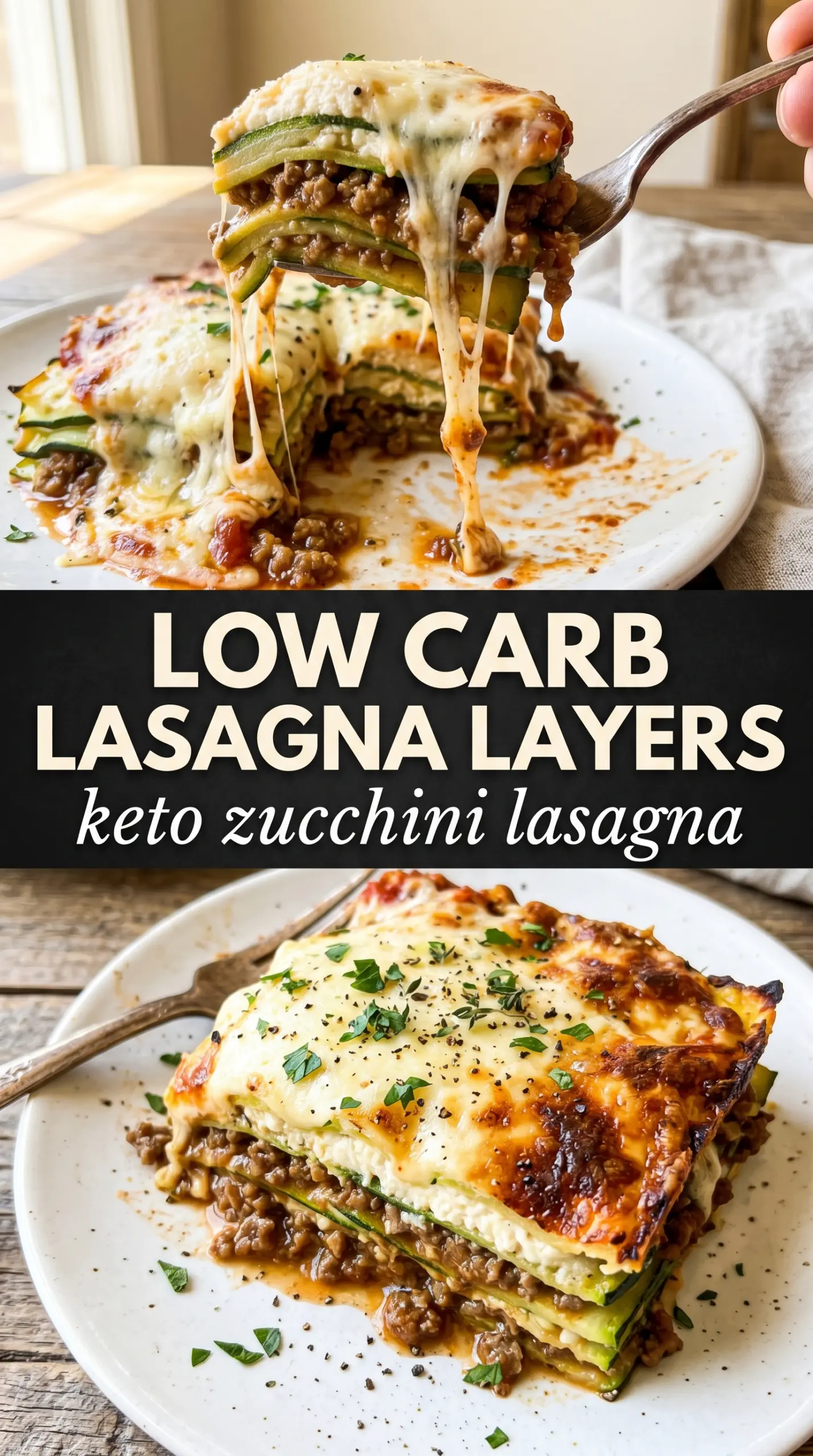
- Zucchini — These are the noodle stand-ins, but they need prep. Thin planks work best because they soften without becoming mushy. Thicker slices stay too firm and make the casserole awkward to cut.
- Ground beef — An 80/20 blend gives you enough fat for flavor without making the sauce greasy. If you go leaner, the sauce can taste flat unless you add a little extra olive oil.
- Crushed tomatoes and tomato paste — The crushed tomatoes bring body, while the paste deepens the sauce and helps it thicken. Tomato paste matters here; it’s what turns the sauce from thin and sharp into something rich enough to hold a layer.
- Ricotta, eggs, and parmesan — Ricotta gives the creamy middle, eggs help it set, and parmesan adds salt and a little backbone. If you skip the eggs, the filling stays softer and can ooze when sliced.
- Mozzarella — Use it in the filling and on top. In the layers, it adds stretch and helps bind the ricotta. On top, it gives that browned, bubbling finish people expect from lasagna.
Building the Layers So They Slice Cleanly
Drying the Zucchini First
Lay the zucchini planks on a tray, salt them, and let them sit until you can see moisture bead on the surface. Pat them dry with paper towels, then roast just until they lose their raw sheen and start to look a little flexible. If they come out soggy, they’re not ready to go into the dish.
Cooking Down the Meat Sauce
Brown the beef with the onion until the onion softens and the meat loses its raw pink color, then add the garlic for the last minute so it doesn’t scorch. Stir in the tomatoes, paste, and seasonings, then simmer until the sauce is thick and glossy. If it still looks thin enough to pour like soup, keep cooking; that extra moisture ends up in the lasagna.
Assembling Without Slippage
Spread the sauce in a thin base layer, then build with zucchini, ricotta mixture, more sauce, and repeat. Keep the layers even and don’t pile the ricotta too thick in one spot, or the center will wobble when you cut it. Finish with sauce and the remaining mozzarella so the top browns evenly instead of drying out.
Baking Until Set and Golden
Cover the dish tightly for the first part of baking so the center heats through without burning the cheese. Remove the foil for the last stretch and watch for deep golden spots around the edges and bubbling sauce at the sides. If there’s liquid on top near the end, leave it uncovered a few extra minutes so it can cook off instead of settling into the pan.
Make it with ground turkey
Ground turkey works if you want a lighter version, but it needs a little help because it doesn’t bring the same richness as beef. Add a tablespoon of olive oil while browning and season boldly, or the sauce can taste lean. The texture stays just as sliceable if you still reduce the sauce properly.
Make it dairy-free
Use a dairy-free ricotta style filling and a melty plant-based mozzarella, but expect a softer set and less of that classic stretchy top. Choose a filling that’s thick, not watery, or it will leak into the zucchini layers. This version still bakes into a solid casserole if the sauce is reduced well.
Make it extra low carb and gluten-free friendly
This recipe is already gluten-free and keto as written, so the main adjustment is keeping the tomato sauce free of hidden starches or sugar. Check the crushed tomatoes and tomato paste labels if that matters to you. The texture depends more on moisture control than on any flour substitute, so the method stays the same.
Storage and Reheating
- Refrigerator: Store covered for up to 4 days. The layers tighten as it chills, which makes the slices even cleaner the next day.
- Freezer: It freezes well in portions. Cool completely, wrap tightly, and freeze for up to 2 months; thaw overnight in the fridge before reheating.
- Reheating: Reheat covered in a 325°F oven until hot in the center. Microwaving works for single slices, but use medium power so the cheese doesn’t turn rubbery before the middle warms through.
Answers to the Questions Worth Asking
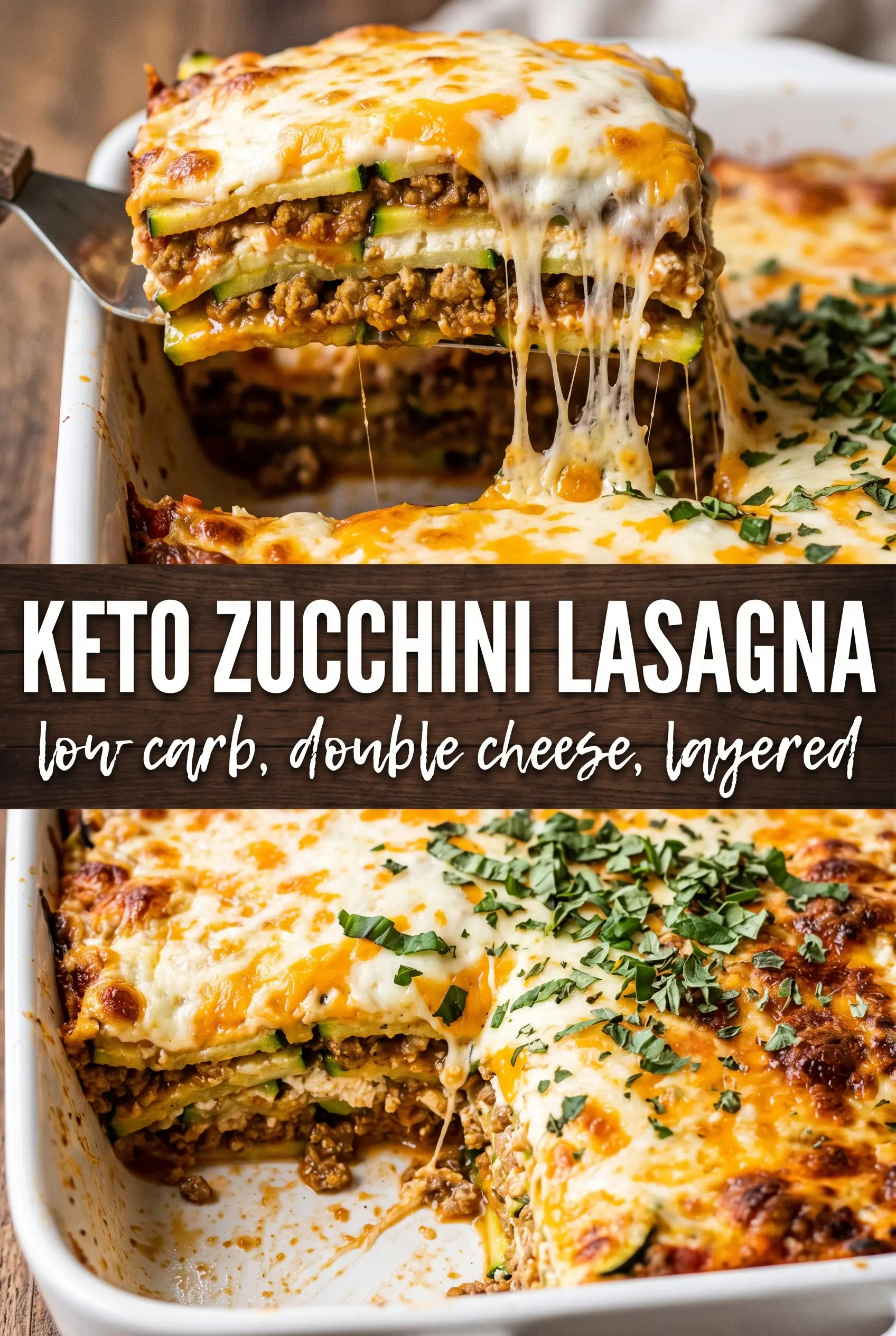
Keto Zucchini Lasagna
Ingredients
Equipment
Method
- Salt the zucchini planks and let sit for 20 minutes, then pat very dry until no moisture beads remain.
- Roast the salted, dried zucchini on a sheet pan at 425°F for 10–12 minutes until slightly dried out, which prevents a watery keto lasagna.
- Brown the ground beef with the diced onion in a Dutch oven, then drain excess fat.
- Add the minced garlic and cook briefly until fragrant.
- Stir in crushed tomatoes, tomato paste, Italian seasoning, red pepper flakes, salt, and pepper.
- Simmer the sauce for 15 minutes until thick.
- In a mixing bowl, combine ricotta, eggs, parmesan, parsley, 1 cup mozzarella, salt, and pepper until smooth and evenly combined.
- Preheat the oven to 375°F and grease a 9x13 baking dish.
- Assemble the lasagna by spreading meat sauce, layering zucchini planks, adding the ricotta layer, then repeating meat sauce and zucchini and ricotta, ending with meat sauce and the remaining mozzarella on top.
- Cover tightly with foil and bake at 375°F for 40 minutes.
- Uncover and bake at 375°F for 15 minutes, until deeply golden and bubbling.
- Rest the keto zucchini lasagna for 15 minutes before cutting for cleaner slices.
- If any liquid pooled, blot it with paper towels before slicing.