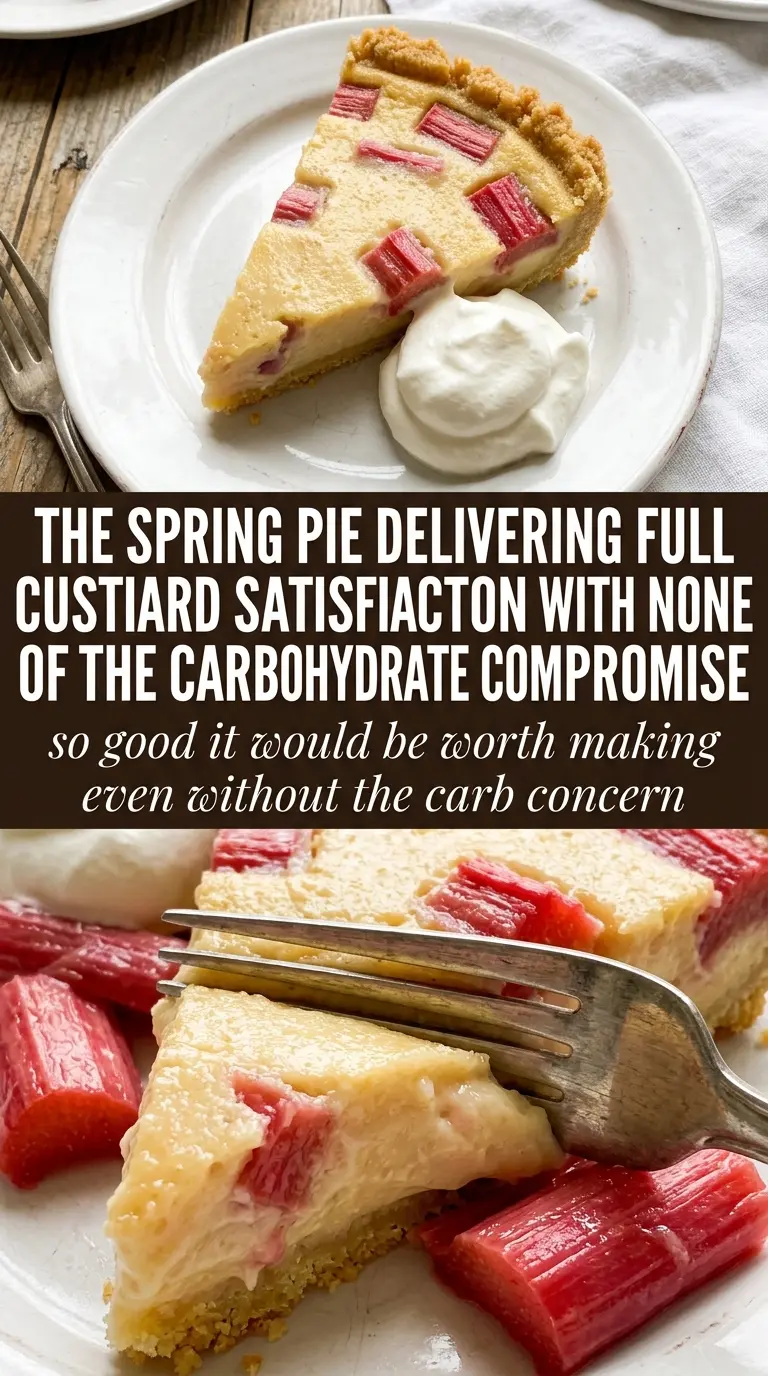
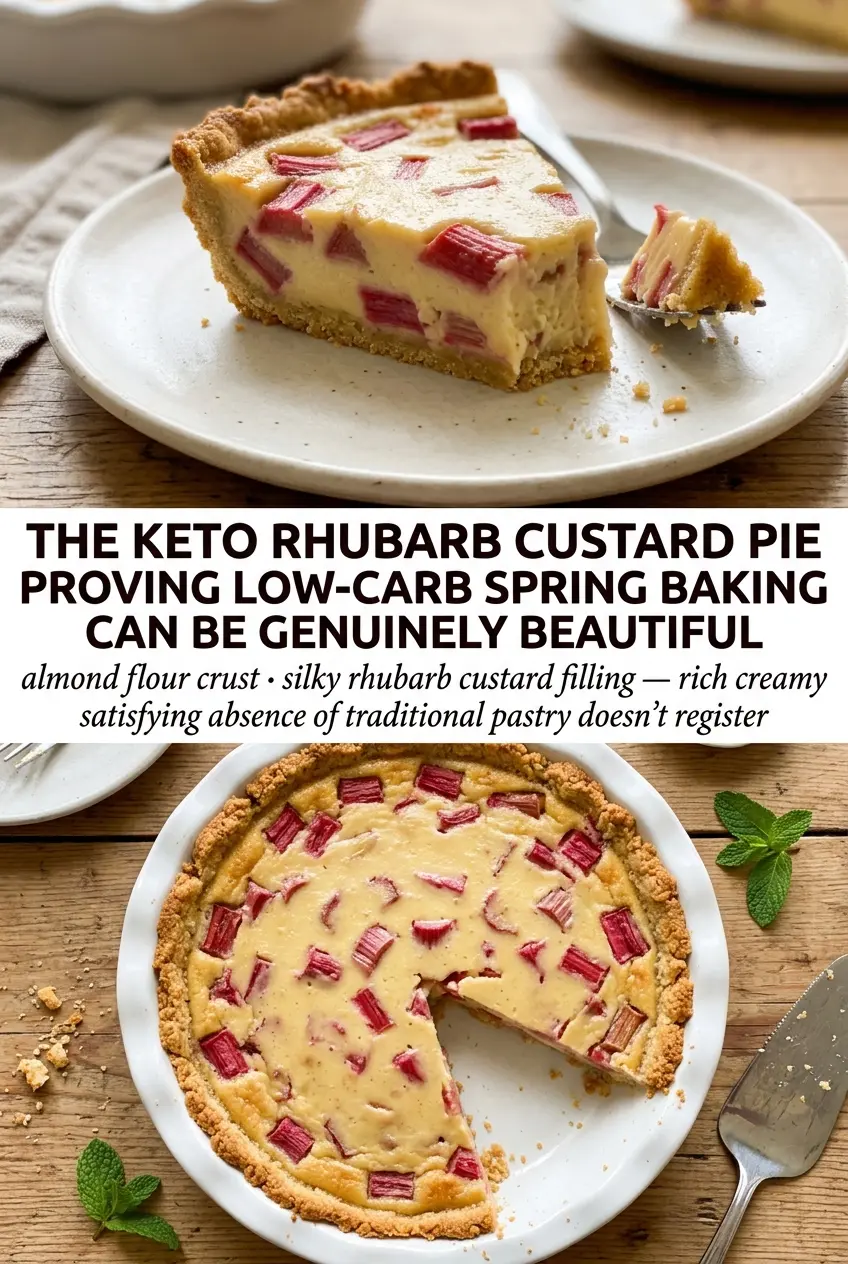
Creamy custard, tart rhubarb, and a tender almond flour crust make this pie feel special without leaning on sugar. The filling sets into soft slices that hold together on the plate, while the rhubarb keeps each bite bright enough to keep you coming back for another forkful. It’s the kind of dessert that tastes clean and balanced instead of heavy, which matters when you’re working with keto ingredients.
The trick here is keeping the custard smooth and the crust sturdy. Almond flour browns faster than wheat flour, so the shell gets a quick pre-bake before the filling goes in. That short head start keeps the bottom from turning soggy once the rhubarb starts releasing juice. The custard itself uses just enough almond flour to help it set without becoming dense or eggy.
Below, I’ll walk through the small details that keep the pie neat when you slice it, plus a few swaps that actually work if you need to adjust the sweetener or make it dairy-free.
The custard set up beautifully and the rhubarb stayed tart instead of turning mushy. I chilled it overnight and the slices came out clean the next day.
Save this keto rhubarb custard pie for the days when you want a sugar-free dessert with a creamy center and a crisp almond flour crust.
The Reason Custard Stays Smooth While the Rhubarb Bakes
Rhubarb can be tricky in a pie because it gives off a lot of juice as it cooks. If you pile it into a crust without a custard that can handle that moisture, the filling turns loose and the bottom gets soft before the center has a chance to set. This version gets around that by using almond flour in the filling, which helps the custard thicken without making it heavy.
The other thing that matters is the initial bake on the crust. Ten minutes is enough to set the almond flour shell and give it structure, but not long enough to dry it out. That step is what keeps the pie from collapsing once the custard goes in. If your crust seems a little fragile when you press it in, that’s normal; it firms up in the oven.
- Almond flour — This does two jobs here: it gives the crust structure and helps the filling set. Fine almond flour works best; coarse meal makes the crust more crumbly and the custard a little gritty.
- Erythritol — It sweetens without adding carbs, but it can leave a slight cooling effect. If you prefer a smoother sweetness, use a monk fruit erythritol blend in the same amount.
- Rhubarb — Fresh rhubarb holds its shape better than frozen. If you use frozen, thaw it first and drain it well, or the pie can turn watery.
- Heavy cream — This gives the custard its rich, silky texture. Half-and-half will work in a pinch, but the filling won’t slice as cleanly.
What Each Ingredient Is Actually Doing in Keto Rhubarb Custard Pie
- Protein (quality, proper thickness) — Good quality protein tastes better. Even thickness ensures even cooking.
- Seasoning (bold, distributed throughout) — Don’t be shy with salt and pepper. Quality seasoning elevates everything.
- Oil or fat (protective and flavorful) — The fat helps develop crust and carries flavors. Use generously.
- Heat management (appropriate temperature for the protein) — Too high and the outside burns before the inside cooks. Too low and it steams.
- Technique (sear, then finish based on thickness) — Proper technique creates flavor. Sear for crust, then cook through gently.
- Aromatics and seasonings (garlic, herbs, spices) — These add complexity and depth. Distribute them throughout the cooking process.
- Resting time (let it rest before serving) — Resting allows juices to reabsorb. This keeps the protein moist and tender.
- Optional: finishing sauce or glaze — A light sauce adds richness without overwhelming. Apply at the very end.
Building the Custard So It Sets Cleanly
Forming and Pre-Baking the Crust
Mix the almond flour, melted butter, erythritol, and egg until the dough looks evenly moistened, then press it firmly into the pie plate. Don’t leave the bottom too thin in the center; that’s where the custard weight will land. Bake until the surface looks dry and lightly set, not deeply browned. If the crust puffs, just press it back down gently with a spoon while it’s still warm.
Whisking the Filling Until It’s Truly Smooth
Whisk the eggs, cream, sweetener, almond flour, vanilla, and salt until the mixture looks fully combined and there are no streaks of egg white. The almond flour needs to disappear into the liquid, not sit in a clump at the bottom of the bowl. If you rush this and pour in a grainy mixture, the custard bakes unevenly and can feel sandy. Give it an extra 20 seconds of whisking if needed.
Baking to the Right Center Set
Pour the custard over the rhubarb and bake until the edges are firm and the center has only a slight wobble. The pie should not slosh in the middle when you tap the pan. If the top browns before the center sets, lay a loose piece of foil over it for the last part of baking. Pull it out before it looks completely solid, because carryover heat finishes the job as it cools.
Cooling Before Slicing
This pie needs the full cooling time. The filling firms up as it rests, and cutting too early will make the slices spread out on the plate. Let it cool completely at room temperature, then chill it for a clean, chilled texture. The first slice is always the messiest, so use a sharp knife and wipe the blade between cuts.
Three Ways to Adjust This Pie Without Ruining the Texture
Use monk fruit instead of erythritol
A monk fruit blend gives a rounder sweetness and avoids the cooling finish some people notice with straight erythritol. Use a 1:1 replacement if your blend is designed that way, but check the package because some are much sweeter than sugar.
Make it dairy-free
Swap the butter for a solid plant-based butter and use canned coconut cream in place of heavy cream. The texture stays rich, but the flavor picks up a light coconut note, which works well with the tart rhubarb.
Bake it as mini tartlets
Press the crust into muffin cups and shorten the bake time. The smaller size gives you more edge and a little more crust in each bite, but the custard will set faster, so start checking early.
Swap in strawberries for half the rhubarb
If you want a softer, sweeter pie, replace up to half the rhubarb with chopped strawberries. The filling will be less tart and slightly looser, so keep the full bake time and chill it well before slicing.
Storage and Reheating
- Refrigerator: Store covered for up to 4 days. The crust softens a little, but the filling keeps its clean slices.
- Freezer: This pie freezes better than you might expect. Wrap individual slices tightly and freeze for up to 2 months; thaw in the fridge overnight.
- Reheating: Serve it chilled or let a slice sit at room temperature for 15 to 20 minutes. Microwaving can loosen the custard and make the crust soggy, so skip that unless you don’t mind losing the texture.
Answers to the Questions Worth Asking
Keto Rhubarb Custard Pie
Ingredients
Equipment
Method
- Preheat the oven to 350°F and grease a 9-inch pie plate. Place the pie plate on a sheet pan for easier transfer (visual cue: stable, centered in the oven).
- Mix almond flour, melted butter, erythritol, and egg, then press the mixture into the pie plate. Visual cue: compact, even crust layer with no loose gaps.
- Bake the crust for 10 minutes at 350°F. Visual cue: edges look set and the surface lightly dries.
- Arrange the diced rhubarb in the baked crust. Visual cue: rhubarb is spread evenly across the bottom.
- Whisk together erythritol, eggs, heavy cream, almond flour, vanilla extract, and salt until smooth. Visual cue: glossy custard mixture with no visible almond flour lumps.
- Pour the custard mixture over the rhubarb. Visual cue: custard rises and level-pours, covering the rhubarb.
- Bake for 40-45 minutes at 350°F until the custard is set and lightly golden. Visual cue: the center jiggles slightly but does not look wet.
- Cool the pie completely for at least 3 hours before slicing. Visual cue: custard firms up fully and the top no longer looks loose.
- Refrigerate and serve chilled. Visual cue: slice holds its shape with creamy custard texture.