Juicy Greek chicken earns its place on the table because the marinade does more than season the surface — it keeps the meat tender, bright, and full of garlicky lemon flavor all the way through. When it hits the grill, the edges pick up a little char while the inside stays succulent, and that balance is what makes this version worth keeping in rotation.
The trick is in the marinade ratio and the timing. Olive oil carries the herbs and protects the chicken from drying out, while lemon juice and zest give you that classic Greek lift without making the meat chalky, as long as you don’t leave it in the acid too long. Fresh oregano brings the clean, aromatic note that defines the dish, and a short rest after grilling keeps the juices where they belong.
Below you’ll find the exact marinating window I rely on, the best way to grill this so it stays juicy, and a few smart swaps for when you want to change the cut or cook it indoors.
The lemon and oregano came through beautifully, and the chicken stayed juicy even on the grill. I marinated it overnight and the flavor went all the way through, not just on the outside.
Save this juicy Greek chicken for the nights when you want lemon, oregano, and a grill-char finish without dry meat.
The Marinade Timing That Keeps Greek Chicken Juicy Instead of Tough
With chicken, the biggest mistake is treating acid like a shortcut to flavor. Lemon juice helps the marinade penetrate and brightens the meat, but if the chicken sits in it too long, the texture can turn a little spongy on the outside before the grill even starts. Four to 24 hours is the sweet spot here, with overnight landing in the best range for both flavor and texture.
Using both juice and zest gives you a fuller lemon taste without needing more acid. The zest carries the oils that smell fresh and herbal, while the juice does the heavy lifting on the meat itself. This is also why olive oil matters; it softens the sharp edges and helps the garlic and oregano cling to the chicken instead of sliding off into the bowl.
What Each Ingredient Is Actually Doing in This Greek Chicken
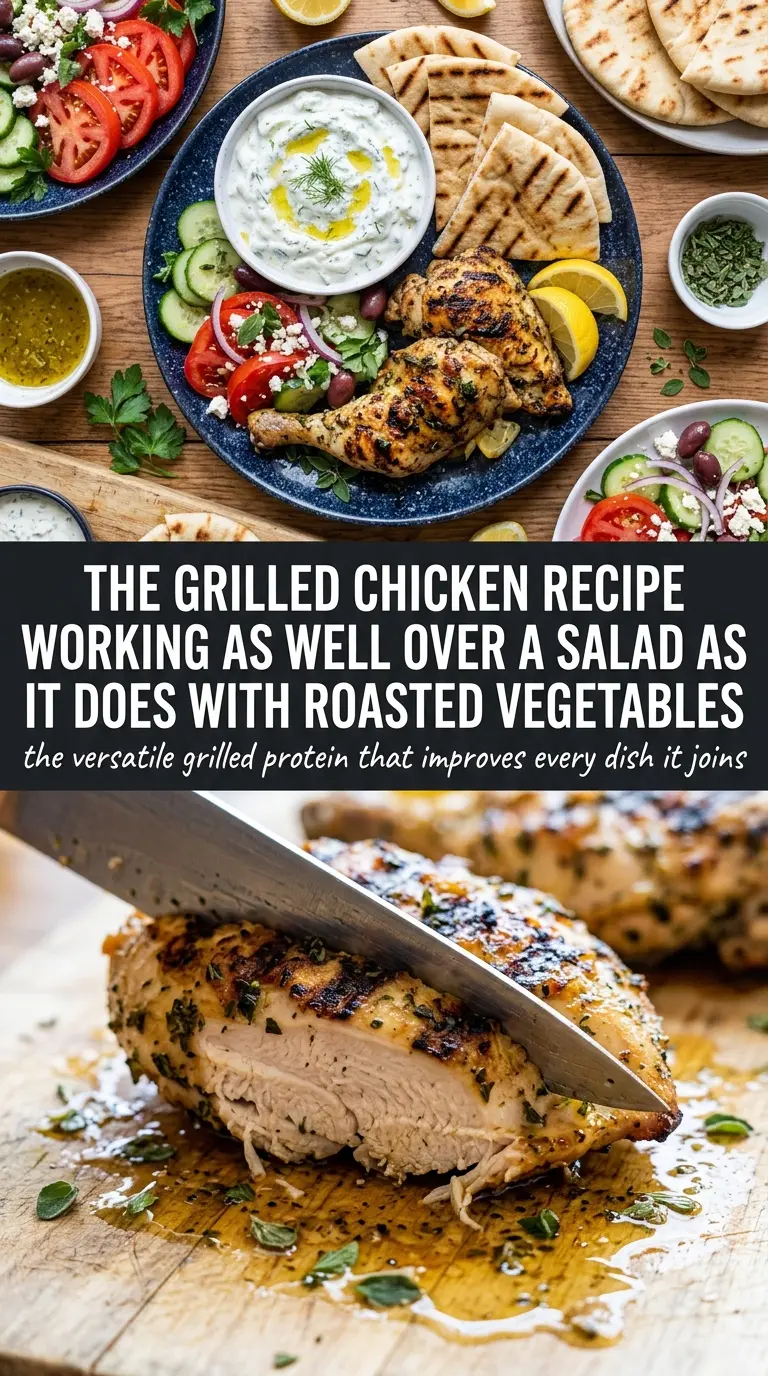
- Chicken pieces — Bone-in, skin-on pieces stay the juiciest on the grill, but boneless thighs work well if you want faster cooking and easier serving. If you use breasts, pull them as soon as they hit 165°F and give them the full rest so they don’t dry out.
- Olive oil — This rounds out the marinade and helps prevent the surface from scorching before the inside is done. Use a good-tasting olive oil if you can, because its flavor comes through here.
- Lemon juice and zest — The juice seasons the meat, but the zest is what makes the chicken taste distinctly Greek instead of just sour. Don’t skip the zest unless you absolutely have to; that’s where the brightest citrus flavor lives.
- Garlic, oregano, and thyme — Garlic gives the marinade backbone, oregano brings the classic Greek profile, and thyme adds a dry herbal note that keeps the flavor from tasting one-dimensional. Fresh oregano is worth using when you have it, but dried oregano is a solid substitute if you reduce the amount.
- Salt and pepper — Salt is what makes the marinade taste like it reaches inside the chicken instead of sitting on the outside. Season confidently; under-salting is the fastest way to end up with chicken that tastes flat after grilling.
Grilling the Chicken So the Outside Charms Before the Inside Dries Out
Building the Marinade
Whisk the olive oil, lemon juice, zest, garlic, oregano, thyme, salt, and pepper until the mixture looks loose and fragrant. You’re not trying to emulsify it completely, just blend it well enough that the herbs and garlic are distributed evenly. If the garlic clumps, it tends to stick in one spot and scorch on the grill instead of flavoring the whole piece.
Letting the Chicken Rest in the Marinade
Cover the chicken and refrigerate it for at least 4 hours, or overnight if you want deeper flavor. Turn the pieces once or twice if you think of it, but don’t obsess over it; the marinade will do the work. If you go much past 24 hours, the lemon can start to work against the texture instead of helping it.
Getting the Grill Hot Enough
Preheat the grill to medium-high and clean the grates well before the chicken goes on. A hot, clean grate gives you those dark grill marks and helps the chicken release on its own instead of tearing. If the fire is too low, the chicken steams and goes pale before it ever picks up color.
Cooking to Juicy, Not Guessy
Cook the chicken until it reaches 165°F in the thickest part, turning as needed for even browning. The outside should have charred edges and the juices should run mostly clear, but the thermometer is what removes the guesswork. If the chicken sticks, give it another minute; it usually releases once the crust sets.
The Final Rest
Move the chicken to a plate and let it rest for 5 minutes before serving. That short pause keeps the juices from flooding out the second you cut in. If you slice too early, the chicken will taste fine but look dry on the plate, which is a shame after all that marinating.
Three Smart Ways to Work This Recipe Into Your Week
Use boneless thighs for faster grilling
Boneless thighs cook more quickly and stay forgiving if your grill runs hot. They won’t give you quite the same dramatic presentation as bone-in pieces, but they deliver a rich, juicy bite and are easier to serve for weeknight dinners.
Make it dairy-free and gluten-free without changing the flavor
This recipe already fits both of those lanes as written, which is one reason it works so well for a crowd. Serve it with rice, potatoes, or salad and you’ve got a meal that stays clean and simple without losing the Greek character.
Cook it under the broiler if grilling isn’t an option
Set the chicken on a rack over a sheet pan and broil it close to the heat source, watching carefully so the garlic doesn’t burn. You’ll lose a little of the smoky grill flavor, but you’ll keep the lemony herb crust and the juicy center.
Storage and Reheating
- Refrigerator: Store leftovers in an airtight container for up to 4 days. The flavor stays strong, and the chicken is still good sliced over salads or grain bowls.
- Freezer: Freeze cooked chicken for up to 2 months, wrapped tightly to prevent freezer burn. Thaw it in the fridge overnight so the texture stays as close to fresh as possible.
- Reheating: Rewarm gently in a covered skillet over low heat with a splash of water or broth, or use a 300°F oven until just heated through. High heat is what dries grilled chicken out, so keep the reheating slow and gentle.
Questions I Get Asked About This Recipe
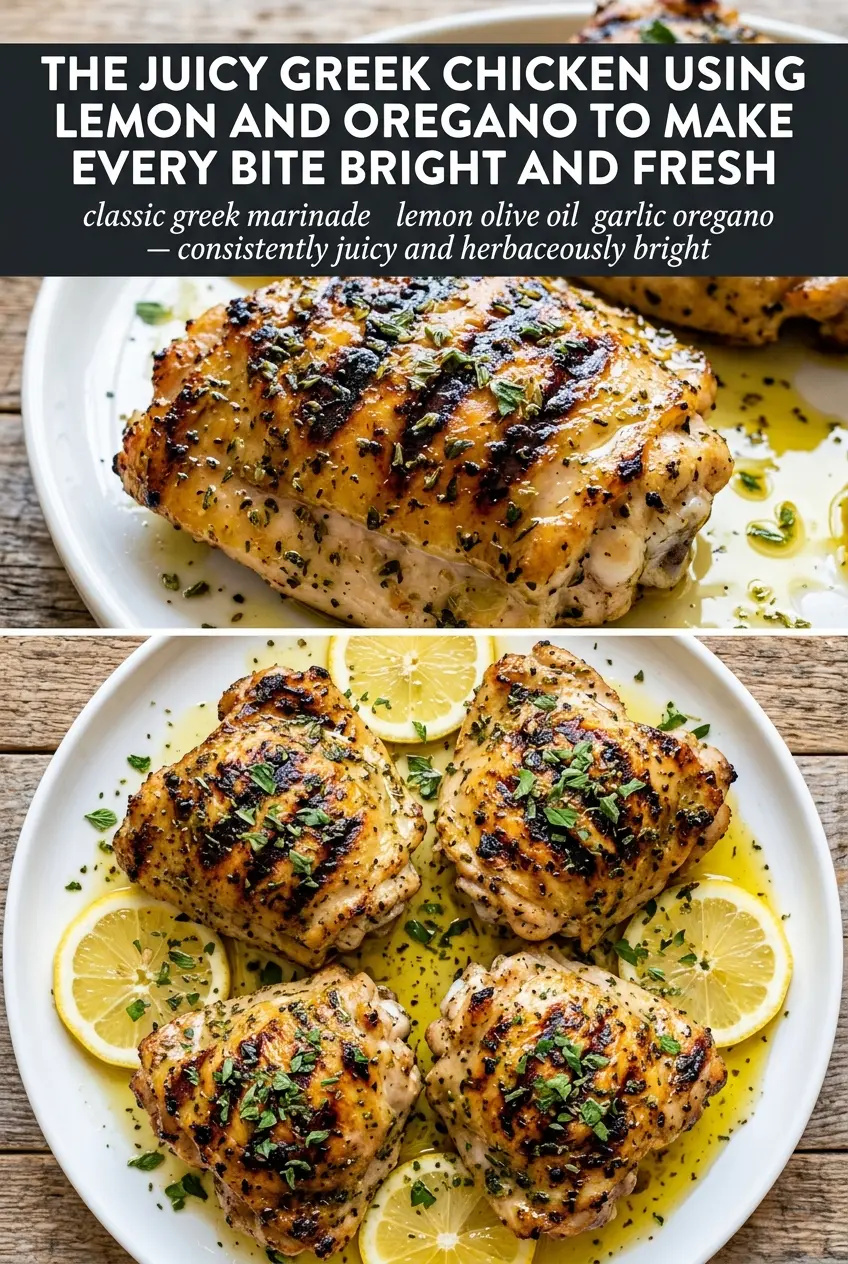
Juicy Greek Chicken
Ingredients
Equipment
Method
- Whisk olive oil, lemon juice, lemon zest, minced garlic, fresh oregano (or dried oregano), dried thyme, salt, and pepper until evenly combined.
- Set the marinade aside while you prep the chicken for even coating.
- Place chicken pieces in a container or resealable bag and pour marinade over the top.
- Marinate for 4-24 hours in the refrigerator so the flavors soak in.
- Preheat the grill to medium-high heat.
- Grill chicken on the hot grates until the internal temperature reaches 165°F, turning as needed for even browning.
- Let grilled chicken rest for 5 minutes before serving to keep it juicy.