Joanna Gaines’ zucchini bread bakes up with a tall domed top, a deep golden crust, and a crumb that stays tender for days. It slices cleanly once it cools, but while it’s still warm the middle is soft, fragrant with cinnamon and nutmeg, and just sweet enough to feel like something special without crossing into cake territory. That split top and farmhouse-style loaf look are part of the charm, but the real reason this recipe earns a permanent spot in the rotation is how dependable it is.
The trick is keeping the batter simple and not overworking it. The zucchini goes in unsqueezed, which sounds backward until you taste the result: that moisture keeps the loaf from drying out in the oven. The sugar is high enough to encourage browning and tenderness, while the oil gives you a softer crumb than butter-based quick breads usually manage. The turbinado sugar on top adds a faint crunch that makes each slice feel finished.
Below, I’m walking through the small details that matter most — especially how to keep the center baked through without losing that classic split top. I’ve also included the swaps that still keep the loaf moist, plus the storage note that helps it taste just as good on day two and day three.
The loaf rose beautifully with that cracked top I was hoping for, and the zucchini kept it unbelievably moist. I baked one pan for the neighbors and they were asking for the recipe before it even cooled.
Save this Joanna Gaines zucchini bread for the days when you want a tall, moist loaf with that classic crackly top.
The Moisture You Want Starts Before the Flour Goes In
Most quick breads fail in one of two ways: they bake up dense from overmixing, or they dry out because the batter was built too lean. This loaf avoids both problems by relying on zucchini moisture and oil instead of trying to beat air into the batter. That means you don’t need to coax structure out of it; you just need to mix it gently and bake it long enough for the center to set.
The other detail that matters is the size of the zucchini shreds. Fine shreds disappear into the crumb and make the loaf almost custardy, while larger shreds can leave wet streaks if they’re too thick. Grating on the small side gives you moisture without visible vegetable bits overpowering the slice. If your loaf sinks in the middle, it’s usually because it came out before the center had time to set, not because the zucchini was a problem.
What the Sugar, Oil, and Spices Are Doing Here
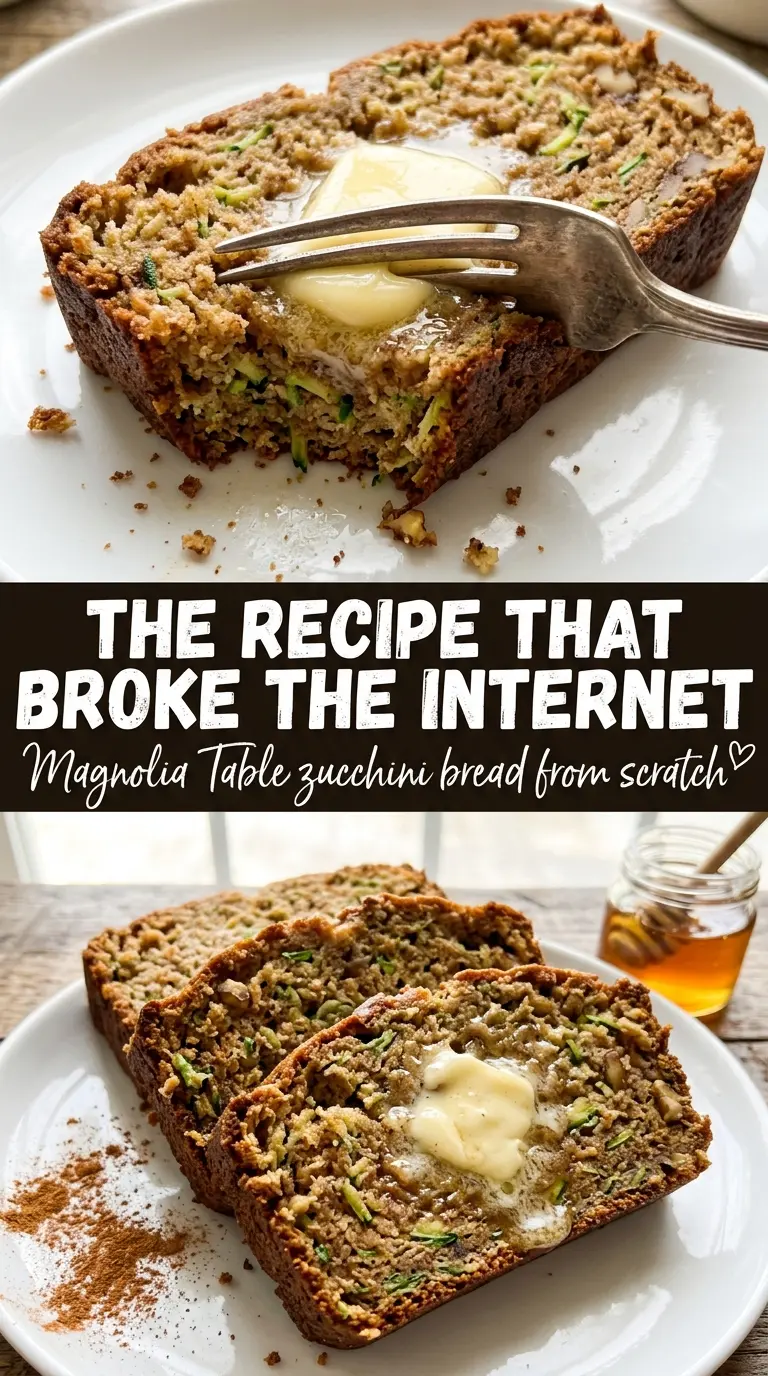
- Zucchini — Use it grated and unsqueezed. The moisture is what keeps the loaf soft, and squeezing it dry takes away the thing that makes this recipe work. If your zucchini is extra watery, that’s still fine; the loaf is built to handle it.
- Vegetable oil — Oil gives this bread a tender, plush crumb that stays softer longer than butter would. Neutral oil works best here because it lets the cinnamon, nutmeg, and vanilla stay in front. Melted butter changes the texture and makes the loaf a little tighter.
- Cinnamon and nutmeg — These are doing more than adding background warmth. They make the bread smell and taste like a proper bakery-style quick bread, not just sweet zucchini cake. Fresh nutmeg isn’t required, but if you have it, the flavor is noticeably fuller.
- Turbinado sugar — This is the small finish that gives the top a little crunch and helps that split, rustic look. Regular sugar won’t give the same texture, though the loaf will still bake fine without it.
- Walnuts — Optional, but they add a nice bite against the soft crumb. If you use them, chop them small enough that they don’t tear through each slice.
Building the Batter Without Losing the Crumb
Mix the dry ingredients first
Whisk the flour, baking soda, baking powder, salt, cinnamon, and nutmeg until they’re evenly distributed. This keeps you from finding pockets of spice or a salty bite in the finished loaf. The baking soda and baking powder work together here, so you want them fully mixed before they hit the wet ingredients.
Stir the wet base until it’s smooth
Whisk the sugar, eggs, oil, and vanilla until the mixture looks glossy and uniform. It doesn’t need to be fluffy, but it should be fully blended so the sugar starts dissolving. If the eggs are left streaky, the batter won’t bake as evenly and the texture can turn patchy.
Add the zucchini before the flour
Stir in the grated zucchini before the dry ingredients go in. That gives the vegetable a chance to distribute evenly through the wet base instead of clumping in floury pockets. Don’t squeeze it dry, and don’t worry if the batter looks loose — that’s what gives the loaf its soft interior.
Stop mixing as soon as the flour disappears
Add the dry ingredients and stir only until no streaks of flour remain. Overmixing develops gluten and turns quick bread rubbery, especially with a batter this moist. Fold in the walnuts at the end if you’re using them, then divide the batter right away so the leaveners can keep working in the oven.
Bake until the center finishes setting
Sprinkle the tops with turbinado sugar and bake until a toothpick comes out clean from the center, usually 55 to 65 minutes. The top should be deeply golden and split down the middle, and the loaf should spring back lightly when pressed. If the top browns too quickly before the center is done, tent it loosely with foil for the last part of baking.
Make It Nut-Free Without Losing the Structure
Leave the walnuts out entirely and the loaf will still bake up with the same tall, tender crumb. The nuts are there for texture, not structure, so you don’t need to replace them with anything unless you want extra crunch on top.
Swap in Whole Wheat Flour for a Heavier, Heartier Loaf
Replace up to half the all-purpose flour with white whole wheat flour if you want a deeper, nuttier flavor. Go all the way to 100 percent whole wheat and the loaf will bake up denser and a little less plush, so it’s best to stop at half unless you like a rustic texture.
Reduce the Sugar if You Want a Less Sweet Slice
You can cut the sugar slightly, but don’t slash it too far. Sugar doesn’t just sweeten this bread; it helps with moisture, tenderness, and browning. If you want the loaf to feel more breakfast-like, reduce it by 1/4 cup and keep the turbinado sugar on top for a little finish.
Dairy-Free and Naturally Egg-Free Won’t Work the Same Way
This recipe is already dairy-free as written, which is part of why it stays so soft. It’s not an egg-free loaf, though — the eggs carry a lot of the structure. A flax egg swap won’t give the same rise or sliceable texture, so if you need that kind of adaptation, it’s better to use a recipe developed for it.
Storage and Reheating
- Refrigerator: Keep the loaf wrapped or in an airtight container for up to 4 days. The crumb stays moist, but the top will soften a bit after the first day.
- Freezer: This bread freezes well. Wrap individual slices or whole cooled loaves tightly in plastic and then foil, and freeze for up to 3 months.
- Reheating: Warm slices in a toaster oven or a low oven until just heated through. The common mistake is blasting it in the microwave too long, which makes the crumb rubbery instead of soft.
Questions I Get Asked About This Recipe
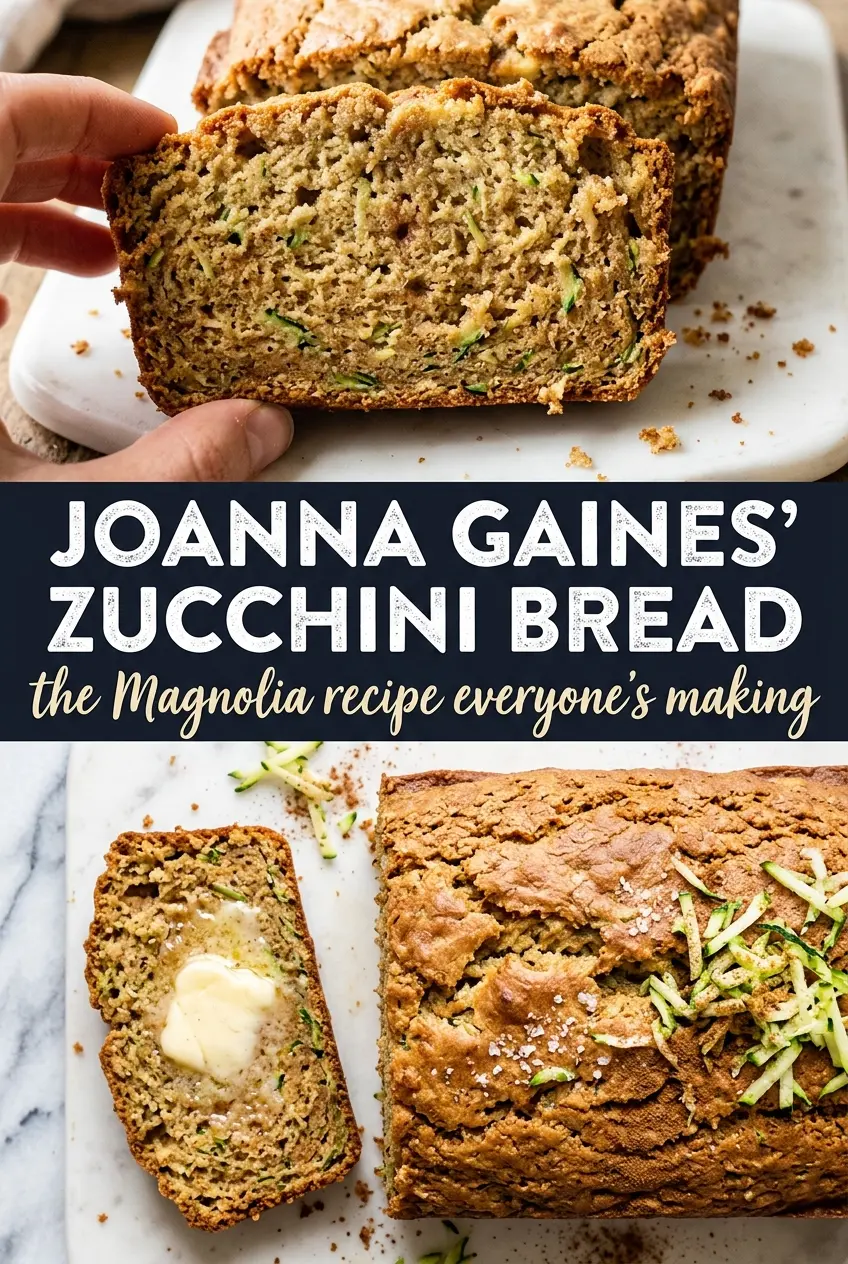
Joanna Gaines' Zucchini Bread
Ingredients
Equipment
Method
- Preheat the oven to 350°F and grease two 9x5 loaf pans (or bake in one large pan). Make sure the pans are well-coated for easy release.
- Whisk the all-purpose flour, baking soda, baking powder, salt, cinnamon, and nutmeg together. Continue whisking until the spices are evenly distributed with no lumps.
- Whisk the granulated sugar, eggs, vegetable oil, and vanilla extract in a large bowl until well combined. Keep whisking until the mixture looks glossy and uniform.
- Stir in the grated zucchini (no squeezing) so the moisture stays in the batter. Mix just until the zucchini is evenly incorporated with no dry pockets.
- Add the dry ingredients to the wet ingredients and stir until just combined. Fold in the chopped walnuts if using, stopping as soon as no flour streaks remain.
- Divide the batter between the prepared pans and sprinkle turbinado sugar on top. Bake 55–65 minutes, until a toothpick comes out clean from the center.
- Cool the loaves for 20 minutes before removing them from the pans. Letting them set helps the domed top and moist interior hold together.