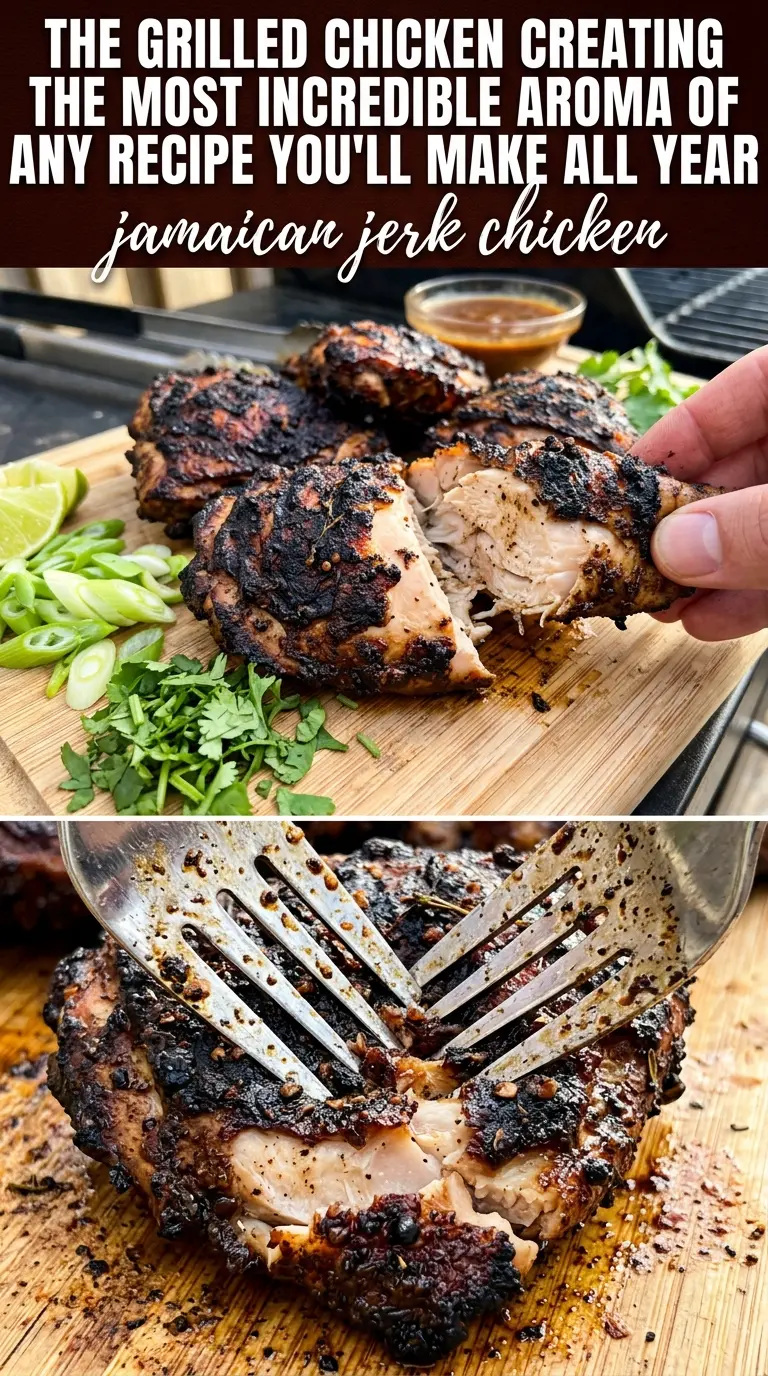
Jamaican jerk chicken lands with heat, smoke, and a deep, aromatic crust that clings to every bite. The best versions are bold without tasting muddled, and this one keeps the spice front and center while still letting the chicken stay juicy underneath. When the marinade is done right, the edges char, the skin tightens, and the first bite gives you pepper, thyme, allspice, and lime all at once.
What makes this version work is the balance in the marinade and the long enough rest time. Scotch bonnet peppers bring the real jerk heat, but brown sugar, lime juice, and soy sauce keep it from turning harsh. Scoring the chicken helps the marinade get into the meat instead of sitting on the surface, and that makes a bigger difference than people expect. The grill does the finishing work, but the flavor is built hours earlier.
Below you’ll find the small details that matter: how to keep the marinade from tasting flat, what to watch for when the chicken hits the grill, and the best swaps if you need to work with what’s in your kitchen.
The chicken picked up the jerk flavor all the way through, and the charred edges on the grill were exactly what I was hoping for. I used habaneros and let it marinate overnight, and it came out juicy with just the right amount of heat.
Save this Jamaican jerk chicken for the nights when you want smoky char, real heat, and a marinade that does the heavy lifting.
The Marinade Needs Time to Work Into the Meat, Not Just Sit on Top
Jerk chicken can taste loud on the outside and flat inside if the marinade never gets past the surface. Scoring the chicken changes that. Those cuts give the garlic, thyme, pepper, and allspice a path into the meat, so the flavor doesn’t disappear after the first bite. The other mistake is rushing the rest time. Four hours is the floor here, and overnight gives you a deeper, more even seasoning.
Heat is the second part people get wrong. Scotch bonnet peppers bring the right kind of burn, but they need support from lime juice, brown sugar, and soy sauce so the marinade tastes layered instead of raw and sharp. If the marinade looks thick, that’s good — it should cling to the chicken in a heavy coat, not run off like dressing.
What Each Ingredient Is Doing in This Jerk Chicken
- Chicken pieces — Bone-in pieces hold up best on the grill and stay juicier through the longer cook. Thighs and drumsticks are the most forgiving, while breasts need closer attention so they don’t dry out.
- Scotch bonnet peppers — These are the heart of jerk heat. Habaneros work if that’s what you can find, but they’re a touch sweeter and slightly less floral, so the final flavor is a little rounder.
- Fresh thyme and allspice — These two give jerk its unmistakable backbone. Dried thyme can stand in if needed, but fresh thyme gives a brighter, greener edge that reads more authentic.
- Brown sugar, lime juice, and soy sauce — This is the balance that keeps the marinade from tasting one-note. Sugar helps with char, lime wakes everything up, and soy adds salt plus depth without making the chicken taste like soy sauce.
- Green onions and garlic — These build the savory base and keep the marinade from leaning too sweet or too hot. Blend them fully so the chicken gets coated evenly and the aromatics don’t burn as aggressively on the grill.
- Cinnamon and nutmeg — Use them lightly, because jerk spice should smell warm before it tastes sweet. They round out the marinade and make the pepper heat feel more complex.
From Blender to Grill: The Part That Gives You Charred Edges and Juicy Chicken
Building the Marinade
Blend everything until the marinade looks mostly smooth, with no big chunks of garlic or scallion left behind. Those bits can scorch fast on the grill, so a smoother paste gives you better color and cleaner flavor. The mixture should be thick enough to coat the chicken heavily. If it seems too loose, the chicken will slide around in it instead of holding the seasoning where it belongs.
Coating the Chicken
Score the chicken with a sharp knife, cutting a few shallow slashes into the thickest parts. Work the marinade into those cuts and get underneath the skin wherever you can. The chicken should look fully stained and heavily coated. If the surface still looks pale in spots, it won’t carry the jerk flavor evenly after cooking.
Grilling to the Right Char
Preheat the grill to medium heat and lay the chicken on once the grates are hot. Turn the pieces frequently so the sugar in the marinade doesn’t burn before the meat cooks through. You want dark, charred edges and a crisped exterior, not blackened patches that taste bitter. Bone-in chicken usually needs 30 to 40 minutes, but the real test is the juices running clear and the thickest part reaching safe doneness.
How to Adapt This Jerk Chicken Without Losing the Point
Make It Milder Without Flattening the Flavor
Use one seeded scotch bonnet or habanero instead of two, then keep the thyme, allspice, lime, and garlic exactly as written. That keeps the jerk profile intact while dialing the heat back to a level most people can handle. Don’t replace the pepper with plain chili powder; you’ll lose the fruitiness that makes jerk taste like jerk.
Oven-Baked When You Can’t Grill
Roast the chicken on a rack over a sheet pan at 425°F until the skin darkens and the meat is cooked through, then finish under the broiler for a few minutes to mimic the grill’s char. The flavor will still be there, but you’ll get less smoke and a softer crust. Keep a close eye on the broiler, because the sugar in the marinade can go from caramelized to burnt fast.
Gluten-Free Jerk Chicken
Swap the soy sauce for tamari or coconut aminos. Tamari keeps the same salty depth with the least change in flavor, while coconut aminos will taste a little sweeter and lighter. The marinade still clings the same way, and the chicken still gets that sticky charred finish.
Storage and Reheating
- Refrigerator: Store cooked chicken for up to 4 days. The skin softens as it sits, but the flavor gets even deeper.
- Freezer: Freeze cooked jerk chicken for up to 2 months, tightly wrapped or sealed in an airtight container. Thaw overnight in the refrigerator before reheating.
- Reheating: Reheat in a 325°F oven, covered loosely with foil, until warmed through. The biggest mistake is blasting it in the microwave, which dries out the meat and softens the char completely.
Answers to the Questions Worth Asking
Jamaican Jerk Chicken
Ingredients
Equipment
Method
- Blend green onions, scotch bonnet peppers, garlic, fresh thyme, brown sugar, soy sauce, lime juice, allspice, black pepper, cinnamon, nutmeg, and salt until smooth.
- Score chicken pieces and rub the jerk marinade all over, working it into the cuts so it clings to the surface.
- Marinate the chicken for 4-24 hours in the refrigerator.
- Preheat the grill to medium heat.
- Grill the chicken, turning frequently, for 30-40 minutes until charred and cooked through.
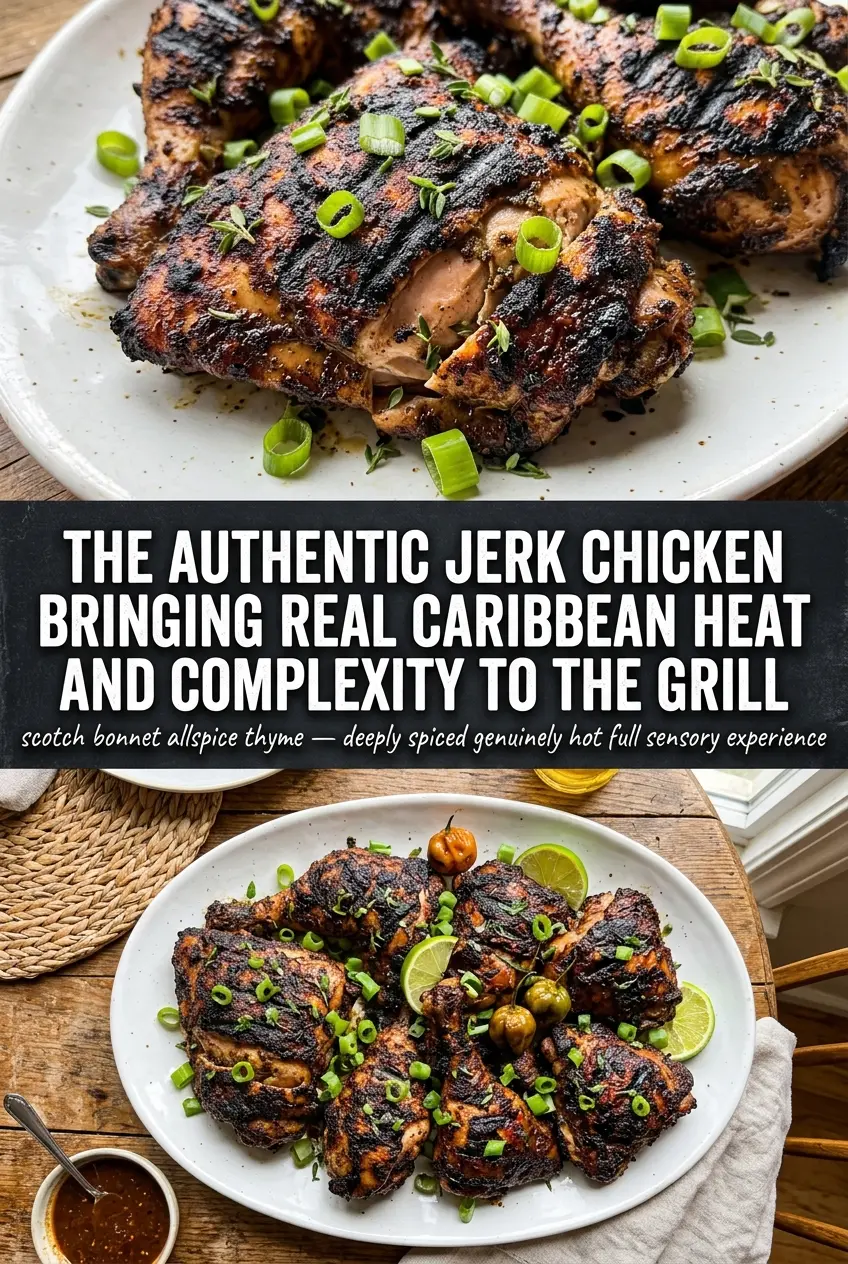
- Serve the charred jerk chicken with rice and peas and lime wedges.