Brown stew chicken earns its place at the center of the table because the sauce turns deep and glossy while the chicken stays tender enough to pull apart with a spoon. The browning sauce, caramelized sugar, and slow simmer build a gravy that clings to every piece instead of running thin on the plate, and the bell peppers and thyme keep it lively rather than heavy.
The marinating step matters here. The chicken gets seasoned all the way through before it ever hits the pan, which means the finished stew tastes layered, not just sauced at the end. Browning the sugar first also gives the dish its color and that unmistakable Jamaican edge, but the heat has to stay controlled or the sugar will go bitter before the chicken even goes in.
Below you’ll find the little details that make a difference, from getting the caramel the right shade to knowing when the gravy has reduced enough to coat the back of a spoon. If you’ve ever had brown stew chicken that tasted flat or looked pale, the fix is in the sequence.
The gravy went thick and glossy, and the chicken was tender after the simmer without falling completely apart. I used the scotch bonnet and the balance of sweet caramel and thyme was exactly what I wanted.
Save this brown stew chicken for the nights when you want deep Jamaican gravy, caramelized peppers, and tender chicken thighs without a long ingredient list.
The Sugar Has to Caramelize Before the Chicken Goes In
The biggest mistake people make with brown stew chicken is rushing the base. The sugar needs to melt and move from clear to amber before the chicken hits the pan, because that caramel is what gives the gravy its color and depth. If it’s still pale, the finished stew tastes flatter; if it goes too dark, it turns bitter fast.
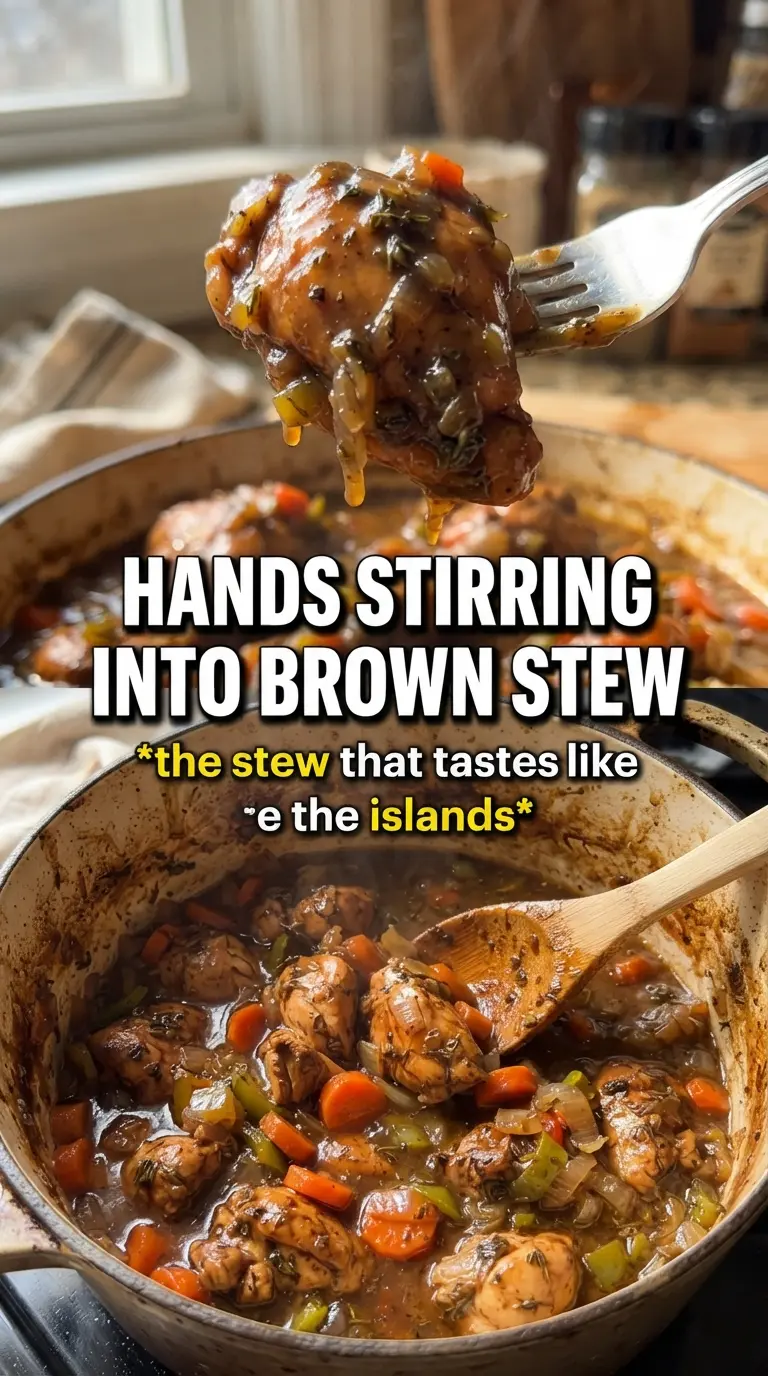
Once the chicken is browned in that caramel oil, the pan should still have sticky brown bits on the bottom. That’s where the flavor lives. The broth loosens all of that up as the chicken simmers, and by the end you should have a sauce that coats the chicken instead of pooling around it.
What Each Ingredient Is Doing in the Pot
- Bone-in chicken thighs and drumsticks — These stay juicy through the long simmer and bring more flavor than boneless pieces. Thighs alone work if that’s what you have, but the bone adds body to the sauce.
- Browning sauce and sugar — The browning sauce gives the stew its deep color and roasty edge, while the sugar builds the caramel base in the pan. Don’t swap in plain soy sauce here; it won’t give the same look or flavor.
- Scotch bonnet or habanero — This is where the dish wakes up. Use a small amount if you want heat without overpowering the stew, or leave it out if you want the peppers and thyme to lead.
- Bell peppers, onion, green onion, and garlic — These soften into the gravy and round out the sharp edges of the caramel. Slice them thick enough that they still have some shape after simmering.
- Chicken broth — This becomes the stew liquid and carries the seasoning through the pot. Homemade broth is nice, but a good store-bought broth works fine as long as it isn’t overly salty.
Building the Gravy Without Burning the Sugar
Marinate for real flavor, not just surface seasoning
Mix the chicken with the browning sauce, all-purpose seasoning, garlic powder, onion powder, thyme, salt, and pepper until every piece is coated. Two hours is the minimum that gives you a noticeable difference, but overnight gives the seasoning time to settle into the meat. If you skip this step, the stew can still look right and taste under-seasoned in the middle.
Caramelize the sugar with focus
Heat the oil, add the sugar, and watch it closely as it melts. You want a golden-brown caramel, not a dark, smoky one. The moment it reaches a deep amber color, start adding the chicken so it doesn’t cross into bitterness while you stand there waiting.
Brown the chicken before the simmer
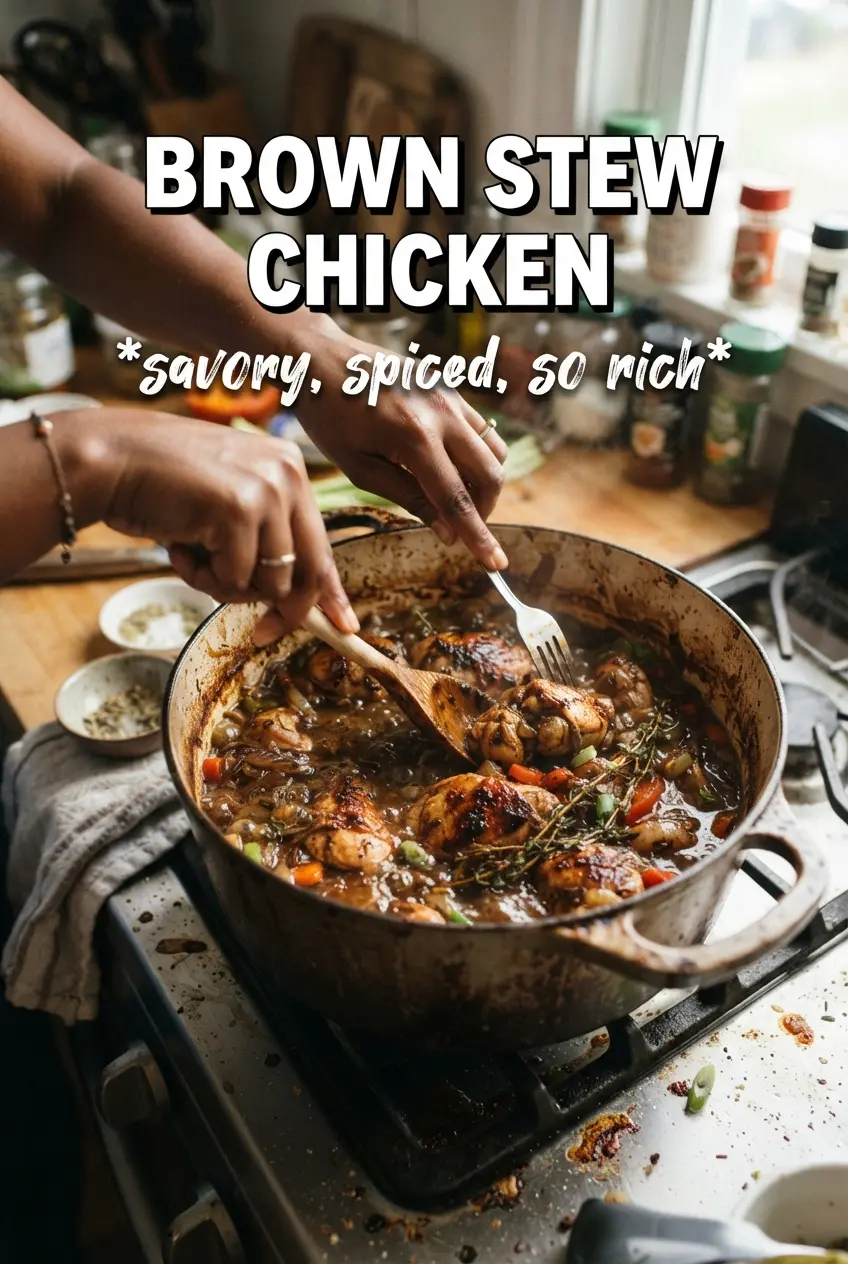
Turn each piece in the caramel oil until it picks up a deep mahogany color on the outside. It doesn’t need to cook through at this point; the goal is color and a little crust. Crowding the pan will steam the chicken instead of browning it, so work in batches if the skillet looks full.
Let the gravy reduce until it clings
After the vegetables and broth go in, bring everything to a boil, then lower the heat and cover the pot. The chicken should become tender enough to pull apart, and the liquid should thicken into a glossy gravy. If it still looks thin near the end, uncover the pot for the last 5 to 10 minutes so the sauce can tighten up.
How to Adjust Brown Stew Chicken Without Losing Its Character
Milder Version Without the Scotch Bonnet
Leave out the hot pepper and keep the thyme, garlic, and browning sauce exactly as written. You’ll lose the sharp heat, but the stew still tastes like brown stew chicken because the caramel and seasoning are doing the heavy lifting.
Gluten-Free Version
Use a gluten-free all-purpose seasoning and check your browning sauce and broth labels. The technique stays the same, and because the stew thickens through reduction instead of flour, you won’t lose any texture.
All-Thigh Version for Extra Tender Meat
Use only chicken thighs if you want meat that stays especially succulent through the simmer. Drumsticks bring a little more rustic feel, but thighs hold up beautifully and make serving easier.
Make It Ahead for Better Flavor
Brown stew chicken tastes even better the next day because the gravy settles and the seasoning mellows into the meat. Cook it fully, cool it down, and reheat it gently with a splash of broth if the sauce thickens too much.
Storage and Reheating
- Refrigerator: Store for up to 4 days. The gravy will thicken as it chills.
- Freezer: It freezes well for up to 2 months. Cool completely first and freeze in airtight containers with some gravy around the chicken.
- Reheating: Reheat gently on the stove over low heat with a splash of broth or water. High heat can make the chicken dry and can split the gravy.
Questions I Get Asked About This Recipe
Brown Stew Chicken
Ingredients
Equipment
Method
- Combine browning sauce, all-purpose seasoning, garlic powder, onion powder, dried thyme, salt, and pepper, then massage over the bone-in chicken thighs and drumsticks. Marinate for at least 2 hours or overnight for best flavor and deeper color.
- Heat vegetable oil in a large skillet or Dutch oven over medium heat, then add sugar and let it caramelize until golden brown, about 3-5 minutes. When the sugar is amber-golden, the oil will smell toasted and the caramel will be fluid.
- Brown the marinated chicken pieces in the caramel oil until deeply golden on all sides, 8-10 minutes total, then remove to a plate. Keep the heat steady so the outside browns without burning the caramel.
- Sauté onion, green bell pepper, red bell pepper, garlic, green onions, and scotch bonnet or habanero pepper for 4 minutes. Stir until the vegetables soften slightly and the garlic turns fragrant.
- Return the browned chicken to the pot, add chicken broth, and bring to a boil. Scrape up any browned bits for more flavor.
- Reduce heat to maintain a gentle simmer, cover, and simmer for 35-40 minutes until chicken is fall-apart tender and gravy is thick. The gravy should cling to the chicken and look glossy, not watery.
- Serve the brown stew chicken with rice and garnish with fresh thyme. Spoon the thick mahogany gravy over the chicken so it coats the meat.