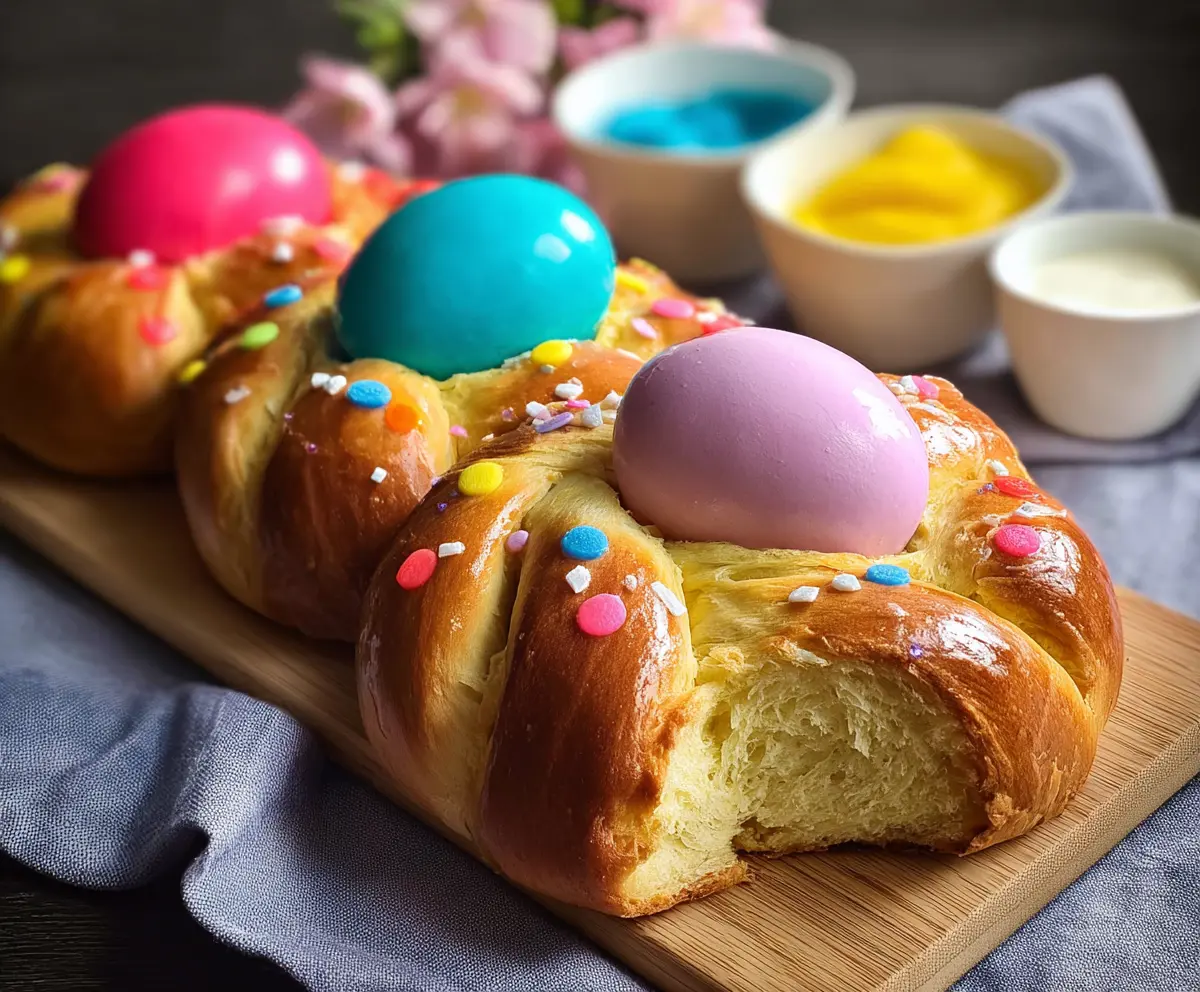
This Italian Easter bread is a sweet and soft delight, usually shaped into a round loaf and topped with vibrant, colorful eggs. It’s not just pretty; it’s packed with flavor too!
Baking this bread always brings a smile to my face. The kids love picking their favorite egg color to decorate the loaf. It’s a fun tradition that makes Easter even more special! 🐣
Key Ingredients & Substitutions
All-Purpose Flour: This is the main base of the bread. If you want a healthier option, try using whole wheat flour, but you might need to adjust the liquid slightly since it’s more absorbent.
Active Dry Yeast: Vital for the bread to rise! If you have instant yeast, you can use that instead, and skip the dissolving step. Just mix it with the dry ingredients.
Whole Milk: Warm milk enhances the yeast activity. If you’re lactose intolerant, almond or oat milk works well as a substitute.
Butter: Unsalted butter gives flavor. You can use coconut oil or vegetable oil if you’re looking for a dairy-free option!
Eggs: For veggie alternatives, you may use flax eggs (1 tbsp ground flaxseed mixed with 2.5 tbsp water equals 1 egg), but keep in mind that this may affect texture a bit.
Lemon Zest: It adds a nice touch of flavor. If you don’t have lemons, orange zest can be a lovely substitute.
How Do You Get Your Bread to Rise Perfectly?
The rising process is crucial for achieving that fluffy texture in your bread. A warm environment helps activate the yeast. You can create a warm space by preheating your oven to the lowest setting for a minute, then turning it off and placing the dough inside, covered.
- Make sure the dough is in a greased bowl to prevent sticking as it expands.
- A second rise after shaping helps develop flavor and texture. Don’t skip it!
- Cover the dough to keep it warm and moist during rising.

How to Make Italian Easter Bread With Colorful Eggs
Ingredients You’ll Need:
For the Dough:
- 4 cups all-purpose flour
- 1/2 cup granulated sugar
- 2 1/4 tsp active dry yeast (1 packet)
- 1/2 tsp salt
- 1/2 cup whole milk, warmed (about 110°F)
- 1/4 cup unsalted butter, melted
- 3 large eggs, room temperature (reserve 1 egg yolk for egg wash)
- 1 tsp vanilla extract
- 1 tsp grated lemon zest (optional for extra flavor)
For Decoration:
- Food coloring (various colors)
- Sprinkles or colored sugar for decoration
How Much Time Will You Need?
This recipe takes about 30 minutes for preparation, plus 2 to 2.5 hours of rising time and about 30 minutes of baking. So in total, you’re looking at roughly 3 hours before this delightful bread is ready to enjoy!
Step-by-Step Instructions:
1. Dye the Eggs:
Start by hard-boiling 3 large eggs for about 10 minutes. Once cooked, cool them in ice water and peel if desired. Alternatively, you can dye the raw eggs—just remember they will cook while baking. Use different food coloring in separate cups and let the eggs dry completely before using them in the bread.
2. Make the Dough:
In a small bowl, dissolve the yeast in warmed milk with a pinch of sugar. Let it sit for 5-10 minutes until it gets frothy. In a mixing bowl, combine the flour, sugar, salt, and lemon zest (if using). Mix well!
3. Combine Ingredients:
Add the yeast mixture, melted butter, 2 eggs, and vanilla extract into the bowl with the dry ingredients. Mix everything together and knead the dough by hand or with a mixer using a dough hook for about 8-10 minutes until the dough is smooth and elastic.
4. Let It Rise:
Place the kneaded dough into a greased bowl. Cover it with a clean towel or plastic wrap, and let it rise in a warm place for 1 to 1.5 hours, or until it doubles in size. Patience is key here!
5. Shape the Bread:
Once risen, gently punch down the dough and divide it into three equal parts. Roll each part into long ropes about 16-18 inches long. Now, braid the three ropes together loosely. This cute braid is what makes your Easter bread special!
6. Add the Eggs:
Carefully tuck the colored eggs into the braid at equal intervals, pressing them in lightly to keep them snugly in place.
7. Second Rise:
Place your beautifully braided dough with the eggs on a baking sheet lined with parchment paper. Cover it again and let it rise for another 30 to 45 minutes. This helps the bread get that lovely fluffy texture.
8. Prepare for Baking:
While your dough rises, preheat the oven to 350°F (175°C). It’s almost time to bake!
9. Egg Wash & Decoration:
Beat the reserved egg yolk with a teaspoon of water and brush it over the entire braid for a lovely golden finish. Then, sprinkle colorful sugar or sprinkles over the top for that festive touch.
10. Bake:
Pop the bread in the oven and bake for 25 to 30 minutes, or until it’s a deep golden brown and sounds hollow when tapped. Your home will smell wonderful!
11. Cool Down:
Once baked, remove the bread from the oven and let it cool on a wire rack before slicing and serving. Enjoy this sweet, soft bread with its festive colored eggs; it’s a cheerful treat perfect for Easter!
Can I Use Different Types of Flour?
Yes, you can! While all-purpose flour works best for this recipe, you could try using a mix of whole wheat flour for a healthier option. Just be aware that it may require slightly more liquid to achieve the right dough consistency.
How Can I Store Leftover Bread?
Store any leftover bread wrapped tightly in plastic wrap or in an airtight container at room temperature for up to 3 days. For longer storage, consider freezing the bread. Wrap it well and it will keep in the freezer for up to 3 months.
Can I Skip Dyeing the Eggs?
Definitely! If you’d prefer not to dye the eggs, you can simply use hard-boiled eggs without dyeing them; they will still look lovely baked into the bread. Alternatively, you can use plastic eggs or omit the eggs entirely for a decorative braid.
What If My Dough Doesn’t Rise?
If your dough doesn’t rise, it could be due to inactive yeast. Always check the expiration date on your yeast before using it. If the yeast mixture didn’t froth in step 2, that indicates the yeast might not be good. You can also try placing the dough in a warmer environment to help with rising.