Grilled salmon earns its place in the regular rotation when the skin turns crisp, the flesh stays moist, and the whole fillet comes off the grill with clean lines instead of sticking and tearing. The best versions don’t need a long marinade or a pile of seasoning. They need dry fish, a hot grate, and enough restraint to let the first side do its job.
That 15-minute rest with olive oil, lemon juice, and garlic does two things: it seasons the surface and gives the salt time to start working without turning the fish mushy. The grill has to be ready before the salmon goes on, and the grates need to be oiled well, because salmon skin will stick if the fish is rushed or moved too early. Skin-side down gives you the most forgiveness and the best texture.
Below, I’ll walk through the part that matters most: how to tell when the fish is ready to turn, how to keep the fillets intact, and what to change if you want to cook it on a cedar plank or skip the marinade altogether.
The skin got crisp without sticking, and the salmon stayed moist right through the center. I used the lemon and dill at the end and it tasted like something from a restaurant grill.
Grilled salmon with crisp skin and lemon-dill finish is worth saving for your next quick dinner.
The Reason Salmon Sticks, Rips, and Overcooks on the Grill
Most grilled salmon problems come from impatience, not lack of skill. If the fish is wet when it hits the grate, the surface steams before it can sear. If the grill isn’t hot enough, the skin clings and tears. If you try to flip it too soon, you lose the crust that keeps the fillet intact.
The fix is straightforward: dry the fish well, oil the grates, and leave the salmon alone on the first side until it releases on its own. That usually takes the full 6 to 8 minutes, depending on thickness. The skin should look crisp and the edges should turn opaque before you even think about lifting it.
- Dry salmon matters. Patting the fillets dry is what lets the surface brown instead of steam. Paper towels are part of the method here, not an extra step.
- The first side does the heavy lifting. Skin-side down builds the crust and protects the flesh from direct flare-up heat.
- Release is the cue. If the fish resists when you lift it, give it another minute. Forcing it is how fillets break apart.
What the Olive Oil, Lemon, and Garlic Are Doing Before the Grill Hits
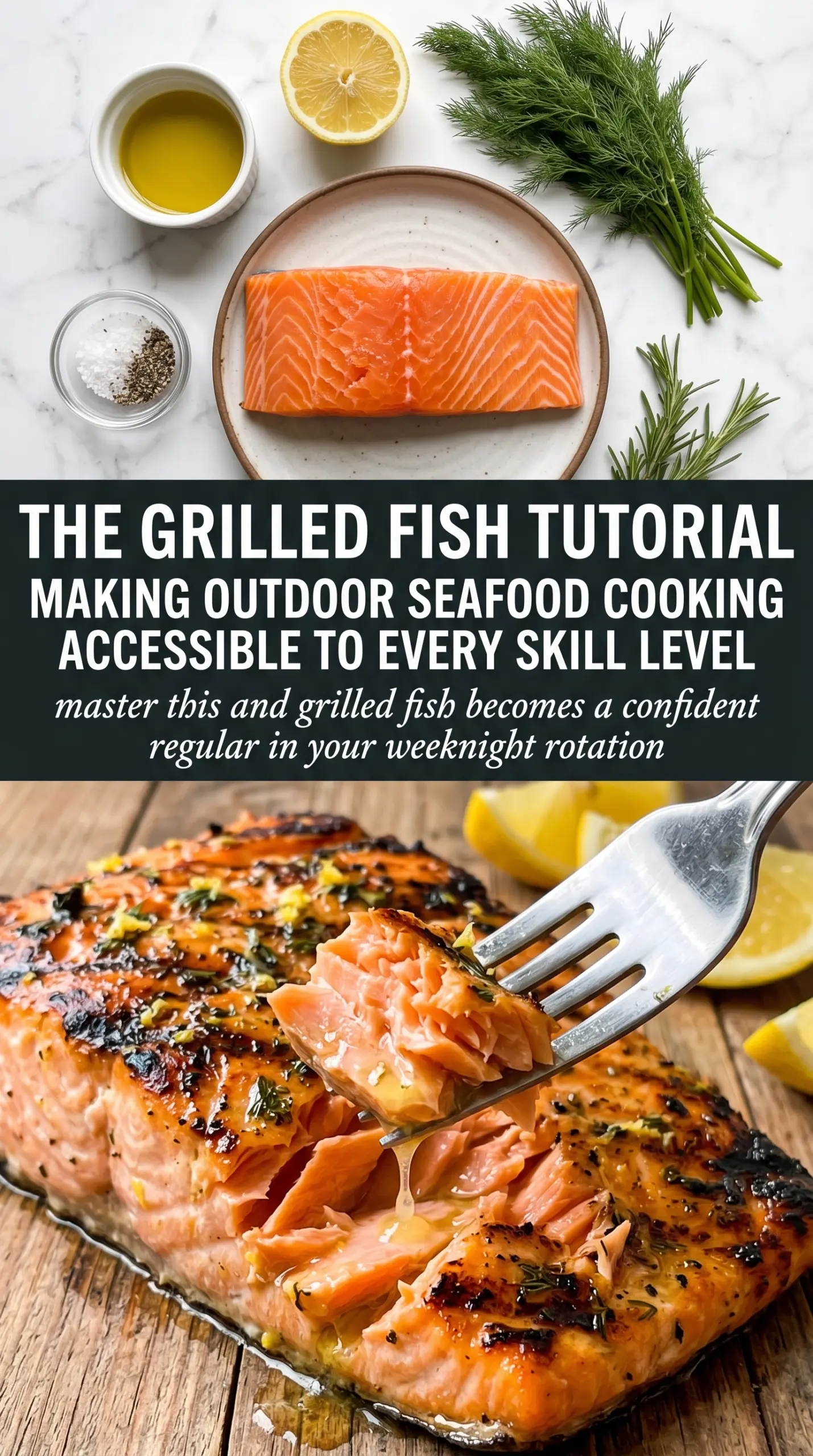
- Olive oil helps the seasoning cling and gives the surface a little extra protection from the heat. Use a good everyday oil; this isn’t the place for expensive finishing oil.
- Lemon juice brightens the fish, but it needs the short 15-minute rest only. Letting it sit much longer can start to cure the outside of the salmon and change the texture.
- Garlic adds flavor fast, but minced garlic can burn on a screaming-hot grill if too much is left on the surface. Brush on a thin coating, not a paste.
- Skin-on fillets are the best choice here because the skin shields the flesh and gives you something sturdy to flip against. Skinless salmon cooks fine, but it’s easier to overdo and harder to move.
The 10 Minutes on the Grill That Matter Most
Prepping the Fish Surface
Brush the salmon with the olive oil, lemon juice, and garlic mixture, then season it generously with salt and pepper. Let it sit for 15 minutes so the salt starts seasoning the fish all the way through. If you skip the rest, the outside tastes flat compared with the center. Keep the fish covered and out of direct sun while it rests so the surface doesn’t dry unevenly.
Setting Up the Grill
Preheat the grill to medium-high and clean the grates well before oiling them. A lightly oiled paper towel held with tongs works better than pouring oil directly on the grates, which can flare up. You want the grates hot enough to sear, not so aggressive that the sugarless marinade scorches before the salmon has time to cook through. If the grill is only warm, the skin will glue itself down.
Cooking Skin-Side Down
Place the fillets skin-side down and don’t move them for 6 to 8 minutes. You’ll see the flesh change from glossy to opaque around the edges, and the skin will tighten and crisp underneath. If the fillet sticks, it isn’t ready yet. Let it go another minute and check again instead of forcing the flip.
Finishing the Last Few Minutes
Flip the salmon carefully and cook for 2 to 3 minutes more, just until it reaches your preferred doneness. For medium, pull it at 145°F, but you can stop a little earlier if you like the center slightly translucent. The fish should flake at the thickest part but still look moist, not chalky. Serve it right away with dill and lemon wedges so the heat of the fish wakes up the herbs.
How to Adapt This Grilled Salmon When You Need a Different Finish
Cedar Plank Salmon
Use a soaked cedar plank if you want softer edges and a little smoky perfume without direct grate marks. The fish cooks a touch more gently, which helps if your grill runs hot, but you’ll lose the crispest skin because the plank protects it from direct heat.
Dairy-Free and Naturally Gluten-Free
This recipe already fits both without any changes. The key is to keep the seasoning simple and skip bottled sauces that can sneak in gluten or thickeners. Lemon, garlic, dill, salt, and pepper carry the whole dish on their own.
No-Grill Oven Finish
If the weather turns or the grill won’t cooperate, bake the salmon on a lined sheet pan at 400°F until it flakes and reaches your preferred doneness. You won’t get the same charred edges, but you’ll keep the same bright lemon-garlic flavor and an easier cleanup.
Using Skinless Fillets
Skinless salmon works, but shorten the first side by a minute or two and watch closely because it cooks faster and tears more easily. Use a clean spatula and flip once only. The tradeoff is less protection from the heat and a softer surface.
Storage and Reheating
- Refrigerator: Store leftovers in an airtight container for up to 3 days. The skin softens after chilling, but the flavor holds up well.
- Freezer: Cooked salmon freezes, but the texture gets a little drier after thawing. Wrap portions tightly and freeze for up to 2 months if you plan to flake it into salads or grain bowls later.
- Reheating: Warm gently in a low oven at 300°F or in a covered skillet over low heat. High heat is the fastest way to turn the fish dry and stringy.
Questions I Get Asked About This Recipe
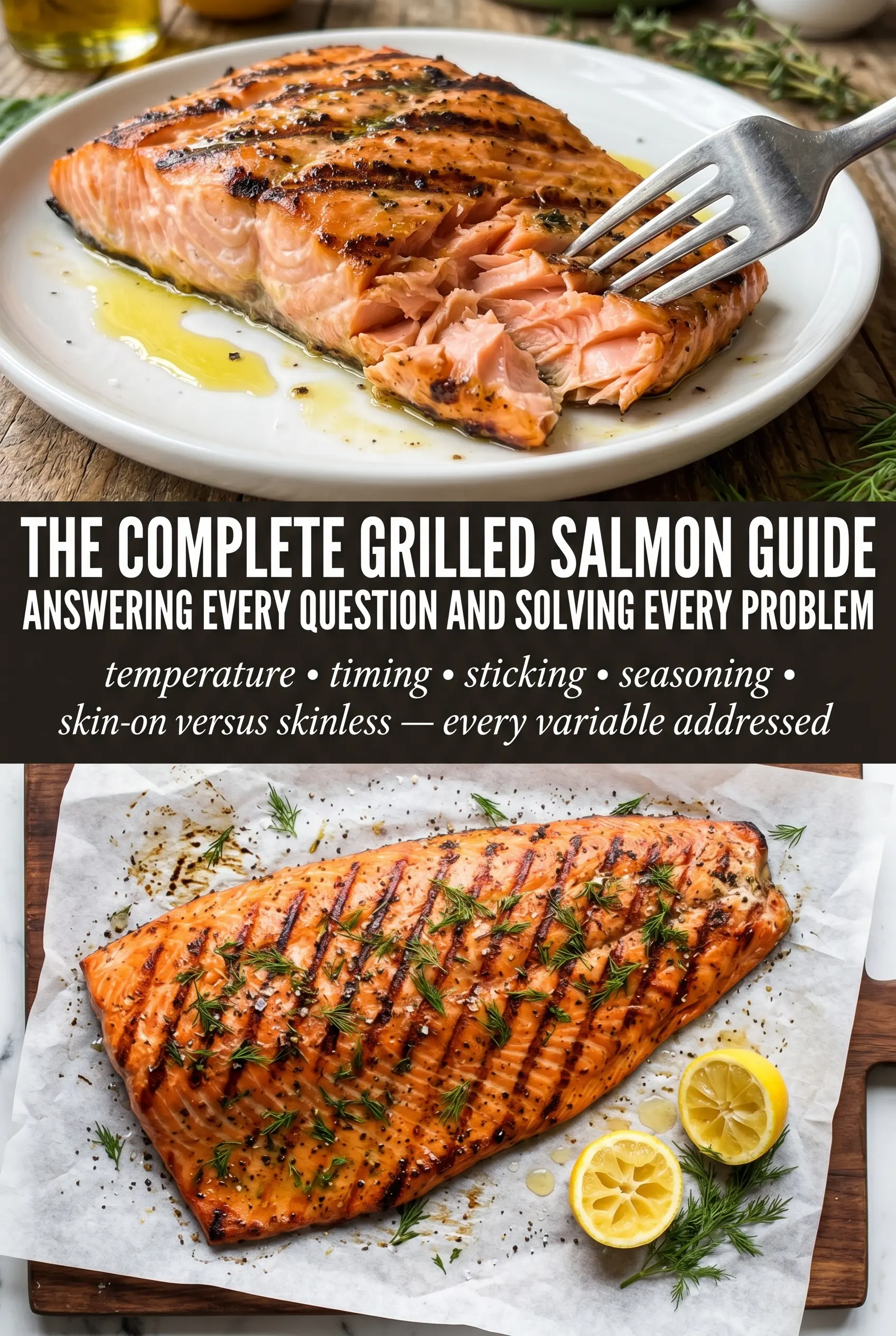
How To Make The Best Grilled Salmon
Ingredients
Equipment
Method
- Pat the salmon dry, then brush all surfaces with the olive oil, lemon juice, and minced garlic mixture.
- Season generously with salt and pepper, then let the salmon sit for 15 minutes to marinate.
- Preheat the grill to medium-high, then oil the grates well to prevent sticking.
- Place the salmon skin-side down and grill for 6-8 minutes without moving, until the skin is crisp and releases easily.
- Carefully flip the salmon and grill 2-3 minutes more, until it reaches 145°F for medium doneness.
- Serve immediately with fresh dill and lemon wedges.