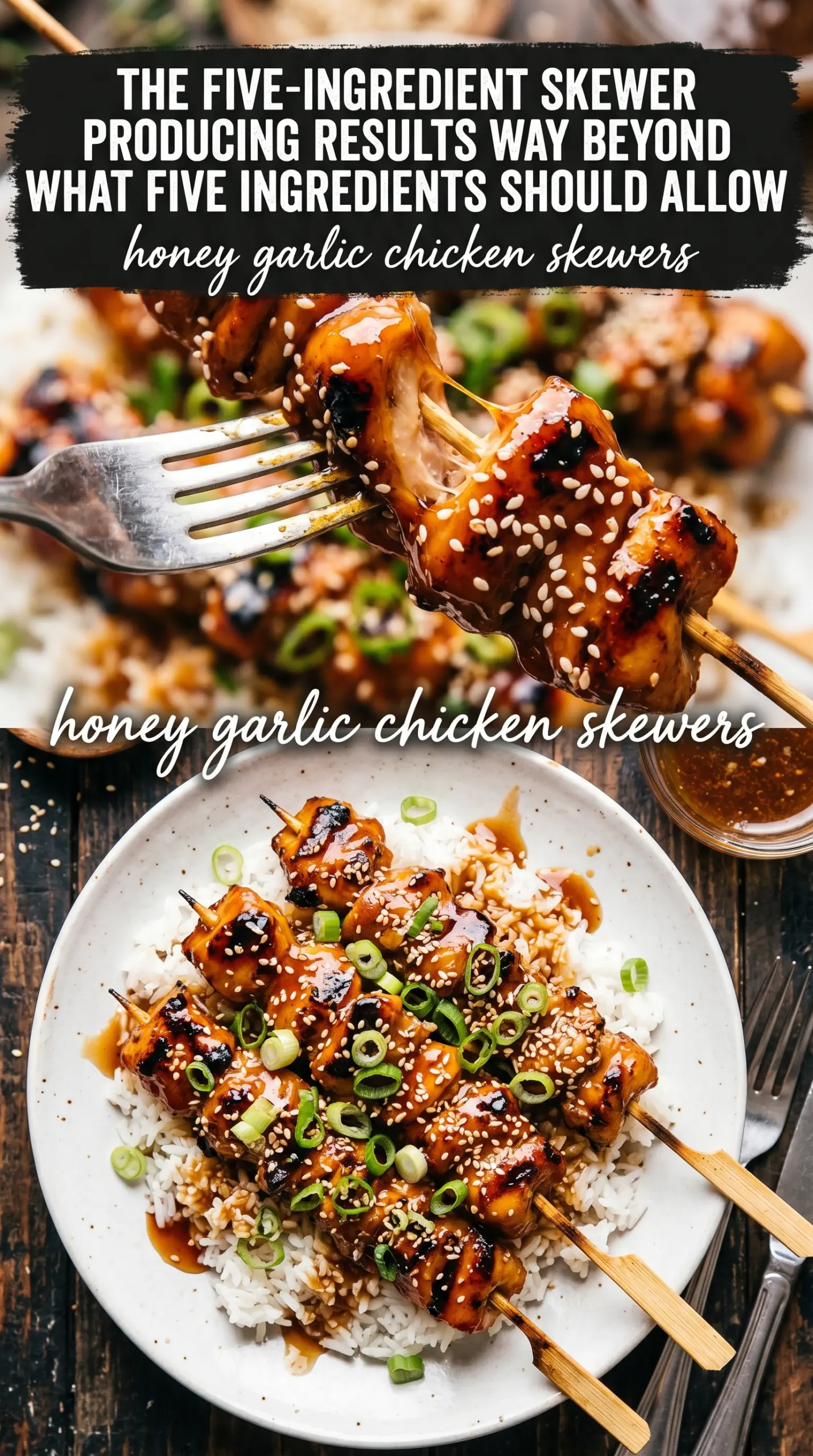
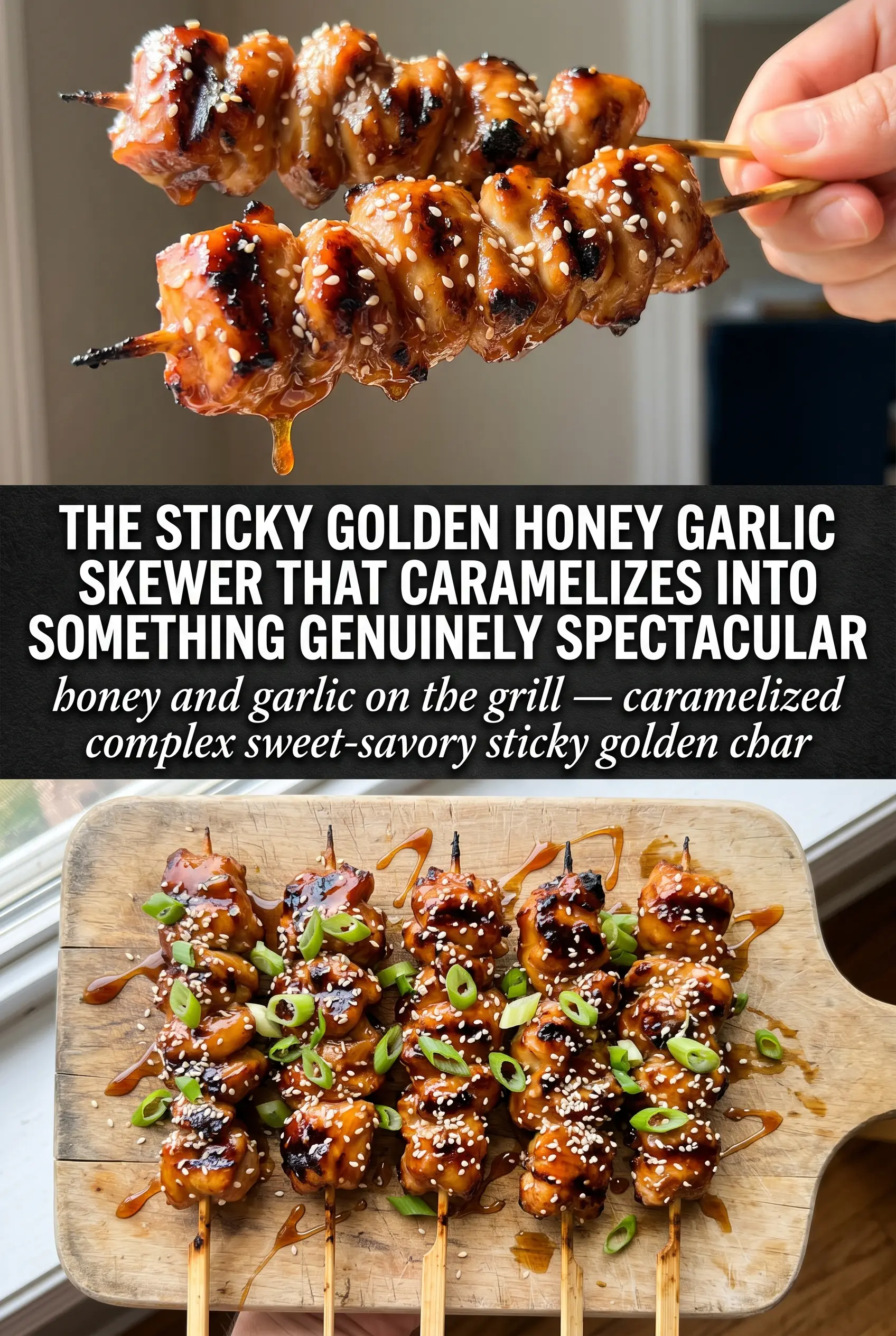
Honey garlic chicken skewers hit that sweet spot between sticky, savory, and charred at the edges. The chicken stays juicy because the marinade does the heavy lifting before it ever sees the grill, and the honey turns into a glossy glaze that clings to every bite. You get caramelized edges, tender centers, and just enough garlic to keep the sweetness from taking over.
What makes this version work is the balance in the marinade and the way it’s handled. Honey adds shine and browning, soy sauce brings salt and depth, and lemon juice keeps the flavor from going flat. The reserved marinade gets brushed on during grilling, which builds layers of flavor instead of leaving everything to the first soak.
Below, I’ve included the part that matters most if you’ve ever had chicken skewers dry out on the grill: how to keep the heat right, when to baste, and what to watch for so the glaze caramelizes instead of burning.
The marinade gave the chicken a gorgeous sticky glaze, and the skewers stayed juicy even after grilling. I loved that the garlic didn’t burn because the heat was just right.
Save these honey garlic chicken skewers for the nights when you want glossy grilled chicken with almost no cleanup.
The Trick to Keeping the Honey Glaze Sticky Instead of Burnt
Honey is the part that makes these skewers taste like more than basic grilled chicken, but it’s also the ingredient that can turn against you if the heat runs too high. The sugar in the honey wants to caramelize fast, which is great until it crosses into scorched territory and starts tasting bitter. Medium-high heat is the right range here because it browns the outside before the chicken dries out.
The other thing that saves this recipe is the reserved marinade. Once the chicken has had its raw soak, that second portion gets brushed on during grilling and tightens into a lacquer as the skewers finish. If you dump all the marinade on at the start, you lose that layered glaze and end up with less color, less shine, and less control.
- Soaked wooden skewers — They keep the sticks from burning through while the chicken cooks. Soak them for at least 30 minutes; dry skewers can char before the meat is done.
- Chicken breasts — Breast meat stays tender here when it’s cut into even chunks. Uneven pieces cook at different speeds, so keep the size consistent or the smaller ones will dry out before the larger ones catch up.
- Honey — This gives you the sticky finish and the deep golden color. There isn’t a perfect substitute for the way honey browns, but maple syrup works in a pinch and brings a slightly softer sweetness.
- Soy sauce — It supplies salt and umami, which keeps the glaze from tasting like plain sweet chicken. Use regular soy sauce for the best balance; low-sodium works if that’s what you keep, but the flavor will be a little lighter.
- Lemon juice — The acid lifts the whole marinade and keeps the honey from reading cloying. Fresh lemon is worth using here because bottled juice can taste flat in a simple marinade like this.
What Each Ingredient Is Actually Doing in Honey Garlic Chicken Skewers
- Protein (quality, proper thickness) — Good quality protein tastes better. Even thickness ensures even cooking.
- Seasoning (bold, distributed throughout) — Don’t be shy with salt and pepper. Quality seasoning elevates everything.
- Oil or fat (protective and flavorful) — The fat helps develop crust and carries flavors. Use generously.
- Heat management (appropriate temperature for the protein) — Too high and the outside burns before the inside cooks. Too low and it steams.
- Technique (sear, then finish based on thickness) — Proper technique creates flavor. Sear for crust, then cook through gently.
- Aromatics and seasonings (garlic, herbs, spices) — These add complexity and depth. Distribute them throughout the cooking process.
- Resting time (let it rest before serving) — Resting allows juices to reabsorb. This keeps the protein moist and tender.
- Optional: finishing sauce or glaze — A light sauce adds richness without overwhelming. Apply at the very end.
How to Build the Glaze Without Drying Out the Chicken
Mixing the Marinade
Whisk the honey, soy sauce, olive oil, garlic, lemon juice, and pepper until the honey dissolves and the mixture looks glossy, not separated. The olive oil helps carry the garlic and keeps the marinade from feeling harsh. Reserve part of it before the chicken goes in, because anything that touches raw chicken should stay out of the basting bowl.
Marinating for Flavor, Not Mush
Let the chicken sit in the marinade for 1 to 4 hours. That window gives you good flavor without turning the surface soft from too much acid. If you push it much longer, the lemon starts to change the texture and the chicken can get a little spongy on the outside.
Threading and Grilling Evenly
Pack the chicken pieces onto the skewers with a little space between them so the heat can move around each piece. Set them on a medium-high grill and leave them alone long enough to get good color before turning. If you move them too early, they stick and tear instead of releasing with those clean grill marks.
Basting for a Lacquered Finish
Brush the reserved marinade on during grilling, not all at once at the beginning. That late-layered basting is what gives you the sticky finish without burning the sugar right away. Pull the skewers when the chicken is cooked through and the glaze has darkened into a deep amber sheen at the edges.
Ways to Adjust These Skewers Without Losing the Point
Make It Gluten-Free
Swap in gluten-free soy sauce or tamari and keep everything else the same. You still get the same sticky glaze and savory backbone, just without the wheat. This is the easiest version to adapt because the recipe doesn’t rely on flour or breadcrumbs for texture.
Use Thighs for a Richer Bite
Boneless chicken thighs work well if you want a juicier, slightly richer skewer. They can take a little more heat without drying out, but they’ll also give you a softer texture and a darker finished look. Keep the pieces similar in size so they cook at the same pace.
Turn It Into a Weeknight Bowl
Skip the skewers and cook the marinated chicken in a hot skillet, then spoon the glaze over the top as it finishes. You lose the grill marks, but you keep the same sweet-savory coating and cut the cook time down a little. Serve it over rice with the parsley on top and the dinner still feels complete.
Storage and Reheating
- Refrigerator: Store leftovers in an airtight container for up to 3 days. The glaze will thicken as it chills, and the chicken stays best if you don’t leave it in the marinade after cooking.
- Freezer: The cooked skewers freeze well for up to 2 months, though the glaze loses a little shine after thawing. Wrap tightly and freeze without the parsley garnish.
- Reheating: Warm gently in a 325°F oven, covered, until heated through. High heat dries out the chicken fast and can make the honey glaze sticky in the wrong way, so slow heat gives you the best texture.
Questions I Get Asked About This Recipe
Honey Garlic Chicken Skewers
Ingredients
Equipment
Method
- Whisk together honey, soy sauce, olive oil, garlic, lemon juice, and black pepper until smooth and evenly combined.
- Reserve 1/4 cup marinade for basting so it’s ready for grilling.
- Marinate chicken in the remaining marinade for 1-4 hours, covered in the refrigerator.
- Thread chicken onto soaked wooden skewers so the pieces touch lightly for even caramelization.
- Grill over medium-high heat for 5-6 minutes per side, basting with the reserved marinade as you cook.
- Garnish with fresh parsley and serve hot.