Salted caramel cottage cheese ice cream turns into a cold, spoonable dessert that tastes far more indulgent than the ingredient list suggests. The texture lands somewhere between soft-serve and scoop shop ice cream if you blend it long enough and give the freezer a little time to do its work. What you get is a caramel-forward dessert with a clean salty finish and none of the icy, chalky edges that can happen when a high-protein base isn’t handled well.
The trick is taking the blending step seriously. Cottage cheese has to be whirred until it’s completely silky, because any tiny curds left behind will show up once the mixture freezes. Caramel sauce brings the flavor, brown sugar deepens the sweetness, and a little sea salt keeps the whole thing from tasting flat. If you want a richer finish, that spoonful of cream cheese adds body without making the ice cream taste tangy.
Below, I’ve included the small details that matter most: how to keep the base smooth, what to change if you want a lighter or richer version, and how to judge the freezing point so it scoops instead of crumbles.
The ice cream came out surprisingly creamy, and blending it for the full 2 minutes made all the difference. The caramel flavor came through cleanly, and the flaky salt on top kept it from tasting too sweet.
Love this salted caramel cottage cheese ice cream? Save it for the nights when you want a creamy, high-protein dessert with a real caramel finish.
The Smooth Base Is What Keeps This From Freezing Grainy
The biggest mistake with cottage cheese ice cream is under-blending. If the base still looks a little speckled or textured before it goes into the freezer, those curds don’t disappear later — they harden into a gritty texture. Blend until the mixture looks glossy and completely uniform, and stop only when you can no longer see any curd structure at all.
Caramel ice cream also needs enough salt to taste balanced after freezing, because cold dulls sweetness. That’s why the full half teaspoon of sea salt matters here. It doesn’t make the dessert salty in a savory way; it sharpens the caramel and keeps the final scoop from tasting one-note.
What Each Ingredient Is Actually Doing in the Bowl
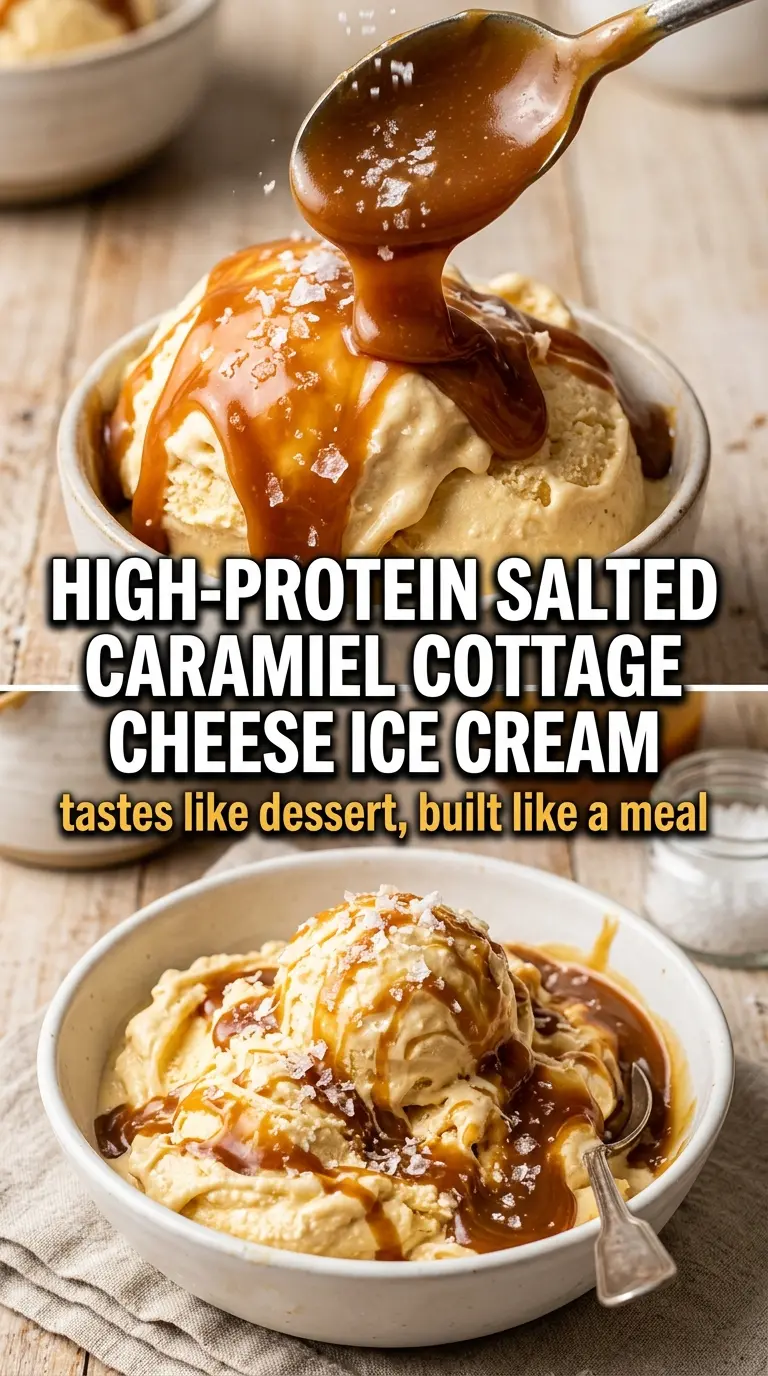
- Full-fat cottage cheese — This is the base, and full-fat gives you a softer, richer freeze than low-fat versions. You can use low-fat in a pinch, but the texture will be icier and less luxurious after freezing. The key is blending until it disappears completely.
- Caramel sauce — This carries the main flavor, so use one you actually like eating off a spoon. A thicker sauce gives a more pronounced caramel taste and helps the base feel denser. If yours is very thin, the ice cream may freeze a little harder.
- Brown sugar — This deepens the caramel note and helps the mixture stay scoopable because sugar lowers the freezing point. White sugar works, but you’ll lose some of that warm molasses edge. If your caramel sauce is already very sweet, reduce this slightly.
- Vanilla extract — Vanilla rounds out the dairy and makes the caramel taste fuller. Skip it and the dessert tastes flatter. Pure vanilla is worth using here since the ingredient list is short.
- Sea salt — Salt is the difference between caramel ice cream and caramel ice cream that tastes like it’s missing something. Fine sea salt blends evenly into the base. Save the flaky salt for the top so you still get those little crunchy bursts.
- Cream cheese — Optional, but it adds body and a little richness that makes the frozen texture feel smoother. It shouldn’t taste tangy if you blend it in well. If you want the lightest version possible, leave it out and add an extra tablespoon of caramel instead.
Blending, Freezing, and the Five-Minute Wait That Matters
Blend Until the Base Looks Silky
Add everything to the blender and keep it going for at least 2 minutes, longer if needed. You’re looking for a completely smooth, pale caramel mixture with no visible curds or specks. If your blender struggles, stop once to scrape down the sides, then blend again until the texture looks almost pourable and glossy. That extra time is what keeps the finished ice cream from tasting icy.
Freeze in a Shallow Container
Pour the blended mixture into a freezer-safe container with a wide surface area so it chills evenly. A shallow dish helps the ice cream set faster and scoop more cleanly than a deep tub. Freeze it for about 4 hours, but check the edges before you walk away from it completely; if it freezes rock-hard in your freezer, it may need a few minutes longer at room temperature before scooping.
Let It Soften Just Enough to Scoop
After freezing, let the container sit out for about 5 minutes before serving. That short rest is the difference between a neat scoop and a broken spoon. Finish with caramel drizzle and a pinch of flaky sea salt right before serving so the topping stays distinct and the salt still pops against the cold creaminess.
How to Adjust the Sweetness, Richness, and Salt Without Losing the Texture
Dairy-Free Version
Use a thick dairy-free yogurt or plant-based cottage cheese alternative if you have one that blends smoothly. The texture will be a little less dense, and the caramel flavor may need an extra pinch of salt to stand out. A coconut-based swap brings more richness, while a neutral almond- or oat-based base keeps the caramel cleaner.
Lower-Sugar Shortcut
Reduce the brown sugar by half and lean on a deeply flavored caramel sauce instead. The result will freeze a little firmer, so plan on a longer softening time before scooping. If you cut the sugar too much, the ice cream loses some of its creamy scoopability.
Extra-Rich Version
Keep the cream cheese and add one extra tablespoon of caramel sauce for a deeper, more dessert-forward finish. This version freezes slightly softer and tastes closer to classic caramel ice cream. It’s the one I’d make for a dinner-party dessert.
Storage and Reheating
- Refrigerator: Not recommended. This is a frozen dessert, and the texture breaks down fast once it thaws.
- Freezer: Store in an airtight container for up to 2 weeks. Press parchment or plastic wrap directly against the surface to limit ice crystals.
- Reheating: There’s no reheating here, but if the ice cream freezes too hard, let it sit at room temperature for 5 to 10 minutes before scooping. Don’t microwave it or the edges will melt before the center softens.
Questions I Get Asked About This Recipe
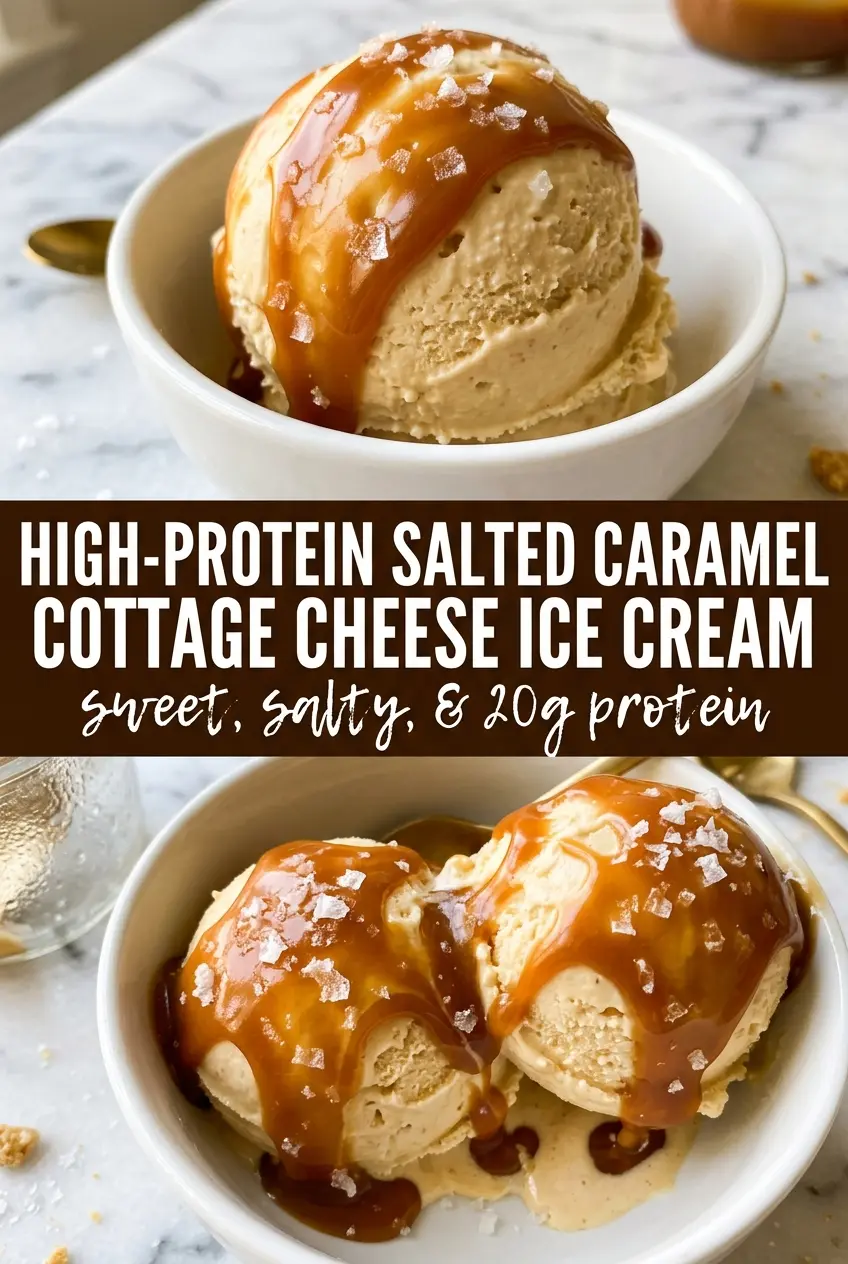
High-Protein Salted Caramel Cottage Cheese Ice Cream
Ingredients
Equipment
Method
- Add full-fat cottage cheese, caramel sauce, brown sugar, vanilla extract, sea salt, and cream cheese (if using) to a stand mixer. Blend for at least 2 minutes, stopping once to scrape the sides, until completely smooth with no visible lumps.
- Taste the mixture and adjust caramel or salt level as needed for your preferred sweet-salty balance.
- Pour the mixture into a freezer-safe container and freeze for 4 hours, until firm and scoopable. Keep the lid closed to prevent ice crystals from forming.
- Remove the container from the freezer and let sit for 5 minutes before scooping. Scoop when softened enough to create creamy spoonable texture.
- Drizzle with extra caramel sauce and finish with a pinch of flaky sea salt before serving. Add immediately for the best contrast between creamy ice cream and crunchy salt.