Gyoza soup turns a simple dumpling dinner into something warm, brothy, and full of texture. The dumplings stay tender, the broth picks up garlic and ginger without tasting heavy, and the bok choy and mushrooms give each bowl enough body to feel like a real meal. The best part is how quickly it comes together once the broth is seasoned right.
What makes this version work is the balance in the broth. Soy sauce brings salt and depth, mirin softens the edges, and a little rice vinegar keeps the whole bowl bright enough that the dumplings don’t taste flat. Adding the gyoza directly to the simmering broth lets them finish gently without tearing, and stirring in sesame oil at the end keeps its flavor fresh instead of cooked off.
Below you’ll find the timing that keeps the dumplings intact, plus a few smart swaps if you’re working with what you have on hand. The details matter here, but none of them are fussy.
The broth tasted like it had simmered all day, and the gyoza stayed intact instead of falling apart. I loved how the sesame oil at the end made the whole bowl smell amazing.
Save this gyoza soup for the nights when you want a fast dumpling bowl with ginger, mushrooms, and a clear savory broth.
The Mistake That Makes Gyoza Soup Taste Flat
The broth needs seasoning before the dumplings go in. If you wait until the end, the gyoza have already absorbed the liquid, and the soup can taste thinner than it should. A little soy sauce, mirin, and rice vinegar in the pot first gives the broth a clear backbone, which matters because the dumplings themselves are mild.
The other trap is boiling too hard. Frozen gyoza can split if they get tossed around in a rolling boil, and the wrappers can turn ragged before the filling is hot. Keep the broth at a steady simmer so the dumplings cook through gently while the mushrooms stay tender and the bok choy keeps some bite.
- Broth — Chicken broth gives the soup more body than plain water, and a good store-bought broth is fine here because the garlic, ginger, and soy sauce do the heavy lifting.
- Gyoza — Frozen dumplings work well and are convenient, but fresh ones need a slightly shorter cook time. Don’t thaw them first unless the package says to; they hold together better going straight into the simmering broth.
- Mirin — This adds a gentle sweetness that rounds out the soy sauce. If you skip it, the broth can taste sharper and less balanced.
- Sesame oil — Add it at the end, not at the beginning. Heat blunts its aroma, so stirring it in right before serving gives the bowl its best finish.
What Each Ingredient Is Actually Doing in This Recipe
- Primary ingredient (the star) — Quality matters most. Choose the best you can find.
- Cooking medium (oil, butter, or broth) — This carries flavors and prevents dryness.
- Seasonings (salt, pepper, spices, herbs) — Layer flavors so nothing overpowers. Build depth gradually.
- Aromatics (garlic, onion, herbs) — Cook with fat to bloom flavors. Become the foundation.
- Supporting ingredients — Complement the main ingredient without overpowering it.
- Sauce or liquid (if applicable) — Brings flavors together. Balance richness with acid.
- Acid (lemon, vinegar, wine, or other) — Brightens and prevents flat-tasting results.
- Final finish (garnish, glaze, or sauce) — Prevents one-dimensional taste and adds visual appeal.
Getting the Dumplings and Broth to Finish at the Same Time
Building the Flavor Base
Start by bringing the broth to a simmer with the garlic, ginger, soy sauce, mirin, and rice vinegar. You want the pot hot enough to steam gently, not bubble aggressively, because that keeps the aromatics clear and the broth from tasting rough. Let this mixture simmer for about 5 minutes so the ginger mellows and the garlic loses its raw edge.
Cooking the Mushrooms First
Add the sliced shiitakes and give them a few minutes in the broth before the dumplings go in. They need a little time to soften and release their flavor, and this step also keeps the soup from feeling like clear broth with things floating in it. If the mushrooms are thickly sliced, they may need the full 4 minutes to lose their chewy edge.
Poaching the Gyoza Gently
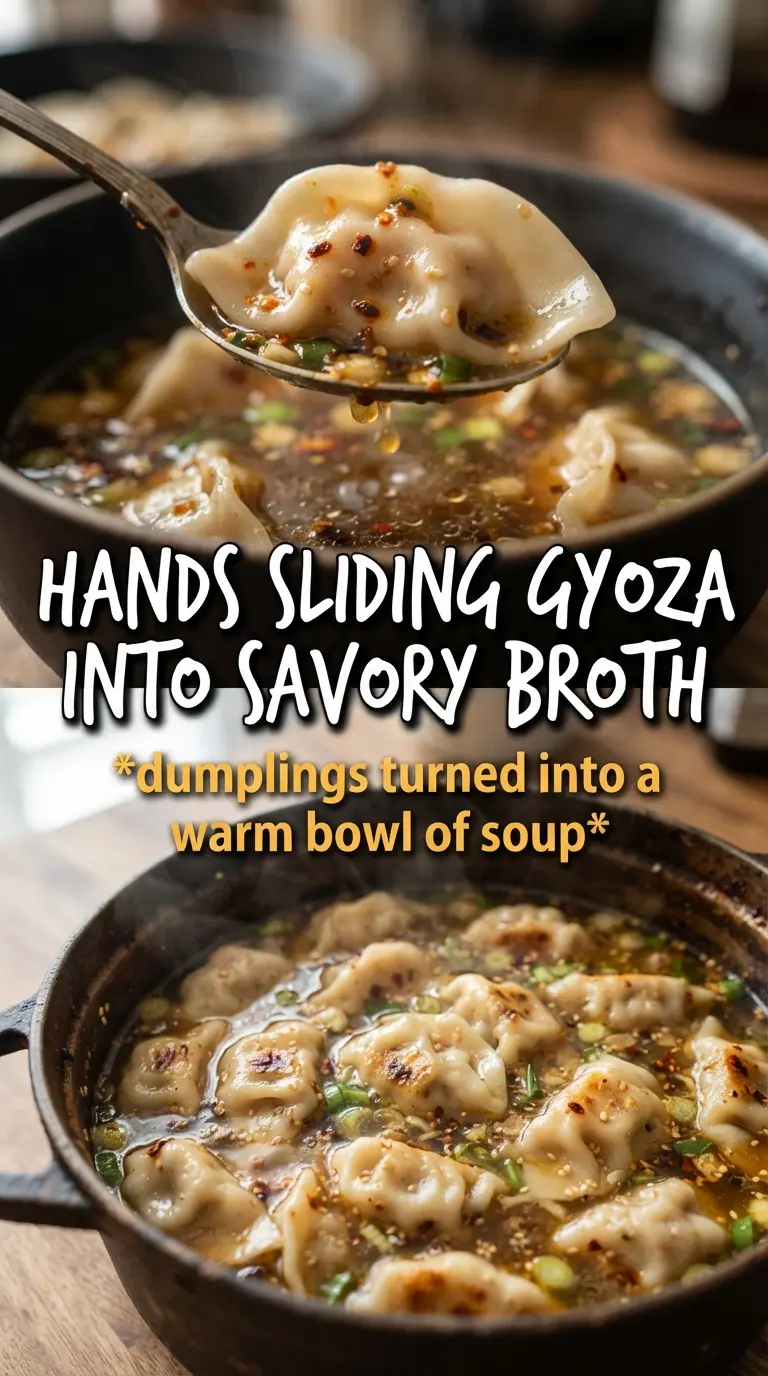
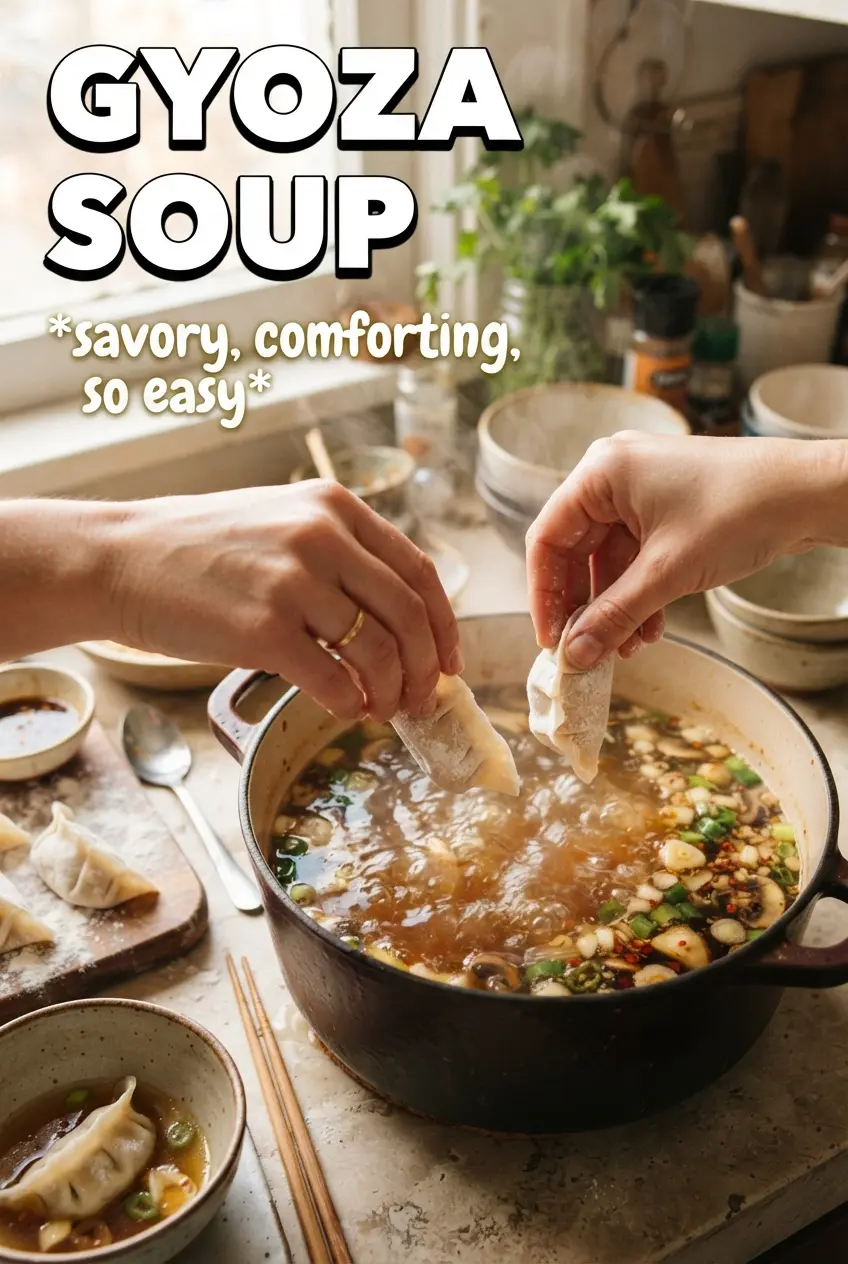
Slide the gyoza into the simmering broth and cook them according to the package timing, usually 5 to 7 minutes. Stir once or twice very gently so they don’t stick to the bottom, but don’t keep agitating them or the wrappers can tear. If you’re using fresh dumplings, check one early; if the wrapper looks translucent and the filling is hot all the way through, they’re done.
Finishing with Bok Choy and Sesame Oil
Add the bok choy near the end and cook just until it wilts and turns bright green, about 2 to 3 minutes. You want the stems tender but still crisp enough to give the soup contrast. Turn off the heat before stirring in the sesame oil, then taste and add salt only if the broth needs it. That last step keeps the sesame flavor clean and fragrant.
How to Adapt This Bowl When You Need a Different Pantry or Protein
Use vegetable broth for a lighter, meat-free bowl
Swap the chicken broth for a good vegetable broth and choose vegetable gyoza. The soup will taste a little cleaner and less savory, so keep the ginger, soy sauce, and mushrooms in place; they carry the depth that chicken broth usually provides.
Make it gluten-free with the right dumplings and soy sauce
Use gluten-free dumplings and tamari or a certified gluten-free soy sauce. The broth itself stays the same, but check the dumpling wrapper ingredients carefully, since that’s usually where the gluten hides.
Add shrimp or shredded chicken for a heartier main course
Cook peeled shrimp in the broth for the last 2 to 3 minutes, or stir in cooked shredded chicken at the end. Both additions turn the soup into a bigger meal, but keep the timing tight so the shrimp stay tender and the chicken doesn’t dry out.
Storage and Reheating
- Refrigerator: Store leftovers up to 3 days. The dumplings will soften as they sit, and the bok choy will lose some bite.
- Freezer: Freezing isn’t ideal once the dumplings and greens are in the soup, since the wrappers can turn mushy after thawing. If you want to plan ahead, freeze the broth base separately and cook fresh gyoza into it later.
- Reheating: Warm the soup gently over low heat until just steaming. A hard boil will break up the dumplings and make the greens tired, so heat it slowly and stop as soon as it’s hot.
Questions I Get Asked About This Recipe
Gyoza Soup
Ingredients
Equipment
Method
- Bring chicken broth to a simmer in a large pot over medium-high heat. Add garlic, ginger, soy sauce, mirin, and rice vinegar, then keep it gently simmering.
- Simmer the broth for 5 minutes to blend flavors. Add shiitake mushrooms and cook 3-4 minutes until tender.
- Add gyoza directly to the simmering broth, then cook according to package directions (usually 5-7 minutes) until cooked through. Keep the broth at a steady simmer during cooking.
- Add bok choy and cook 2-3 minutes until wilted and bright green. Stir gently so the dumplings stay submerged.
- Stir in sesame oil and taste the broth, then season with salt to your preference. Turn off the heat to avoid overcooking the bok choy.
- Serve immediately, topped with green onions, sesame seeds, and chili oil. Drizzle chili oil lightly for heat.