Zucchini lasagna with ground turkey lands in that sweet spot where the layers still feel comforting, but the finished dish isn’t heavy or watery. The zucchini softens into tender planks, the turkey sauce brings enough richness to stand in for a classic meat ragù, and the ricotta layer keeps every slice creamy without turning the whole pan dense. When it’s done right, you get clean slices that hold together and a bubbling top with golden mozzarella edges.
The part that matters most here is moisture control. Zucchini gives up a lot of water, and if you skip the salting and roasting, the whole pan can slide apart at the first scoop. I also like using ground turkey that’s browned well before the sauce goes in, because that extra color builds the savory base you need when there’s no beef or pasta to lean on.
Below, I’ll walk through the part that keeps the layers intact, the ingredient swaps that actually work, and the rest time that makes slicing so much easier. If you’ve ever had vegetable lasagna collapse into a puddle, this version fixes that problem.
I followed the zucchini salting and roasting exactly, and the lasagna held its layers instead of turning watery. The ricotta stayed creamy, and the turkey sauce had enough flavor that nobody missed the noodles.
Save this zucchini lasagna with ground turkey for a layered, low-carb dinner with creamy ricotta and a deeply savory turkey sauce.
The Moisture Trap Most Zucchini Lasagnas Fall Into
Zucchini acts like a sponge in the oven. If it goes into the pan wet, the sauce loosens, the cheese slides, and the bottom turns soupy before the top has a chance to brown. Salting the planks first pulls out a surprising amount of water, and roasting them for a few minutes after patting them dry tightens the texture just enough to keep the layers distinct.
The other thing that helps is using a sauce that’s already concentrated. Ground turkey needs a proper browning step before the marinara goes in, because turkey can taste flat if it just simmers in sauce from the start. Those browned bits in the skillet carry the flavor, and once the marinara reduces for a few minutes, the whole pan tastes fuller and holds up better between the zucchini layers.
What Each Layer Is Doing in This Lasagna
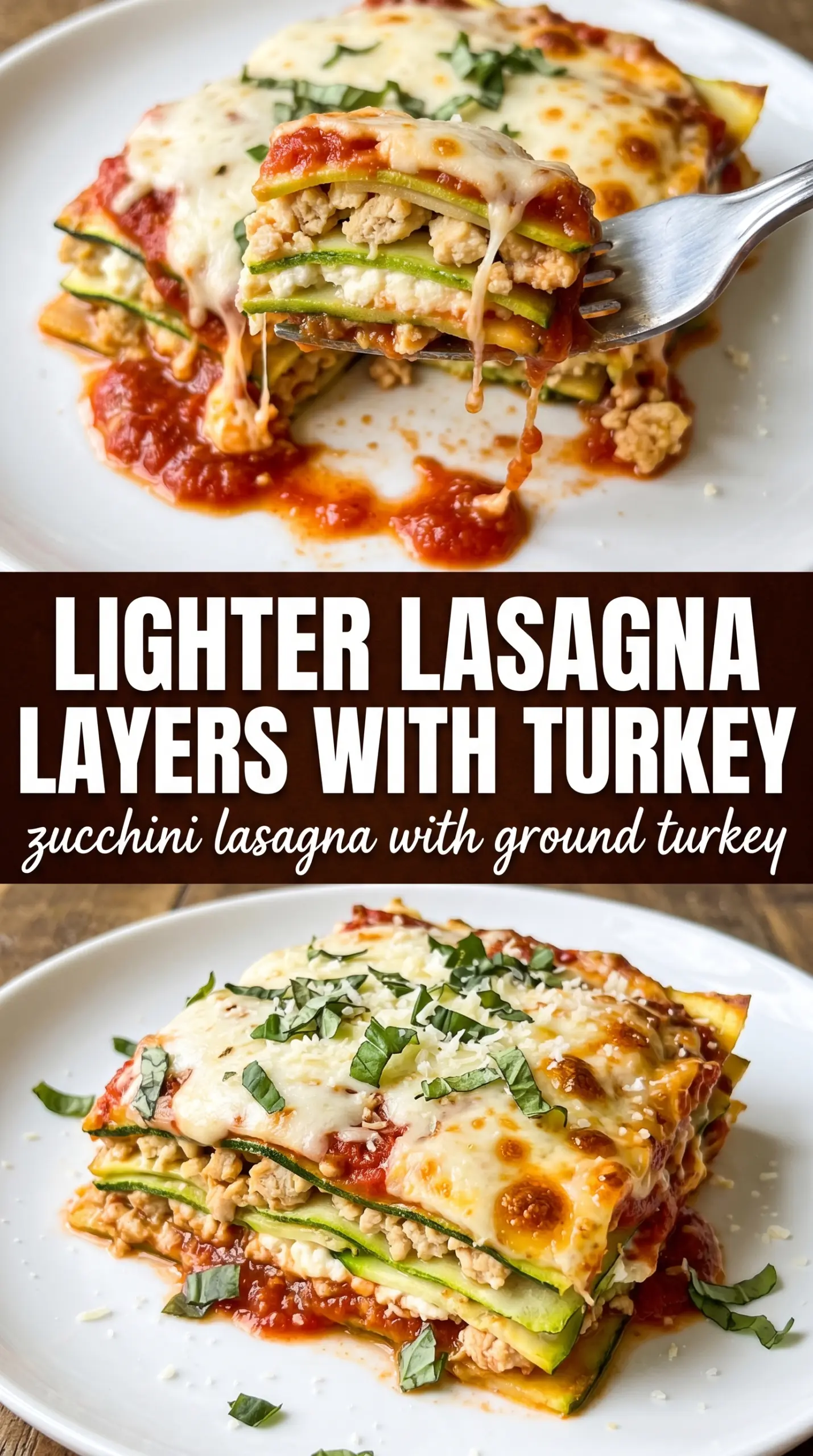
- Zucchini — Thin planks work better than thick slices because they soften evenly and still hold shape. If your zucchini are especially large and seedy, scoop out the watery center a little before slicing; that keeps the finished lasagna from flooding the pan.
- Ground turkey — This is where the savory backbone comes from. Lean turkey is fine here because the marinara and cheeses carry the richness, but don’t skip browning; pale turkey tastes thin, while browned turkey tastes layered and meaty.
- Ricotta — The egg and parmesan help it set instead of running through the layers. If your ricotta is loose, drain it in a fine mesh strainer for 15 to 20 minutes before mixing so the filling stays creamy instead of watery.
- Mozzarella — Shredded mozzarella gives you that stretchy top and helps the slices hold together once the lasagna rests. Pre-shredded works, but a block you shred yourself melts a little smoother and browns more evenly.
- Marinara — Use a sauce you’d actually eat on its own. Since there aren’t many ingredients here, a bland jarred sauce stays bland; a well-seasoned marinara gives the whole dish its tomato base.
Building the Layers So the Lasagna Slices Cleanly
Dry the Zucchini First
Salt the zucchini planks and let them sit long enough to draw out the moisture, then pat them dry until the surface feels tacky instead of wet. Roast them at 425°F just long enough to soften and drive off more water; they should look a little wilted, not browned and shriveled. If you skip this step, the zucchini will steam inside the lasagna and the layers will slump when you cut it.
Cook the Turkey Until It Browns
Brown the turkey with the onion over medium-high heat before adding garlic and seasoning. You want some color on the meat and a few browned bits stuck to the skillet, because that’s where the deep savory flavor comes from. If the pan looks crowded and the turkey is just steaming, give it a minute to sit undisturbed so it can actually brown.
Build the Filling, Then Let the Pan Rest
Mix the ricotta with the egg, parmesan, basil, salt, and pepper until it looks cohesive and thick. When you assemble the lasagna, start with a thin layer of sauce, then zucchini, then ricotta, then more sauce and cheese; that base layer keeps the first zucchini from sticking and burning. After baking, let the pan rest for the full 15 minutes so the ricotta and sauce set up; cutting it too early is the fastest way to get a messy pile instead of squares.
How to Adapt This Zucchini Lasagna Without Losing the Structure
Dairy-Free Version with Cashew Filling
Swap the ricotta mixture for a thick blended cashew filling and use a dairy-free mozzarella-style cheese on top. The dish will still hold together, but the filling tastes a little less tangy than ricotta, so the basil and parmesan-style seasoning matter more for balance.
Gluten-Free and Low-Carb as Written
This recipe is already naturally gluten-free and low in carbs as long as your marinara doesn’t contain added sugar or flour-thickened ingredients. Check the jar if that matters to you, because some sauces add starch that can make the tomato layer looser.
Swap Ground Turkey for Italian Sausage
Use half or all Italian sausage if you want a richer, spicier filling. You’ll get more fat and more seasoning, so go lighter on added salt until you taste the sauce; the finished lasagna will be deeper and more traditional, but less lean.
Make It Ahead for an Easier Dinner
Assemble the lasagna up to a day ahead, cover it tightly, and refrigerate it before baking. Cold lasagna needs a few extra minutes in the oven, and baking it straight from the fridge helps the layers firm up before the cheese fully melts, which improves slicing.
Storage and Reheating
- Refrigerator: Store leftovers in an airtight container for up to 4 days. The zucchini softens a little more as it sits, but the flavor gets even better by day two.
- Freezer: Freeze individual portions or the whole baked lasagna tightly wrapped for up to 2 months. Thaw overnight in the fridge before reheating so the center warms evenly.
- Reheating: Reheat covered in a 350°F oven until hot in the center, or warm single portions in the microwave at medium power. High heat is what turns the cheese greasy and pushes more water out of the zucchini.
Answers to the Questions Worth Asking
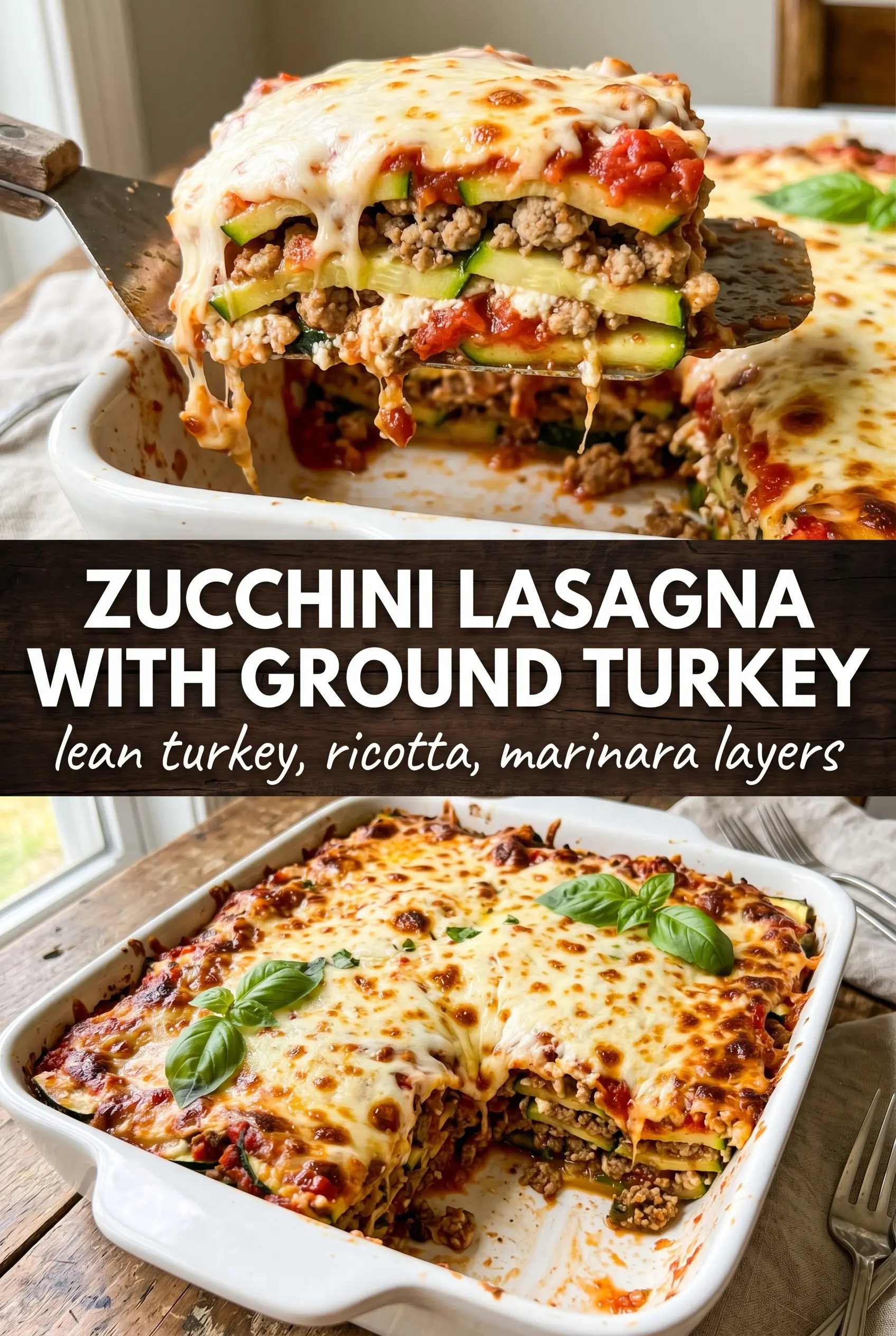
Zucchini Lasagna with Ground Turkey
Ingredients
Equipment
Method
- Salt the zucchini planks and let sit for 20 minutes. Pat completely dry so the surface is not wet before baking.
- Roast the dried zucchini on a sheet pan at 425°F for 10 minutes to drive off moisture. Remove when tender and slightly softened.
- Cook the ground turkey with the diced onion in a skillet over medium-high heat until browned. Stir and break up the meat as it cooks.
- Add the minced garlic, fennel seeds (if using), marinara sauce, and Italian seasoning, then simmer for 10 minutes. Season with salt and pepper to taste and simmer until the sauce thickens slightly.
- Mix ricotta with the egg, grated parmesan, chopped basil, salt, and pepper until smooth. Stop when fully combined with no dry cheese pockets.
- Preheat the oven to 375°F and grease a 9x13 baking dish. Lightly coat the bottom and corners so layers release easily.
- Assemble by spreading 1/2 cup turkey sauce on the bottom, then layering zucchini planks, ricotta, turkey sauce, and mozzarella. Repeat layers, finishing with turkey sauce and mozzarella on top.
- Cover with foil and bake for 40 minutes at 375°F. Look for bubbling at the edges when you remove the foil.
- Uncover and bake for 15 minutes at 375°F until deeply golden. The top should be browned and set, not watery.
- Rest the lasagna for 15 minutes before slicing. This helps the layers firm up for clean cuts.