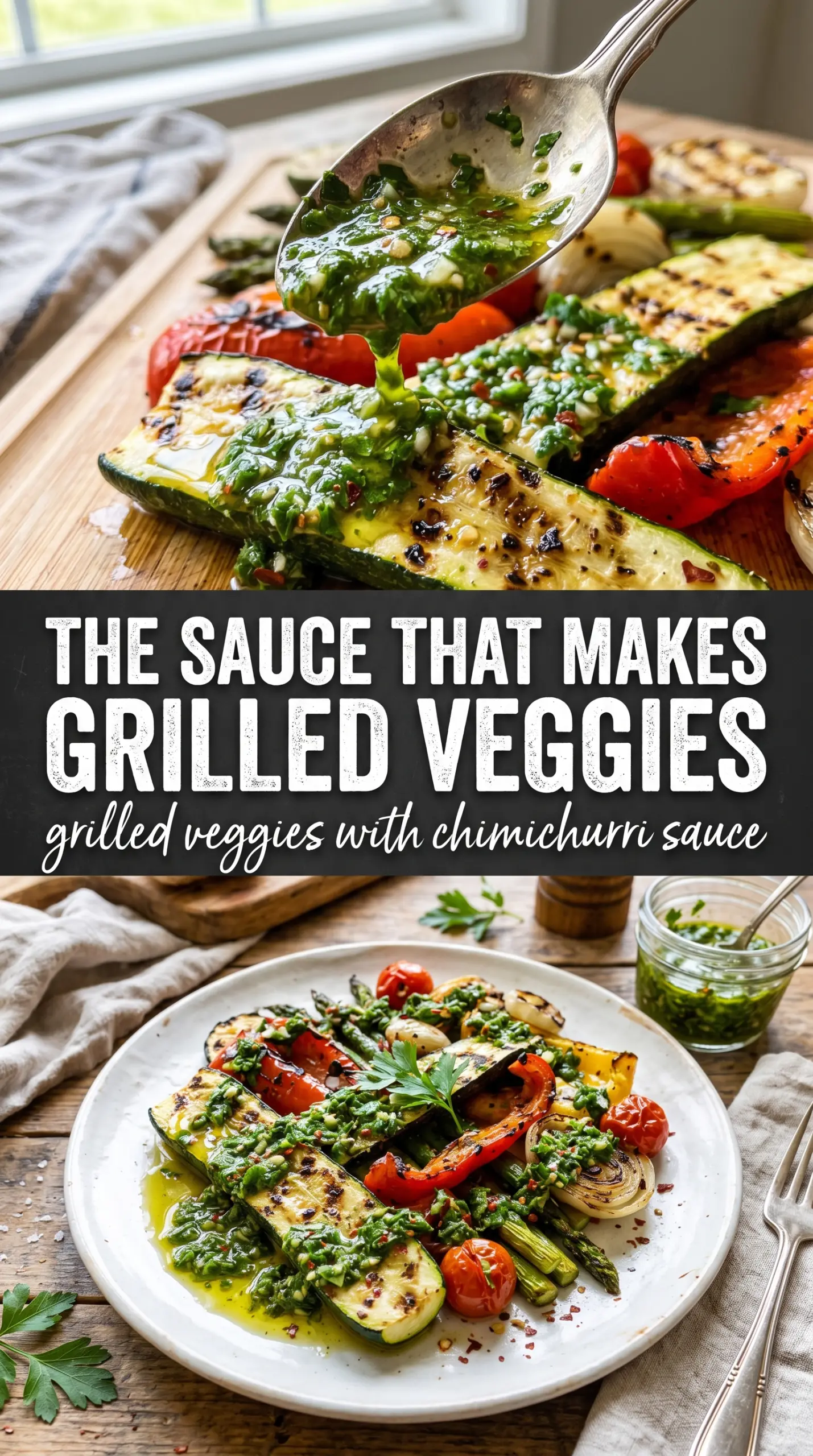
Grilled vegetables get a whole lot more interesting when they’re finished with a bright chimichurri that cuts through the smoke and brings every bite back to life. The vegetables stay tender with those deep grill marks you actually want, while the sauce gives you garlic, herbs, vinegar, and heat in one sharp, vibrant spoonful. It’s the kind of side dish that disappears fast because it tastes like more than the sum of its parts.
The trick here is not to drown the vegetables in oil before they hit the grill. A light coat is enough to keep them from sticking and help the edges blister, but too much oil softens the surface before it has a chance to char. The chimichurri also works best when it’s chopped rather than puréed smooth, so it keeps some texture and clings to the vegetables instead of sliding off.
Below, I’ll show you how to get the grill hot enough for good color without turning the vegetables mushy, plus a few smart swaps if you need to adjust what’s on hand.
The chimichurri was the best part — I chopped it instead of blending it smooth, and it clung to the zucchini and eggplant perfectly. Even the onions stayed sweet with those crisp charred edges.
Save these grilled vegetables with chimichurri for the next barbecue when you want a smoky side dish that still tastes bright and fresh.
The Grill Marks That Keep the Vegetables From Going Soft
Vegetables fail on the grill for two reasons: they’re cut too thin, or the heat never gets high enough to sear the surface before the insides collapse. Zucchini, eggplant, peppers, and onion all need enough thickness to hold their shape, and they need direct contact with a hot grate to build flavor before they start releasing moisture. That first bit of color matters more than extra minutes on the grill.
Eggplant is the one people get nervous about, but it behaves well here if you slice it into half-inch planks and season it lightly. Thin slices dry out fast and thick slabs can turn spongy before they char. Bell peppers and onion rounds need enough time to soften, but not so much that they lose their structure. Pull them when they’re tender with defined grill marks, not floppy.
What the Chimichurri Is Doing Besides Adding Green Color
- Parsley — This is the backbone of the sauce. It stays grassy and fresh even after the garlic and vinegar go in. Flat-leaf parsley works best because it blends without turning muddy.
- Cilantro — It adds brightness and a little lift. If you’re one of those people who really dislikes cilantro, replace it with more parsley and a few tender mint leaves for freshness without the soapy edge.
- Garlic — Raw garlic is what gives chimichurri its bite. Four cloves sound bold, but the vegetables mellow it out. If your garlic is especially sharp, let the sauce sit for 10 minutes before serving so it softens.
- Red wine vinegar — This keeps the sauce from tasting flat. Lime juice changes the flavor enough that it no longer reads like chimichurri, so vinegar is the better swap if you want the right balance.
- Olive oil — Use a decent one here because the sauce is mostly oil and herbs. You don’t need the most expensive bottle on the shelf, but a harsh oil will show up immediately.
- Dried oregano and red pepper flakes — These bring the savory, slightly spicy finish that makes the sauce feel complete. Fresh oregano can overpower the herbs, so dried is the cleaner choice in this dish.
How to Keep the Vegetables and Sauce Working at the Same Time
Chopping the Chimichurri Without Turning It Into Paste
Start the sauce first so the garlic and herbs have time to settle while you grill. Pulse everything just until the herbs are broken down and the mixture looks loose and textured, not smooth like pesto. If you overprocess it, the sauce turns dull and the herbs lose their shape. Taste it after a minute of resting, because vinegar and salt read more clearly once the mixture sits.
Oiling the Vegetables for the Grill
Brush the vegetables lightly with olive oil and season them just before they go on the grill. If they sit salted too long, zucchini and eggplant will start pulling out water and the surface won’t sear as well. The goal is a thin, even sheen, not a slick coating. You should hear a clean sizzle when the vegetables hit the grate.
Grilling in the Right Order
Put the bell peppers on first if your grill runs hot, since they need the most time to soften. Zucchini and eggplant cook faster and should come off with deep marks and a little give in the center. Onion rounds need gentle handling so they stay intact; slide a thin spatula under them before you turn them. If something is charring before it softens, move it to a cooler spot on the grill instead of keeping it over direct heat.
Finishing on the Platter
Arrange the vegetables as they come off the grill so they keep their shape and don’t steam in a pile. Spoon the chimichurri over the top while they’re still warm, not blazing hot, so the herbs stay bright instead of wilting instantly. Some of the sauce will soak into the vegetables and some will pool on the platter, and that’s what you want. Serve it right away, or let it sit a few minutes if you want the flavors to settle together.
How to Adapt This for a Smaller Grill, No Cilantro, or a Dairy-Free Table
No cilantro
Swap the cilantro for extra parsley and a small handful of mint. You’ll lose a little of the sharp herbal edge, but the sauce stays bright and fresh instead of collapsing into a parsley-only paste.
Dairy-free and gluten-free as written
This recipe already fits both without changes. The only place people trip up is with bottled chimichurri-style seasoning mixes that sometimes sneak in additives, so stick with the herbs, vinegar, garlic, and oil here.
Making it on a grill pan or under the broiler
A grill pan gives you the same char pattern, but work in batches so the pan stays hot. Under the broiler, place the vegetables close to the heat and watch them closely, because the line between browned and burned is narrow. The flavor stays strong, but the vegetables will be a little less smoky than over live fire.
Storage and Reheating
- Refrigerator: Store the vegetables and chimichurri separately for up to 3 days. The vegetables soften a little, but they still taste good cold or at room temperature.
- Freezer: The grilled vegetables don’t freeze well because they lose their texture. The chimichurri can be frozen in a small container, though the herbs will darken a bit when thawed.
- Reheating: Warm the vegetables in a skillet over medium heat or on a sheet pan in a hot oven until just heated through. Don’t microwave them if you want to keep the edges from turning limp.
Questions I Get Asked About This Recipe
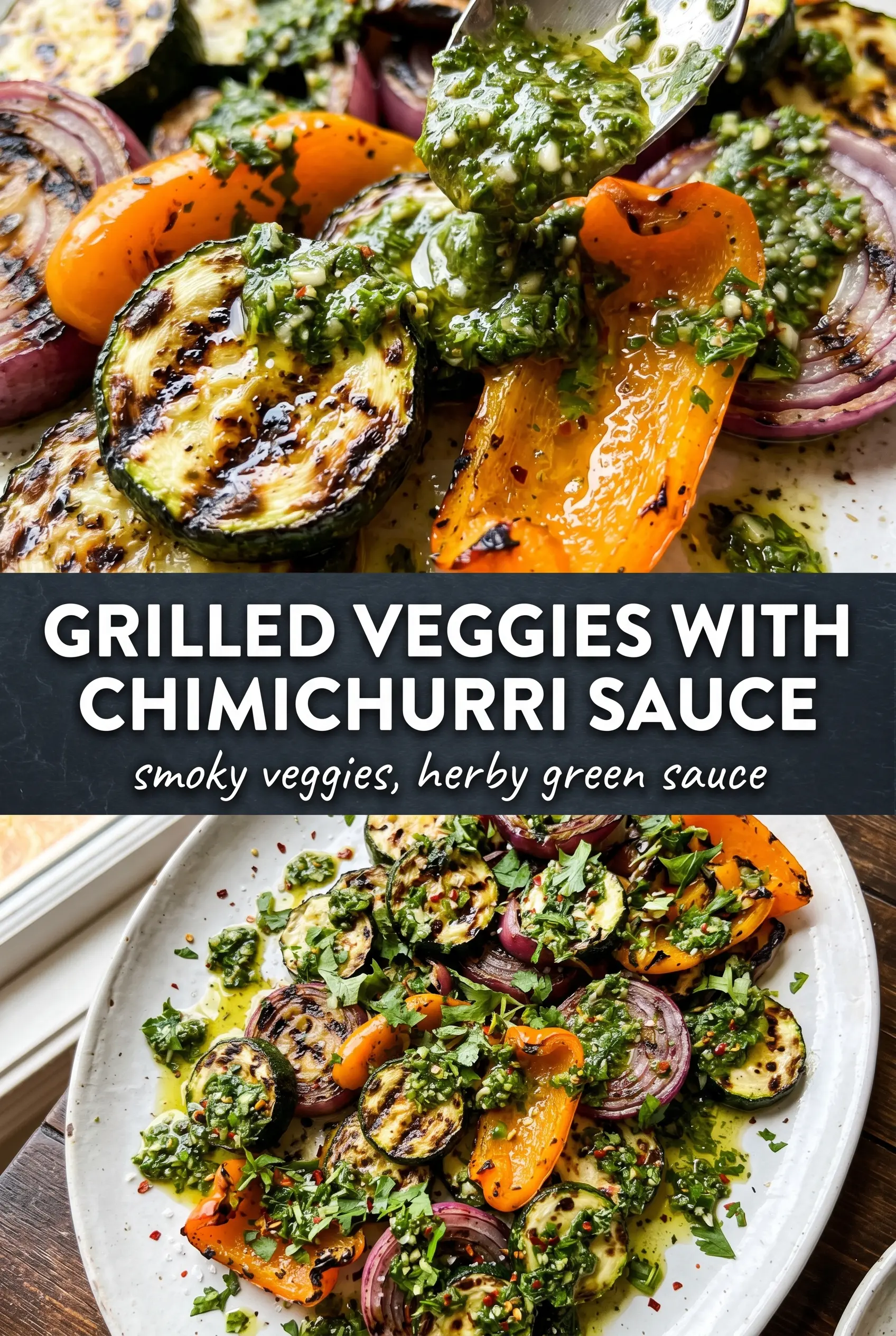
Grilled Veggies with Chimichurri Sauce
Ingredients
Equipment
Method
- Blend parsley, cilantro, garlic, olive oil, red wine vinegar, dried oregano, and red pepper flakes until roughly chopped, not fully smooth; adjust with salt and pepper, then set aside.
- Brush zucchini, bell peppers, eggplant, and red onions with olive oil, then season all over with salt and pepper.
- Preheat the grill to medium-high and oil the grates.
- Grill bell peppers for 4–5 minutes per side until char marks form and they are tender.
- Grill zucchini and eggplant for 3–4 minutes per side until char marks form and they are tender.
- Grill onion rounds for about 3 minutes per side until char marks form and they are tender.
- Arrange the grilled vegetables on a large serving platter as they come off the grill.
- Spoon chimichurri generously over all the vegetables, ensuring the charred surfaces are well coated.
- Serve immediately at any temperature.