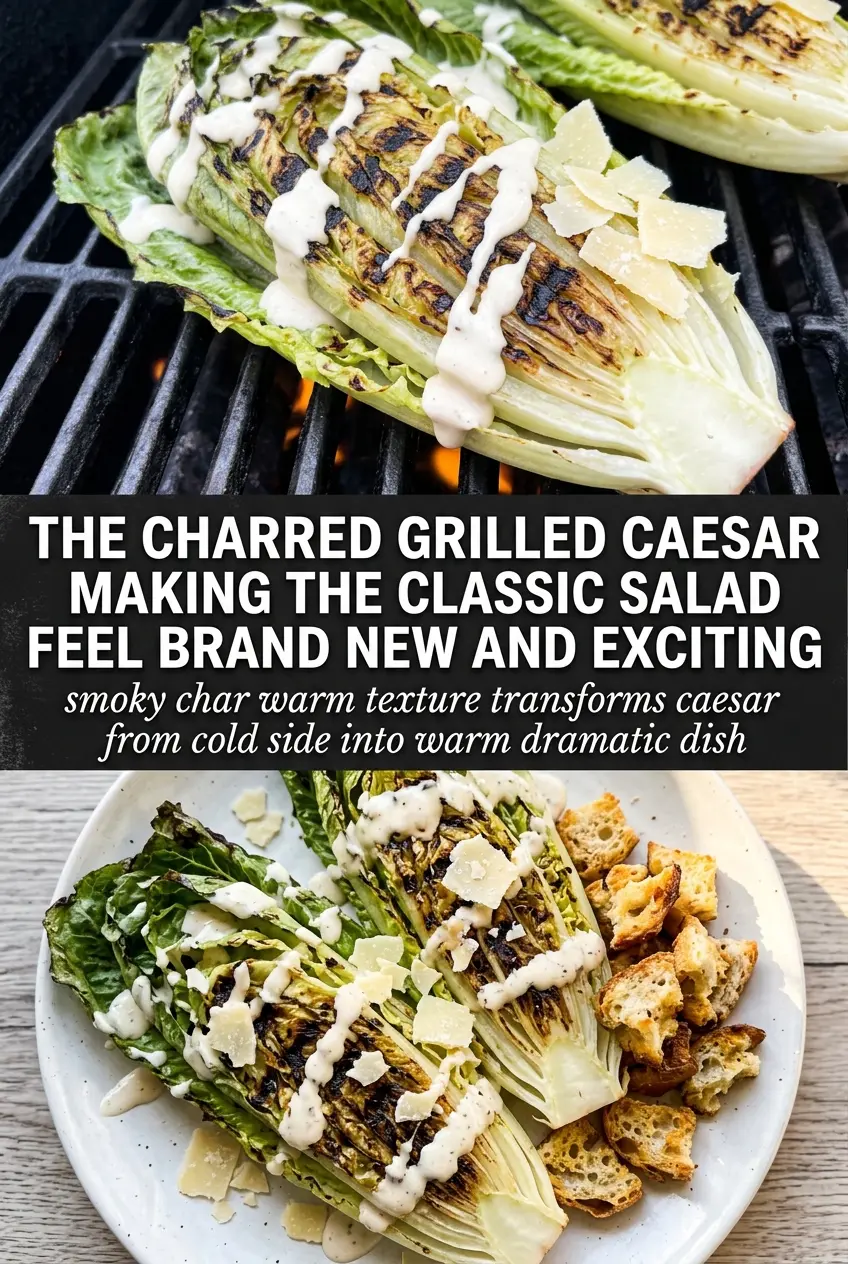
Charred romaine turns Caesar salad into something sharper, smokier, and a little more interesting than the usual bowl of cold leaves. The grill takes just enough water out of the lettuce to give it structure, while the cut sides pick up bitter-sweet edges that play nicely with the creamy dressing and salty Parmesan. It still eats like a salad, but it lands on the plate with a little more personality.
The key is a fast, hot grill and romaine hearts that stay intact. If the heat is too low, the lettuce softens before it chars, and you lose that crisp-tender bite that makes this version worth making. The dressing also needs balance: enough lemon to cut through the mayonnaise, enough garlic to show up, and just enough Worcestershire to give the whole thing depth without making it taste heavy.
Below, I’ve included the small details that matter most — how to keep the romaine from collapsing on the grill, what to look for in the dressing texture, and a few useful swaps if you want to make it your own.
The romaine held its shape on the grill and got those perfect char marks without going limp. The dressing was creamy, bright, and had just enough garlic to taste like Caesar without overpowering the lettuce.
Like this grilled Caesar salad? Save it for the nights when you want smoky romaine, creamy dressing, and crisp croutons on one plate.
The Part That Keeps Grilled Romaine Crisp Instead of Limp
Grilled romaine fails for one simple reason: it sits on the heat too long. The goal isn’t to cook the lettuce through. It’s to scorch the cut surface fast enough to pick up flavor while the inner leaves stay cool and crunchy. Medium-high heat gives you that window, but only if the grill is already hot before the lettuce goes on.
Brush the cut sides lightly with oil so they don’t stick and season right before grilling. If you salt too early, the cut edges start leaking water and the lettuce loses its snap. Two to three minutes cut-side down is enough for most romaine hearts; if yours are especially small, start checking at the 90-second mark.
What Each Ingredient Is Actually Doing in This Dish

- Romaine hearts — These are sturdy enough to hold up to the grill and still stay crisp in the center. Use full hearts, not loose leaves; you want the wedge shape so the salad can be plated cleanly and the cut side can char without falling apart.
- Olive oil — A thin coating keeps the lettuce from welding itself to the grates and helps the cut surface blister instead of drying out. You don’t need a fancy bottle here, but use a fresh-tasting oil since it shows up in the first bite.
- Mayonnaise — This gives the dressing body without needing egg yolks or a blender. It also clings to the warm lettuce better than a thinner dressing would, which matters once the romaine comes off the grill.
- Parmesan — Grated Parmesan melts into the dressing for salt and depth, while shaved Parmesan on top adds texture. If you buy one ingredient that’s worth stepping up, make it the cheese.
- Dijon and Worcestershire — Dijon sharpens the dressing and helps it emulsify, while Worcestershire brings the savory backbone that makes Caesar taste like Caesar. You need both for balance; leaving one out makes the dressing flatter.
- Lemon juice and garlic — Lemon keeps the dressing bright enough to handle the smoky lettuce, and garlic gives it the classic bite. Fresh lemon matters here, and the garlic should be finely minced so you don’t hit raw chunks in the finished salad.
How to Grill the Lettuce and Finish It Cleanly
Prepping the Romaine
Cut the romaine hearts lengthwise and keep the core attached so each half stays together on the grill. Pat the cut sides dry before brushing on oil; wet lettuce steams before it chars. Season right before it hits the heat so the salt doesn’t pull moisture out early.
Getting the Char
Lay the romaine cut-side down over medium-high heat and leave it alone for 2 to 3 minutes. You’re looking for deep grill marks and just a little collapse at the edges, not a wilted pile. If the leaves start to blacken all over, the fire is too hot or the lettuce stayed on too long.
Building the Dressing
Whisk the mayonnaise, Parmesan, lemon juice, garlic, Dijon, Worcestershire, salt, and pepper until smooth and spoonable. If the dressing looks thick enough to hold on the back of a spoon, it’s ready; if it seems pasty, add a small splash of water or a little more lemon juice. The garlic should disappear into the mixture, not sit there in little raw pieces.
Plating with the Right Texture Mix
Set the grilled romaine on plates while it’s still warm, then drizzle on the dressing instead of tossing everything together. That keeps the char visible and the lettuce from getting crushed under the croutons. Finish with croutons, shaved Parmesan, and lemon wedges so each bite can lean smoky, creamy, salty, or bright depending on how you build it.
Three Ways to Adapt This Grilled Caesar Salad
Dairy-Free Caesar With the Same Sharp Finish
Use a dairy-free mayonnaise and replace the Parmesan with 1 to 2 teaspoons of nutritional yeast plus an extra pinch of salt. You’ll lose the nutty sharpness of real Parmesan, but the dressing still comes across creamy, tangy, and savory enough to stand up to the grilled romaine.
Make It a Main with Chicken or Salmon
Add sliced grilled chicken breast or leftover salmon on top and keep the rest of the salad exactly the same. The smoky lettuce and creamy dressing can handle a richer protein, but don’t overdo the toppings or you’ll bury the charred romaine that makes the dish special.
Gluten-Free Version
Swap in certified gluten-free croutons or use toasted gluten-free bread cubes seasoned with olive oil and salt. The texture stays crisp, which is what matters most here; if the bread is already sturdy, it’ll still give you the crunch you want against the warm lettuce.
Storage and Reheating
- Refrigerator: Store the grilled romaine and dressing separately for up to 2 days. The lettuce will soften a little, but it still works well if you’re assembling leftovers for lunch.
- Freezer: Don’t freeze this salad. The lettuce turns watery and the dressing separates once thawed.
- Reheating: Reheat the romaine quickly in a dry skillet for 20 to 30 seconds per side if you want to bring back a little warmth, but don’t chase a full re-grill. The common mistake is microwaving it, which makes the leaves limp and mutes the char.
Answers to the Questions Worth Asking
Grilled Caesar Salad
Ingredients
Equipment
Method
- Brush cut sides of romaine hearts with olive oil and season with salt and pepper.
- Grill cut-side down over medium-high heat for 2-3 minutes until charred.
- Whisk together mayonnaise, Parmesan cheese, lemon juice, garlic, Dijon mustard, Worcestershire sauce, salt, and black pepper until smooth.
- Place grilled romaine hearts on plates, drizzle with Caesar dressing.
- Top with croutons, shaved Parmesan cheese, and lemon wedges.