Grilled ranch garlic parmesan chicken skewers come off the grill juicy in the middle with a savory, lightly crusted coating that clings to every bite. The ranch seasoning brings the familiar tang, the garlic gives the marinade backbone, and the parmesan turns golden at the edges instead of sliding off into the fire. You get the kind of chicken that disappears fast because it tastes like it was built for dipping, sharing, and going back for “just one more.”
The part that makes this version work is the balance in the marinade. Ranch dressing alone can be too loose, and parmesan alone can scorch before the chicken cooks through. Mixing them with olive oil gives the coating enough body to cling, while a short marinade keeps the dairy and cheese from getting muddy on the grill. The other piece that matters is the cut size: even chunks cook at the same pace, which is how you get char on the outside and still keep the center juicy.
Below you’ll find the small details that keep the chicken from sticking, the swap that works if you need a dairy-free version, and the timing that keeps the skewers from drying out before the center reaches temperature.
The parmesan stuck to the chicken instead of burning on the grill, and the ranch flavor was in every bite. I did 30 minutes of marinating and the chicken came out juicy with great char marks.
Grilled Ranch Garlic Parmesan Chicken Skewers with that crispy parmesan edge are made for the grill nights when you want big flavor without a long ingredient list.
The Marinade Has to Coat, Not Soak
The most common mistake with cheese-forward chicken skewers is treating the marinade like a bath instead of a coating. If the mixture is too thin, the parmesan and seasoning slide off before the chicken ever hits the grill, and what you taste later is mostly charred dairy stuck to the grates. This recipe keeps enough olive oil and dressing in the mix to cling to the chicken, which helps the seasoning brown instead of disappearing.
Short marinating time matters here. Ranch dressing contains enough acidity and salt to season the chicken quickly, but leaving it overnight can soften the outside too much and mute the parmesan. Thirty minutes to two hours is the sweet spot: enough time for the garlic and herbs to get into the meat without turning the texture soft or chalky.
- Chicken breast chunks — Cut them into even pieces, about 1 1/2 inches across. Uneven chunks mean some pieces dry out before others reach temperature.
- Parmesan — Freshly grated parmesan gives the best grip and browning. The finely shredded stuff from a bag can work in a pinch, but it won’t melt and cling as cleanly.
- Ranch dressing and ranch seasoning — The dressing carries fat and tang, while the dry seasoning gives the sharp ranch flavor that survives the grill. If you only use one or the other, the flavor gets flatter.
- Garlic — Fresh garlic matters here because it rounds out the saltiness from the ranch and parmesan. Jarred garlic works, but the flavor is softer and less punchy.
What Each Ingredient Is Actually Doing in Grilled Ranch Garlic Parmesan Chicken Skewers

- High heat (essential for browning) — High heat creates crust and caramelization. Medium heat just cooks without developing flavor.
- Oil or fat (for browning and flavor) — The fat helps transfer heat and create crust. It also carries seasonings.
- Salt and seasoning (bold, applied before) — Season confidently. The high heat cooking mellows flavors slightly.
- No moving it around (let it sit) — The food needs time to develop crust. Constant flipping and moving prevents browning.
- Timing (watch carefully) — High heat cooks fast. Check doneness frequently to avoid overcooking.
- Optional: finishing sauce or glaze — Apply in the last minute for flavor without burning. Heavy sauces applied early can char.
- Resting time (5-10 minutes before serving) — Resting allows juices to reabsorb. Cutting right away lets them run out.
- Optional: smoke or char flavor (if available) — Wood smoke or char adds depth. Build the fire strategically for the flavor you want.
Getting the Grill Marks Without Drying Out the Chicken
Building the Coating
Mix the ranch dressing, olive oil, parmesan, garlic, ranch seasoning, Italian seasoning, salt, and pepper until the chicken looks evenly slicked and speckled with cheese. The marinade should cling in a thick layer, not pool at the bottom of the bowl. If it looks greasy and separated, whisk again before adding the chicken. That helps the parmesan stay distributed instead of collecting in clumps.
Skewering for Even Cooking
Thread the chicken onto soaked wooden skewers with a little space between the pieces. Crowding the chicken traps steam, and steam is what keeps you from getting those browned edges. Leave just enough room so heat can move around the pieces, and don’t pack the skewer so tight that the centers stay cool while the outside chars.
Grilling to Temperature
Preheat the grill to medium-high and oil the grates before the skewers go on. Place the chicken over direct heat and grill for 5 to 6 minutes per side, turning once, until the outside has char marks and the center reaches 165°F. If the parmesan starts to darken too fast, move the skewers to a cooler part of the grill for the last minute or two. Let them rest briefly after grilling so the juices settle instead of running out onto the platter.
How to Adapt These Skewers for Different Grills and Diets
Dairy-Free Version
Use a dairy-free ranch dressing and swap the parmesan for a tablespoon or two of nutritional yeast. You won’t get the same salty crust, but you will keep the ranch-herb backbone and the savory finish without the dairy.
Chicken Thigh Swap
Boneless skinless thighs work beautifully if you want a richer, juicier result. They can take a little more grill time, but they stay tender even if the heat runs a touch high, which makes them more forgiving for cookouts.
Oven or Broiler Method
If grilling isn’t an option, arrange the skewers on a foil-lined sheet pan and broil them close to the heat source, turning once. The flavor still lands, but you’ll get more even browning than char, and you need to watch closely because the parmesan can go from golden to dark in a minute.
Making Them Ahead
You can marinate the chicken up to two hours ahead and thread the skewers shortly before cooking. If the chicken sits on the skewers too long, the seasoning can slide toward the bottom and the wood can start pulling moisture from the meat.
Storage and Reheating
- Refrigerator: Store leftovers for up to 3 days. The parmesan coating softens a bit, but the flavor holds well.
- Freezer: Freeze the cooked chicken off the skewers for up to 2 months. Wrap tightly and thaw in the refrigerator before reheating.
- Reheating: Warm in a 325°F oven until heated through, or use a covered skillet over low heat. High heat dries the chicken fast and can make the cheese coating tough.
Questions I Get Asked About This Recipe
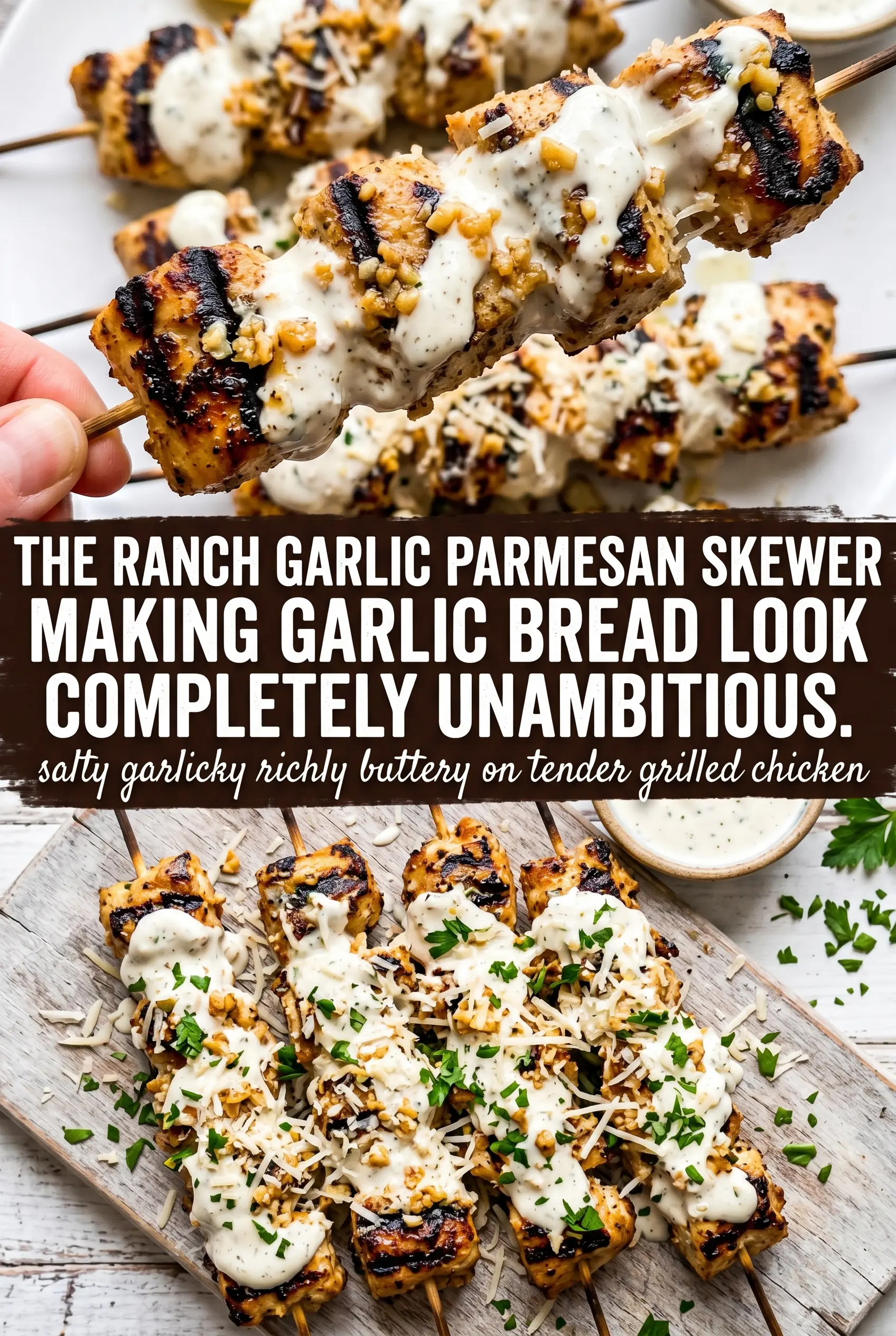
Grilled Ranch Garlic Parmesan Chicken Skewers
Ingredients
Equipment
Method
- Mix ranch dressing, olive oil, Parmesan, garlic, ranch seasoning mix, Italian seasoning, salt, and pepper until well combined. The mixture should look creamy and speckled with seasoning and garlic.
- Add chicken chunks to the marinade and coat evenly. Refrigerate for 30 minutes to 2 hours.
- Thread the chicken onto soaked wooden skewers. Arrange them so chunks sit close together for even browning.
- Preheat the grill to medium-high heat and oil the grates. You should see a quick sizzle when chicken is placed on the grill.
- Grill the skewers for 5-6 minutes per side until the chicken reaches 165°F and has nice char marks. Look for a golden, lightly crisp parmesan crust along the edges and visible grill marks.
- Garnish with fresh parsley and serve with extra ranch for dipping. Serve while hot so the parmesan crust stays golden.