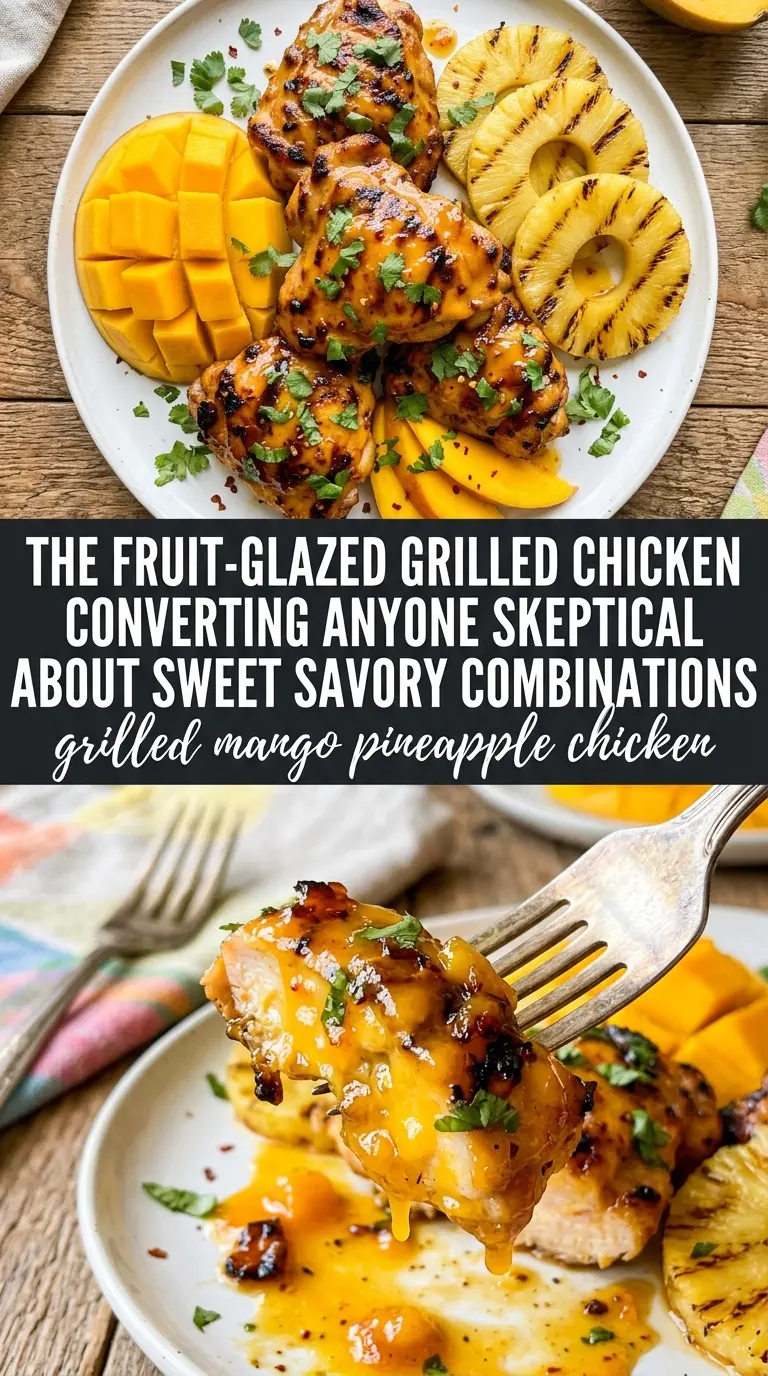
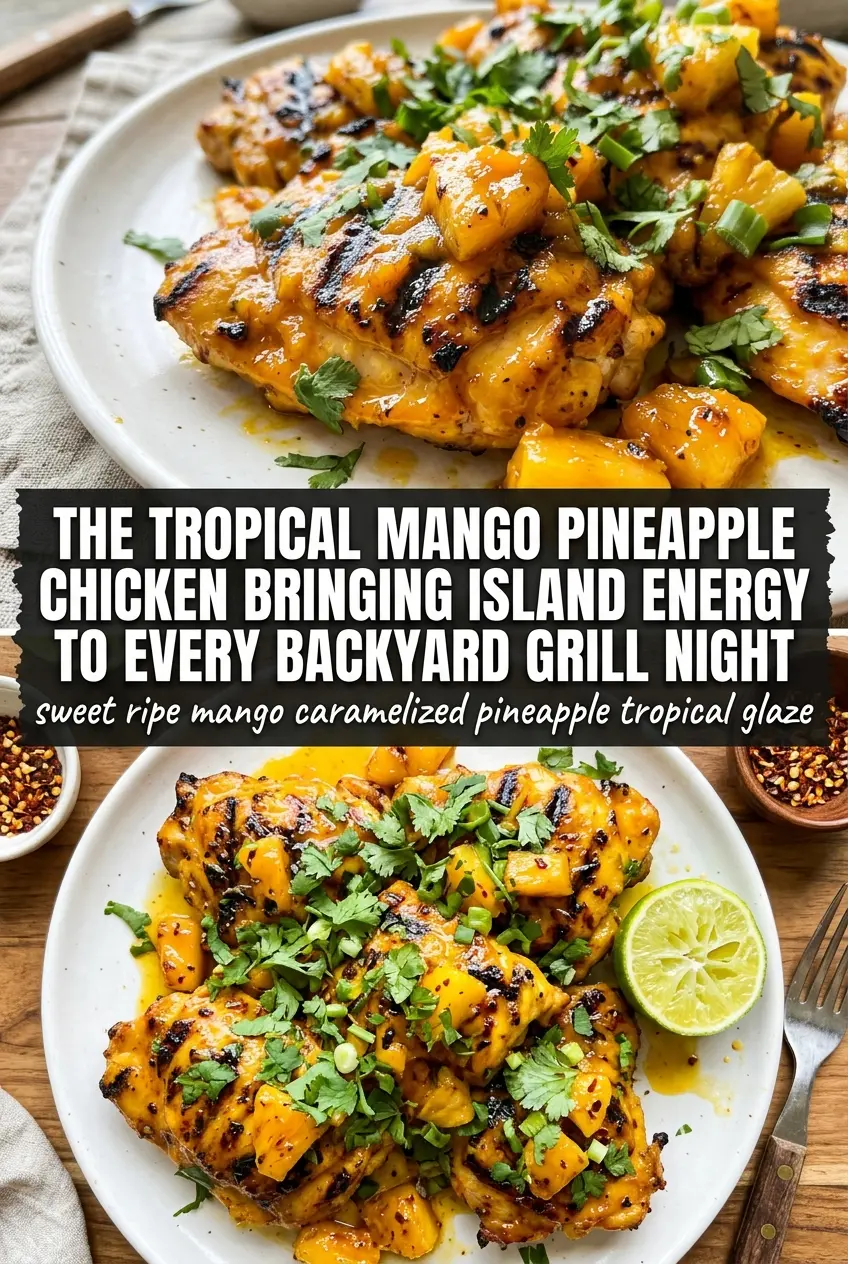
Grilled mango pineapple chicken lands with the kind of sweet-savory balance that keeps it from tasting like a sauce job. The chicken picks up a glossy, caramelized coating on the grill, while the fruit in the marinade keeps the meat juicy and gives every bite a bright, tropical edge. When it’s done right, the outside has those dark grill marks and sticky bits you want, but the inside stays tender instead of drying out.
The trick is keeping the sugar in the marinade from burning before the chicken cooks through. Mango puree and pineapple juice bring enough natural sweetness to brown beautifully, but the lime juice and garlic keep the flavor from drifting into dessert territory. I also like reserving part of the marinade before it touches the raw chicken, because that clean portion is what you’ll brush on during grilling for a thicker glaze and better color.
Below you’ll find the timing that keeps the chicken juicy, the reason the fruit should go on the grill too, and a few smart swaps if you only have thighs or want to make the dish a little more heat-forward.
The marinade gave the chicken a beautiful caramelized crust, and even after grilling the breasts stayed juicy. I used the extra mango-pineapple glaze on the fruit, and it was the part everyone kept reaching for.
Save this grilled mango pineapple chicken for the nights when you want sticky, tropical grilled chicken with caramelized fruit on the side.
The Marinade Needs Sweetness, Acid, and a Clean Brush-On Portion
The biggest mistake with fruit-based marinades is treating them like they’re all the same. Mango puree gives body, pineapple juice brings brightness, and honey helps the glaze caramelize instead of tasting thin or watery. Lime juice keeps the sweetness in check, but it also adds enough acid to help the chicken pick up flavor faster.
The part most people miss is the reserved marinade. Once raw chicken touches the mixture, that bowl is no longer safe for basting unless you set some aside first. Use half for marinating and keep the clean half in a separate bowl for brushing on during the last few minutes of grilling; that’s what gives you the shiny finish without risking a cross-contamination problem.
- Mango puree — This is the backbone of the glaze. It clings to the chicken better than juice alone and gives the finished dish its soft, tropical sweetness. If you don’t have puree, blend fresh or thawed mango until smooth.
- Pineapple juice — Pineapple brings sharpness and helps the marinade taste lighter. Fresh or bottled both work, but bottled is fine here because the chicken is getting grilled and the juice is mixed with stronger flavors.
- Honey — This is what helps the outside of the chicken darken and gloss over on the grill. If you skip it, the marinade still tastes good, but you lose some of that sticky, lacquered finish.
- Lime juice — Lime keeps the fruit from tasting flat and gives the chicken a cleaner finish. Bottled lime juice works in a pinch, but fresh lime tastes brighter and less sharp.
- Ginger and garlic — These are the ingredients that keep the marinade from leaning too sweet. Fresh is worth using here because the chicken only needs a short marinating time, and dried versions won’t spread through the sauce as evenly.
What Each Ingredient Is Actually Doing in Grilled Mango Pineapple Chicken
- High heat (essential for browning) — High heat creates crust and caramelization. Medium heat just cooks without developing flavor.
- Oil or fat (for browning and flavor) — The fat helps transfer heat and create crust. It also carries seasonings.
- Salt and seasoning (bold, applied before) — Season confidently. The high heat cooking mellows flavors slightly.
- No moving it around (let it sit) — The food needs time to develop crust. Constant flipping and moving prevents browning.
- Timing (watch carefully) — High heat cooks fast. Check doneness frequently to avoid overcooking.
- Optional: finishing sauce or glaze — Apply in the last minute for flavor without burning. Heavy sauces applied early can char.
- Resting time (5-10 minutes before serving) — Resting allows juices to reabsorb. Cutting right away lets them run out.
- Optional: smoke or char flavor (if available) — Wood smoke or char adds depth. Build the fire strategically for the flavor you want.
Getting the Glaze Right on the Grill
Blending a Marinade That Actually Coats
Blend everything until the marinade looks smooth and lightly thickened, with no chunks of garlic or ginger left behind. That texture matters because a smoother marinade clings better to the chicken and brushes on more evenly later. If it looks too loose, the glaze will run off the meat and disappear onto the grates instead of building color.
Marinating Without Turning the Chicken Mushy
Two to six hours is the sweet spot. Less than that and the fruit flavor stays on the surface; much longer and the acid from the lime and pineapple starts to soften the outside of the meat too much, especially if you’re using breasts. Keep the chicken cold while it marinates, and turn it once or twice so every side gets coated.
Grilling for Color Before the Sugar Burns
Set the grill to medium-high and cook the chicken for about 6 to 7 minutes per side, depending on thickness. If the heat is too high, the honey and fruit sugars will darken before the center cooks through. Brush on the reserved marinade during the last few minutes, not at the start, so the glaze thickens without scorching.
Finishing with the Fruit
Grill the mango and pineapple slices just long enough to get good char marks and a little softness at the edges. Two minutes per side is usually enough. They should still hold their shape, not collapse into the grate; that quick kiss of heat makes them taste sweeter and gives the plate a fresh, bright finish.
What to Change When You Need a Different Cut or a Different Finish
Use chicken thighs for a juicier result
Thighs handle the sweet marinade better than breasts because they stay tender even if you run the grill a little hot. They may take a few extra minutes, but they’re more forgiving and give you a richer, more succulent bite.
Make it gluten-free without changing the method
This recipe is naturally gluten-free as written, as long as your pineapple juice is pure and you’re not serving it with a sauce or side that adds gluten later. The grilling method and marinade stay exactly the same.
Turn up the heat with chili
A pinch of crushed red pepper or a little minced jalapeño gives the marinade a sharper edge and keeps the sweetness from taking over. Add it to the blender with the other ingredients so the heat spreads evenly instead of hitting in one bite.
Use the oven when the grill isn’t cooperating
Bake the marinated chicken on a rack set over a sheet pan at 425°F, then broil it briefly at the end for color. You won’t get the same smoke or grill marks, but you’ll still get a glossy, flavorful finish if you brush on the reserved marinade near the end.
Storage and Reheating
- Refrigerator: Store leftover chicken in an airtight container for up to 4 days. The glaze will thicken as it chills, but the flavor holds up well.
- Freezer: Freeze cooked chicken for up to 2 months, wrapped tightly and sealed well. The fruit glaze can soften a little after thawing, but it’s still good for sliced chicken or rice bowls.
- Reheating: Reheat gently in a covered skillet over low heat with a splash of water or pineapple juice. High heat dries out the chicken fast and can make the sweet glaze stick before the meat is warm.
Answers to the Questions Worth Asking
Grilled Mango Pineapple Chicken
Ingredients
Equipment
Method
- Blend mango puree, pineapple juice, honey, lime juice, garlic, ginger, salt, and pepper until smooth. The mixture should look glossy and evenly colored.
- Reserve 1/2 cup marinade for basting. Set it aside so you can brush it onto the chicken while grilling.
- Marinate chicken in the remaining marinade for 2-6 hours. Keep it refrigerated so the chicken absorbs the tropical flavor.
- Preheat the grill to medium-high heat. Aim for a steady sizzle before placing the chicken on the grates.
- Grill chicken for 6-7 minutes per side over medium-high heat, basting with the reserved marinade. Brush a few times as it cooks so the glaze caramelizes.
- Grill fresh fruit slices for 2 minutes per side. Cook until grill-marked and slightly softened.
- Serve the chicken with the grilled fruit. Plate so the caramelized mango-pineapple glaze shines next to the vibrant fruit.