Grilled Huli Huli chicken lands on the plate with sticky edges, a sweet-savory glaze, and just enough char to keep every bite interesting. The best versions don’t taste like bottled teriyaki; they taste layered, with ginger, garlic, pineapple, and soy all pulling in the same direction while the skin or surface caramelizes on the grill. That balance is what makes this one worth keeping in rotation.
The trick is in the marinade and the heat. Brown sugar and ketchup help the glaze cling and brown, while pineapple juice and ginger keep the chicken from tasting flat. Turning the chicken often is part of the method, not a sign something’s wrong. Huli means “turn,” and that constant movement helps build those glossy, lacquered edges without burning the sugar.
Below, I’ve included the one detail that keeps the glaze from tasting scorched, plus a few swaps that work when you want to use thighs, legs, or a different cut of chicken.
The marinade was spot on, and turning the chicken often gave me that shiny, caramelized coating instead of burnt sugar. The thighs stayed juicy all the way through.
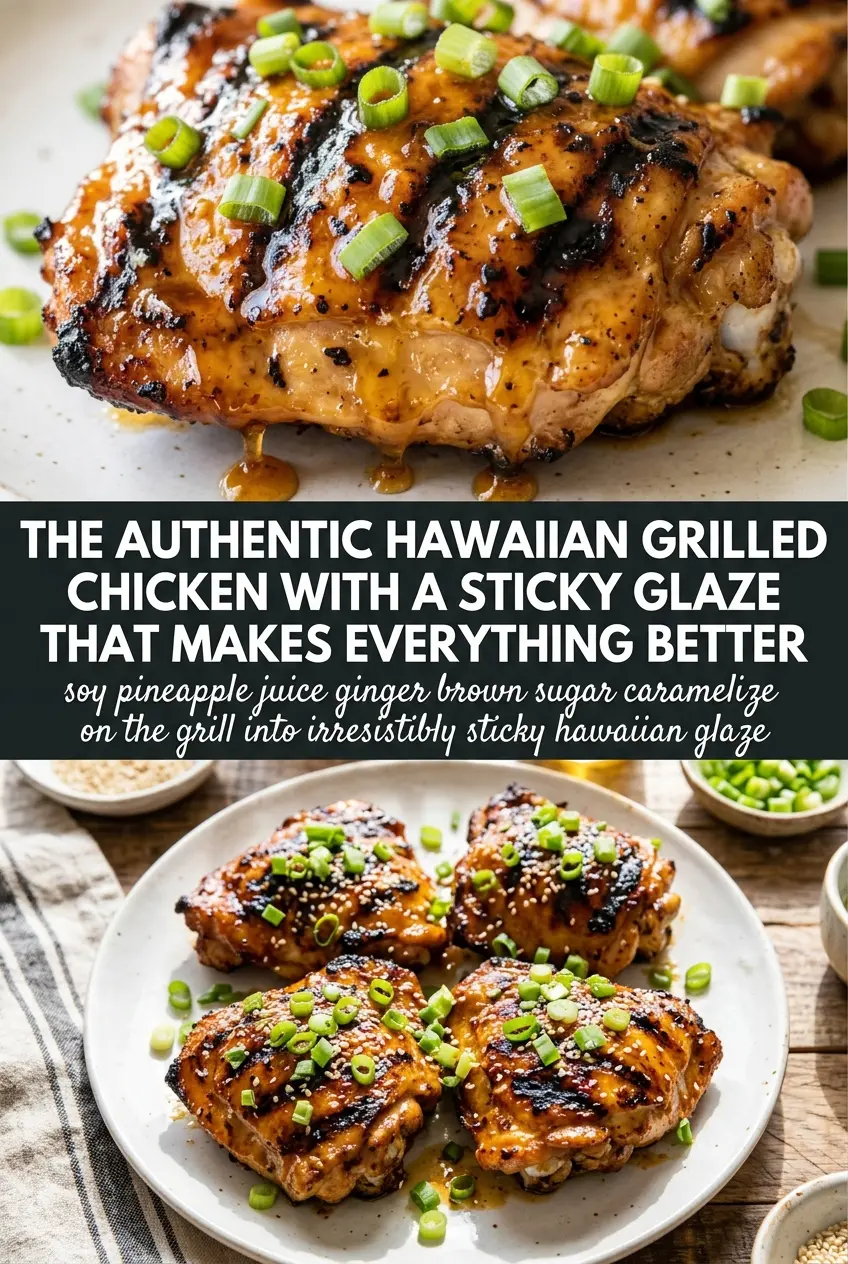
Save this Grilled Huli Huli Chicken for the nights when you want sticky Hawaiian-style chicken with real grill marks and a pineapple-ginger glaze.
The Turn-and-Baste Method That Keeps the Glaze From Burning
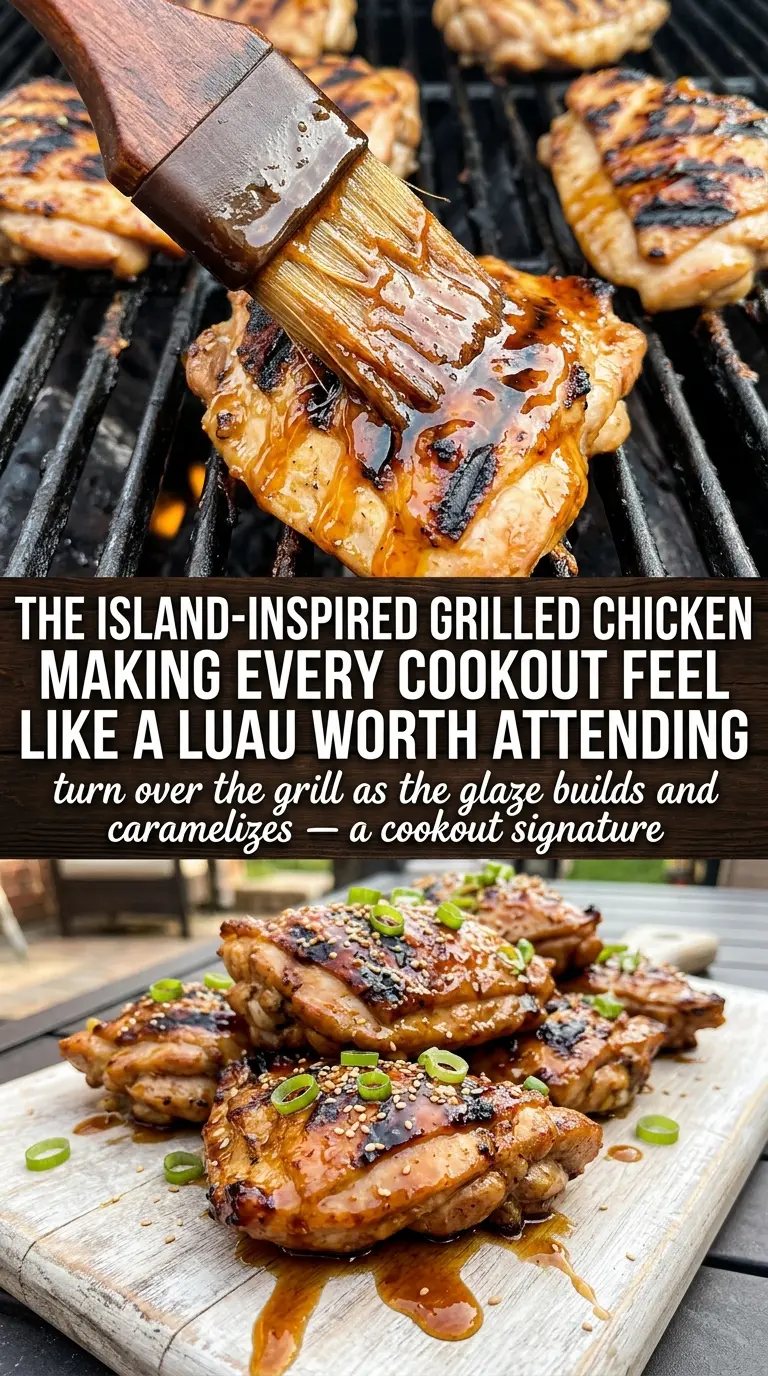
Huli Huli chicken can go wrong fast if you treat it like a set-it-and-forget-it barbecue recipe. The marinade has brown sugar and ketchup, which means it wants to caramelize quickly. That’s the point, but it also means the chicken needs frequent turning and basting so the glaze builds in thin layers instead of scorching on the first side that hits the heat.
Medium heat matters here more than high heat ever would. You want steady browning and a sticky finish, not a blackened shell with raw spots underneath. If the grill runs hot, move the chicken to a cooler area and keep turning it. The chicken should look glossy, deeply browned, and slightly lacquered before it comes off the grill.
What Each Ingredient Is Doing in the Marinade
- Soy sauce — This is the salty backbone and gives the chicken its deep savory base. Regular soy sauce works well; low-sodium is fine if that’s what you keep on hand, but don’t swap in something much lighter or the marinade will taste thin.
- Brown sugar — This is what helps the glaze cling and caramelize on the grill. You need the molasses note here; white sugar won’t give the same depth or stickiness.
- Ketchup — It brings body, acidity, and a little sweetness that rounds out the sauce. It also helps the marinade coat the chicken instead of sliding off.
- Pineapple juice — This adds bright tropical sweetness and a gentle tang that keeps the marinade from tasting one-note. Use canned juice if that’s what you have; just don’t use pineapple syrup.
- Sherry or chicken broth — Sherry adds a little complexity, but broth is a perfectly good backup if you want to keep it alcohol-free. Either way, this loosens the marinade enough to cover the chicken evenly.
- Fresh ginger and garlic — Fresh is worth using here because both ingredients should taste sharp and fragrant after grilling. Powdered versions won’t give the same lift or freshness.
- Sesame oil — A small amount goes a long way and gives the marinade that toasted finish. Don’t overdo it or it starts to dominate the whole dish.
- Chicken thighs or legs — Dark meat stays juicier over a longer grill time and handles the sugar in the glaze better than lean cuts. You can use bone-in or boneless, but bone-in pieces need a little more time and a watchful eye near the end.
How to Build the Glaze So It Stays Sticky, Not Burnt
Mix the Marinade Until the Sugar Dissolves
Whisk the soy sauce, brown sugar, ketchup, pineapple juice, sherry or broth, ginger, garlic, and sesame oil until the mixture looks smooth and no big granules of sugar remain at the bottom. If the sugar sits in a clump, it won’t distribute evenly and you’ll get hot spots on the grill. Reserve part of the marinade before the chicken goes in so you have a clean basting sauce later.
Marinate Long Enough for Flavor, Not Forever
Two hours is enough for good flavor, and eight hours is the upper edge I’d use for this recipe. The pineapple juice and ginger keep the chicken bright, but too much time can make the outside texture softer than you want. Keep it chilled while it marinates, and turn the bag or dish once if you can so every piece gets coated.
Grill With Frequent Turns
Set the chicken over medium heat and turn it often, brushing on the reserved marinade as it cooks. This is where the Huli part matters: the repeated turning builds a glossy surface and helps the sugars brown evenly. If the glaze starts to darken too quickly, move the chicken to a cooler section of the grill and keep going there.
Cook to the Right Temperature and Shine
The chicken is done when the thickest part reaches 165°F and the outside has a deep caramel color with some charred edges. Bone-in thighs and legs usually take 25 to 30 minutes, but temperature is the real test. Pull it off the grill and let it rest a few minutes so the juices settle back into the meat instead of running out when you cut it.
Three Ways to Adapt This Hawaiian Grill Chicken Without Losing the Point
Use Boneless Thighs for Faster Grilling
Boneless thighs cook faster and are easier to serve, but they also brown more quickly because there’s less protection from the bone. Keep the heat at medium and start checking early so the glaze doesn’t overcook before the center is done.
Make It Gluten-Free
Swap in a gluten-free soy sauce or tamari and keep the rest of the marinade the same. The flavor stays close to the original, and you won’t lose the salty backbone that makes the glaze taste complete.
Skip the Alcohol With Chicken Broth
Use chicken broth in place of sherry and the marinade still has enough body to coat the chicken well. You’ll lose a little of the subtle depth that sherry brings, but the final dish still tastes balanced and grill-friendly.
Reduce the Sugar for a Less Sweet Finish
Cut the brown sugar back slightly if you prefer a darker, less candy-like glaze. The chicken will still brown, but you’ll need to watch the grill even more closely because the sauce won’t thicken quite as fast.
Storage and Reheating
- Refrigerator: Store leftovers for up to 4 days. The glaze will set up more firmly as it chills, which is normal.
- Freezer: The cooked chicken freezes well for up to 2 months. Wrap it tightly or store it in an airtight container, and freeze with a little extra sauce if you have it.
- Reheating: Reheat gently in a covered skillet over low heat or in a 300°F oven until warmed through. High heat will dry out the chicken and can make the sugar in the glaze taste bitter.
Answers to the Questions Worth Asking
Grilled Huli Huli Chicken
Ingredients
Equipment
Method
- Whisk together soy sauce, brown sugar, ketchup, pineapple juice, sherry or chicken broth, grated ginger, minced garlic, and sesame oil until the sugar dissolves and the mixture looks smooth.
- Reserve 1/2 cup of the marinade for basting so you have sauce ready during grilling.
- Add chicken thighs or legs to the marinade, turning to coat, then cover and refrigerate for 2-8 hours.
- Preheat the grill to medium heat and place chicken on the grates, then grill while turning (huli) frequently and brushing with the reserved marinade.
- Continue grilling for 25-30 minutes total, basting as you turn, until the internal temperature reaches 165°F and the glaze is caramelized, charred, and sticky.