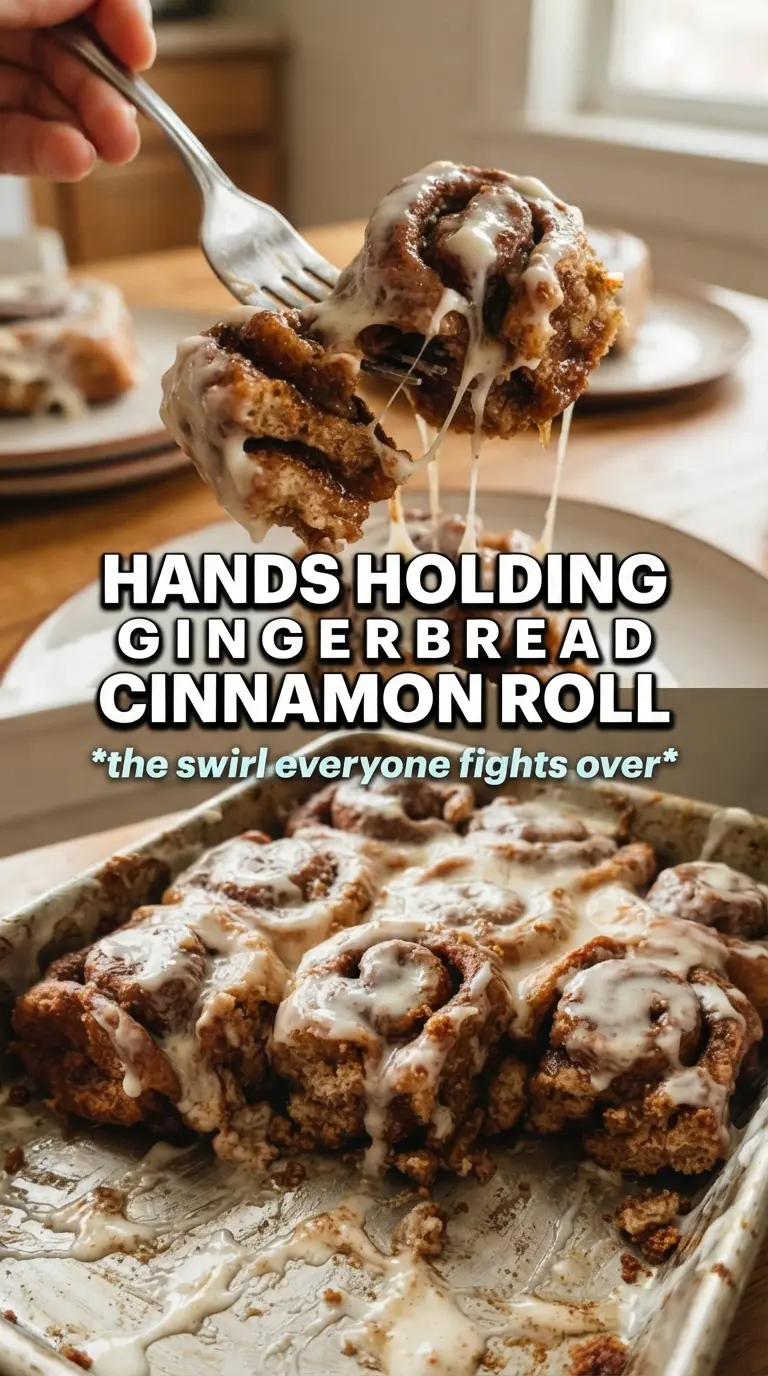
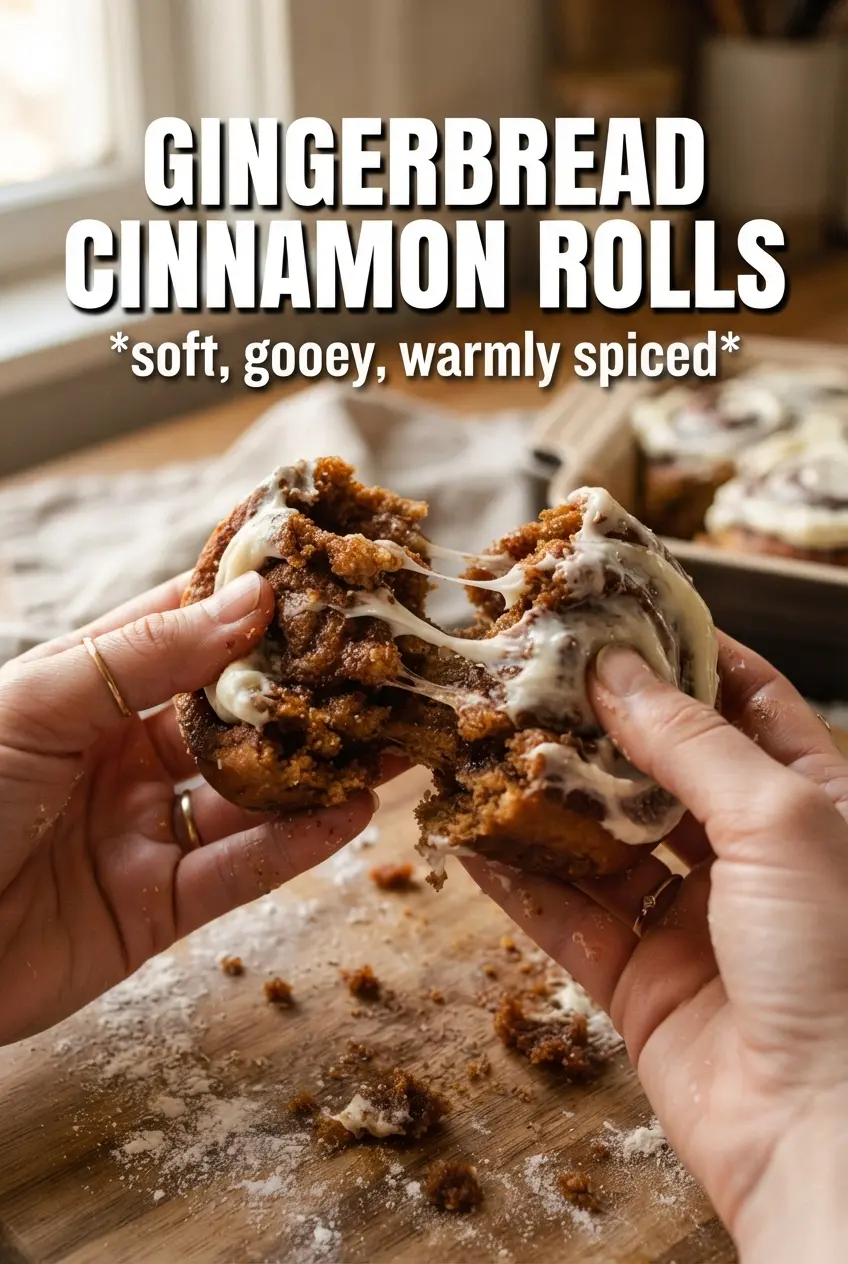
Gingerbread cinnamon rolls bake up soft and pillowy with a dark, molasses-rich dough that stays tender under a thick layer of spiced filling. The first bite gives you that warm gingerbread note right away, then the brown sugar-cinnamon swirl and cream cheese glaze take over. They taste like a holiday bakery roll, but they’re sturdy enough to make for a regular weekend breakfast.
What makes this version work is the balance in the dough. Molasses adds depth and color without making the rolls heavy, while the eggs and butter keep the crumb rich. The spices are split between the dough and the filling, so the gingerbread flavor comes through in every layer instead of sitting only on the surface. That’s what keeps these rolls from tasting like plain cinnamon rolls with a little spice sprinkled in.
Below you’ll find the timing cues that matter most, plus the small details that keep the filling from leaking out and the glaze from turning runny on warm rolls.
The dough rose right on schedule and the rolls baked up super soft. The molasses flavor came through without being too strong, and the cream cheese glaze melted into all the swirls perfectly.
Like these gingerbread cinnamon rolls? Save them to Pinterest for a soft, spiced breakfast with molasses dough and cream cheese glaze.
The Part That Keeps the Molasses Dough Tender
Molasses changes more than flavor here. It also makes the dough darker, softer, and a little more elastic, which is exactly what you want in a roll that needs to rise, roll out, and still stay plush after baking. If you add too much flour because the dough feels sticky at first, you’ll get dense spirals instead of a soft crumb. The dough should feel tacky, not dry, before the first rise.
The other place people go wrong is heat. Warm milk should feel like bathwater, not hot. Too much heat kills the yeast before the dough ever gets a chance to rise, and cold milk slows everything down enough to make the timeline frustrating. The dough should double in a warm spot and look puffy before you roll it out.
What Each Ingredient Is Doing in These Gingerbread Rolls
- Molasses — This is the gingerbread backbone. It gives the dough that deep brown color and warm, slightly bitter sweetness that plain sugar can’t copy. Use regular unsulphured molasses, not blackstrap, unless you want a sharper, more bitter roll.
- Brown sugar — Brown sugar keeps the dough and filling soft and caramel-like. In the filling, it melts into the butter and creates that sticky swirl that bakes into the center of each roll.
- Butter — Melted butter goes into the dough for richness, while softened butter in the filling helps the sugar spread evenly. If the filling butter is too cold, it tears the dough; if it’s too melted, the sugar leaks out and caramelizes in the pan instead of inside the roll.
- Spices — Cinnamon, ginger, and cloves work in layers, not as an afterthought. The dough needs enough spice to taste like gingerbread even before the glaze goes on, and the filling carries the stronger hit. Fresh spices matter here because old spices fade fast in a recipe built around them.
- Cream cheese — This makes the glaze thick and tangy enough to stand up to the molasses. A plain powdered sugar glaze would disappear against the deep spice, but cream cheese gives it enough body to cling to the warm rolls.
Building the Swirl So It Stays in the Roll
Making the Dough
Start by activating the yeast in warm milk with the molasses, then stir in the brown sugar, butter, and eggs. The mixture should smell sweet and warm, and the yeast should look foamy before you add the flour. If it never bubbles, the milk was either too hot or too cold, and the dough won’t rise the way it should.
Kneading Until the Dough Turns Smooth
Add the flour and spices, then knead for 8 to 10 minutes until the dough turns smooth and elastic. It should pull away from the bowl but still cling a little to your fingers. Stop adding flour the second the dough becomes workable; over-floured dough bakes up dry and fights you when you roll it out.
Filling and Rolling
Roll the dough into a rectangle and spread the filling all the way to the edges, leaving only a small strip at one long side so the seam seals cleanly. Roll it up tightly from the long side to keep the spirals even. If the log feels loose, the centers will unravel in the pan and the filling will ooze out instead of staying layered.
Second Rise and Baking
Place the cut rolls in a greased 9×13 dish and let them rise until puffy, about 45 minutes. They should look joined but still soft and airy, not packed tight. Bake until the tops are set and lightly browned; if you pull them too early, the centers stay doughy, and if you overbake them, the edges dry out before the middle is done.
Glazing While Warm
Beat the cream cheese glaze until smooth, then drizzle it over the rolls while they’re still warm. Warm rolls help the glaze melt into the crevices without disappearing completely. If the glaze seems too thick, add the milk a teaspoon at a time; if it’s too thin, it will slide off the rolls instead of settling into the swirls.
How to Adapt These Rolls Without Losing the Gingerbread Character
Dairy-Free Version
Use unsweetened non-dairy milk and a plant-based butter that works for baking. The texture stays close, though the glaze won’t have quite the same tang unless you use a dairy-free cream cheese. Keep the milk warm, not hot, because plant milks can separate if overheated.
Make-Ahead Overnight Rolls
Assemble the rolls through the cut-and-pan step, cover them tightly, and refrigerate overnight. In the morning, let them sit at room temperature until puffy before baking. Cold dough goes into the oven too tight and bakes unevenly, so give it time to wake up.
Extra-Spiced Holiday Version
Add a pinch more ginger and cloves to the filling if you want a sharper gingerbread bite. That pushes the rolls farther toward classic gingerbread and away from a standard cinnamon roll, but it can overpower the glaze if you go heavy-handed. Keep the balance warm, not bitter.
Freezer-Friendly Batch
Freeze the baked rolls without glaze, then thaw and warm them before adding the glaze. The texture holds up better this way because the glaze stays fresh and the rolls don’t absorb extra moisture. If you freeze them glazed, the icing tends to get patchy after reheating.
Storage and Reheating
- Refrigerator: Store covered for up to 4 days. The rolls will firm up a bit in the fridge, but they stay soft once warmed.
- Freezer: Freeze baked rolls for up to 2 months, tightly wrapped and preferably without glaze. Thaw overnight in the refrigerator before reheating.
- Reheating: Warm individual rolls in the microwave for 20 to 30 seconds or cover the whole pan with foil and reheat in a 300°F oven until just heated through. Don’t blast them on high heat or the edges dry out before the center softens.
Questions I Get Asked About This Recipe
Gingerbread Cinnamon Rolls
Ingredients
Equipment
Method
- In a stand mixer bowl, combine warm milk and yeast with molasses, then add the brown sugar, melted butter, and eggs until smooth.
- Add the flour, cinnamon, ginger, cloves, and salt, then knead for 8-10 minutes until the dough is cohesive and elastic.
- Cover and let the dough rise for 1 hour in a warm spot, until visibly puffy.
- Roll the dough into a rectangle on a lightly floured surface, keeping an even thickness for consistent swirls.
- Spread the softened butter over the dough, then sprinkle with the brown sugar, cinnamon, ginger, and cloves.
- Roll the dough tightly into a log and cut it into 12 rolls.
- Arrange the rolls in a greased 9x13-inch baking dish and let them rise for 45 minutes, until they look fuller and touch lightly.
- Bake at 375°F for 22-25 minutes, until the tops are deeply golden and the center rolls feel set.
- Beat the cream cheese, powdered sugar, milk, and vanilla until smooth.
- Drizzle the glaze over the warm rolls so it melts slightly into the creases.