Silky garlic soup turns mellow and rich when the cloves are cooked slowly first, instead of blasted until bitter. The garlic softens into something sweet and almost nutty, then blends into broth with just enough texture left behind to keep each spoonful interesting. Topped with a poached egg and crusty toast, it eats like a full meal, not a side dish pretending to be dinner.
The key is patience with the garlic. Medium-low heat lets it turn golden and tender without taking on that harsh, burnt edge that can ruin the whole pot. A little smoked paprika and cayenne warm the broth without making it taste spicy for the sake of it, and blending most, but not all, of the garlic keeps the soup lush instead of flat.
Below you’ll find the one step that keeps the garlic sweet, plus a few ways to adjust the broth, bread, and eggs depending on what you’ve got on hand.
The garlic turned sweet and mellow instead of sharp, and the poached egg made the broth feel like a full meal. I loved that the bread stayed crisp on top but softened just enough underneath.
Save this silky garlic soup for the nights when you want mellow roasted garlic, a poached egg, and crusty bread in one bowl.
The Reason Garlic Goes Sweet Instead of Bitter
The difference between silky garlic soup and a harsh one comes down to heat. Garlic needs time in oil to soften and sweeten before the broth goes in. If it browns too fast, the soup picks up a bitter edge that no amount of stock can hide.
Cook the cloves over medium-low until they’re pale gold and mash easily with a spoon. That gentle start does two jobs at once: it pulls flavor into the oil and keeps the garlic mellow enough to blend into a smooth, almost velvety base. Once the broth is added, the soup only needs a simmer, not a hard boil, so the garlic stays soft and the liquid doesn’t turn muddy.
- Garlic heads — Fresh, firm cloves matter here because old garlic can taste dull or bitter even after a long cook. Peel them all before they hit the pan so they soften evenly.
- Olive oil — This carries the garlic flavor and helps it cook gently. A good extra-virgin oil gives the soup a rounder finish, but you don’t need your fanciest bottle.
- Broth — Chicken broth gives the soup a little more body; vegetable broth keeps it fully meatless. Use one with decent flavor because the broth becomes the backbone once the garlic is blended.
What Each Ingredient Is Doing in the Bowl

The bread and eggs are more than garnish. The toast soaks up the broth and turns the bowl into something substantial, while the poached egg adds richness and a soft yolk that folds into the soup. The smoked paprika and cayenne don’t make the broth hot; they add a quiet warmth that keeps the garlic from tasting one-note. Thyme should go in near the end so it stays bright instead of cooking into dust.
If you want the soup silkier, use an immersion blender and stop before everything is completely smooth. A few whole cloves left behind give the bowl some texture and make it taste homemade, not pureed into submission.
Building the Garlic Base Without Losing the Sweetness
Softening the Garlic Slowly
Warm the olive oil in a large saucepan over medium-low, then add the peeled cloves. Let them cook 12 to 15 minutes until they’re soft, golden, and fragrant. If the heat is too high, the outside will color before the inside turns sweet, and you’ll taste that bitterness right away. Stir often and lower the heat if any clove starts taking on deep brown spots.
Spices and Broth
Stir in the smoked paprika and cayenne for about a minute, just long enough to wake them up in the oil. Then add the broth and water and bring it to a boil before dropping it back to a simmer. A hard boil makes the garlic taste rougher and can thin the broth faster than you want, so keep it at a quiet bubble for the next 15 minutes.
Blending the Right Amount
Use an immersion blender to puree most of the soup, but leave a handful of cloves whole. That mix gives you a velvety base with little pockets of soft garlic instead of a perfectly uniform puree. Season with salt, pepper, and thyme after blending, because the flavor changes once the garlic is fully broken down.
Poaching the Eggs in the Soup
Crack the eggs straight into the simmering soup and let them poach 3 to 4 minutes, depending on how runny you want the yolks. The soup should barely simmer at this point; if it’s boiling hard, the whites shred and cloud the broth. Spoon the soup into bowls, tuck in the toast, and finish with parsley right before serving so it stays bright.
How to Adapt This for Different Kitchens and Diets
Vegetarian version with vegetable broth
Swap in a vegetable broth with enough body to stand up to the garlic. The soup stays just as rich if you don’t skimp on the olive oil, but a thin broth will taste flat once the garlic is blended.
Dairy-free and naturally gluten-free
This recipe is already dairy-free, and it can be gluten-free if you serve it with gluten-free toast or skip the bread entirely. The soup itself doesn’t need cream or flour to feel substantial; the blended garlic and egg do the heavy lifting.
Make it thicker and more filling
Use an extra slice of toast per bowl or tear the bread into the soup so it softens into the broth. That gives the finished dish more body without changing the flavor, and it works especially well if you want the soup to eat like a light dinner.
Skip the poached egg
Leave the egg out and finish the bowl with extra olive oil and parsley. The soup will be lighter, and the garlic flavor comes through more clearly, but it won’t have the same rich finish or make the meal as hearty.
Storage and Reheating
- Refrigerator: Store the soup without the egg and toast for up to 4 days. The garlic flavor deepens overnight, and the texture stays smooth.
- Freezer: Freeze the soup base for up to 2 months, but freeze it before adding eggs or bread. Eggs don’t reheat well from frozen in this dish, and the bread turns soggy.
- Reheating: Warm it gently over low heat until just steaming, then poach fresh eggs in the reheated soup. A hard boil can make the garlic taste sharp again and can break the texture.
Answers to the Questions Worth Asking
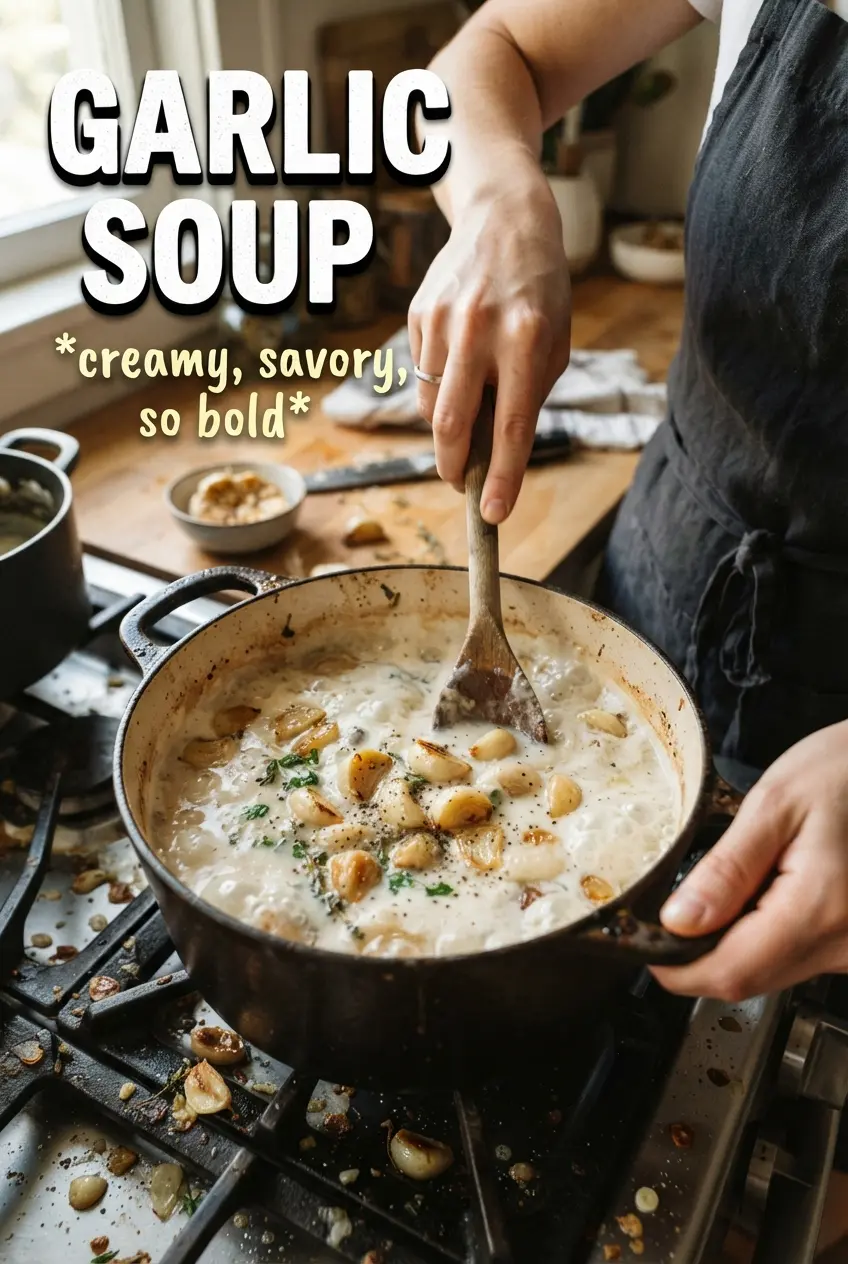
Garlic Soup
Ingredients
Equipment
Method
- Heat 3 tbsp olive oil in a large saucepan over medium-low heat, then gently cook the peeled garlic cloves for 12-15 minutes until soft and golden but not brown. Keep the heat low so the garlic mellows instead of browning.
- Add smoked paprika and cayenne to the saucepan and cook for 1 minute, stirring to coat the garlic. Cook until fragrant but not scorched.
- Add chicken or vegetable broth and water to the saucepan, bring the mixture to a boil, then simmer for 15 minutes. Maintain a gentle simmer for the full time.
- Use an immersion blender to blend most of the garlic smooth, leaving a few cloves whole for texture. Blend carefully to keep some chunkiness.
- Season with salt, pepper, and fresh thyme leaves, then stir to combine. Taste and adjust seasoning before moving on.
- Poach the eggs directly in the simmering soup for 3-4 minutes. The whites should set while the yolks remain tender.
- Serve the soup with toasted crusty bread, a poached egg in the center, and fresh parsley garnish. Ladle carefully so each bowl gets both broth and egg.