Golden seared chicken thighs over creamy Parmesan rice hit the plate with the kind of comfort that doesn’t need anything else. The chicken stays juicy because it’s cooked hard and fast first, then tucked back into the rice at the end so it can finish gently without drying out. The rice picks up every bit of garlic butter and pan drippings, which is what turns a simple chicken-and-rice dinner into something worth repeating.
The trick here is building the dish in one skillet without rushing the layers. You want real browning on the chicken before the butter and garlic go in, because that fond at the bottom of the pan is what seasons the rice. Long-grain white rice holds its shape better than short-grain here, and the cream goes in after the rice has already absorbed the broth so the final texture turns silky instead of heavy.
Below you’ll find the part that matters most: how to keep the rice creamy without turning it sticky, plus the small adjustments that make this work with what you already have in the kitchen.
The rice turned out creamy without getting mushy, and the garlic butter flavor soaked into every bite. My husband kept going back for seconds and asked me to put it on the regular dinner list.
Save this garlic butter chicken with Parmesan rice for a creamy one-skillet dinner that turns golden chicken and garlicky rice into one pan.
The Pan Sear That Gives the Rice Its Best Flavor
The chicken needs a deep golden crust before it comes out of the skillet. That color is not cosmetic; it’s the base of the sauce your rice is about to absorb. If the pan looks pale and you rush ahead, the finished dish tastes flat even if you season it well.
Keep the heat at medium-high for the sear and leave the chicken alone until it releases on its own. Boneless thighs handle this better than breasts because they stay tender while developing more browning. When the garlic goes in, don’t let it sit long enough to toast hard. You want fragrant butter, not bitter garlic, because the rice cooks in that same pan and picks up every edge of the flavor.
What Each Ingredient Is Actually Doing in This Dish

- Boneless skinless chicken thighs — Thighs stay juicy through the sear and still taste rich after they’re returned to the rice. Breasts work in a pinch, but they dry out faster and need a shorter final rest in the pan.
- Long-grain white rice — This is the structure of the dish. It stays fluffy enough to hold the sauce instead of collapsing into a paste. Jasmine can work if that’s what you keep on hand, though it will cook up a little softer.
- Chicken broth — The rice absorbs this instead of plain water, which gives the whole skillet a deeper savory backbone. Use a broth you’d actually taste on its own, since there isn’t much chance to hide blandness later.
- Parmesan cheese — Grated Parmesan melts into the cream and turns the rice silky. Freshly grated is worth it here because pre-shredded cheese can stay gritty and clump instead of melting cleanly.
- Heavy cream — This is what gives the rice that spoon-coating finish. Half-and-half works if needed, but the sauce will be a little looser and less plush.
- Butter, garlic, and thyme — Butter carries the garlic flavor into the rice, and thyme keeps the dish from tasting one-note. The garlic should be minced fine so it softens quickly and blends into the pan rather than sitting in sharp bits.
How to Keep the Rice Creamy Without Turning It Heavy
Season and Sear the Chicken First
Pat the thighs dry, season them well, and lay them into hot oil without crowding the pan. They should hiss the moment they hit the skillet, and after about 5 to 6 minutes per side they’ll pull away with a deep brown crust. If the chicken sticks hard, it isn’t ready yet. Pull it only after it’s cooked through to 165°F and let it rest on a plate while you build the rice.
Toast the Rice in the Garlic Butter
After the butter melts, stir in the garlic just until fragrant, then add the rice and coat every grain. Toasting for 2 minutes gives the rice a slight nutty edge and helps it hold its shape later. If the garlic starts browning fast, lower the heat right away. Burnt garlic will take over the whole dish.
Simmer Until the Liquid Is Gone
Pour in the broth, bring it to a boil, then cover and drop the heat low. The rice should quietly simmer, not aggressively bubble, for about 18 minutes. Lifting the lid too often lets steam escape and leaves you with uneven rice, so trust the timer and check only near the end. The grains should be tender and the surface should look mostly absorbed before you stir in the cream.
Finish With Cream and Parmesan
Stir in the Parmesan, cream, and thyme off the hottest part of the burner if the pan is still screaming hot. The rice will turn glossy and loose enough to spoon around the chicken, not soupy. If it looks thick at first, give it a minute; Parmesan takes a moment to melt fully. Nestle the chicken back in so it warms through in the sauce instead of drying out on top.
How to Adapt This for Different Kitchens and Schedules
Dairy-Free Version
Use olive oil instead of butter, then finish the rice with unsweetened full-fat coconut milk or a dairy-free cooking cream. You’ll lose the sharp saltiness of Parmesan, so add a little extra seasoning and a touch of nutritional yeast if you want some of that cheesy depth back.
Chicken Breast Swap
Chicken breasts work, but they need less time and more attention. Sear them until just cooked through, then take them out before they dry out and return them only at the end. The dish will taste lighter and a little less rich than the thigh version.
Gluten-Free and Naturally Thick
This dish is naturally gluten-free as written, as long as your broth is certified gluten-free. The sauce thickens from the starch in the rice and the Parmesan, so there’s no flour needed at all.
Storage and Reheating
- Refrigerator: Store in an airtight container for up to 4 days. The rice will firm up as it chills, but it still reheats well.
- Freezer: It freezes, though the cream can make the rice a little less silky after thawing. Freeze in portions for up to 2 months and thaw overnight in the fridge.
- Reheating: Warm it gently in a skillet with a splash of broth or water, covered, over low heat. The common mistake is blasting it in the microwave until the chicken tightens and the rice dries out.
Answers to the Questions Worth Asking
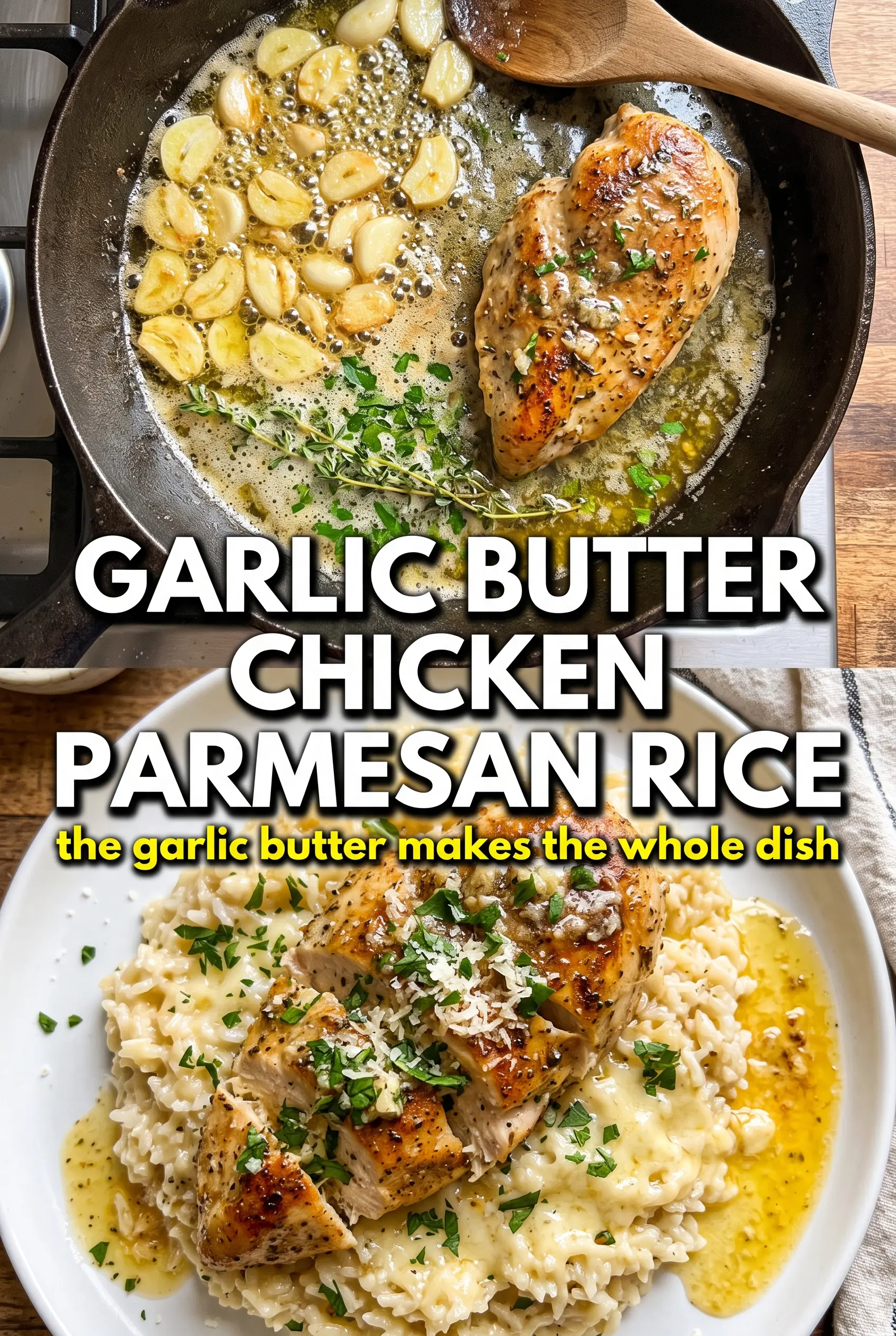
Garlic Butter Chicken with Parmesan Rice
Ingredients
Equipment
Method
- Season boneless skinless chicken thighs with salt, pepper, garlic powder, and smoked paprika to taste. Heat olive oil in a large skillet over medium-high heat, then sear the chicken for 5-6 minutes per side until golden and cooked through to 165°F; remove and set aside.
- Melt butter in the same skillet, scraping up browned bits from the bottom. Cook the minced garlic for 1 minute, until fragrant.
- Add long-grain white rice to the skillet and toast for 2 minutes, stirring so the grains look lightly opaque and glossy.
- Pour in chicken broth and bring to a boil. Cover and simmer over low heat for 18 minutes until the rice is tender.
- Stir in Parmesan cheese, heavy cream, and dried thyme until the rice is creamy and saucy, with no dry pockets.
- Return the chicken to the pan, nesting the thighs into the Parmesan rice so they warm through in the creamy sauce.
- Garnish with fresh parsley and serve immediately, spooning the creamy rice and pan drippings over the chicken.