Crispy firecracker chicken earns its place fast: the chicken stays shatteringly crisp for just long enough to get coated in a sticky, sweet-heat sauce that clings instead of sliding off. The first bite hits with tang from the vinegar and hot sauce, then settles into brown sugar richness and a little burn from the red pepper flakes. Served over rice, it tastes like takeout with better texture and a cleaner finish.
The trick is in the double coating and the quick sauce. Cornstarch helps the chicken fry up with a craggy edge, while flour gives it enough structure to hold onto the glaze. The sauce only needs a short simmer, just until the butter melts and everything turns glossy. If you cook it too long before tossing the chicken, it tightens up and starts to candy in the pan instead of coating each piece evenly.
Below you’ll find the exact point where the chicken turns crisp, why the sauce balances heat with sweetness instead of turning flat, and the small finishing move that keeps the coating clingy and bold.
The coating stayed crisp even after I tossed it in the sauce, and the sweet heat had just enough vinegar to keep it from tasting heavy. My husband kept picking pieces off the pan before dinner.
Save this firecracker chicken for the nights when you want crispy takeout-style chicken with a glossy sweet-heat sauce.
The Crisp Coating That Stays Put After the Sauce Goes On
The biggest mistake with firecracker chicken is treating it like sauced chicken instead of crisp chicken with a glaze. If you fry it pale and soft, the sauce turns it soggy in minutes. The cornstarch and flour combination matters because cornstarch gives you that dry, brittle surface that fries up with edges, while flour adds enough body so the coating doesn’t shatter the second you toss it.
The sauce also has to be built fast and used fast. You want it smooth, shiny, and just thick enough to coat the back of a spoon. If it reduces too far before the chicken goes in, the sugar starts sticking to the pan and the glaze gets patchy instead of glossy.
What Each Ingredient Is Actually Doing in This Firecracker Chicken
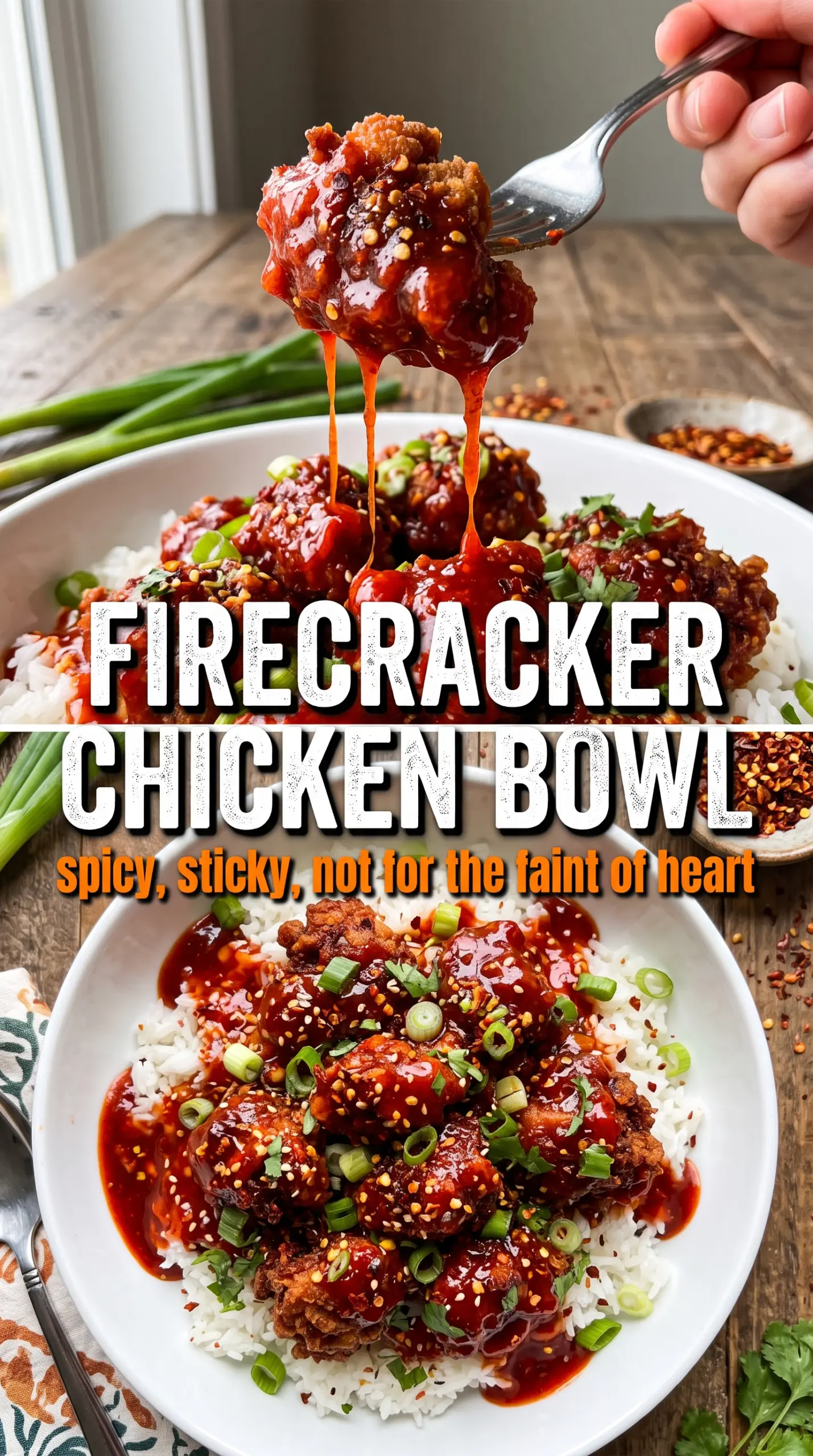
- Boneless skinless chicken breasts — They cook quickly and stay light under the sauce. Cut them into even bite-sized pieces so they fry at the same rate; uneven chunks leave you with some dry pieces and some underdone ones. Chicken thighs work too, but they bring a richer, juicier bite and a little less of that clean takeout-style finish.
- Cornstarch — This is what gives the chicken its crisp edge. There isn’t a substitute that behaves the same way in a quick fry, though arrowroot can work in a pinch with a slightly softer crust.
- Brown sugar — It rounds out the heat and helps the sauce turn sticky instead of thin. Light or dark brown sugar both work; dark brown sugar gives a deeper molasses note.
- Hot sauce and red pepper flakes — The hot sauce brings acid and heat, while the flakes give the sauce its little bursts of fire. Frank’s RedHot is mild enough to let the sweet-sour balance shine, but any cayenne-style hot sauce can work.
- Butter and soy sauce — Butter smooths the sauce and gives it a glossy finish, while soy sauce adds salt and depth. Use a regular soy sauce here; low-sodium is fine if that’s what you keep on hand, but don’t skip it or the sauce tastes flat.
How to Fry, Glaze, and Caramelize Without Losing the Crunch
Coating the Chicken Evenly
Toss the chicken pieces until every side looks dusty and clumped with the flour-cornstarch mix. That rough coating is what turns into texture in the oil. If the chicken looks wet in spots, it won’t brown evenly, so shake off excess moisture before dredging and don’t crowd the bowl with too many pieces at once.
Frying to a Deep Golden Finish
Heat the oil to 375°F and keep the pieces in a single layer. If the oil runs too cool, the coating drinks it in and goes greasy; if it runs too hot, the outside browns before the center cooks through. You’re looking for a deep golden crust and chicken that feels firm when pressed with tongs, about 3 to 4 minutes per side depending on size.
Building the Firecracker Sauce
Put the sauce ingredients in a saucepan over medium heat and stir until the butter melts and the mixture turns smooth and glossy. The sauce should smell sharp from the vinegar and hot sauce, then mellow as the sugar dissolves. If you see dry sugar granules clinging to the sides, keep stirring a little longer before it goes on the chicken.
Coating and Caramelizing
Toss the fried chicken in the sauce until every piece is lacquered, then return it to the pan for 1 to 2 minutes. That last pass lets the glaze cling and lightly caramelize instead of staying loose in the bowl. Don’t leave it in long enough to darken heavily; once the sugar crosses that line, the coating starts to harden instead of staying sticky.
How to Adjust the Heat, Crunch, and Sweetness
Mild Firecracker Chicken
Cut the red pepper flakes in half and use the lower end of the hot sauce amount. You still get the sweet-tangy glaze and glossy finish, but the heat lands more like a warm hum than a burn.
Gluten-Free Firecracker Chicken
Swap the all-purpose flour for a gluten-free all-purpose blend and use tamari instead of soy sauce. The crust comes out just a touch more delicate, but the chicken still fries crisp and the sauce stays balanced.
Boneless Thigh Version
Use boneless skinless thighs instead of breasts for a juicier center and a slightly richer bite. They hold up well to the sauce, but they need an extra minute or two in the oil because of their shape and thickness.
Storage and Reheating
- Refrigerator: Store leftovers for up to 3 days. The coating softens in the fridge, but the flavor stays strong.
- Freezer: Freeze the fried chicken pieces before saucing for the best texture. The sauced version freezes poorly because the glaze turns sticky and the crust loses its crunch.
- Reheating: Reheat in a 375°F oven or air fryer until hot and the edges crisp back up. The common mistake is microwaving it, which steams the coating and turns the sauce dull.
Answers to the Questions Worth Asking
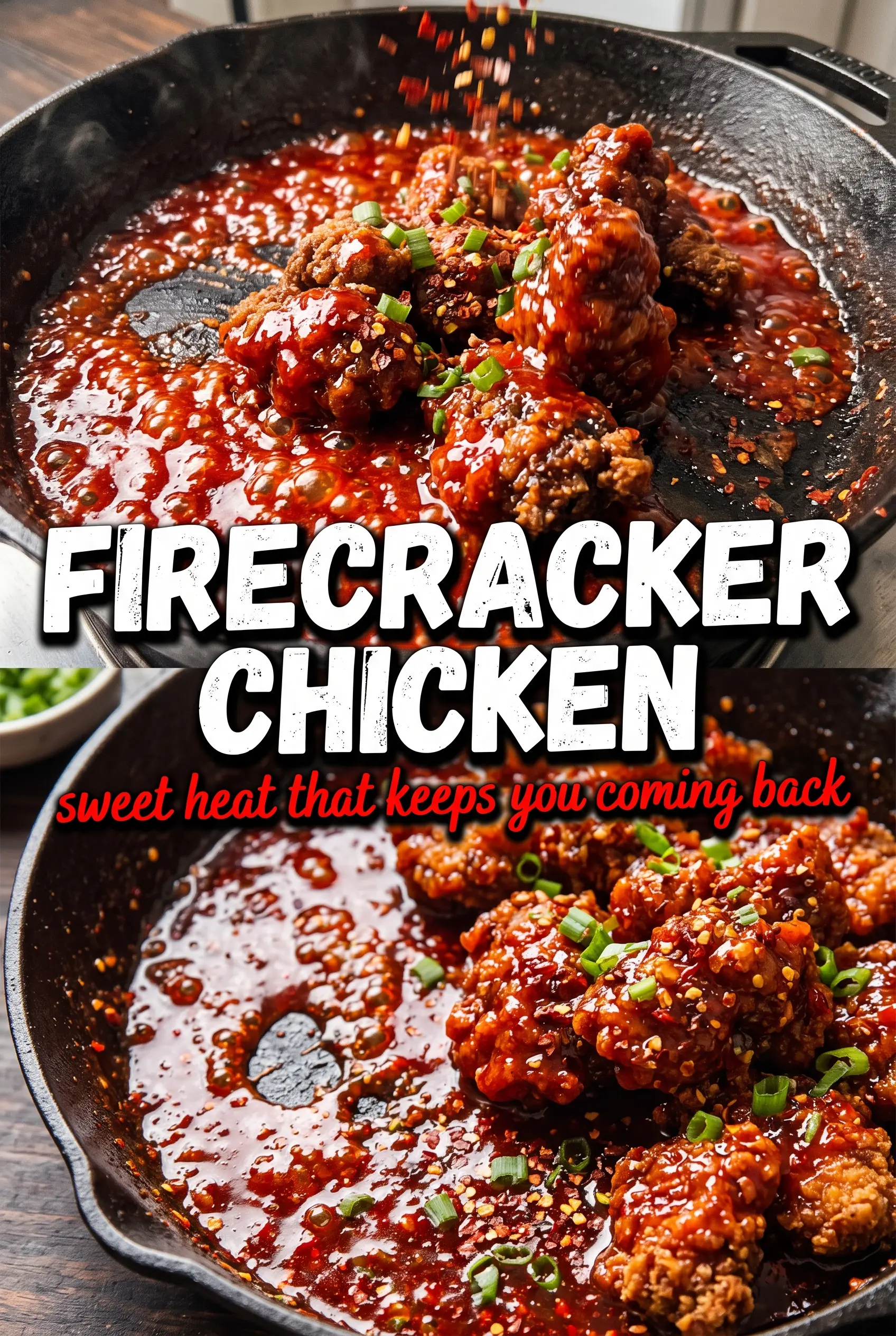
Firecracker Chicken
Ingredients
Equipment
Method
- Toss the chicken pieces with cornstarch, flour, salt, pepper, and garlic powder until every piece looks evenly coated and dry. Let it sit 20 minutes to help the coating cling.
- Heat about 1/2 inch of vegetable oil in a Dutch oven to 375°F, watching for steady bubbling when a bit of coating is added. Fry the chicken in batches for 3-4 minutes per side until deep golden and cooked through, then drain.
- In a saucepan, combine hot sauce, brown sugar, butter, apple cider vinegar, soy sauce, garlic powder, and red pepper flakes over medium heat. Stir until the butter melts and the sauce turns smooth and glossy, about 2-3 minutes.
- Add the hot fried chicken to the saucepan and toss until every piece is fully coated in the vivid red-orange, sticky glaze with visible red pepper flakes. Return to the pan and cook 1-2 minutes to caramelize, until the coating looks darker and clings to the chicken.
- Serve immediately over steamed rice and top with sesame seeds and sliced green onions for a bright finish.