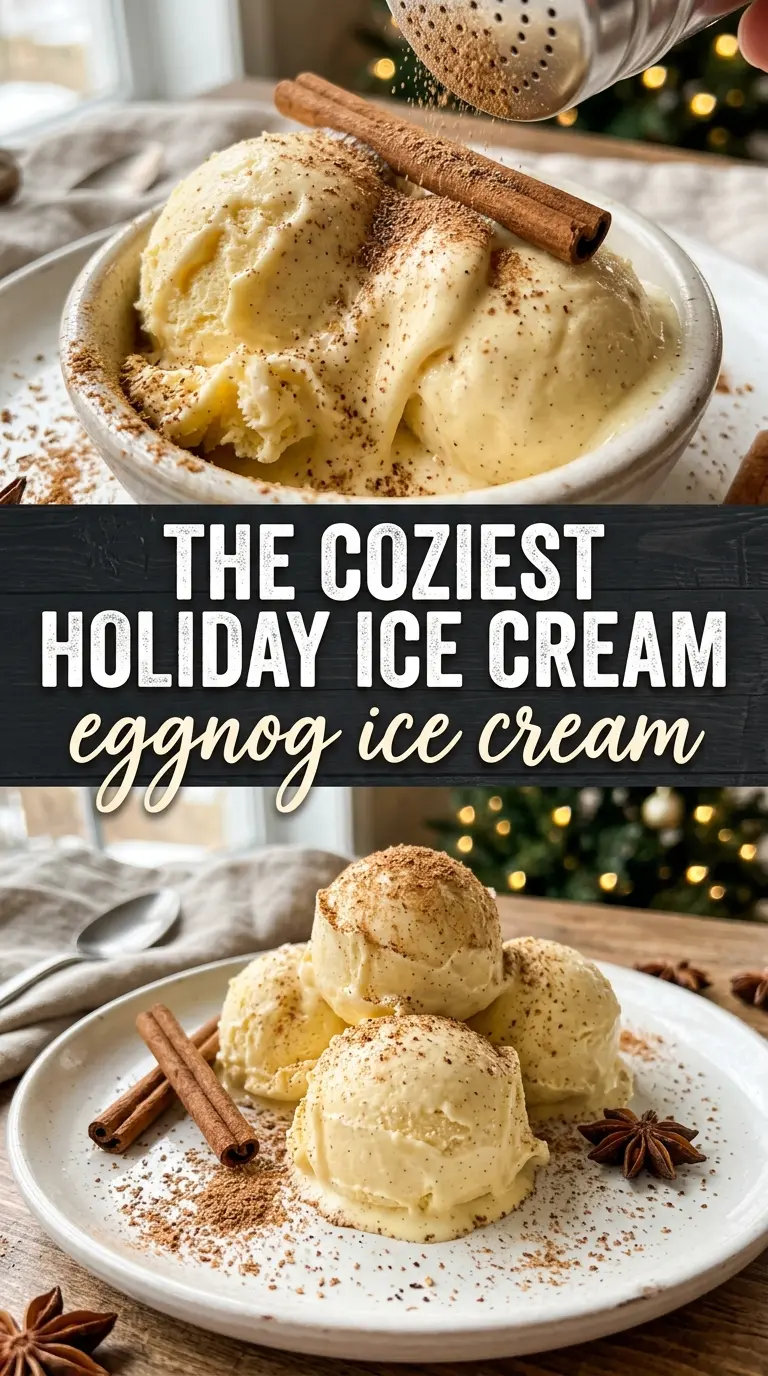
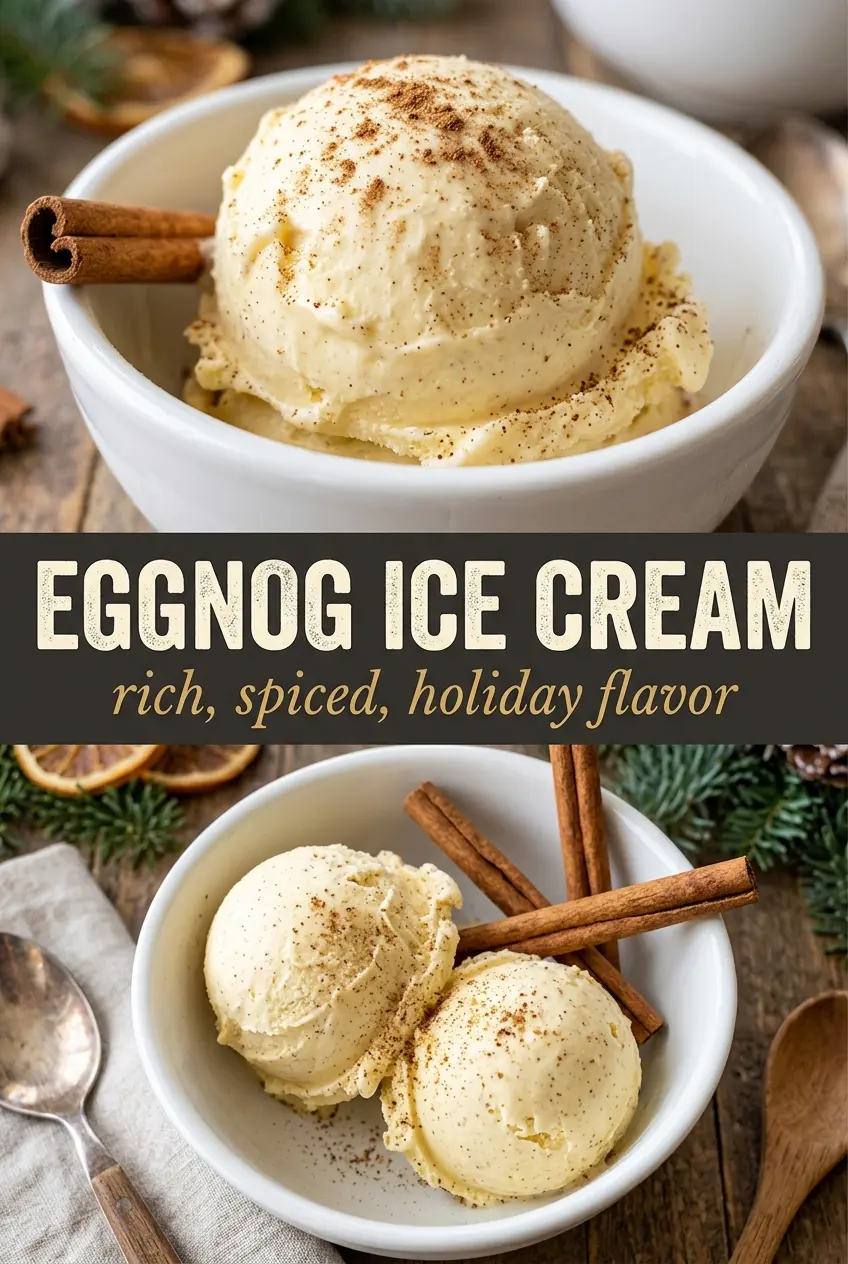
Eggnog ice cream turns the classic holiday drink into something even better: a scoop that’s silky, cold, and full of nutmeg without tasting heavy or cloying. The custard base gives it that rich, velvety texture you want from homemade ice cream, while the eggnog brings the spiced flavor so you don’t have to build everything from scratch. What you get is a festive dessert that tastes familiar at first bite and then feels a little more special with the creaminess of a proper custard.
The trick is treating the eggnog like part of the base, not the whole base. A little heavy cream keeps the texture smooth, and the egg yolks help the ice cream freeze with a softer scoop instead of an icy one. I also like finishing with fresh nutmeg at the end, because the flavor is brighter than pre-ground and it makes the whole thing taste more alive. If you’ve ever had eggnog desserts that came out flat or icy, the method below fixes both problems.
Below, you’ll find the exact temperature to look for, the best way to keep the custard from scrambling, and a few smart swaps if you want to make it without alcohol or with a stronger rum note.
The custard thickened up beautifully and the ice cream churned into the softest scoopable texture. The nutmeg comes through just enough, and the little splash of bourbon kept it from freezing into a brick.
Like this eggnog ice cream? Save it to Pinterest for a creamy holiday dessert with nutmeg and a boozy finish.
The Custard Needs Gentle Heat, Not Hope
Eggnog already contains dairy, sugar, and spice, but that doesn’t mean it can jump straight into the ice cream maker. The yolks still need to be cooked into a custard if you want a smooth scoop that freezes without ice crystals. The biggest failure point is high heat. If the pan gets too hot, the eggs curdle before the base thickens, and you end up straining out little bits instead of building a glossy custard.
Cook it over medium-low and keep stirring across the bottom and corners of the pan. You’re looking for a base that lightly coats the spoon and reaches 175°F, not a boil. That temperature gives you enough structure for a creamy freeze without pushing the yolks into scrambled-egg territory.
What the Ingredients Are Doing in This Frozen Custard
- Store-bought eggnog — This is the main flavor, and it’s where the holiday spice comes from. Use a good-tasting one since there isn’t much room to hide off flavors. If yours is especially thick and rich, it’ll make the final ice cream taste more custardy.
- Heavy cream — This keeps the texture plush and helps the base churn into something scoopable instead of icy. You can’t swap in milk here and expect the same result; you’d lose the fat that keeps the freeze soft.
- Egg yolks — They thicken the base and give it that classic frozen custard feel. There isn’t a real substitute if you want the same body, though a cornstarch-thickened base can work in a pinch, just with a less velvety finish.
- Rum or bourbon — Optional, but useful. A couple tablespoons won’t make the ice cream boozy; they just keep it a little softer in the freezer and round out the spice. Skip it if you want a fully family-friendly version.
- Fresh nutmeg — This is the finishing note that makes the whole dessert wake up. Pre-ground nutmeg works in the base, but grating fresh over the top at serving gives you the best aroma.
Cooking the Custard Without Scrambling the Yolks
Warming the Dairy
Set the eggnog and cream over medium heat and warm them until steam rises from the pan. You don’t want a boil here; the goal is to temper the yolks gradually so they blend smoothly instead of seizing. If the dairy starts to bubble hard, pull it back right away and lower the heat.
Tempering the Eggs
Whisk the yolks and sugar in a separate bowl until they look slightly lighter and glossy. Ladle in the hot dairy slowly while whisking the whole time, which spreads the heat out before it hits the eggs. If you dump it all in at once, the edges cook first and you’ll get little bits of egg in the custard.
Thickening to the Right Point
Return everything to the saucepan and cook over medium-low, stirring constantly and scraping the bottom. The custard is ready when it reaches 175°F and coats the back of a spoon with a clean path when you run your finger through it. If it gets much hotter, the texture can turn grainy, so take it off the heat as soon as it hits the target.
Chilling Before Churning
Strain the custard into a clean bowl, then stir in the vanilla, nutmeg, cinnamon, rum if using, and salt. Cover it and chill it until it’s fully cold, then let it rest in the fridge for at least 4 hours. A warm base in the ice cream maker churns poorly and stays soft too long, which leads to a looser freeze and more ice crystals later.
Make It Without Alcohol
Leave out the rum or bourbon and the ice cream still works fine. It will freeze a little firmer, so let it sit at room temperature for 5 to 10 minutes before scooping. The flavor stays family-friendly and very much eggnog-forward.
Use Bourbon for a Deeper Finish
Bourbon adds a warmer, slightly caramel note than rum. Stick with the same amount so the base doesn’t turn boozy or soften too much. It plays especially well if your eggnog already leans heavy on nutmeg.
Turn It Into a Dairy-Free Version
This one is harder to adapt cleanly because the eggnog and cream do the heavy lifting. If you need a dairy-free dessert, use a thick dairy-free nog and full-fat coconut cream, but expect a coconut note and a softer set. The texture won’t be quite as custardy, but it will still churn to a spoonable finish.
Storage and Reheating
- Refrigerator: The churned base should be used within 4 to 5 days after freezing. After that, it can pick up ice crystals and lose some of its smooth texture.
- Freezer: It freezes well for about 2 weeks in an airtight container. Press parchment or plastic wrap directly on the surface to help prevent freezer burn.
- Reheating: This isn’t a dish you reheat; let it stand at room temperature for 5 to 10 minutes before scooping. If it’s rock hard, the freezer was too cold or the alcohol was omitted.
Answers to the Questions Worth Asking
Eggnog Ice Cream
Ingredients
Equipment
Method
- In a saucepan, heat the store-bought eggnog and heavy cream over medium heat until steaming, with small bubbles around the edges and visible steam.
- Slowly whisk the hot eggnog mixture into the egg yolks and granulated sugar, pouring in a thin stream to keep the yolks from scrambling.
- Return everything to the saucepan and cook over medium-low heat, stirring constantly, until the custard thickens and reaches 175°F (about 10 minutes), with a glossy coating on the spoon.
- Strain the custard into a bowl, then stir in vanilla extract, nutmeg, cinnamon, rum or bourbon if using, and salt until fully blended and smooth.
- Cool completely, then refrigerate at least 4 hours until cold and slightly thickened.
- Churn the chilled custard in an ice cream maker until it reaches a soft, scoopable consistency.
- Transfer to a freezer-safe container and freeze until firm, about long enough to set through the center.
- Grate fresh nutmeg over each serving right before serving for a warm, aromatic finish.