Egg roll soup has the same savory, gingery, sesame-scented comfort as the takeout classic, but in a bowl you can spoon up in minutes. The broth stays light, the pork adds richness, and the cabbage softens just enough to keep a little bite instead of turning mushy. Topped with crispy wonton strips, it hits that egg roll craving without the wrapper-frying mess.
This version works because the aromatics go in before the broth, which gives the soup a deeper base before the vegetables even start to simmer. The rice vinegar keeps the broth from tasting flat, the sesame oil adds that unmistakable takeout note, and the cabbage and carrots cook just long enough to stay lively. Ground chicken works too, but pork gives the most egg-roll-like flavor and a little extra body in the broth.
Below, I’ve included the one timing detail that keeps the vegetables from going limp, plus a few easy ways to adjust the heat, swap the protein, or make it work with what’s already in your fridge.
The cabbage stayed tender but still had a little bite, and the broth tasted just like the filling from my favorite egg rolls. I added extra sriracha at the table and my husband went back for seconds.
Like this egg roll soup? Save it to Pinterest for a fast, savory bowl with ginger-soy broth, tender cabbage, and crispy wonton topping.
The Broth Tastes Flat Until the Aromatics Hit the Pan First
The biggest mistake with soup versions of egg rolls is treating everything like a simmer-and-go situation. If the garlic and ginger don’t get a minute in the hot oil, the broth tastes thin no matter how much soy sauce you add. That quick sauté wakes up the ginger and gives the pork drippings somewhere to go, which is where the depth comes from.
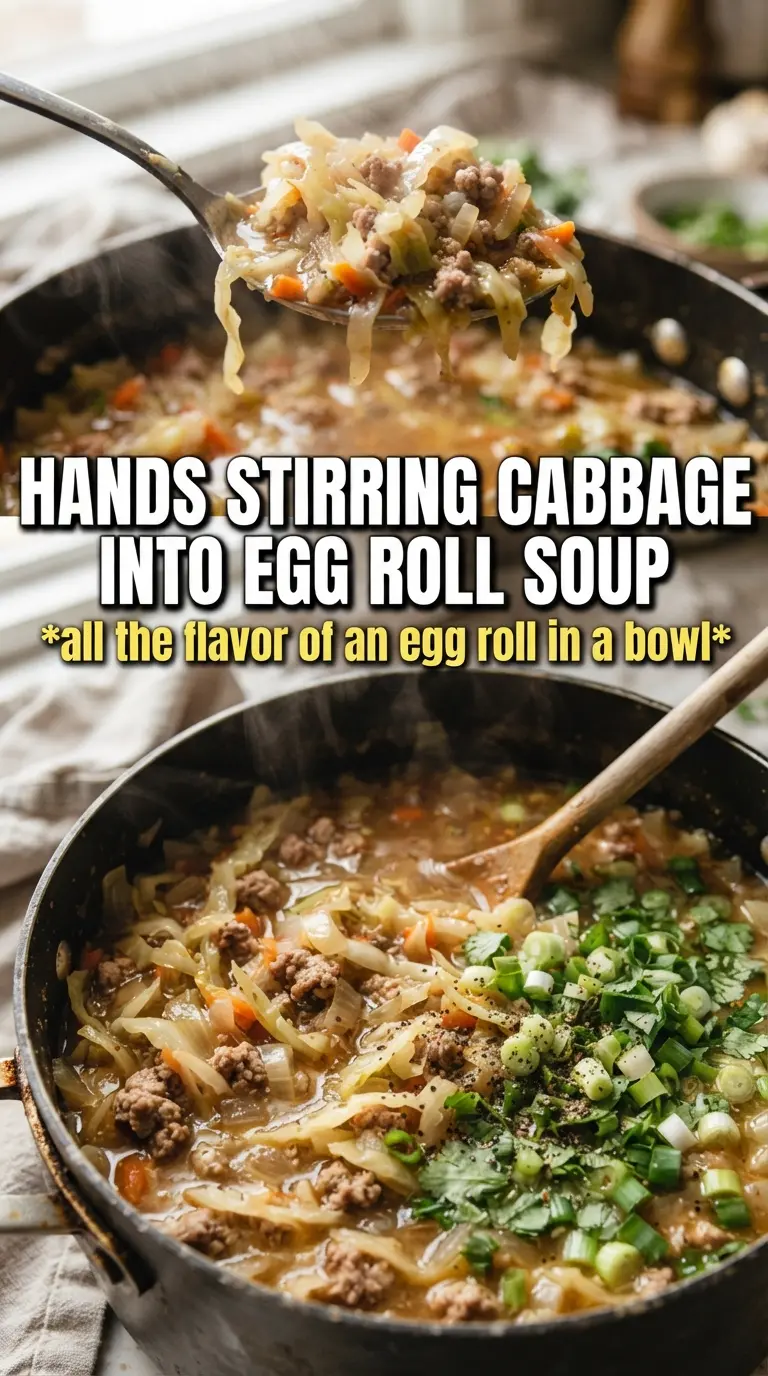
Keep the cabbage cut thin and the simmer short. Thick wedges stay crunchy in the wrong way, and a long cook turns the whole pot soft and dulled out. You want the cabbage tender at the stem and just yielding at the leaf edges, with the carrots still holding shape.
- Ground pork — This gives the soup the richest, most classic egg-roll flavor. Ground chicken works if you want it lighter, but it needs the sesame oil and soy to carry more of the flavor.
- Cabbage — Thin shreds matter here. They cook fast and mimic the filling texture instead of turning the soup into a chunky stew.
- Fresh ginger and garlic — Fresh is worth it. The jarred versions don’t bloom the same way in hot oil, and that missing punch shows up in the finished broth.
- Rice vinegar — Don’t skip it. It lifts the broth and keeps the soy sauce from tasting one-note.
What Each Ingredient Is Actually Doing in This Bowl
- Vegetable oil — This is just the cooking fat for browning the meat and blooming the aromatics. Use a neutral oil so the sesame flavor can come through at the end.
- Chicken broth — A good broth gives the soup its body. If yours is salty, hold back a little soy sauce until the end.
- Sriracha — This isn’t there to make the soup hot; it gives the broth a little heat and a touch of sweetness. Use more if you want a stronger kick, or leave it at a teaspoon for a gentle background warmth.
- Green onions — Stir them in at the end so they stay bright. If they go in too early, they lose their clean onion bite and disappear into the broth.
- Crispy wonton strips — Add these right before serving. If they sit in the soup, they go soft fast, so treat them like the finishing crunch, not an ingredient to simmer.
Building the Soup So the Vegetables Stay Tender, Not Limp
Brown the Pork First
Set a large pot over medium-high heat and cook the pork until it’s no longer pink and has some browned bits at the bottom. That browning matters because it gives the broth a deeper, meatier taste. If there’s a lot of grease, drain the excess, but leave a little behind so the garlic and ginger can cook in flavor, not a dry pan.
Wake Up the Garlic and Ginger
Add the garlic and ginger to the hot pot and stir for 1 to 2 minutes, just until fragrant. The kitchen should smell sharp, warm, and savory, not burnt. If the garlic starts to brown fast, lower the heat right away; burnt garlic will carry bitterness through the whole soup.
Simmer the Cabbage at the Right Speed
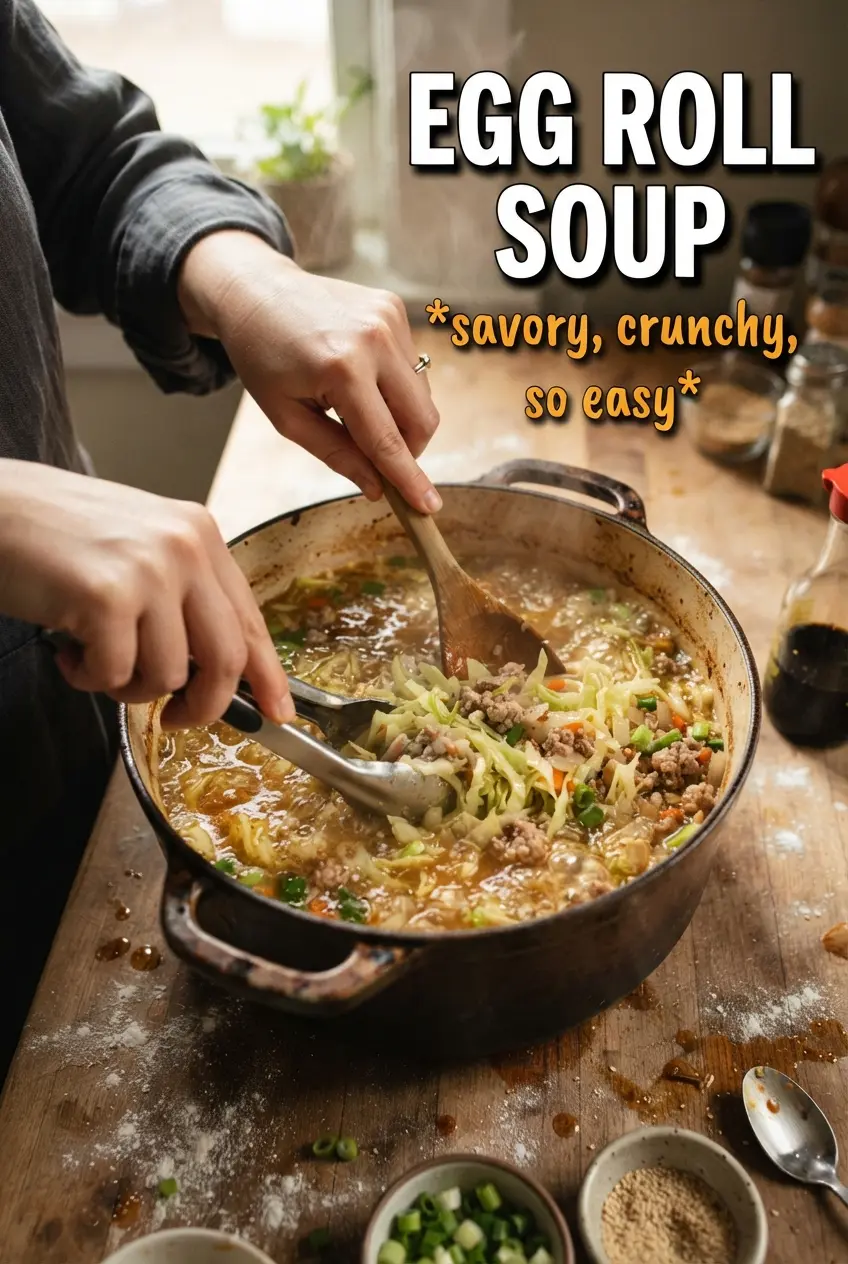
Pour in the broth, soy sauce, sesame oil, rice vinegar, and sriracha, then bring the pot to a boil before adding the cabbage and carrots. Once the vegetables are in, drop the heat and simmer until they’re tender but still have shape, about 8 to 10 minutes. If you keep boiling hard here, the cabbage turns mushy and the broth tastes overcooked.
Finish with the Fresh Stuff
Stir in the green onions at the end and taste before adding salt and pepper. That last adjustment matters because soy sauce and broth can already bring plenty of salt. Serve immediately with wonton strips and sesame seeds so the crunch stays on top where it belongs.
How to Adapt This Egg Roll Soup Without Losing the Takeout Feeling
Make It with Ground Chicken
Ground chicken makes the soup lighter and a little cleaner tasting, but it doesn’t bring the same richness as pork. If you use it, keep the sesame oil and ginger in place so the broth still tastes layered instead of thin.
Make It Gluten-Free
Swap the soy sauce for tamari or a certified gluten-free soy sauce. Skip regular wonton strips unless you’ve found a gluten-free version, and finish with sesame seeds and extra scallions for the same crunch.
Turn Up the Heat
Add extra sriracha in the broth or finish each bowl with chili oil. Keep the first round modest, because heat builds as the soup sits and the ginger gets a little stronger.
Storage and Reheating
- Refrigerator: Store the soup without the wonton strips for up to 4 days. The cabbage softens a little more each day, but the flavor holds up well.
- Freezer: It freezes better than you’d expect, though the cabbage will be softer after thawing. Freeze in airtight containers for up to 2 months and add fresh scallions and crunch when serving.
- Reheating: Warm it gently on the stove over medium-low heat until hot. A hard boil can make the vegetables too soft and push the broth toward salty.
Questions I Get Asked About This Recipe
Egg Roll Soup
Ingredients
Equipment
Method
- Heat a large pot over medium-high heat and add the vegetable oil. Brown the ground pork, breaking it up as it cooks, then drain excess fat.
- Add the minced garlic and grated ginger to the pot. Cook for 1-2 minutes until fragrant.
- Pour in the chicken broth, soy sauce, sesame oil, rice vinegar, and sriracha. Bring the mixture to a boil.
- Add the shredded cabbage and carrots. Simmer for 8-10 minutes, until the vegetables are tender.
- Stir in the sliced green onions, then season with salt and pepper to taste. Taste and adjust as needed.
- Serve the soup hot, topped with crispy wonton strips, sesame seeds, and extra green onions.