Silky rhubarb curd gives you that bright, tart spoonful that wakes up toast, scones, yogurt, and anything else that needs a little lift. This version turns fresh rhubarb into a smooth pink spread with enough butter and egg yolk to feel rich, but not so much that it loses its sharp edge. The texture lands somewhere between lemon curd and jam, only more delicate and a little more elegant.
The trick is softening the rhubarb fully before blending it smooth, then cooking the curd low and steady once the yolks go in. Rhubarb starts out stringy and fibrous, and if you skip the puree step you’ll feel that texture in the finished curd. The butter gets whisked in off the heat, which keeps the emulsion glossy instead of greasy, and a fine-mesh strain at the end gives you that clean, spoonable finish if you want it.
Below you’ll find the exact point where the curd thickens, the swap I use when I want it even smoother, and a few ways to serve or store it without losing that fresh rhubarb flavor.
I was nervous about curdling the eggs, but keeping the heat on medium-low worked perfectly. The rhubarb flavor stayed bright and the curd set up beautifully after chilling.
Save this silky rhubarb curd for the next time you want a bright pink spread that sets up smooth and tart.
The Step That Keeps Rhubarb Curd Smooth Instead of Stringy
Rhubarb is naturally fibrous, and that’s the part that trips people up. If you cook it straight into eggs and butter without fully softening and pureeing it first, you end up with a curd that tastes right but feels rough on the tongue. The puree step matters here because it gives you a clean base before the eggs go in, which is what makes the finished curd feel polished instead of rustic.
The second thing that saves this recipe is the heat level. Egg yolks thicken gently; they don’t like a hard simmer. Medium-low heat gives the curd enough time to thicken without scrambling, and constant stirring keeps the mixture moving across the bottom of the pan so it doesn’t catch.
- Softened rhubarb — Cook it until it collapses completely before blending. If there’s any resistance left, the curd won’t puree fully smooth.
- Egg yolks — They give the curd body and a rich, custard-like finish. Whole eggs will work in a pinch, but the result will be looser and less velvety.
- Butter — Add it off the heat in cubes so it melts evenly. That’s what gives the curd its glossy finish instead of a greasy sheen.
- Lemon juice — Rhubarb is already tart, but a little lemon sharpens the flavor and keeps the curd tasting bright after chilling.
What Each Ingredient Is Doing in This Pink Curdsome
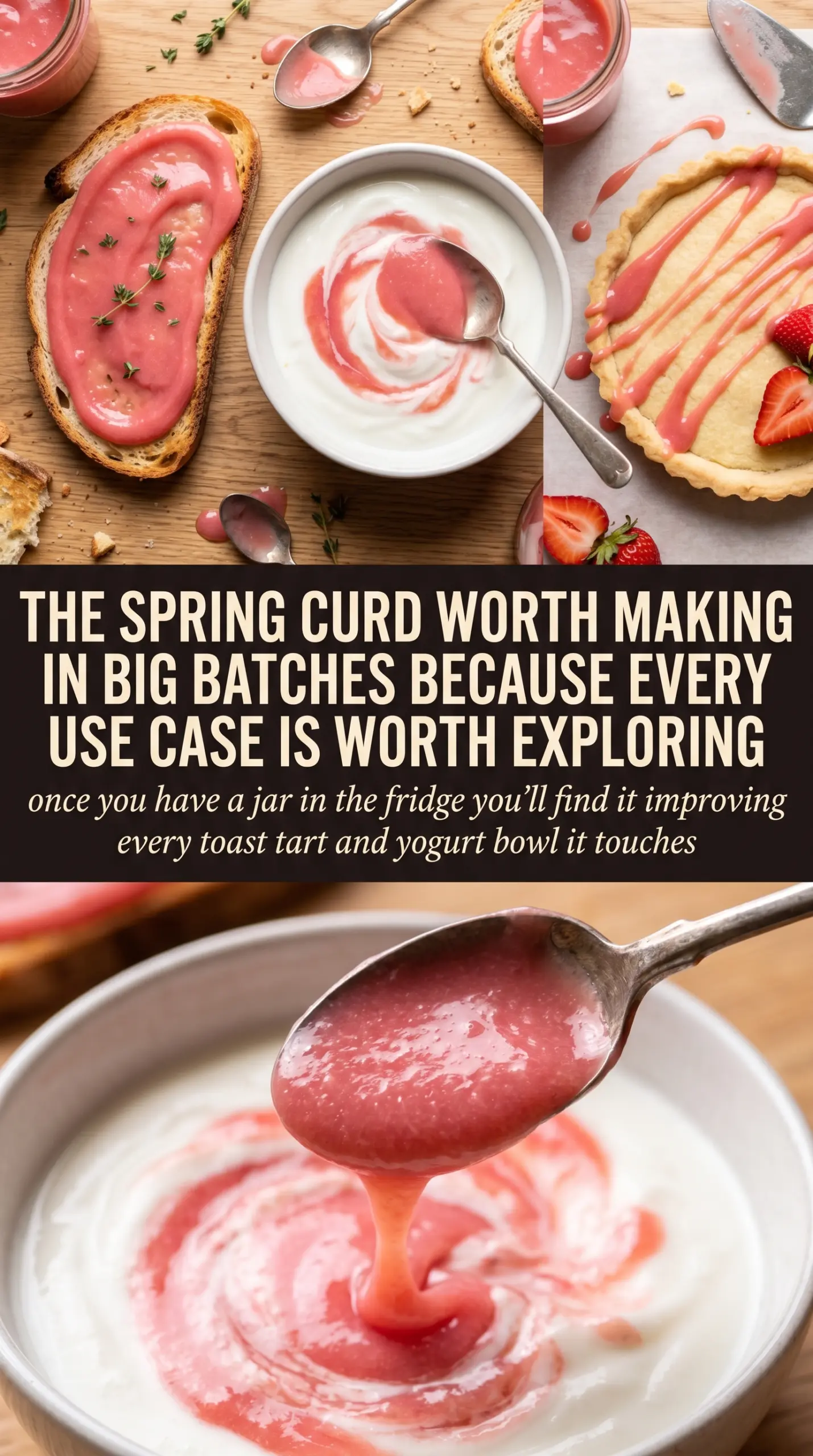
- Fresh rhubarb — Fresh stalks give you the cleanest, brightest flavor and the prettiest color. Frozen rhubarb can work, but it releases more water, so the first cook may take a little longer.
- Sugar — This isn’t just for sweetness; it balances the rhubarb’s sharp edge and helps the curd thicken properly. Cutting it too much can leave the curd thin and overly sour.
- Egg yolks — Yolks are what turn fruit puree into curd. They thicken the mixture and give it that rich, spoonable texture that holds on toast instead of sliding off.
- Butter — Use real butter here. It rounds out the tartness and gives the finished curd a smoother mouthfeel than oil or margarine ever could.
- Lemon juice — A tablespoon is enough to brighten the flavor without making the curd aggressively sharp. If your rhubarb is particularly tart, don’t add more unless you taste it after cooking.
Cooking the Curd Until It Coats the Spoon
Softening the Rhubarb
Start by cooking the rhubarb with half the sugar until it breaks down completely and looks jammy, not watery. You’re looking for pieces that collapse with the back of a spoon and a pan that no longer has obvious chunks floating in syrup. If the rhubarb still looks stringy at this stage, the blender won’t completely fix it later, so give it the full time until it turns soft and almost saucy.
Blending and Rebuilding the Base
Puree the cooked rhubarb until smooth, then return it to the saucepan before adding the remaining sugar, yolks, and lemon juice. This is where the texture gets refined, and it’s worth taking an extra minute to scrape down the blender well so you don’t leave any fibrous bits behind. Once the eggs go in, keep the heat modest and the whisk moving; a still pan on higher heat is how curd turns grainy or scrambled around the edges.
Thickening Without Scrambling
Cook the mixture over medium-low heat, stirring constantly, until it thickens enough to coat the back of a spoon. It should look glossy and slightly puffed, and when you drag a spatula through the pan, the line should hold for a second before closing. If you see even tiny flecks of cooked egg, pull the pan off the heat immediately and strain the curd right away.
Finishing With Butter
Take the pan off the heat before whisking in the butter cubes. The residual heat is enough to melt them, and that gentler finish keeps the curd smooth and shiny. Strain it through a fine-mesh sieve if you want a silkier jarred curd, then chill it until it’s fully set; warm curd always looks looser than it really is.
Make It Even Smoother With a Strain
If you want a truly silky curd, pass it through a fine-mesh sieve after the butter melts. This catches any last bits of rhubarb fiber and any tiny bits of cooked egg, which gives you a cleaner spread for toast or layered desserts.
Dairy-Free Version
You can swap the butter for a good dairy-free stick butter, but the curd won’t taste quite as round or rich. Use one that melts cleanly and has a neutral flavor, then chill the curd fully so it can set after the fat firms up.
Frozen Rhubarb Works in a Pinch
Frozen rhubarb can replace fresh without changing the method, but it usually gives off more liquid. Cook it a few minutes longer in the first stage so the puree isn’t thin before the yolks go in.
Storage and Reheating
- Refrigerator: Store in clean jars for up to 2 weeks. The curd will thicken more as it chills.
- Freezer: It freezes well for up to 3 months in a freezer-safe container with a little headspace. Thaw overnight in the refrigerator and stir gently if the texture looks slightly loosened.
- Reheating: Curds are best served cold or at room temperature. If you want it looser for drizzling, warm a small amount gently over low heat; high heat can break the emulsion and make it look oily.
Answers to the Questions Worth Asking
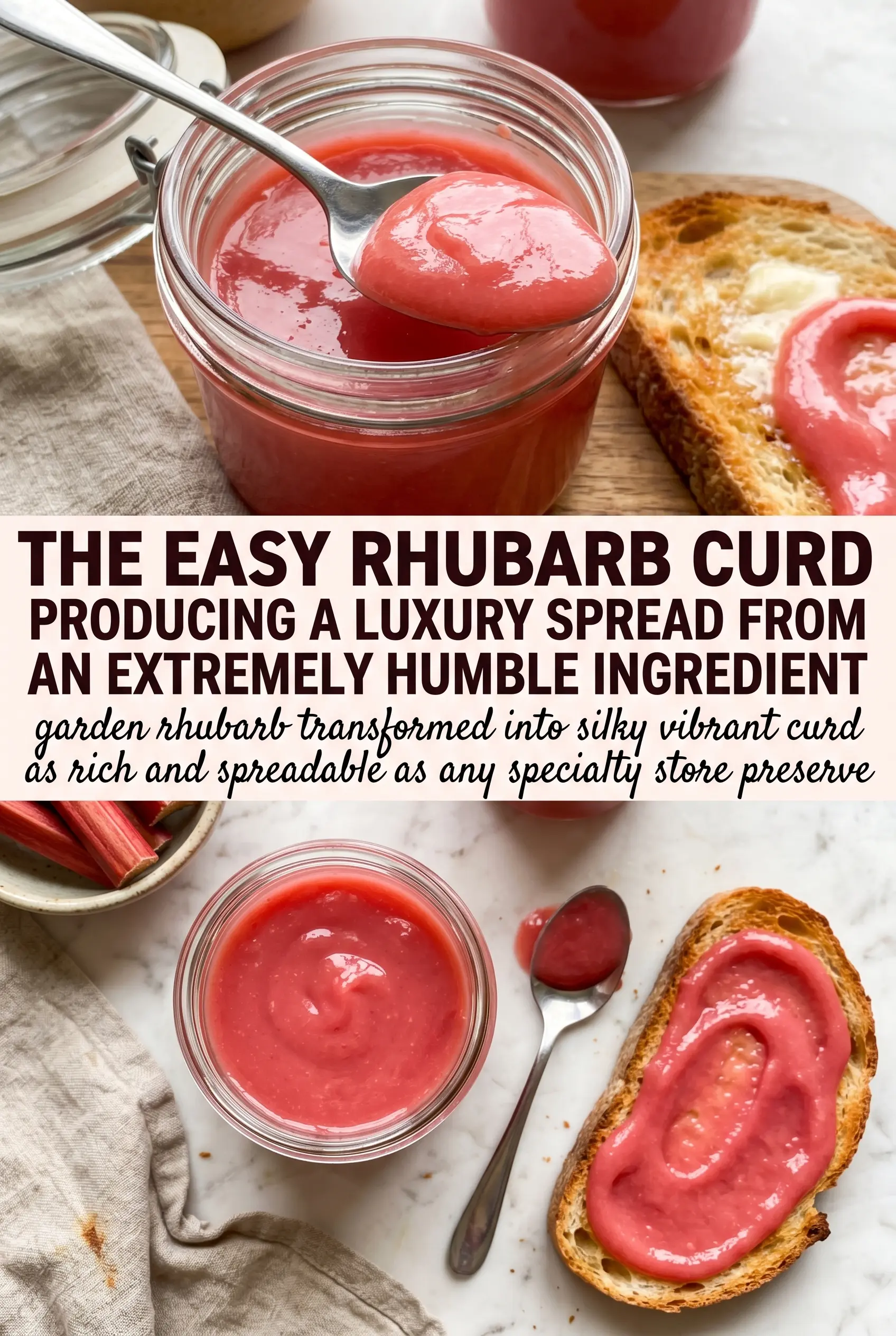
Easy Rhubarb Curd
Ingredients
Equipment
Method
- Combine chopped fresh rhubarb and 1/2 cup sugar in a saucepan and cook over medium heat until very soft, about 8 minutes, stirring occasionally so it breaks down evenly.
- Puree the cooked rhubarb until smooth in a blender, then return the pink puree to the saucepan.
- Whisk in the remaining sugar, egg yolks, and lemon juice until smooth and uniform in color.
- Cook over medium-low heat, stirring constantly, until the mixture thickens and coats the back of a spoon, about 6-8 minutes, and looks glossy and smooth.
- Remove from heat and whisk in the butter cubes until completely melted and the curd is silky and smooth.
- Strain through a fine mesh sieve if desired for extra smoothness, using a spatula to press gently for a clean texture.
- Pour the curd into clean jars, cover, and refrigerate for at least 2 hours, until it firms up to a spreadable consistency.
- Store in the refrigerator for up to 2 weeks for best flavor and texture.