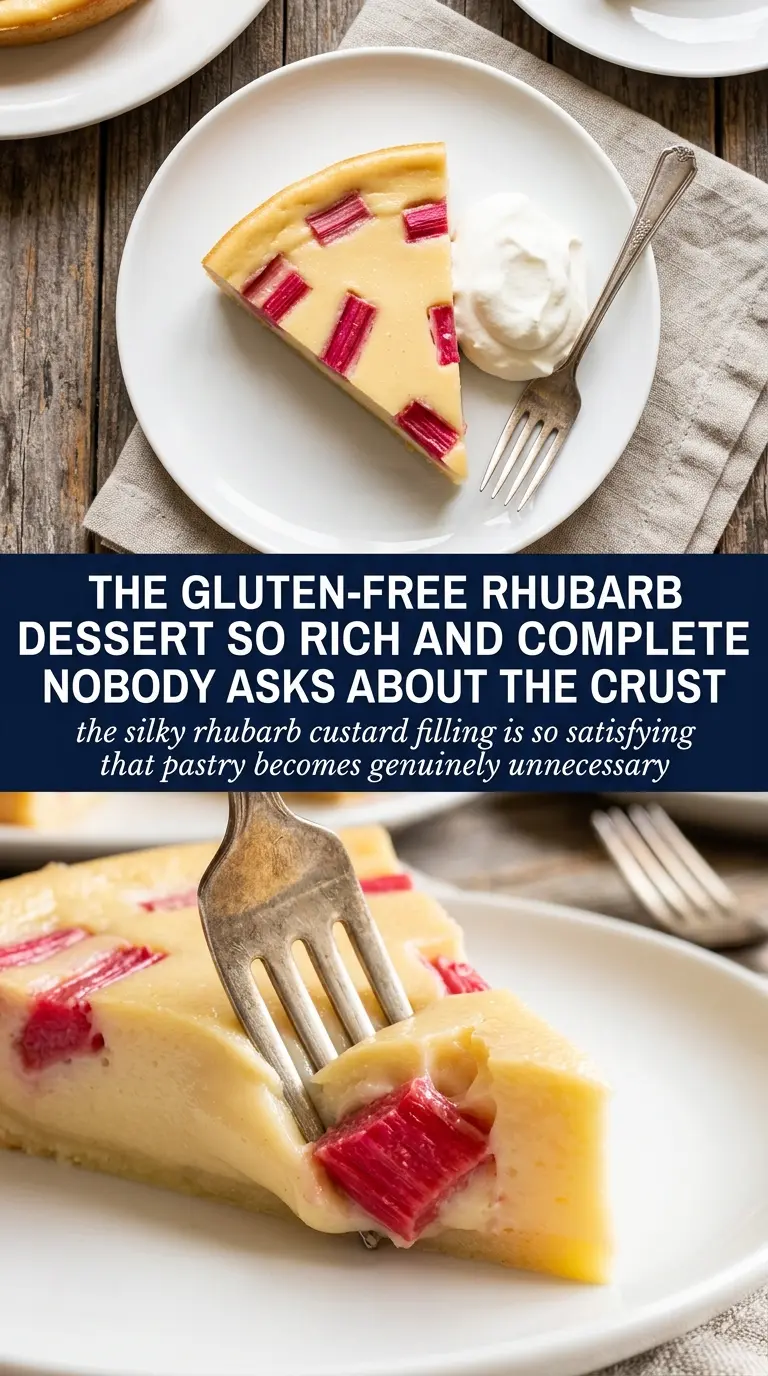
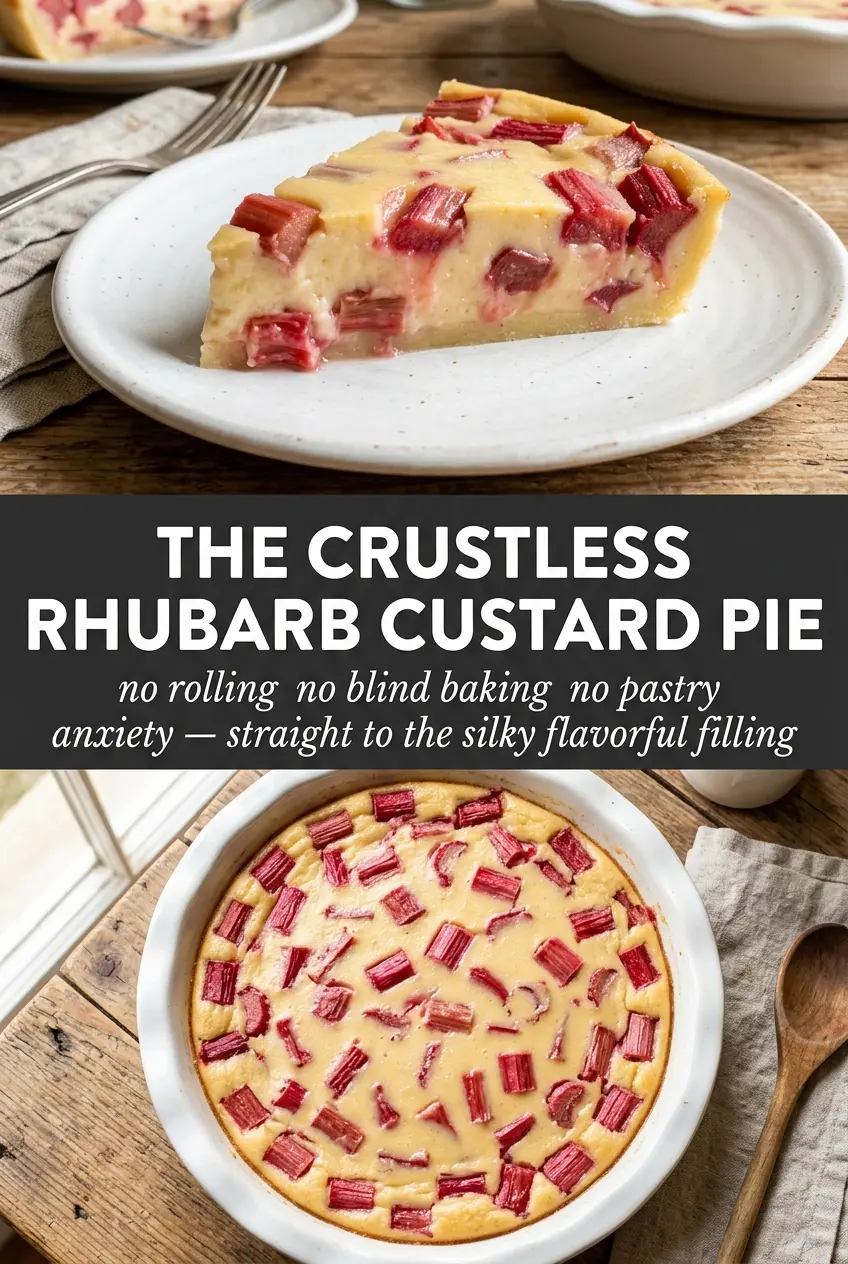
Creamy, set custard and tart little pockets of rhubarb make this crustless pie one of those desserts people remember after the plate is empty. It bakes up with a golden top, a tender middle, and just enough structure to slice cleanly once it’s fully cooled. There’s no pastry to roll out, which means the fruit and custard get all the attention instead of the crust.
The trick here is letting the flour do a small amount of thickening while the eggs set the filling into a soft, spoonable slice. Rhubarb goes in first, so it stays evenly distributed instead of sinking to the bottom, and the melted butter keeps the custard rich without making it heavy. The sugar softens rhubarb’s sharp edge, but the fruit still keeps its bright bite.
Below, I’ve included the detail that matters most for this pie: how to know when it’s baked enough without overcooking the custard, plus a few simple swaps if you’re working with frozen rhubarb or want to adjust the sweetness.
The custard set up perfectly and the rhubarb stayed bright and tender instead of turning mushy. I baked it right at 50 minutes and it sliced clean after chilling.
Like this crustless rhubarb custard pie? Save it to Pinterest for the days when you want a creamy fruit dessert with barely any fuss.
The Reason This Custard Sets Cleanly Without a Crust
A lot of custard pies fail for one of two reasons: they’re baked until the center turns rubbery, or they’re pulled too early and collapse when sliced. This one avoids both by using enough flour to reinforce the eggs without turning the filling cakey. The result is soft and creamy, but not loose.
The rhubarb also matters here. It gives off some moisture as it bakes, so the batter needs that extra structure to keep the slices intact. If you’ve ever had a fruit custard that wept liquid onto the plate, the usual culprit is underbaking or too much juice from the fruit without enough thickener in the filling.
- Eggs — They build the custard body. Four eggs give you a slice that holds together after chilling without becoming firm like quiche.
- Flour — This is the quiet insurance policy. It thickens the filling just enough to keep the custard from breaking when the rhubarb releases juice.
- Butter — Melted butter keeps the pie rich and helps the top bake into that light golden crust. Margarine won’t give the same flavor, and the texture is less clean.
- Rhubarb — Fresh rhubarb is best for the sharp, bright flavor and neat texture. If you use frozen, thaw it first and drain off excess liquid so the filling doesn’t turn watery.
What Each Ingredient Is Doing in the Pan
- Sugar — This does more than sweeten. It pulls the tartness back just enough that the rhubarb tastes bright instead of sharp, and it helps the top brown a little as the pie bakes.
- Milk — Whole milk gives the filling a smoother finish, but 2% will work. Don’t swap in a thinner milk alternative unless you’re okay with a softer set.
- Vanilla — It rounds out the custard and keeps the rhubarb from tasting one-dimensional. The vanilla doesn’t need to stand out; it just needs to make the filling taste complete.
- Whipped cream — Keep it simple. The pie is sweet enough that you don’t need anything heavier than a soft spoonful on top.
The Bake Time That Gives You a Silky Slice
Building the Fruit Layer
Spread the diced rhubarb evenly in the pie plate before the custard goes in. That keeps the fruit suspended throughout the slice instead of sinking into one wet layer. If the pieces are huge, they’ll stay a little firmer than you want, so aim for a small, even dice.
Whisking the Custard Smooth
Whisk the sugar, eggs, butter, flour, milk, vanilla, and salt until the batter looks smooth and unified, with no dry flour clinging to the sides of the bowl. The batter should pour like thin cream. If you see lumps now, they’ll show up as little floury pockets in the baked pie.
Watching for the Set
Bake until the top is golden and the center has a slight wobble when you nudge the pan. The middle should not look sloshy, but it should still move a little like set gelatin. If you bake until the center is completely rigid in the oven, it’ll taste dry after cooling.
Cooling Before the First Slice
Let the pie cool completely, then chill it for at least two hours before cutting. That resting time is what turns a soft custard into clean slices. If you cut it warm, the filling will spread, and the rhubarb will drag through the middle instead of staying neatly suspended.
Use Frozen Rhubarb Without a Watery Center
Thaw the rhubarb completely, then drain it well and pat it dry before using. Frozen rhubarb gives up more liquid than fresh, so skipping this step usually leads to a loose custard and a soggy bottom layer.
Make It a Little Less Sweet
Cut the sugar back to 1 1/4 cups if your rhubarb is especially tender or you like a sharper dessert. The pie will still set the same way, but the rhubarb flavor comes forward more clearly.
Dairy-Free Version
Use a neutral plant-based milk and a dairy-free butter substitute with a similar fat content. The pie will still set, but the flavor is a little less rich and the top won’t brown quite as deeply.
Turn It Into Mini Custard Pies
Divide the batter and rhubarb among greased muffin cups and shorten the bake time significantly. You’ll get little hand-held custards with more browned edges, which is great if you want individual servings.
Storage and Reheating
- Refrigerator: Store covered for up to 4 days. The texture stays best when chilled, and the slices hold their shape better on day two.
- Freezer: It freezes, but the custard can turn a little grainy after thawing. If you freeze it, wrap slices tightly and thaw in the refrigerator overnight.
- Reheating: Serve it cold or let it sit at room temperature for a few minutes. Warming it in the microwave can loosen the custard and make the rhubarb leak.
Questions I Get Asked About This Recipe
Easy Crustless Rhubarb Custard Pie
Ingredients
Equipment
Method
- Preheat the oven to 350°F and grease a 9-inch deep-dish pie plate.
- Spread the diced rhubarb evenly in the bottom of the prepared pie plate.
- Whisk together the sugar, eggs, melted butter, flour, milk, vanilla extract, and salt until smooth.
- Pour the egg mixture over the rhubarb and tap the pan gently to release air bubbles.
- Bake for 45 to 50 minutes at 350°F until the custard is set and the top is golden brown.
- Cool completely before slicing, then refrigerate for at least 2 hours to fully set the texture.
- Serve chilled with whipped cream.