Double Crunch Orange Chicken lands with the kind of crisp bite that holds up under sauce instead of collapsing the second it hits the bowl. The chicken stays shatter-crisp on the outside, juicy in the middle, and the orange sauce clings in a glossy layer that tastes bright, sticky, and just a little caramelized at the edges. It’s the difference between takeout that turns soft on the drive home and a version that still has texture after the sauce goes on.
The double coating is what makes this work. A first dip in the egg and flour mixture gives the chicken something to grip onto, and the second pass builds the thick, craggy crust that fries up with all those little crunchy ridges. The sauce gets its body from fresh orange juice, zest, and a small cornstarch slurry, which keeps it shiny instead of syrupy or thin. Once the chicken is fried, it only needs a quick toss in the sauce so the crust keeps some of its crunch.
Below you’ll find the exact frying cue I use to keep the coating from going greasy, plus a few smart swaps if you need to adjust the dish without losing that orange-chicken character.
The chicken stayed crunchy even after I tossed it in the sauce, and the orange glaze thickened up fast without turning sticky-sweet. My husband kept sneaking pieces straight from the pan.
Save this double crunch orange chicken for the nights when you want glossy takeout-style sauce with a crust that still snaps under the fork.
The Coating Has to Fry Before It Touches the Sauce
Orange chicken fails when the crust is pale, soft, or greasy before it ever meets the glaze. That usually comes from oil that isn’t hot enough, or from crowding the pan so the chicken steams instead of frying. At 375°F, the coating sets quickly and develops that rough, crunchy surface that can stand up to a sticky sauce.
The second dip is the part most people skip, and it matters. The first layer gives the egg something to cling to; the second layer builds those irregular edges that fry darker and crunchier. If the coating looks smooth and thin before it hits the oil, it won’t give you that signature bite after saucing.
- Chicken thighs stay juicier than breast meat during frying, which matters because the chicken cooks quickly and doesn’t get a long protected simmer.
- Cornstarch plus flour gives you a coating that’s crisp but not brittle. Cornstarch alone can go dusty; flour alone fries up softer.
- Fresh orange zest is not optional if you want bold orange flavor. Juice brings acidity and sweetness, but zest carries the perfume that makes the sauce taste bright.
- Soy sauce and hoisin keep the glaze from tasting flat. Soy brings salt and depth; hoisin adds the faint molasses note that makes the sauce taste rounded instead of sharp.
What Each Ingredient Is Actually Doing in This Orange Chicken
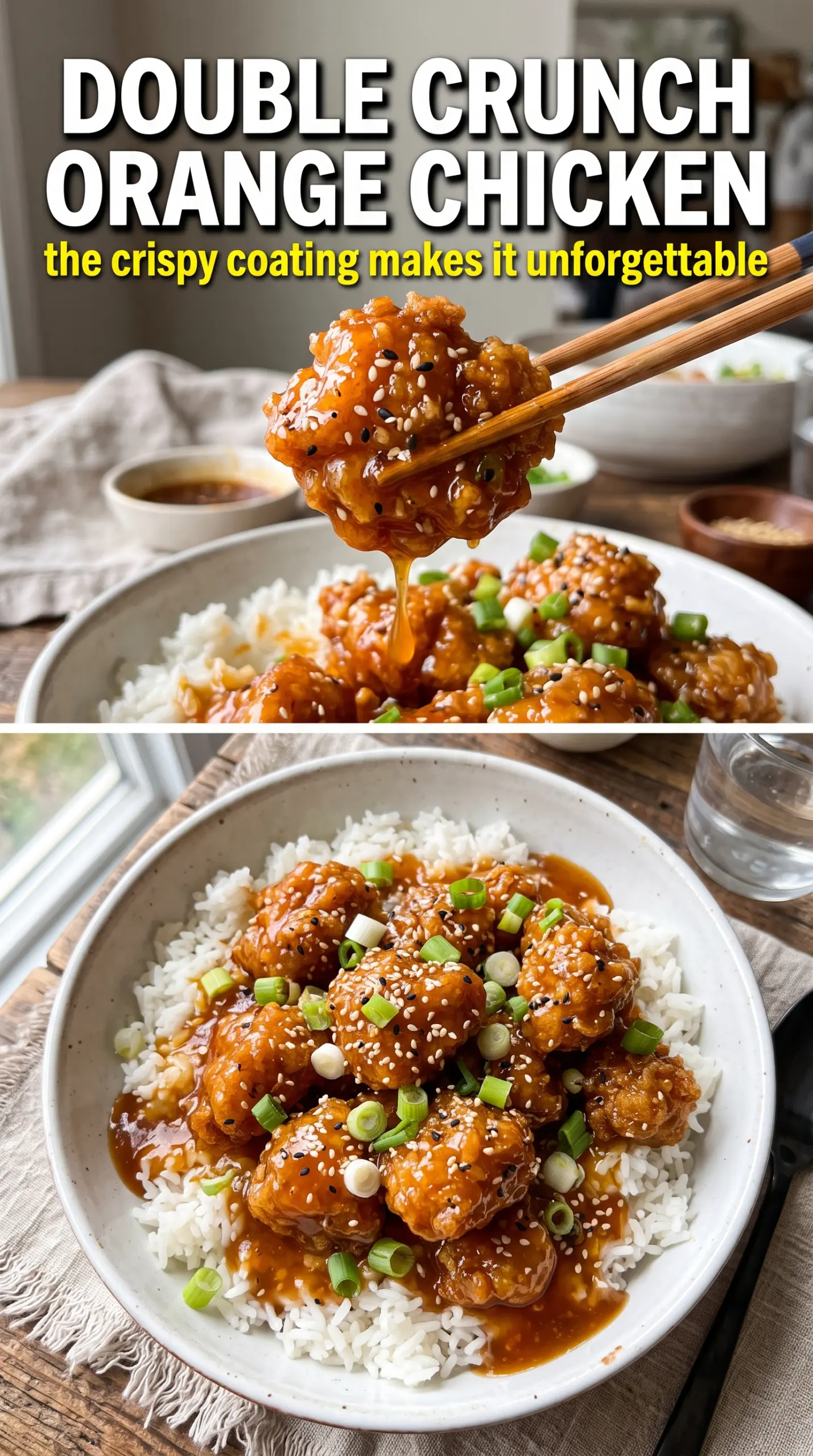
The chicken thighs are the right cut here because they stay tender while the crust crisps hard and fast. You can use breast meat, but it dries out more easily, especially if your oil runs a little hot. Cut the pieces into even bite-size chunks so they finish at the same time.
Fresh orange juice and zest carry the sauce. Bottled juice tastes dull here, and the zest makes the difference between a sauce that tastes like orange candy and one that tastes like actual citrus. Rice vinegar sharpens everything, while sesame oil gives the glaze a faint nutty finish at the end.
The cornstarch slurry is what gives the sauce its lacquered look. Add it after the sauce comes to a boil, then cook it for a couple of minutes until it turns glossy and lightly thickened. If you add the slurry before the sauce heats, it can leave a raw starchy taste.
Frying the Chicken, Thickening the Sauce, and Keeping the Crunch
Building the Double Coating
Mix the cornstarch, flour, garlic powder, salt, and pepper first, then set up the egg and flour stations before you start dipping. Press the chicken into the flour mixture after the egg so every piece gets a dry, shaggy coating. For the second dip, return each piece to the egg and then back into the flour mixture; that extra layer is what gives you those craggy edges that fry up so well.
Frying to a Deep Gold
Drop the chicken into oil that stays at 375°F and keep the pieces in a single layer. If the temperature falls too much, the coating drinks oil and turns heavy instead of crisp. Fry until the chicken is deeply golden and sounds crisp when you lift a piece from the oil, usually 5 to 6 minutes depending on the size of the chunks.
Making the Orange Glaze
Stir the orange juice, zest, soy sauce, brown sugar, rice vinegar, hoisin, garlic, ginger, and sesame oil together in a saucepan and bring it to a boil. The sauce should smell sharp and fragrant before the slurry goes in. Once you add the cornstarch mixture, keep cooking for 2 to 3 minutes until the sauce looks shiny and coats the back of a spoon without running off like water.
Coating Without Sogging Out the Crust
Toss the chicken in the sauce only after both pieces are ready. If you let the fried chicken sit in sauce too long, the crust softens fast. Work quickly, use a wide bowl or pan, and get the chicken onto rice as soon as it’s evenly coated.
Three Ways to Adjust This Without Losing the Orange Chicken Feel
Gluten-Free Version
Use a gluten-free all-purpose flour blend in the coating and swap in gluten-free soy sauce or tamari. The crust still fries up crisp, though it may be a little more delicate at the edges, so handle the pieces gently when tossing them in the sauce.
Baked Instead of Fried
Lightly oil the coated chicken and bake it on a wire rack until crisp and cooked through, then toss it in the sauce right before serving. You won’t get the same deep crunch as frying, but you’ll still get a solid crust and a cleaner finish.
Lower-Sugar Sauce
Reduce the brown sugar a little if you want a sharper citrus finish. The sauce will taste less sticky and more bright, but you still need enough sugar for the glaze to thicken and cling instead of tasting thin and sour.
Storage and Reheating
- Refrigerator: Store leftovers for up to 3 days. The coating softens in the fridge, but the flavor holds well.
- Freezer: Freeze the fried chicken and sauce separately if you want the best texture. The sauce freezes well; the crust loses some crunch, so don’t expect the same result after thawing.
- Reheating: Reheat the chicken in a hot oven or air fryer until it’s heated through and the edges crisp up again, then warm the sauce separately and toss right before serving. Microwaving the coated chicken makes it limp fast.
Answers to the Questions Worth Asking
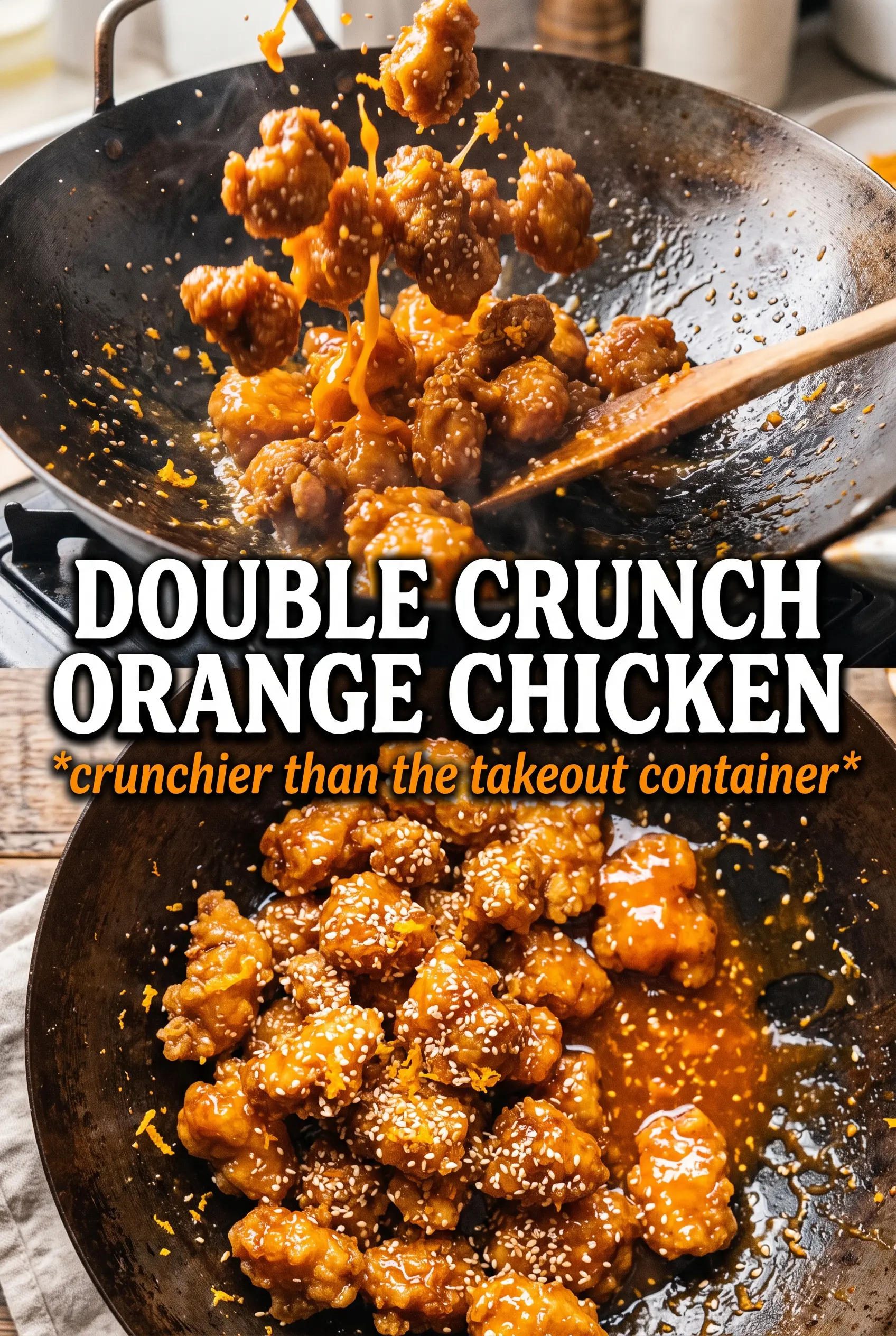
Double Crunch Orange Chicken
Ingredients
Equipment
Method
- Mix cornstarch, all-purpose flour, garlic powder, salt, and pepper in a wide bowl. Dip the bite-sized chicken pieces in beaten eggs, then dredge in the flour mixture for an even coat.
- For maximum crunch, double-dip by returning the coated chicken to the beaten eggs, then back into the flour mixture again. Set the double-dipped chicken aside briefly so the coating clings.
- Heat vegetable oil to 375°F in a Dutch oven or cast iron skillet. Fry the chicken in batches for 5-6 minutes until deeply golden and cooked through, then drain.
- In a saucepan, combine fresh orange juice, orange zest, soy sauce, brown sugar, rice vinegar, hoisin sauce, minced garlic, grated ginger, and sesame oil. Bring to a boil, then stir in the cornstarch slurry and cook for 2-3 minutes until thick and glossy.
- Toss the crispy chicken in the orange sauce until evenly coated and glossy. Serve immediately over steamed rice with sesame seeds and sliced green onions.