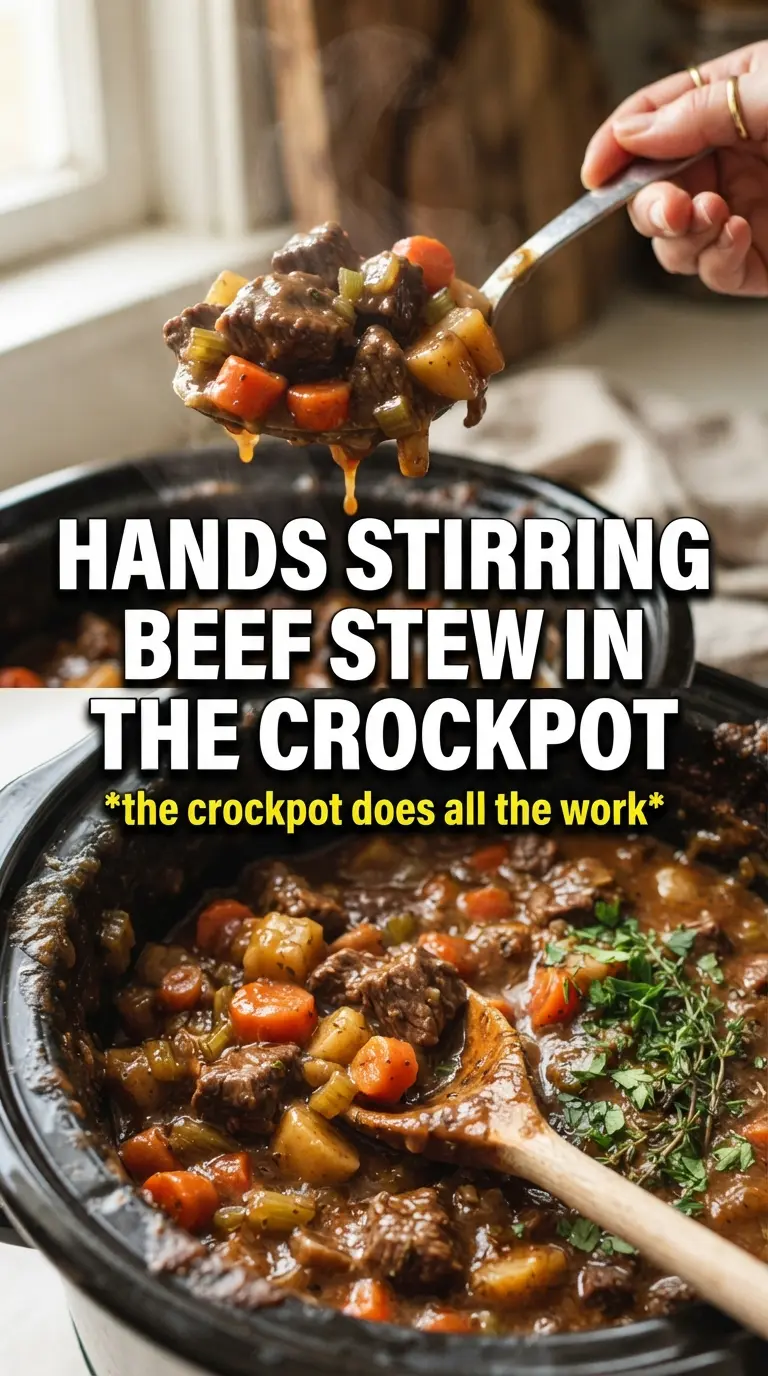
Crock Pot beef stew turns into the kind of dinner that fills the house with savory, slow-cooked comfort and lands in the bowl with beef that falls apart at the touch of a fork. The broth gets deep and rich instead of thin and one-note, and the vegetables hold their shape just enough to give every bite some texture. It’s the sort of meal that tastes like you gave it all day, because you did — but the slow cooker does the heavy lifting.
What makes this version work is the layering. The vegetables go in first so they’re not floating on top of the meat the whole time, and the beef sits above them where it can braise gently as the liquid comes up around it. Tomato paste, Worcestershire, and a little red wine build a darker, rounder broth, while the cornstarch slurry goes in only at the end so the stew thickens without turning muddy or pasty.
Below, I’ll walk through the small details that keep the beef tender and the broth balanced, plus a few swaps that still give you a proper stew. If you’ve ever had slow cooker stew come out bland or watery, this version fixes both problems.
The stew thickened up beautifully at the end and the beef was tender enough to shred with a spoon. I loved that the potatoes stayed intact instead of turning to mush.
Pin this Crock Pot beef stew for a deep, beefy dinner with tender vegetables and a rich broth that thickens right at the end.
The Step That Keeps Slow Cooker Stew from Turning Watery
Most slow cooker stew problems start with the liquid ratio. A crock pot doesn’t evaporate much, so if you pour in too much broth at the beginning, you end up with a soup that tastes like stew ingredients instead of a real stew. This version keeps the liquid tight, then finishes with a cornstarch slurry after the beef is tender, which gives you a glossy broth that clings to the meat and vegetables.
The other trap is overcooking the vegetables into silence. Baby potatoes and thick carrot rounds hold up better than diced versions, and placing them under the beef helps them cook through without getting shredded by the long simmer. The beef itself needs enough time for the connective tissue to relax; if it still feels firm after 8 hours on low, it hasn’t finished braising yet.
- Beef chuck — This is the cut that turns silky in a slow cooker. Leaner beef gets stringy before it gets tender, so chuck is worth using here.
- Tomato paste — It deepens the broth and gives the stew a darker, richer base. Don’t skip it unless you’re replacing it with a little extra tomato flavor from diced tomatoes.
- Red wine — It adds depth and keeps the broth from tasting flat. If you don’t cook with wine, use extra beef broth, but the stew will be a little less rounded.
- Baby potatoes — They keep their shape better than chopped russets. Halving them is enough; smaller pieces can break apart during the long cook.
What Each Ingredient Is Actually Doing in This Recipe
- Primary ingredient (the star) — Quality matters most. Choose the best you can find.
- Cooking medium (oil, butter, or broth) — This carries flavors and prevents dryness.
- Seasonings (salt, pepper, spices, herbs) — Layer flavors so nothing overpowers. Build depth gradually.
- Aromatics (garlic, onion, herbs) — Cook with fat to bloom flavors. Become the foundation.
- Supporting ingredients — Complement the main ingredient without overpowering it.
- Sauce or liquid (if applicable) — Brings flavors together. Balance richness with acid.
- Acid (lemon, vinegar, wine, or other) — Brightens and prevents flat-tasting results.
- Final finish (garnish, glaze, or sauce) — Prevents one-dimensional taste and adds visual appeal.
Building the Stew in the Right Order
Layering the Vegetables
Start with the potatoes, carrots, celery, and onion on the bottom of the slow cooker. That gives the beef a bed to sit on and keeps the vegetables from being blasted by heat all day. If you dump everything in at once and stir, the smaller pieces can overcook before the beef is done.
Seasoning and Nestling the Beef
Season the beef generously before it goes in. The slow cooker softens flavors, so under-seasoning at the start usually means a bland stew at the end. Nestle the beef over the vegetables rather than burying it, then add the garlic, broth, wine, tomatoes, tomato paste, Worcestershire, thyme, rosemary, and bay leaves. The liquid should mostly come partway up the ingredients, not drown them.
Finishing for Body and Gloss
When the beef is fall-apart tender, pull out the bay leaves and stir in the cornstarch slurry. The stew needs that final blast of heat on High for 20 to 30 minutes so the starch can activate and thicken the liquid. If the broth still seems loose, let it go a little longer before you salt it again; salt can distract you from the real issue, which is usually just not enough reduction or thickening time.
How to Adapt This Stew for What’s in Your Kitchen
Skip the Wine Without Losing Depth
Use an extra cup of beef broth in place of the wine. You’ll lose a little of the stew’s sharp edge and complexity, so the best backup move is to keep the tomato paste and Worcestershire in place, since those carry a lot of the savoriness.
Make It Gluten-Free
This stew is already close to gluten-free, but you still need to check the broth and Worcestershire sauce labels. Use a certified gluten-free Worcestershire if needed, and keep the cornstarch slurry as written since it thickens cleanly without flour.
Swap in Sweet Potatoes
Sweet potatoes can stand in for the baby potatoes, but they soften faster and bring a sweeter finish to the broth. Cut them into larger chunks and expect them to be more delicate than white potatoes after the long cook.
Storage and Reheating
- Refrigerator: Keeps well for 4 days. The broth thickens as it chills, and the vegetables soften a bit more.
- Freezer: Freezes well for up to 3 months. Cool it completely first, then portion it into airtight containers so the potatoes don’t get crushed later.
- Reheating: Reheat gently on the stove over medium-low or in the microwave in short bursts. Add a splash of broth if it looks too thick, and don’t boil it hard or the beef can dry out and the potatoes can break apart.
Answers to the Questions Worth Asking

Crock Pot Beef Stew
Ingredients
Equipment
Method
- Season the beef generously with salt and pepper to coat all sides for deep flavor.
- Place the potatoes, carrots, celery, and onion in the bottom of the slow cooker to form the stew base.
- Nestle the beef on top, then add the garlic, beef broth, wine, diced tomatoes, tomato paste, Worcestershire sauce, dried thyme, dried rosemary, and bay leaves so everything steams evenly.
- Cook on Low for 8-10 hours until the beef is fall-apart tender, with a steady simmer throughout.
- Alternatively, cook on High for 4-5 hours until the beef is fall-apart tender.
- Remove the bay leaves, then stir the cornstarch slurry (cornstarch mixed with water) into the stew to prevent lumps.
- Cook on High for 20-30 minutes until the broth thickens and looks glossy.
- Season with salt and pepper to taste, then serve hot with the vegetables and beef fully coated in the sauce.