Griddle smashed potatoes turn plain baby potatoes into crisp-edged rounds with a soft middle and a loaded finish that disappears fast once they hit the table. The best part is the contrast: buttery bottoms, lacy browned edges, and enough surface area to catch melted cheddar, bacon, sour cream, and chives in every bite.
This version works because the potatoes are boiled first, then cooled just enough to dry the surface before they go onto the hot griddle. That step matters. Wet potatoes steam; dry potatoes blister and brown. The smash also matters more than people think. A firm, even press gives you maximum contact with the griddle, which is where the crunch comes from.
Below you’ll find the timing that keeps the centers tender while the outsides turn deeply golden, plus a few ways to change the toppings without losing the texture that makes these worth making.
The potatoes got that shatter-crisp edge on the griddle and the cheese melted right into the cracks. I added the bacon at the end and they stayed crisp instead of getting soggy.
Save these griddle smashed potatoes for the night you want ultra-crispy edges, melted cheddar, and an easy loaded side dish.
The Secret to Crisp Edges Is Dry Potatoes, Not More Heat
The potatoes need to be fully tender before they ever touch the griddle. If the centers are still firm, you’ll press them flat and still end up with a hard middle instead of a fluffy one. After boiling, let them steam off for a few minutes in the colander or on the tray. That little bit of drying time is what keeps them from sticking and lets the oil and butter do their job.
The other mistake is smashing too early or too gently. A warm potato breaks cleanly and spreads into a thin round. A cool, dry potato holds its shape long enough to get a good sear before it starts to fall apart. You want enough pressure to create lots of surface area, but not so much that the potato shreds into fragments on the griddle.
What the Potatoes, Fat, and Toppings Are Each Doing Here
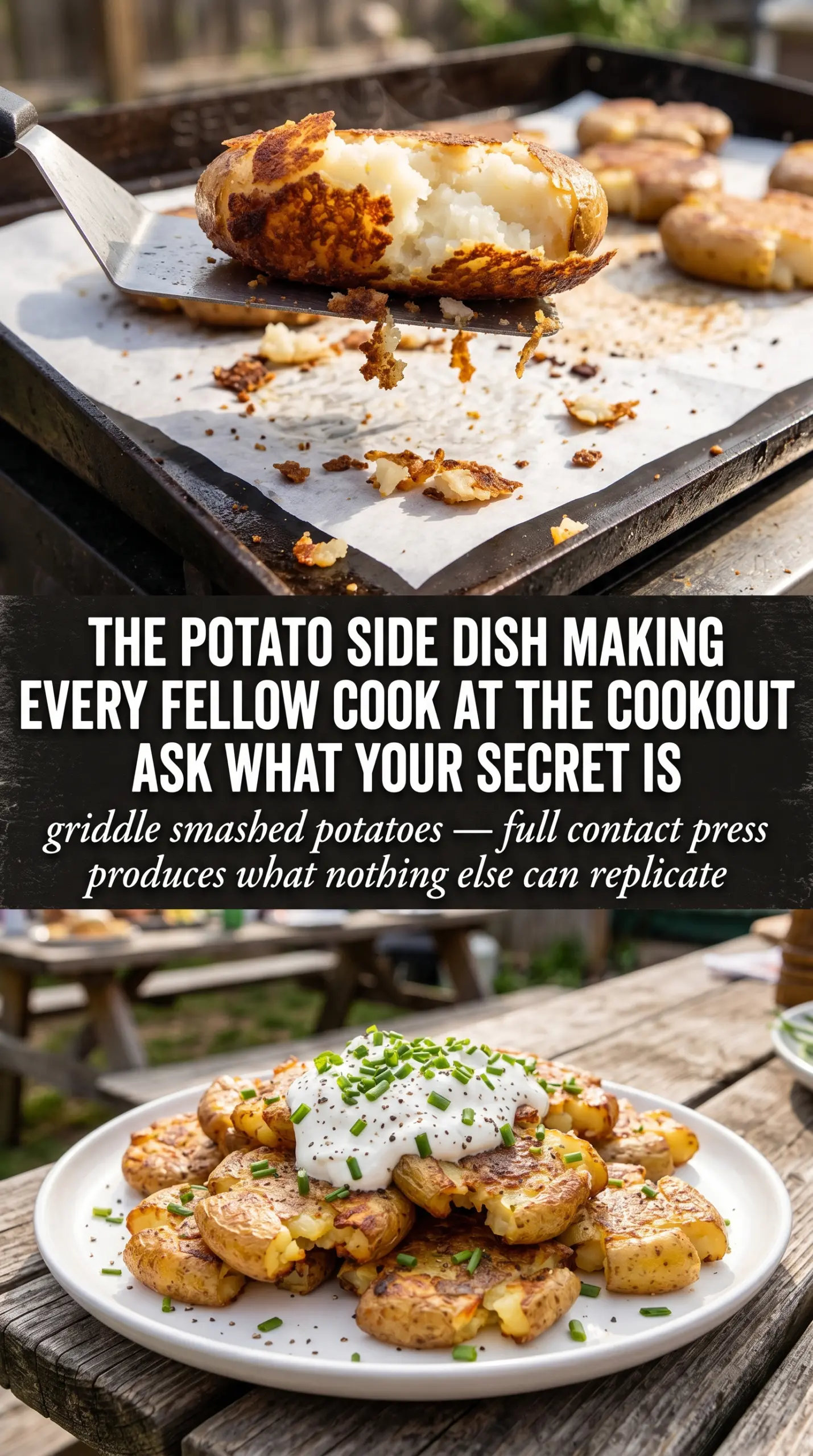
- Baby potatoes — These are the right size because they cook through quickly and smash into neat rounds with plenty of surface area. Waxy potatoes like Yukon Golds or red potatoes hold together best. Russets will work, but they tend to fall apart more and give you a rougher texture.
- Olive oil and butter — Oil keeps the potatoes from sticking and raises the browning potential, while butter adds the rich, nutty edge you taste in the finished crust. Use both if you can. If you only use butter, it can brown too fast on a hot griddle.
- Garlic — Adding minced garlic around the potatoes instead of piling it directly under them keeps it from scorching. The garlic gets toasted in the fat and seasons the potatoes without turning bitter. If you want a milder result, use thin slices instead of minced garlic.
- Cheddar, bacon, sour cream, and chives — This is the loaded finish that turns the potatoes into a side dish people notice. Shred the cheese yourself if possible; pre-shredded cheese melts less smoothly because of the anti-caking coating. Add the sour cream after the potatoes leave the griddle so it stays cool and fresh instead of melting into the crisp crust.
Getting the Smash, Sear, and Finish in the Right Order
Boiling Until Just Tender
Start by boiling the baby potatoes until a knife slides in with little resistance, about 15 to 20 minutes depending on size. Pull them the moment they’re tender; overcooked potatoes split when you smash them. Drain well and let the surface dry before moving on. Any extra water on the outside will slow the browning and make the griddle sputter.
Building the First Crust
Heat the griddle to medium-high, then add the oil and butter so the fat shimmers across the surface. Place the potatoes down with space between them and press each one flat with a heavy spatula. You want a clear sizzle the moment they hit the pan. If the heat is too low, they sit there and soften instead of crisping.
Letting the Edges Turn Deeply Golden
Cook the smashed potatoes for 6 to 7 minutes until the bottoms are deeply golden and release without sticking. Add the garlic around the potatoes during this stage so it can perfume the fat without burning. Flip each potato carefully and cook the second side for another 5 to 6 minutes. If the first side is pale, give it more time; don’t rush the flip or you’ll lose the crust.
Melting the Toppings at the End
Once both sides are crisp, scatter the cheddar over the hot potatoes and let it melt for a minute or two. Add the bacon, then finish with sour cream and chives. If you add the sour cream too early, it thins out and disappears into the pan. The final potatoes should look loaded and glossy, with crisp edges still visible under the toppings.
How to Change These Without Losing the Crunch
Dairy-Free Loaded Potatoes
Skip the butter and use all olive oil, then finish with dairy-free cheese or leave the cheese off entirely and lean on the bacon, chives, and a spoonful of dairy-free sour cream. You lose a little richness, but the griddle crust stays intact as long as the potatoes are dry and the pan is hot.
Vegetarian Version
Leave out the bacon and add extra chives, cracked pepper, and a little smoked paprika if you want that savory note back. The potatoes still taste plenty hearty because the crisped buttered surface carries the dish. If you want more substance, add sautéed mushrooms after they’ve browned separately.
Lighter Weeknight Side
Cut the cheese and sour cream in half and keep the bacon as a finishing accent instead of a full topping. You still get the same crisp griddle texture, but the potatoes stay more balanced and less heavy. This is the version I’d serve next to grilled chicken or burgers.
Storage and Reheating
- Refrigerator: Store leftovers in an airtight container for up to 4 days. The crust softens, but the flavor stays good.
- Freezer: These freeze, but the texture gets softer after thawing. Freeze the plain smashed potatoes before topping for the best result.
- Reheating: Reheat on a skillet, griddle, or in a hot oven until the edges crisp again. The mistake to avoid is microwaving them alone, which makes the potatoes limp and the cheese oily.
Answers to the Questions Worth Asking
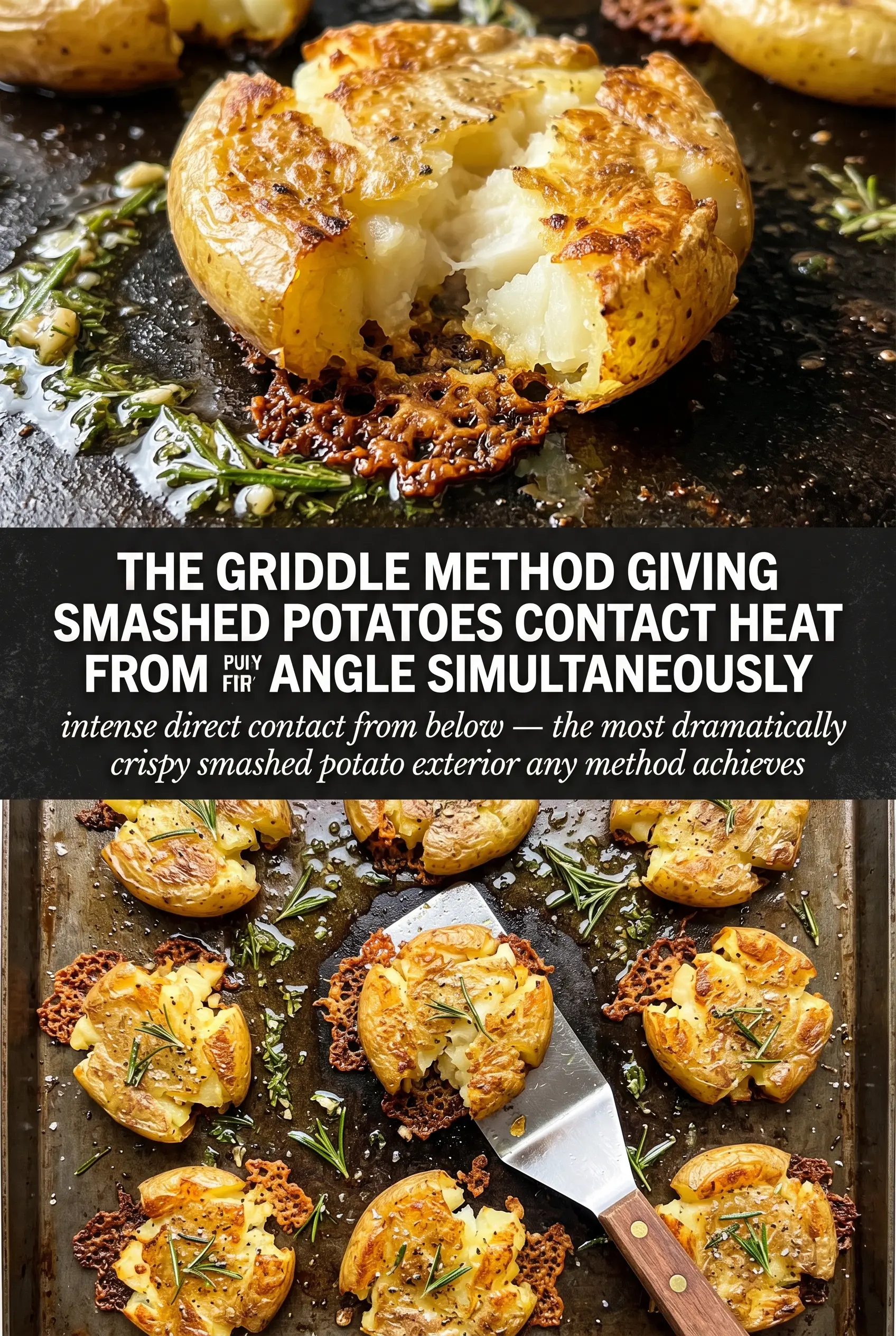
Griddle Smashed Potatoes
Ingredients
Equipment
Method
- Boil baby potatoes in salted water until tender, about 15–20 minutes. You should be able to pierce them easily with a fork.
- Drain the potatoes and cool slightly for a few minutes so they can be handled and smashed without crumbling.
- Heat a cast iron skillet or griddle over medium-high heat, then add olive oil and butter. Let the butter melt and foam lightly before adding potatoes.
- Place the potatoes on the griddle and smash completely flat with a heavy spatula. Press firmly to create even, ultra-thin rounds for maximum crust.
- Add minced garlic around the potatoes and cook 6–7 minutes without moving them. Cook until you see a crispy golden crust on the bottom edges.
- Flip the smashed potatoes and cook another 5–6 minutes. Continue until both sides are deeply crisp and golden.
- Top the crispy potatoes with shredded cheddar cheese, crumbled bacon, sour cream, and chopped chives. Serve immediately while the cheese is hot and the edges stay crisp.