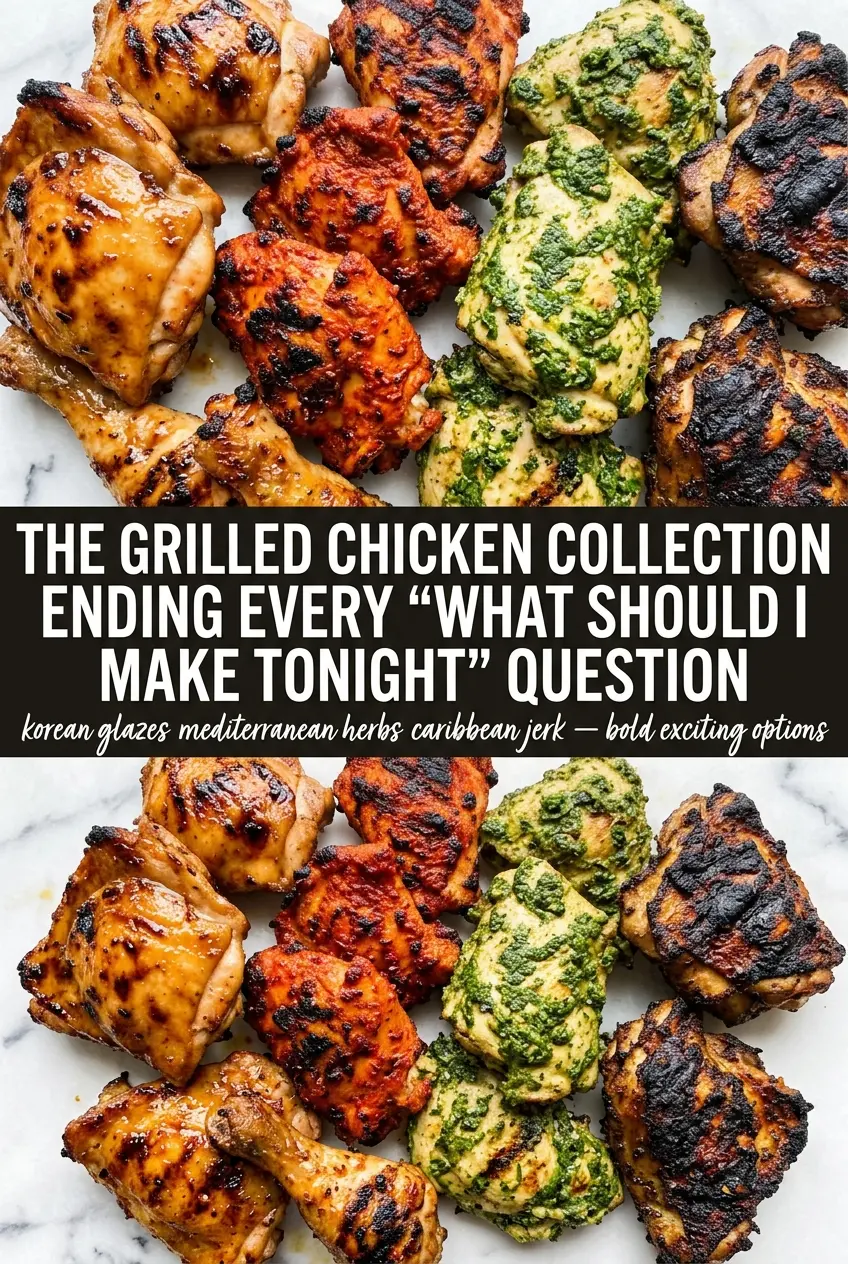
Grilled chicken gets a lot more interesting when the flavor changes with the cut, the marinade, and the heat. A good collection gives you more than one path to dinner: smoky and tangy, herb-heavy and bright, sticky and charred, or simple salt-and-pepper chicken that still tastes like you planned ahead. That kind of range is what makes grilled chicken earn a regular place in the rotation instead of feeling like a fallback.
The real win here is flexibility without losing control of the grill. Thighs forgive a little more heat and stay juicy through longer marinades, while breasts need a cleaner hand and a close eye so they don’t dry out. Acidic marinades, dry rubs, and finishing sauces each behave differently over fire, and once you know which one works best with which cut, the whole process gets easier.
Below you’ll find the details that matter most: how to keep the chicken juicy, how to choose the right marinade for the cut, and which small grill-side habits make the difference between flavorful char and dried-out edges.
The marinade really clung to the chicken, and the thighs stayed juicy even after I got a little extra char on the edges. I loved that I could use the same grilling method for both breasts and drumsticks without guessing.
Save this grilled chicken collection for nights when you want to swap in a new marinade, rub, or cut without changing the grill method.
The Mistake That Makes Grilled Chicken Dry Before It Even Hits the Plate
Most grilled chicken goes wrong before the lid ever closes. The problem is usually a marinade that is either too acidic for too long or a grill that is too hot for the cut you chose. Acid helps flavor the surface, but left in contact too long it tightens the meat instead of tenderizing it, especially on boneless breasts. Thighs have more fat and can handle more aggressive seasoning, which is why they tolerate bolder flavors and longer marinating windows better than lean cuts.
The other trap is cooking everything the same way. Drumsticks need a little more time and benefit from indirect heat after the first sear, while breasts need a fast, controlled cook and a rest that lets the juices settle back in. If your chicken keeps turning out dry, the fix is rarely a fancier marinade. It is better heat management and picking the right cut for the flavor you want.
- Boneless breasts — Best for quick marinades and shorter grill time. They pick up flavor fast, but they dry out if you chase dark grill marks over high heat for too long.
- Thighs — The most forgiving cut in the group. They stay juicy with stronger marinades, smoky rubs, and a little extra char.
- Drumsticks — Good for family-style grilling because they hold up well and stay flavorful, but they need time to cook through to the bone.
- Citrus and vinegar-based marinades — Great for bright flavor, but keep the soak time moderate. Overnight is usually too long for breasts; a few hours is plenty.
What Each Marinade Style Is Doing on the Grill

The flavoring method matters as much as the cut. A wet marinade gives you surface seasoning and helps the chicken brown, but it needs enough oil to carry the herbs and spices across the meat. A dry rub builds a stronger crust and works especially well on skin-on pieces or thighs, where the surface can take a little more heat without drying out. Finishing sauce belongs at the end, not at the start, if it contains sugar or honey, because it burns before the chicken is cooked through.
- Oil — Helps the seasoning spread and encourages browning. A marinade without enough oil tends to cook up patchy and uneven.
- Fresh herbs — Add bright flavor, especially with lemon, garlic, or yogurt-based marinades. Chop them finely so they stick instead of sliding off the chicken.
- Citrus — Brings lift and contrast, but it is not a tenderizing shortcut. Use it for flavor, not as a long soak.
- Dry spices — Paprika, cumin, chili powder, and black pepper build a more concentrated crust than a thin marinade ever will.
Grilling Each Cut So It Stays Juicy and Gets the Right Char
Building the Flavor Base
Start by choosing the cut and flavor style together. Thin breasts want a lighter marinade and a shorter rest, while thighs and drumsticks can sit longer and take on stronger seasoning. Pat the chicken dry before it goes on the grill if you want better browning; too much surface moisture steams the meat and blunts the char. If you are using a rub, press it on firmly so it stays put once the heat starts moving.
Setting the Grill for the Cut
Preheat the grill to the right zone for what you are cooking. Boneless breasts do best over medium heat, where they can cook through without burning on the outside. Bone-in pieces need a hot start for color, then gentler indirect heat to finish. If flare-ups keep happening, move the chicken off the hottest part of the grate instead of chasing the flames with more turning.
Knowing When It Is Done
Look for clear juices, firm but springy meat, and grill marks that release without tearing the surface. A thermometer is the easiest way to avoid guesswork: pull breasts around 165°F and thighs a little higher if you want them extra tender. Rest the chicken for a few minutes before slicing or serving. That pause keeps the juices from running out onto the cutting board the second you cut in.
Lemon-Herb Chicken for a Bright, Clean Finish
Use olive oil, lemon zest, garlic, parsley, and oregano for a marinade that tastes fresh without overpowering the grill. This works best on breasts and thighs, and it gives you a lighter result that pairs well with vegetables or rice. Keep the lemon in check so the chicken tastes bright, not sharp.
Smoky Paprika Rub for Deep Char and Bigger Flavor
A dry rub with smoked paprika, garlic powder, onion powder, brown sugar, salt, and pepper gives you a darker crust and more grill personality. It is especially good on thighs and drumsticks because the added fat keeps the surface from drying out. If you use it on breasts, watch the heat so the sugar does not scorch.
Yogurt Marinade for Extra Tender Chicken
Yogurt coats the chicken and helps it stay moist while carrying spices into the surface. It is a strong choice for bone-in pieces and thighs, and it gives you a tender bite without the aggressive tang of a straight acid marinade. Scrape off the excess before grilling so the coating browns instead of steaming.
Dairy-Free and Gluten-Free Grilling
Most of the collection can be kept dairy-free and gluten-free with simple ingredient checks. Use oil-based marinades, skip yogurt, and choose sauces without soy sauce unless you use a gluten-free version. The grilling method stays the same, so the change is in the seasoning, not the cooking.
Storage and Reheating
- Refrigerator: Store cooked chicken in an airtight container for up to 4 days. Slice only what you need so the rest stays juicier.
- Freezer: Grilled chicken freezes well for up to 2 months. Wrap pieces tightly and freeze with a little sauce if you have it to help protect the texture.
- Reheating: Warm gently in a covered skillet with a splash of water or broth, or reheat in a 300°F oven until just heated through. High heat makes the edges tough before the center is warm.
Questions I Get Asked About This Recipe Collection
Creative Grilled Chicken Recipes Collection
Ingredients
Equipment
Method
- Choose your preferred marinade or rub from the collection so the chicken matches the flavor profile you want for the grill. Pick one option per batch for consistent seasoning.
- Prepare the chicken according to the specific recipe instructions for your chosen cut (breasts, thighs, or drumsticks). Pat dry and trim any excess, then season with the selected marinade or dry rub.
- Marinate the chicken for 30 minutes to overnight, depending on the collection option. Cover and refrigerate so the seasoning penetrates evenly.
- Preheat the grill to 450°F, then set up for direct heat cooking. Oil the grill grates lightly and toss the vegetables to be ready to grill alongside.
- Grill chicken breasts at 450°F for 6-8 minutes per side until cooked through. Turn only once to promote even browning.
- Grill chicken thighs at 450°F for 8-10 minutes per side until cooked through. Keep the lid closed as much as possible for steady heat.
- Grill chicken drumsticks at 450°F for 10-12 minutes per side until cooked through. Rotate occasionally for uniform char.
- Grill the vegetables on the hot grates for 6-10 minutes total, turning once, until tender with grill marks. Move to a cooler side if they brown faster than they soften.
- Rest the grilled chicken for 5 minutes before serving so the juices redistribute. Slice or serve whole after the rest.
- Pair the chicken with the suggested serving sauce and accompaniments from the collection. Serve immediately while the char and herbs-citrus aroma are at their peak.
- Mix and match flavors by grilling different cuts with different marinades or rubs from the collection. Build a variety plate by combining one or more chicken types with the grilled vegetables.