Golden seared chicken breasts tucked into a silky tomato cream sauce earn their place in the rotation fast. The sauce lands in that sweet spot between bright and rich: tomato gives it backbone, cream softens the edges, and Parmesan pulls everything together into a glossy pan sauce that clings to every bite.
What makes this version work is the order. The chicken gets a hard sear first, which builds flavor in the pan and keeps the meat juicy. Then the garlic, wine, tomatoes, cream, and cheese go in one after another, with the heat kept low enough that the sauce thickens instead of breaking. The final swirl of butter gives it that restaurant-style sheen without turning it heavy.
Below, you’ll find the exact cues to watch for at each stage, plus a few practical swaps if you need to work with what’s in the fridge. The sauce is forgiving if you respect the heat, and that’s what makes this one worth making on a busy night.
The sauce turned that perfect rosy color and stayed silky all the way through dinner. I added a splash of pasta water at the end and it coated the noodles beautifully without getting heavy.
Save this creamy tomato chicken for the nights when you want a silky pan sauce that tastes like it took a lot longer than 25 minutes.
The Trick to Keeping the Tomato Cream Sauce Silky, Not Split
The most common mistake in a dish like this is rushing the cream into a pan that’s too hot. Tomato sauce plus cream can look forgiving, but once the heat climbs, the dairy can go grainy or separate and lose that smooth, rose-colored finish. Keep the simmer gentle after the cream goes in, and the sauce will thicken naturally as the Parmesan melts.
The other place people lose the texture is on the chicken side. If you crowd the pan or move the chicken too early, you don’t get the browned bits that give the sauce depth. That sear isn’t decoration; it’s the base of the whole dish.
- Medium-high heat for the sear — hot enough to build color, not so hot that the outside burns before the center cooks.
- Low simmer after the cream goes in — this is what keeps the sauce smooth and glossy.
- Parmesan added off the boil — cheese melts cleanly when the sauce isn’t violently bubbling.
What Each Ingredient Is Actually Doing in This Dish
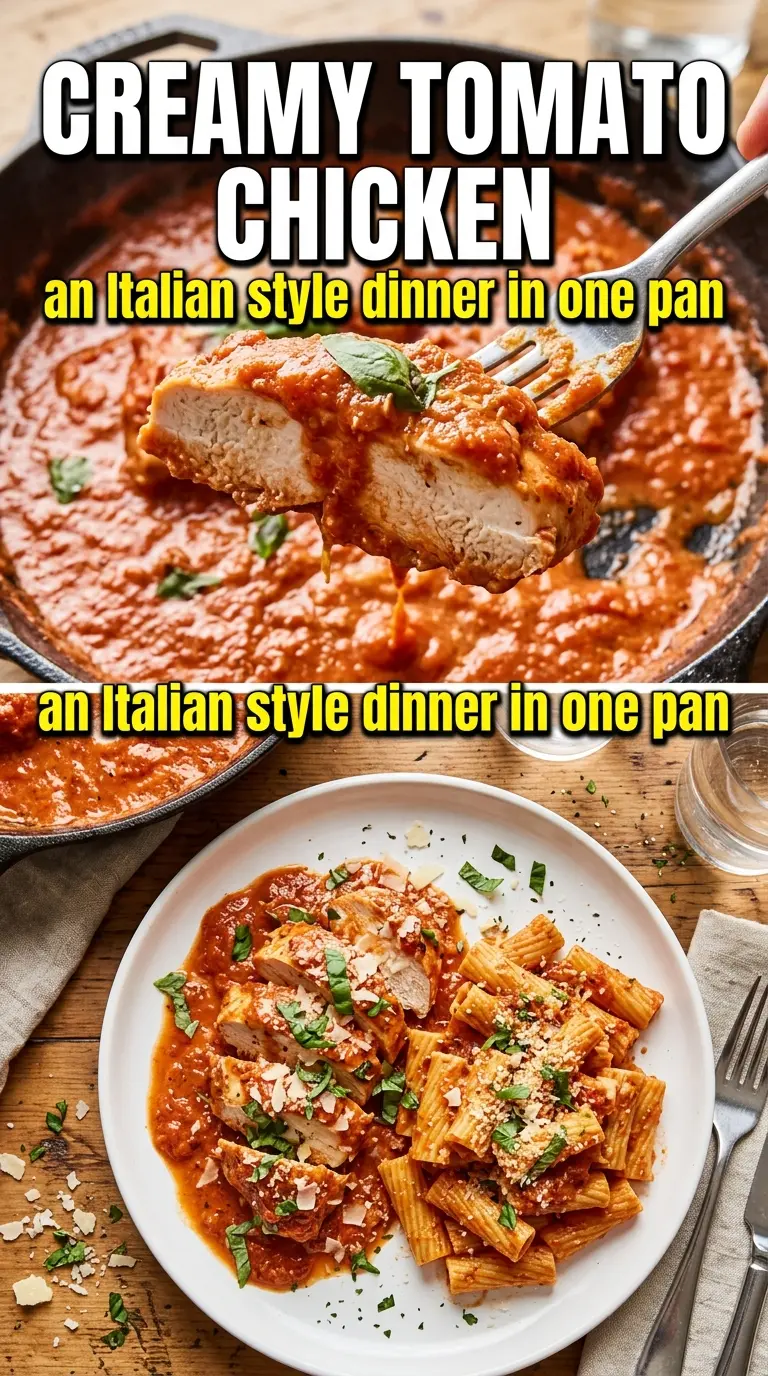
- Chicken breasts — Boneless, skinless breasts cook quickly and give you a clean canvas for the sauce. If yours are thick on one end and thin on the other, pound them to an even thickness so they sear and finish at the same pace.
- Crushed tomatoes — These give the sauce body without making it chunky. Tomato sauce or marinara can work in a pinch, but both usually bring extra seasoning and a different texture, so the final taste will be less clean and less fresh.
- Heavy cream — This is what turns the tomatoes into a velvety pink sauce instead of a sharp pan tomato sauce. Half-and-half can work, but it’s more likely to break if you boil it, so keep the heat lower and expect a thinner result.
- Parmesan — It adds salt, body, and a little nutty depth. Grate it finely so it melts into the sauce instead of sinking into little clumps.
- Dry white wine or chicken broth — The wine lifts the browned bits from the pan and gives the sauce a little brightness. Broth is the easy swap if you don’t keep wine on hand, though it won’t add the same sharp edge.
- Butter and basil — Butter finishes the sauce with shine, and basil wakes up the whole pan right before serving. Skip the basil only if you have to; it’s the fresh note that keeps the sauce from tasting flat.
Building the Sauce in the Same Pan Without Losing the Sear
Seasoning and Browning the Chicken
Coat the chicken with salt, pepper, garlic powder, and Italian seasoning, then sear it in olive oil over medium-high heat until the outside is deeply golden and the chicken releases easily from the pan. If it sticks, it needs another minute. A good sear takes 5 to 6 minutes per side for average breasts, but the real target is 165°F in the center, not the clock.
Pulling Flavor from the Pan
After the chicken comes out, the pan should still have browned bits at the bottom. That’s where the sauce gets its depth. Add the garlic for just 30 seconds, then pour in the wine or broth and scrape up those bits while the liquid is hot; if the garlic goes too long, it turns bitter and overwhelms the sauce.
Turning Tomato and Cream into One Sauce
Stir in the crushed tomatoes and Italian seasoning first, then let them simmer for a few minutes before the cream goes in. Once the cream and Parmesan are added, keep the sauce at a gentle bubble and stir until it turns thick and rose-colored. If it looks loose at first, give it a minute; it tightens as the cheese melts and the moisture cooks off.
Finishing and Returning the Chicken
Swirl in the butter until the surface looks glossy, then return the chicken to the pan and spoon sauce over the top. Let it sit in the sauce for a minute or two so the chicken picks up flavor without overcooking. Basil goes on right at the end so it stays bright and fragrant instead of wilted and dark.
How to Adapt Creamy Tomato Chicken Without Losing What Makes It Good
Dairy-Free Version
Use full-fat coconut cream instead of heavy cream and skip the Parmesan, then finish with a little extra salt and a squeeze of lemon if the sauce tastes muted. You’ll lose some of the classic Parmesan richness, but the sauce will still be silky and satisfying.
Chicken Thigh Swap
Boneless skinless thighs bring more richness and stay juicier if you tend to overcook chicken breasts. They need a little longer in the pan and may release more fat, so drain off excess oil before building the sauce if the skillet looks greasy.
Gluten-Free Serving Ideas
The chicken and sauce are naturally gluten-free as written, so the only thing to watch is what you serve underneath. Spoon it over gluten-free pasta, mashed potatoes, rice, or roasted vegetables and it still eats like a full meal.
Making It Spicier
Increase the red pepper flakes or add a pinch of cayenne with the tomatoes. That gives the sauce a little heat without muddying the creamy texture, which is better than dumping in hot sauce after the fact.
Storage and Reheating
- Refrigerator: Store in an airtight container for up to 3 days. The sauce thickens as it chills, which is normal.
- Freezer: It freezes, but cream sauces can separate a bit after thawing. Freeze the chicken and sauce together for up to 2 months, then reheat gently and whisk if needed.
- Reheating: Warm it slowly over low heat on the stove with a splash of broth or cream. High heat is what makes the sauce split and the chicken go dry.
Answers to the Questions Worth Asking
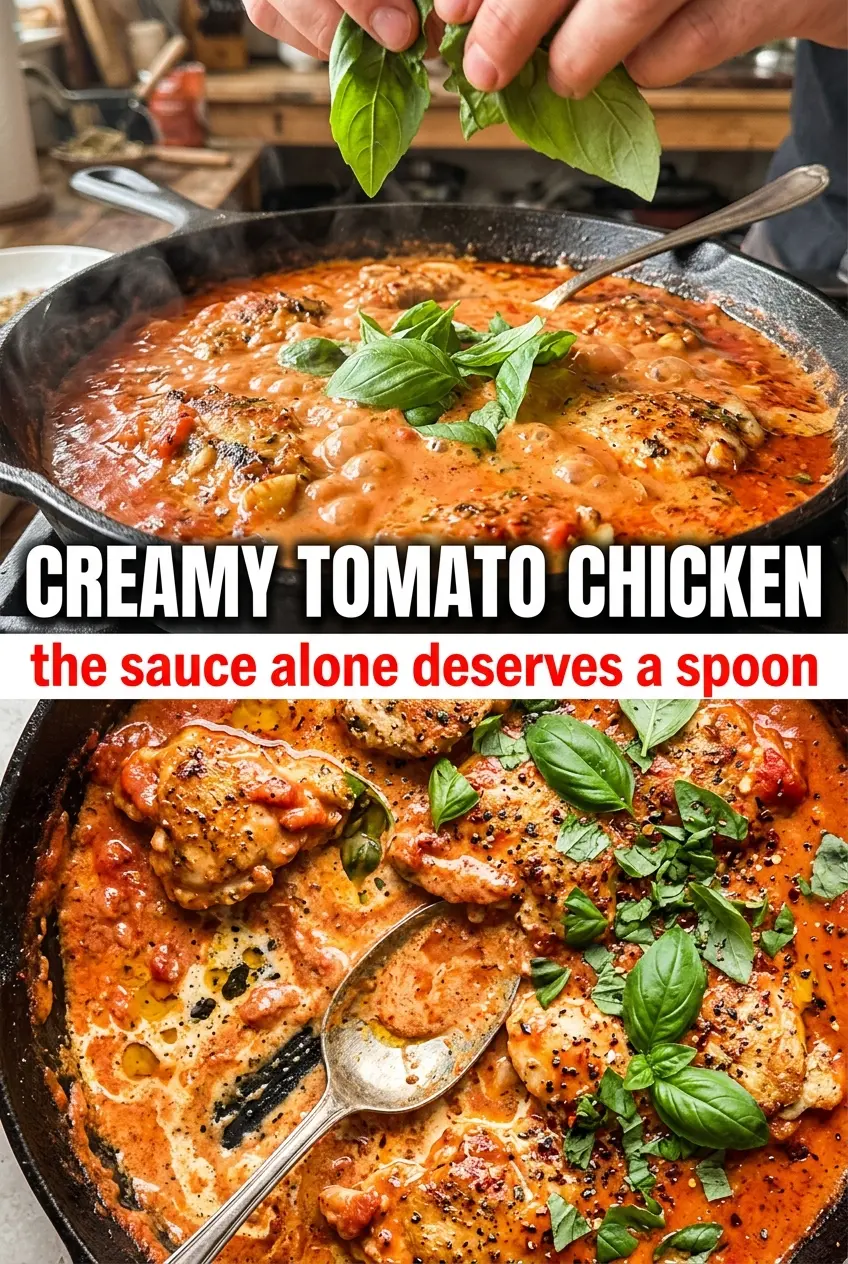
Creamy Tomato Chicken
Ingredients
Equipment
Method
- Season the boneless skinless chicken breasts with salt, pepper, garlic powder, and Italian seasoning to taste. Heat the olive oil in a wide skillet over medium-high heat and sear the chicken for 5-6 minutes per side until golden and the internal temperature reaches 165°F, then remove.
- Cook the minced garlic in the same pan for 30 seconds until fragrant. Deglaze with the dry white wine or chicken broth, then add the crushed tomatoes and Italian seasoning and simmer for 5 minutes.
- Stir in the heavy cream, Parmesan cheese, and red pepper flakes. Simmer for 4-5 minutes until the sauce is thick and rose-colored.
- Swirl in the butter until the sauce turns glossy.
- Return the chicken to the pan and spoon the tomato cream sauce over each breast. Garnish with fresh basil and serve over pasta or gnocchi.