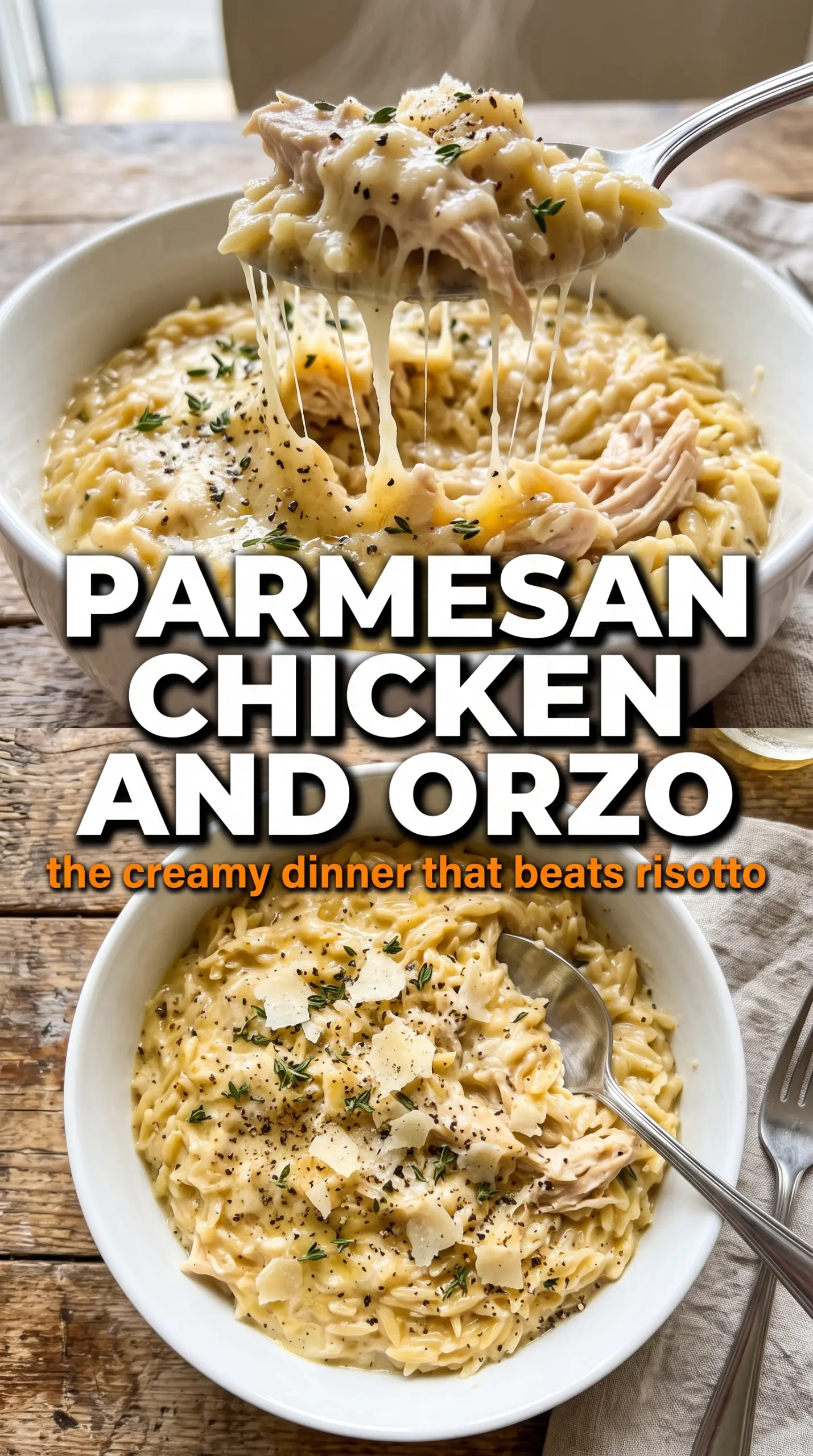
Golden chicken thighs over silky Parmesan orzo make one of those pans you keep sneaking back to for “just one more spoonful.” The orzo cooks right in the sauce, so every grain picks up chicken flavor, garlic, and Parmesan instead of tasting like plain pasta with cream poured over it. The spinach softens into the sauce, the sun-dried tomatoes bring a little tang, and the whole dish lands in that sweet spot between comforting and polished.
What makes this version work is the order. The chicken gets a hard sear first, which leaves browned bits in the pan for the orzo to pick up later, and the orzo is toasted briefly before the broth and cream go in. That tiny step keeps the pasta from tasting flat and helps the sauce stay layered instead of heavy. Stirring often matters here too, because orzo can stick fast once the liquid starts to reduce.
Below, I’ve included the cues I watch for when the sauce is turning glossy instead of gluey, plus a few smart swaps for making this dinner fit what’s in your kitchen.
The orzo turned out creamy without getting mushy, and the sun-dried tomatoes gave it just enough brightness to balance the Parmesan. I loved that the chicken stayed juicy even after I tucked it back into the skillet.
Creamy Parmesan chicken and orzo with golden thighs and silky sauce is the kind of skillet dinner worth pinning for busy nights.
The Trick Is Keeping the Orzo Moving Before It Catches
Orzo behaves more like risotto than a typical pasta bake once the broth and cream go in. It releases starch as it cooks, which is what gives you that glossy sauce, but it also means the bottom of the skillet can go from creamy to stuck in a hurry if you walk away. Stir often enough to keep the grains moving, especially during the last few minutes when the liquid starts to tighten up.
The other thing worth knowing is that the sauce should look a little loose before you add the Parmesan. If it seems perfect in the pan before the cheese goes in, it usually ends up too thick by the time you serve it. The cheese finishes the sauce, and the spinach adds just enough moisture to keep everything spoonable.
What Each Ingredient Is Actually Doing in This Recipe
- Primary ingredient (the star) — Quality matters most. Choose the best you can find.
- Cooking medium (oil, butter, or broth) — This carries flavors and prevents dryness.
- Seasonings (salt, pepper, spices, herbs) — Layer flavors so nothing overpowers. Build depth gradually.
- Aromatics (garlic, onion, herbs) — Cook with fat to bloom flavors. Become the foundation.
- Supporting ingredients — Complement the main ingredient without overpowering it.
- Sauce or liquid (if applicable) — Brings flavors together. Balance richness with acid.
- Acid (lemon, vinegar, wine, or other) — Brightens and prevents flat-tasting results.
- Final finish (garnish, glaze, or sauce) — Prevents one-dimensional taste and adds visual appeal.
What Each Ingredient Is Actually Doing in This Skillet
- Chicken thighs — Thighs stay juicier than breasts during the final simmer, which matters because they go back into the skillet after the orzo cooks. Boneless, skinless thighs also sear well and give you enough browned flavor in the pan without needing extra time in the oven.
- Orzo — This is the backbone of the dish, not just a filler. It soaks up the broth and cream quickly and gives the sauce body as it cooks, which is why you want uncooked orzo here instead of trying to stir in pre-cooked pasta at the end.
- Heavy cream — Cream gives the sauce its silky finish and keeps the Parmesan from turning gritty. Half-and-half will work in a pinch, but the sauce will be thinner and a little more likely to break if you boil it hard.
- Parmesan — Use freshly grated Parmesan if you can. Pre-shredded cheese often has anti-caking agents that can make the sauce grainy instead of smooth, and this dish depends on a clean melt.
- Sun-dried tomatoes — These cut through the richness with tang and a little chew. If yours are packed in oil, drain them before adding so the sauce doesn’t turn greasy.
- Spinach — Baby spinach folds in at the end and disappears into the sauce without needing a long cook. If you use regular spinach, chop it first so you don’t end up with large wilted leaves tangled through every bite.
- Chicken broth — This carries the savory base of the sauce and helps the orzo cook evenly. Low-sodium broth is the safer choice because the Parmesan adds plenty of salt on its own.
Building the Sauce Without Losing the Sear
Getting the Chicken Golden First
Season the chicken well before it hits the pan so the surface tastes as good as the sauce does. Let it sear in olive oil over medium-high heat until the first side releases cleanly and turns deep golden, then flip and finish cooking through. If the pan is too crowded, the chicken will steam instead of brown, and you’ll lose the fond that gives the orzo its depth. Pull the chicken out once it’s cooked through and let it rest on a plate while you build the rest of the dish.
Toasting the Orzo in the Pan
After the garlic cooks for just 30 seconds, add the dry orzo and stir for about a minute. It should smell nutty and pick up a little color from the pan drippings. That quick toast gives the pasta more flavor and helps it hold up in the creamy sauce. If the garlic starts browning fast, lower the heat right away; burnt garlic will take over the whole skillet.
Turning Broth and Cream Into a Glossy Sauce
Pour in the broth and cream, then bring everything to a steady simmer, not a hard boil. A gentle bubble keeps the sauce moving while the orzo cooks, and it gives the pasta time to release starch without breaking the dairy. Stir every minute or so, scraping the bottom of the pan as you go. If the mixture looks dry before the orzo is tender, add a small splash of broth.
Finishing with Parmesan, Greens, and the Chicken
Once the orzo is tender and the sauce looks creamy, stir in the Parmesan off the hottest part of the burner if you can. That keeps the cheese smooth instead of stringy or grainy. Add the spinach and sun-dried tomatoes next and cook just until the spinach collapses. Nestle the chicken back in for a couple of minutes so it warms through and sits in the sauce without overcooking.
Three Smart Ways to Adjust This Skillet Dinner
Make It Gluten-Free
Swap the orzo for a gluten-free orzo-style pasta if you can find one. The cooking time may change a little, and you’ll need to stir more carefully because gluten-free pasta can break down faster in a creamy skillet sauce. Start checking early so it stays tender without turning soft.
Make It Lighter Without Losing the Creaminess
Use half-and-half instead of heavy cream, and add an extra splash of broth if the sauce starts to tighten too much. The finished skillet will be a little less plush, but still creamy enough to cling to the pasta. Don’t boil it hard or the lighter dairy is more likely to separate.
Swap the Chicken for a Vegetarian Version
Leave out the chicken and use vegetable broth instead of chicken broth. Add sautéed mushrooms or white beans for more substance, because the dish needs something with enough body to stand up to the sauce. You’ll lose the meaty pan drippings, so brown the mushrooms well to build a deeper base.
Storage and Reheating
- Refrigerator: Store leftovers in an airtight container for up to 3 days. The sauce thickens as it chills, and the orzo will absorb more liquid.
- Freezer: I don’t recommend freezing this one. Cream sauces with pasta can turn grainy and the orzo softens too much after thawing.
- Reheating: Warm it gently on the stovetop over low heat with a splash of broth or cream, stirring as it loosens. The common mistake is microwaving it on high until the sauce splits and the chicken turns dry.
Answers to the Questions Worth Asking

Creamy Parmesan Chicken and Orzo
Ingredients
Equipment
Method
- Season the chicken thighs with salt, pepper, garlic powder, Italian seasoning, and smoked paprika to taste. Heat olive oil in a large skillet over medium-high heat and sear the chicken for 4-5 minutes per side until golden and cooked through, then remove to a plate.
- In the same pan, cook the minced garlic for 30 seconds until fragrant. Add the orzo and toast for 1 minute, stirring so the pasta is coated.
- Pour in the chicken broth and heavy cream, then bring to a simmer over medium-high heat. Cook uncovered for 10-12 minutes, stirring often, until the orzo is tender and the sauce is creamy.
- Stir in the grated Parmesan, baby spinach, and sun-dried tomatoes. Cook until the spinach wilts.
- Nestle the chicken thighs back into the orzo and heat through for 2 minutes. Turn off the heat so the sauce stays silky.
- Garnish with fresh basil and serve immediately. Make sure each serving gets a portion of chicken, spinach, and sun-dried tomatoes.