Golden chicken thighs tucked into a pale, wine-kissed cream sauce have a way of making an ordinary skillet dinner feel a lot more finished. The chicken stays juicy because it’s braised gently after the sear, and the sauce picks up just enough depth from Riesling to taste elegant without turning sharp or boozy. Mushrooms, shallots, and tarragon do the rest of the work, giving the dish that savory, slightly herbal balance that keeps you going back for another spoonful of sauce.
The key here is building flavor in layers. A hard sear on the thighs gives you the browned bits that make the sauce taste like it’s been cooking all day, but the wine needs a few minutes on its own before the cream goes in so the final sauce tastes round instead of raw. Dijon helps the sauce hold together and keeps the richness in check, while the butter at the end gives it that glossy finish you want when you spoon it over the chicken.
Below, I’ve included the little details that matter most: how to keep the sauce smooth, what to do if your wine is sweeter than you expected, and the swaps that still preserve the spirit of a proper chicken Riesling.
The sauce reduced beautifully and stayed silky after I added the cream. The tarragon with the Riesling made it taste like something from a nice restaurant, and the chicken was still juicy after simmering.
Save this creamy Chicken Riesling for the nights when you want a silky wine sauce, golden chicken thighs, and one skillet that tastes like more effort than it takes.
The Sear Is Doing More Than Browning the Chicken
Chicken thighs are the right cut for this dish because they can handle the simmer without drying out, but the skin only turns crisp and deeply golden if the pan is hot enough before the chicken goes in. If the thighs stick at first, leave them alone. They’ll release once the skin has rendered and taken on color.
The mistake that flattens this recipe is rushing past the sear and moving straight into the sauce. Those browned bits on the bottom are the backbone of the dish, and they need the shallots and wine to pull them up before the cream softens everything. If your skillet looks dark in spots after the chicken comes out, that’s exactly where the flavor is.
What Each Ingredient Is Actually Doing In This Skillet
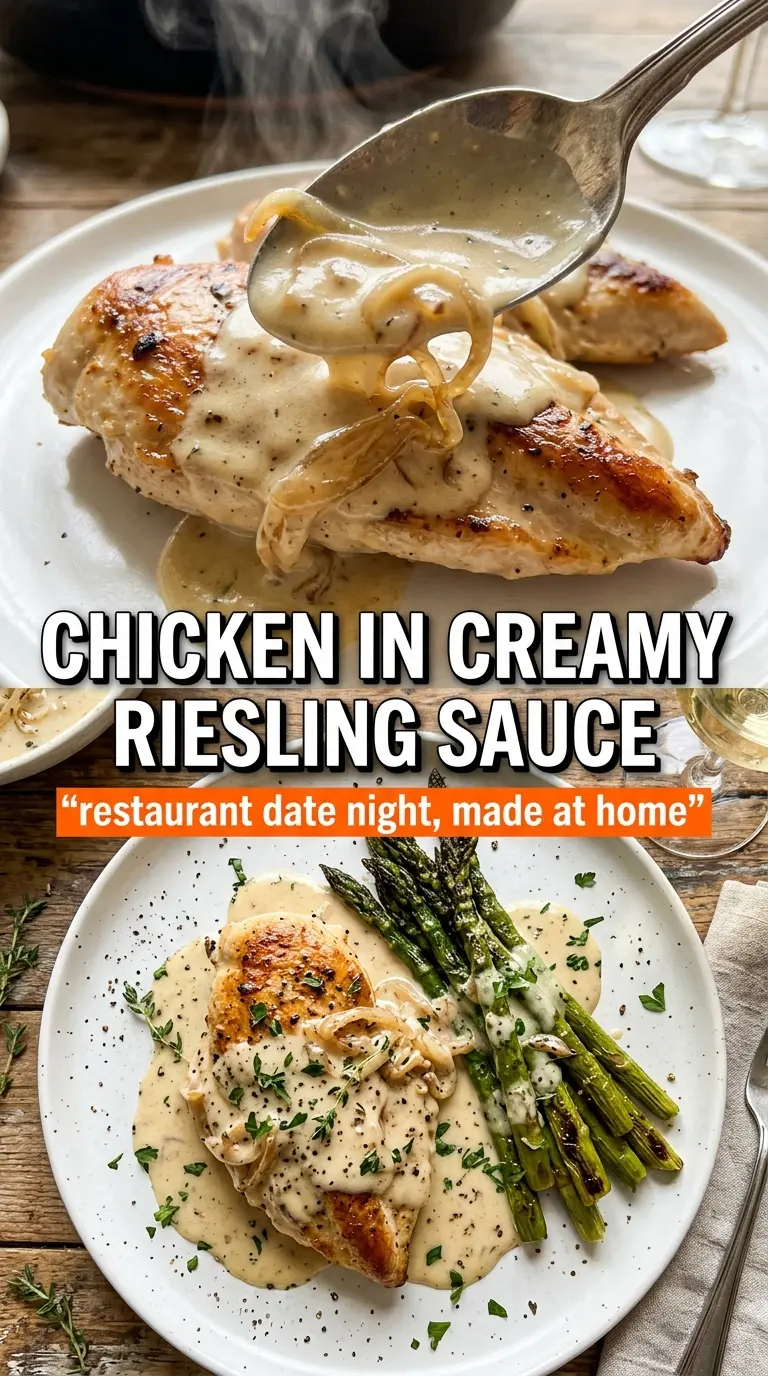
- Bone-in, skin-on chicken thighs — These stay juicy through the simmer and give you the best browned drippings for the sauce. Boneless thighs work in a pinch, but they cook faster and won’t build the same depth.
- Riesling — This is the dish’s signature. A dry or off-dry Riesling gives enough fruit and acidity to cut the cream without making the sauce taste sweet. If you use a sweeter bottle, reduce it a little longer before adding the cream.
- Heavy cream — It’s what gives the sauce its body and smooth finish. Half-and-half is more likely to split and won’t cling to the chicken the same way.
- Dijon mustard — Just a spoonful sharpens the sauce and helps it stay emulsified. Don’t skip it; the sauce tastes flatter without that small edge.
- Fresh tarragon — Tarragon is what makes chicken Riesling taste unmistakable. Dried works if that’s what you have, but use less because it concentrates fast.
- Cremini mushrooms and shallots — They deepen the pan sauce and make the dish taste complete, not just creamy. Let them brown a little before adding garlic so they bring sweetness instead of just moisture.
Building the Sauce So It Stays Smooth and Fragrant
Getting the Chicken Color Right
Season the thighs well, then lay them skin-side down into the hot oil and don’t move them until the skin is deeply golden and pulls away cleanly. Seven to eight minutes is usually enough, but go by color and sound; the pan should have a steady sizzle, not a sputter. If the heat is too low, the chicken steams and the skin turns pale and rubbery instead of crisp.
Cooking the Mushrooms Until They Taste Like More Than Filler
After the chicken comes out, the shallots and mushrooms need time to lose their moisture and take on some color. That step matters because raw mushroom flavor disappears under cream. Once the pan looks mostly dry and the mushrooms have edges turning brown, add the garlic for just a minute so it perfumes the oil without burning.
Reducing the Wine Before the Cream Goes In
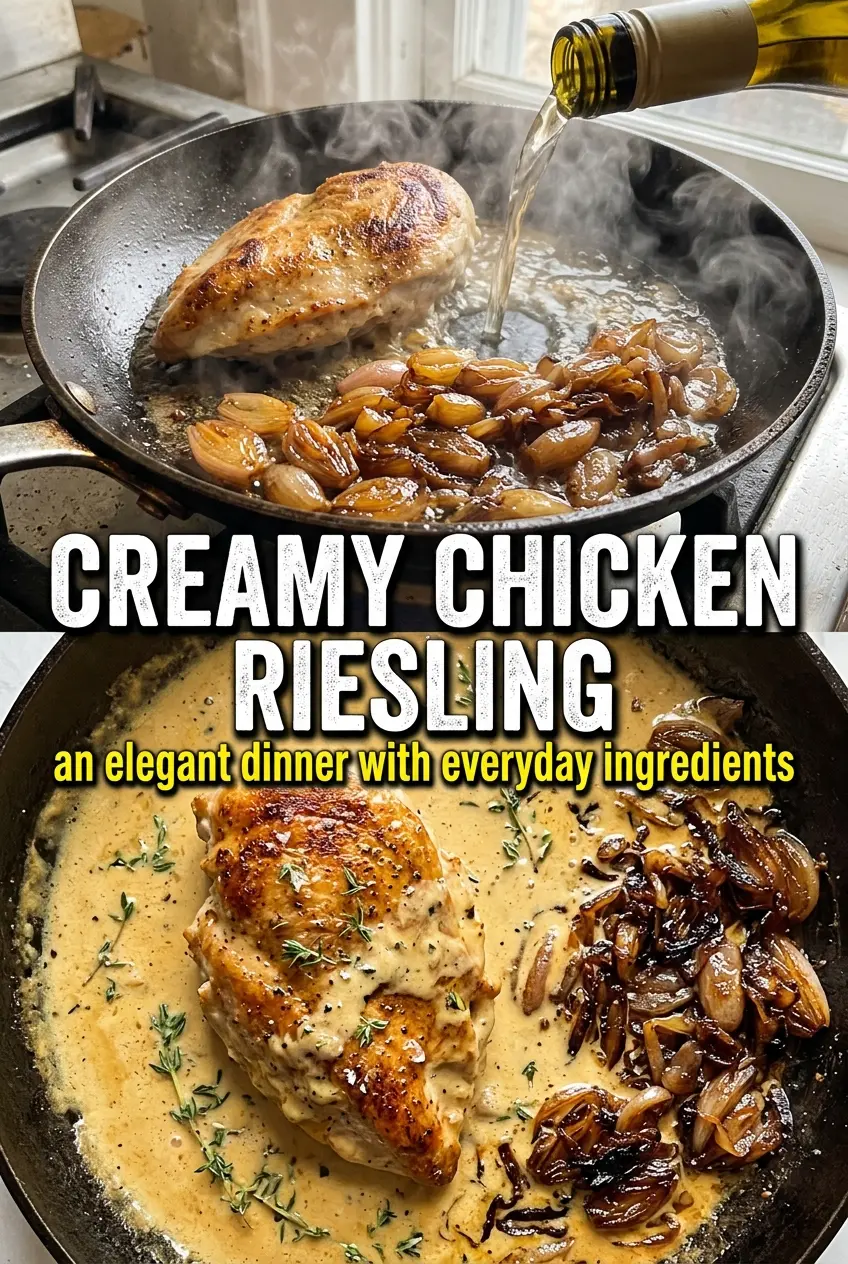
Pour in the Riesling and let it bubble on its own for a few minutes. This is where the alcohol cooks off and the flavor concentrates. If you add the cream too soon, the sauce can taste thin and the wine can come across sharp instead of rounded. You want it smelling like warm grapes and shallots before you move on.
Finishing the Sauce Without Breaking It
Stir in the cream, broth, tarragon, and Dijon, then nestle the chicken back into the skillet skin-side up. Keep the simmer gentle. A hard boil can tighten the chicken and make the cream look grainy around the edges. At the end, pull the chicken out for a moment and swirl in the butter off the heat so the sauce turns glossy instead of greasy.
How to Adapt This for a Lighter Table or a Different Pantry
Dairy-Free Version
Use full-fat coconut cream or a plain unsweetened dairy-free cooking cream in place of heavy cream. The sauce won’t taste as classic, and the coconut version adds a faint sweetness, but the dish still gets that silky, spoonable texture if you keep the heat low.
Boneless Thighs or Chicken Breasts
Boneless thighs work well and shave off a few minutes of cooking time. Chicken breasts can be used, but they need a shorter simmer and should come off the heat as soon as they reach temperature or they’ll dry out before the sauce finishes.
Making It Gluten-Free
This recipe is naturally gluten-free as long as your chicken broth and Dijon are certified gluten-free. The sauce gets its body from reduction and cream, not flour, which keeps the texture smooth and light.
If Your Riesling Runs Sweet
A sweeter Riesling can still work, but let it reduce a little longer before the cream goes in and use the full tablespoon of Dijon. That extra reduction concentrates the savory notes and keeps the sauce from tasting dessert-like.
Storage and Reheating
- Refrigerator: Store covered for up to 3 days. The sauce thickens as it chills, and the chicken stays best when kept with the sauce.
- Freezer: It can be frozen, but the cream sauce may separate slightly when thawed. For the best texture, freeze in a shallow container and thaw overnight in the fridge.
- Reheating: Warm gently in a skillet over low heat with a splash of broth or cream. Don’t boil it, or the sauce can turn oily and the chicken can tighten up.
Questions I Get Asked About This Recipe
Creamy Chicken Riesling
Ingredients
Equipment
Method
- Season the bone-in skin-on chicken thighs with salt, pepper, and garlic powder to taste. Pat dry so the skin browns evenly.
- Heat olive oil in a large cast iron skillet over medium-high heat. Sear the chicken skin-side down for 7-8 minutes until deeply golden, then flip and sear 4 minutes.
- Remove the chicken from the skillet and set aside. Leave the browned bits in the pan for flavor.
- Add the minced shallots and sliced cremini mushrooms to the skillet. Cook for 5-6 minutes until golden.
- Add the minced garlic and cook for 1 minute. Stir just until fragrant.
- Pour in Riesling wine and let it cook off for 3 minutes. Scrape up any browned bits as the liquid reduces.
- Add heavy cream, chicken broth, fresh tarragon (or 1 teaspoon dried), and Dijon mustard. Stir until the sauce is smooth.
- Return the chicken skin-side up to the skillet. Cover and simmer 15-18 minutes until the internal temperature reaches 165°F.
- Remove the chicken from the skillet. Swirl butter into the sauce until glossy.
- Return the chicken to the sauce and garnish with fresh tarragon for garnish. Serve right away with the pale golden sauce pooling around the thighs.