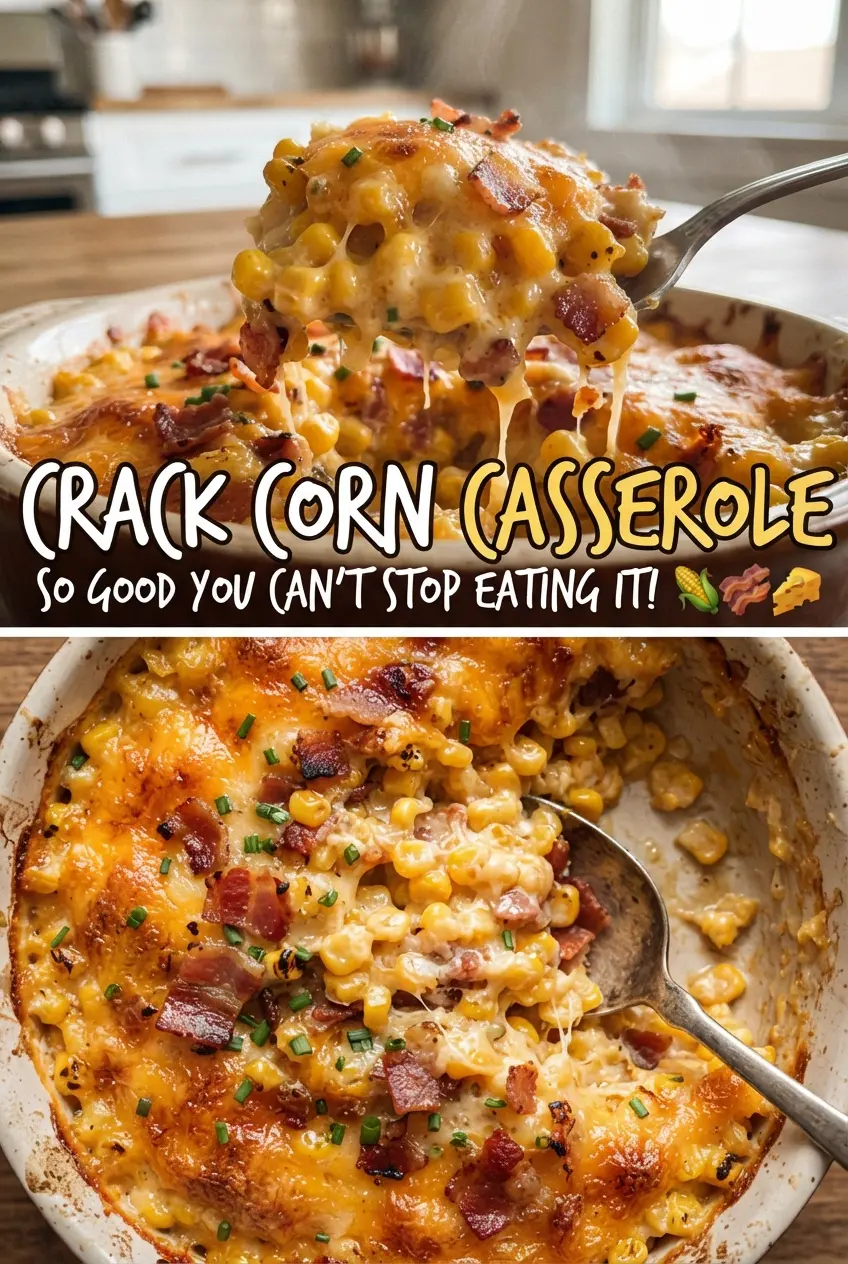
Crack corn casserole bakes up creamy in the center, golden on top, and packed with sweet corn, sharp cheddar, smoky bacon, and just enough jalapeño to keep each bite lively. It’s the kind of side dish that disappears fast because it lands somewhere between cozy casserole and spoonable dip, which means people keep going back for “just one more” scoop.
The texture depends on how you handle the base. Cream cheese and butter need to melt together until fully smooth before anything else goes in, or you’ll end up chasing little lumps through the mixture. Folding the corn in after the dairy is silky keeps the casserole rich without turning heavy, and saving some cheese for the top gives you that browned, stretchy finish everyone wants.
Below, I’ll walk you through the small details that make this casserole hold together, plus the swaps that still keep the flavor on track. There’s also a storage note worth knowing if you’re making it ahead for a crowd.
The cheese melted into the corn perfectly and the bacon on top stayed crisp even after baking. I brought it to a potluck and there wasn’t a spoonful left after dinner.
Save this crack corn casserole for the next potluck, holiday table, or weeknight when you want creamy corn, bacon, and cheddar in one bubbling dish.
The Trick to Keeping the Filling Creamy Instead of Gritty
The filling looks simple, but the order matters. Cream cheese and butter need to melt into a smooth base before the sour cream goes in, because dairy that goes into a lumpy, half-melted mixture never fully blends once the corn is added. If you rush that part, you get pockets of cream cheese instead of a cohesive casserole.
Frozen corn works beautifully here because it holds its shape and gives you a little bite after baking. Thawed corn is the safe move, though, because extra ice in the mix waters down the filling and keeps the center from setting as cleanly. The ranch seasoning is doing more than adding salt; it gives the casserole that familiar savory backbone that makes the bacon and cheddar taste even richer.
What Each Ingredient Is Actually Doing in This Casserole

- Frozen corn — This gives the casserole its sweet pop and a little structure. Thawed corn is best so the filling doesn’t get loose in the oven. If you use canned corn, drain it very well and expect a softer texture.
- Cream cheese — This is what makes the casserole thick and spoonable instead of thin and soupy. Room-temperature cubes melt faster, but even cold cream cheese works if you give it enough time over low heat.
- Butter and sour cream — Butter helps the base turn glossy and rich, while sour cream adds tang and loosens the mixture just enough to bake up creamy. Plain Greek yogurt can work in a pinch, but it gives a sharper finish and a slightly firmer texture.
- Ranch seasoning — This is the flavor shortcut that makes the whole dish taste seasoned without needing a long spice list. A homemade ranch blend can stand in, but the packet gives the most reliable balance.
- Cheddar — Use a block and shred it yourself if you want the smoothest melt. Pre-shredded cheese will still work, but it won’t get quite as silky because of the anti-caking coating.
- Bacon and jalapeño — Bacon adds salt and smoke, and the jalapeño keeps the casserole from tasting flat. Leave some bacon for the top so it stays crisp instead of disappearing into the filling.
Building the Casserole So It Bakes Up Bubbling, Not Runny
Melt the base until it’s completely smooth
Start with the cream cheese and butter over low heat and stir until the mixture looks glossy and even, with no soft white streaks left behind. This is the moment that decides whether the casserole bakes into a creamy scoop or a lumpy one. Once the sour cream and ranch seasoning go in, the mixture should look thick but pourable.
Fold in the mix-ins without crushing the corn
Add the corn, most of the cheddar, most of the bacon, and the jalapeño, then stir just until everything is coated. Overmixing breaks the corn and makes the casserole pasty instead of textured. You want each spoonful to hold corn kernels, not turn into a mashed filling.
Bake until the edges bubble and the top browns
Spread the mixture into a greased baking dish and finish with the remaining cheddar and bacon. The casserole is done when the edges are actively bubbling and the top has golden spots, usually after 25 to 30 minutes. If the center still looks wet and loose, give it a few more minutes before adding the green onions so the texture stays creamy instead of soupy.
Finish with the green onions at the end
Sprinkle the sliced green onions over the casserole right before serving so they stay bright and sharp. If they go in too early, they wilt and disappear into the cheese. The fresh bite on top keeps the dish from tasting heavy.
How to Adapt This Crack Corn Casserole Without Losing the Point
Make It Gluten-Free
This casserole is naturally close to gluten-free, but the ranch seasoning packet is the ingredient to check. Use a certified gluten-free ranch blend, and everything else stays the same. The texture and bake time won’t change.
Make It Meat-Free
Skip the bacon and add a little extra cheddar plus a pinch of smoked paprika if you still want that savory edge. You’ll lose the salty crunch on top, so save some cheese for browning and consider a handful of crushed crackers if you want more texture.
Turn Down the Heat, Keep the Flavor
If you want less spice, leave the jalapeño out or use just half, seeded carefully. The casserole will still taste complete because the ranch, cheddar, and bacon do the heavy lifting. For more heat, keep some of the jalapeño seeds or add a pinch of cayenne.
Storage and Reheating
- Refrigerator: Keep leftovers covered for up to 4 days. The casserole thickens as it chills, so expect a firmer texture the next day.
- Freezer: It freezes well for up to 2 months, though the dairy can separate a little after thawing. Freeze in a tightly covered dish or portion it into airtight containers, then thaw overnight in the fridge.
- Reheating: Warm it covered at 325F until hot in the center, or reheat smaller portions in the microwave in short bursts. The main mistake is blasting it on high heat, which makes the dairy split and turns the edges oily before the middle is hot.