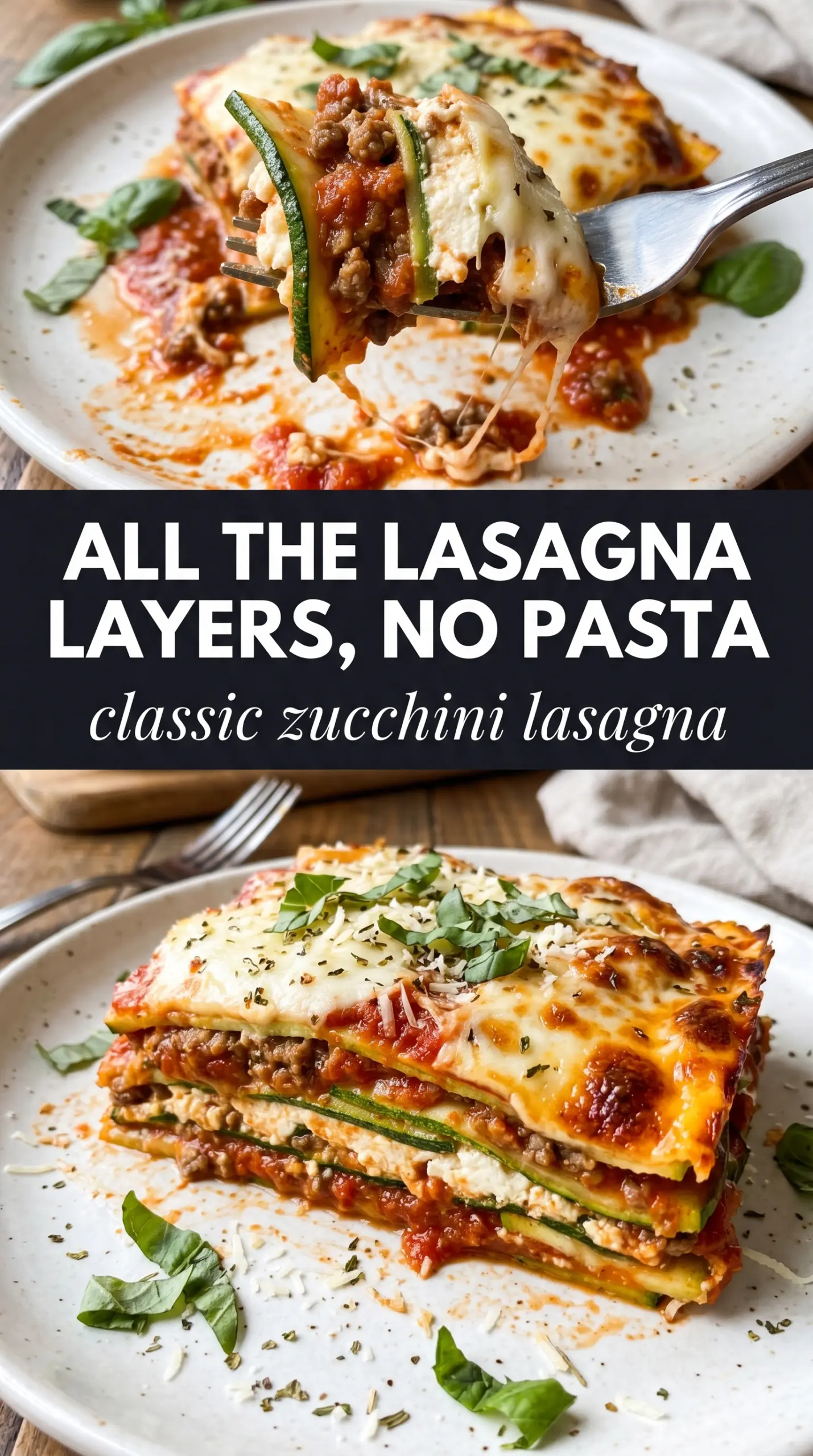
Zucchini lasagna earns its keep when the layers slice cleanly and hold together instead of slumping into a watery pan. The best versions still give you that rich, saucy, cheesy comfort, but with zucchini doing the work where noodles usually would. What makes this one worth making again is the extra moisture control: the zucchini gets salted, patted dry, then briefly roasted before it ever meets the sauce.
That double-step is what keeps the final bake from turning soupy. Zucchini carries a lot of water, and if you skip the sweat-and-roast treatment, it releases that moisture right into the ricotta and meat sauce. The ricotta layer is kept simple and firm with egg and parmesan, which helps the slices stay distinct once the lasagna has had its rest.
Below, I’m walking through the part that matters most: how to keep the pan from getting wet, how to build the layers so they don’t slide, and what to change if you want to adapt it for your kitchen.
The zucchini stayed firm and the lasagna cut into neat squares after resting. I was worried it would be watery, but salting and roasting the planks made all the difference.
Want those clean layers and a dry slice? Save this zucchini lasagna for the night you want all the comfort of lasagna without the noodle sogginess.
The Step Most People Skip That Keeps Zucchini Lasagna from Turning Watery
The watery-pan problem usually starts before the lasagna even goes into the oven. Zucchini looks sturdy, but once it heats up, it dumps moisture fast. Salting the planks pulls out surface water, and the short roast drives off even more so the layers can bake in sauce instead of steam in it.
The other place people lose the structure is in the ricotta layer. A little egg and parmesan give it enough body to set, which helps each square hold its shape after resting. If the filling is loose or the zucchini is still damp, the pan slides the second it gets cut.
- Zucchini planks — Slice them lengthwise into even 1/4-inch planks so they cook at the same rate. Thicker slices stay too firm; thinner ones collapse and leak more moisture.
- Salt — This isn’t about seasoning the whole dish. It’s about pulling water out of the zucchini before assembly, which is the difference between a clean slice and a puddle.
- Roasting after salting — The extra 10 minutes in a hot oven matters. It’s the fastest way to reduce moisture without cooking the zucchini to mush.
- Resting time — The lasagna needs that 15 minutes after baking so the sauce settles and the cheese firms up. Cut it too early and it spreads across the plate.
What Each Ingredient Is Actually Doing in This Zucchini Lasagna
- Ground beef or Italian sausage — Beef gives you a cleaner, classic red-sauce flavor, while sausage adds more seasoning and a little fat. Either works; choose sausage if you want a bolder lasagna without adding extra spices.
- Marinara sauce — Use a jarred sauce you actually like to eat on its own. Since the sauce is doing most of the flavor work here, a thin or overly sweet jar will show in the final dish.
- Ricotta, egg, and parmesan — This trio makes the creamy layer set instead of running. The egg binds, the parmesan seasons, and the ricotta stays rich without becoming soupy.
- Mozzarella — Shredded mozzarella melts into the top and between layers for that stretchy, classic finish. Pre-shredded is fine here, though freshly shredded melts a little smoother.
- Parsley and basil — Parsley goes into the filling for freshness, and basil on top wakes up the whole pan right before serving. Fresh herbs matter most at the end, where their flavor stays bright.
Building the Layers So They Hold When You Slice Them
Drying the Zucchini First
Salt the zucchini planks and let them sit for the full 20 minutes. You’ll see beads of moisture on the surface, which is exactly what you want. Pat them dry with paper towels until they feel tacky instead of slick. If they go into the pan wet, the lasagna steams from the inside and the bottom layer turns loose.
Cooking Off the Last Bit of Water
Roast or grill the zucchini briefly in a 425°F oven until it softens just enough to bend without cracking. You’re not trying to cook it through; you’re trying to remove the moisture that salt didn’t pull out. Lay the planks out in a single layer so they dry instead of overlap and trap steam. Let them cool a little before assembling so they don’t melt the ricotta on contact.
Building the Sauce and Cheese Layers
Brown the meat with the onion until the onion turns translucent and the meat has real color. Drain the fat before adding garlic, marinara, and Italian seasoning so the sauce tastes rich instead of greasy. Mix the ricotta layer until the egg and parmesan disappear into it, then season it well because bland ricotta makes the whole pan taste flat.
Assembling for a Clean Slice
Start with a thin layer of meat sauce so the zucchini doesn’t stick to the dish. Build in even layers and press them down lightly as you go, but don’t pack them hard or the filling squeezes out the sides. End with meat sauce and mozzarella on top so the cheese browns without drying the whole dish out under the foil.
Baking Until Set, Not Soupy
Cover the dish first so the heat works through the center without scorching the top. Then uncover it for the last 15 minutes until the cheese is golden and bubbling at the edges. If the top browns before the middle feels hot, the oven was running too hot; tent it loosely with foil and give the center more time.
How to Adapt This for a Different Pan, Diet, or Leftover Plan
Make It Gluten-Free Without Changing the Texture
This recipe is naturally gluten-free as long as your marinara sauce is gluten-free. The structure comes from the zucchini, the ricotta, and the meat sauce, so you don’t need any flour or breadcrumbs to hold it together.
Use Sausage for a Richer, More Seasoned Lasagna
Italian sausage brings extra fennel and spice, which gives the sauce more depth with no extra work. If your sausage is on the salty side, go lighter on the parmesan in the ricotta mixture.
Make It Ahead for Tomorrow’s Dinner
You can assemble the lasagna a day in advance, cover it tightly, and refrigerate it before baking. Pull it out while the oven preheats so the center isn’t ice-cold, and add a few extra minutes to the covered bake if needed.
Storage and Reheating
- Refrigerator: Store leftovers covered for up to 4 days. The layers hold up well, though the zucchini softens a bit more after chilling.
- Freezer: It freezes well in portions. Wrap slices tightly and freeze for up to 2 months; thaw overnight in the fridge before reheating.
- Reheating: Reheat covered in a 350°F oven until hot in the center. The biggest mistake is using high heat, which dries out the cheese before the middle warms through.
Questions I Get Asked About This Recipe
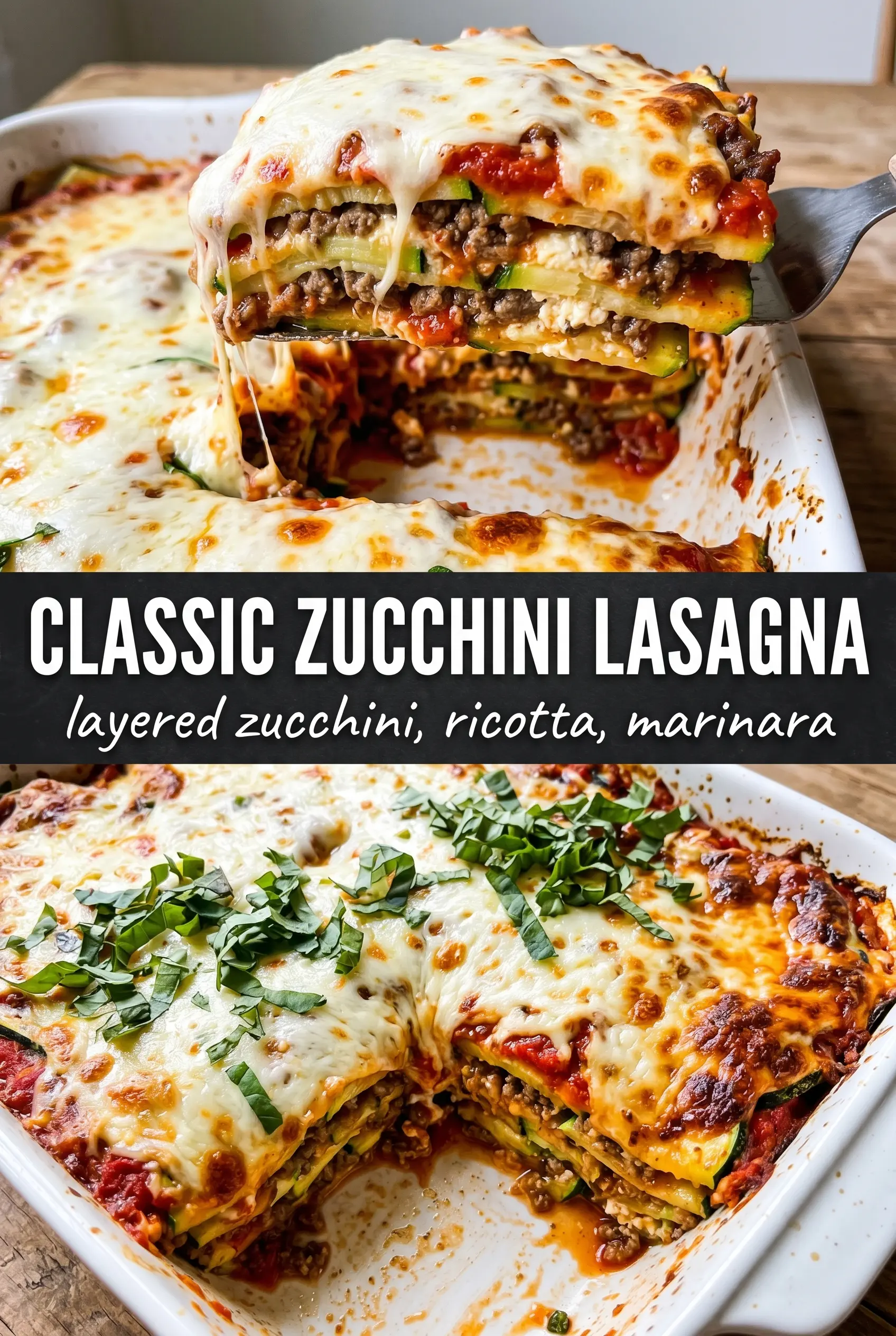
Classic Zucchini Lasagna
Ingredients
Equipment
Method
- Salt the zucchini planks and let sit for 20 minutes, then pat very dry with paper towels until moisture is removed.
- Grill or roast the zucchini planks in a 425°F oven on a sheet pan for 10 minutes to remove more moisture, then set aside.
- Preheat the oven to 375°F.
- Brown the ground beef with the diced onion in a skillet, drain excess fat, then add the garlic, marinara sauce, and Italian seasoning and simmer for 10 minutes.
- Mix ricotta with the egg, parmesan, parsley, and salt and pepper until smooth and evenly combined.
- Assemble in a 9x13 dish by spreading 1/2 cup meat sauce, layering zucchini planks, spreading ricotta, adding more meat sauce, and sprinkling mozzarella; repeat layers, ending with meat sauce and mozzarella on top.
- Cover with foil and bake for 40 minutes, then uncover and bake for 15 minutes at 375°F until golden and bubbly.
- Rest for 15 minutes before cutting, then serve with extra parmesan and fresh basil.