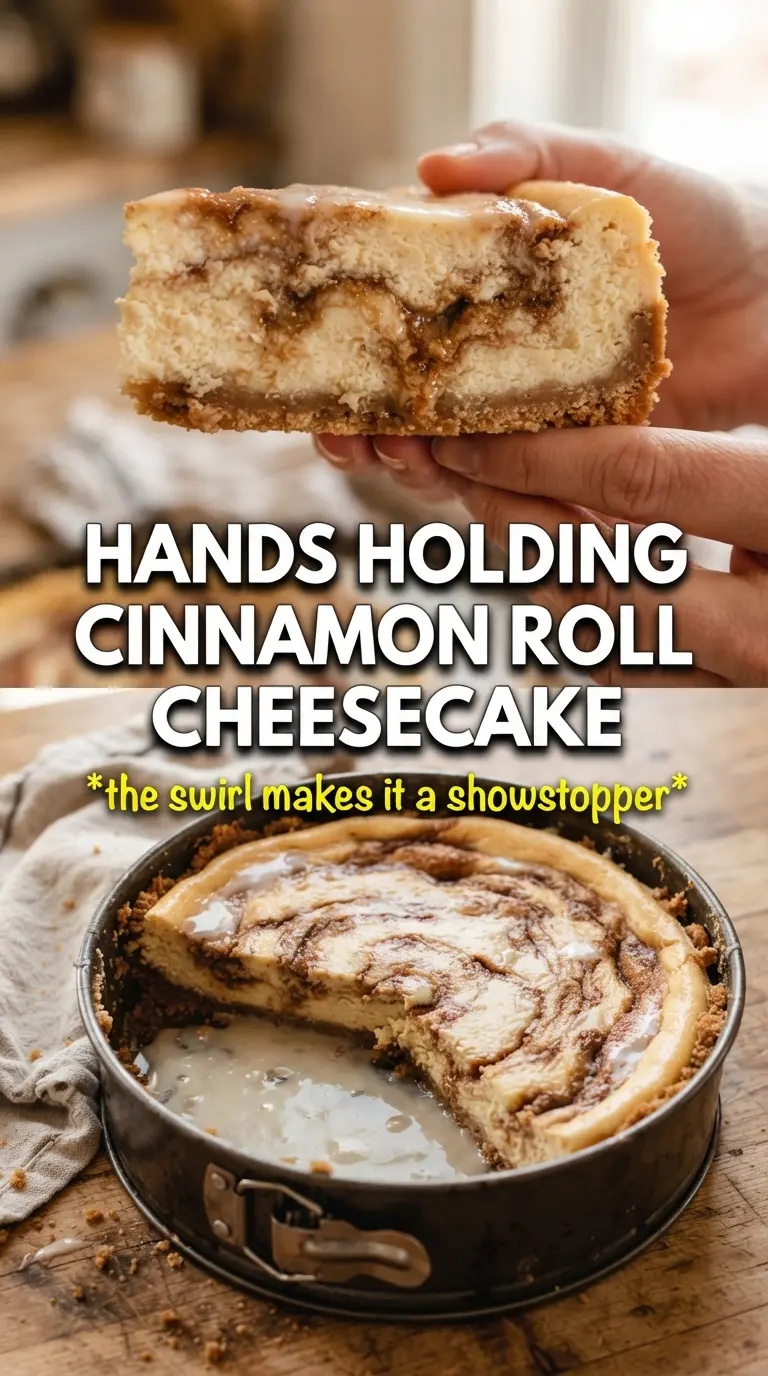
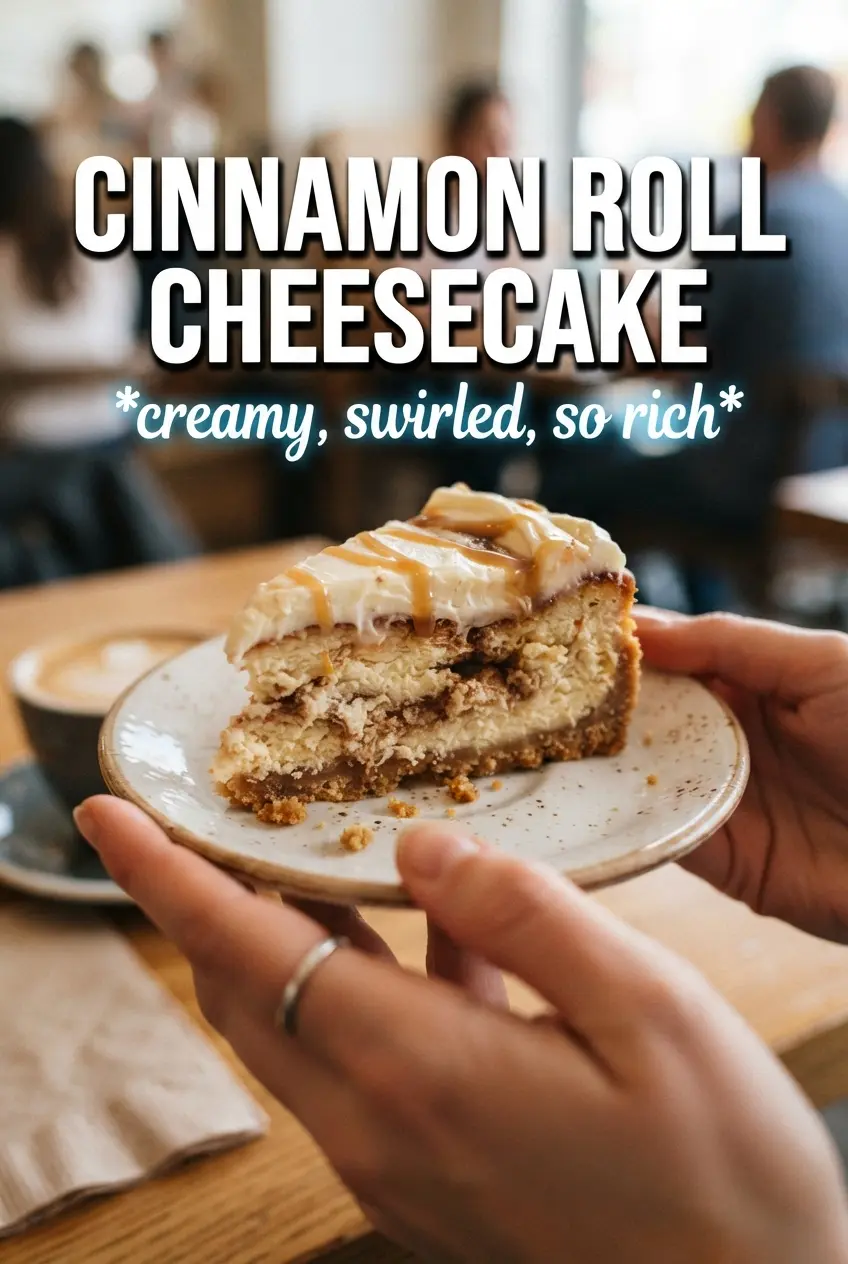
Cinnamon Roll Cheesecake bakes up with the best parts of two classics in one slice: a buttery cinnamon crust, a silky cheesecake center, and that sweet swirl running through the middle like a built-in ribbon of spice. The texture is the real reason this one earns a spot on the dessert rotation. You get a firm crust at the base, a creamy filling that holds its shape after chilling, and a glaze that settles into every crack and swirl on top.
The trick is keeping the batter smooth and the oven gentle. Cream cheese that’s too cold leaves little lumps behind, and cheesecake baked without a water bath tends to dry out at the edges before the center is done. The cinnamon swirl also needs to stay thick enough to sit on the batter instead of dissolving into it, which is why melted butter ties the brown sugar and cinnamon together so well.
Below, I’ve included the small details that matter most: how to keep the swirl defined, what to look for when the cheesecake is set, and the best way to glaze it so every slice looks as good as it tastes.
The swirl stayed clean all the way through the cheesecake, and the filling set up creamy instead of dense. I chilled it overnight and the slices came out neat with no cracking.
Love the cinnamon swirl layers and cream cheese glaze? Save this Cinnamon Roll Cheesecake for the dessert nights when you want a bakery-style slice with clean layers.
The Swirl Needs Thickness, Not Just Flavor
The part that goes wrong most often here is the cinnamon ribbon. If the swirl is too thin, it disappears into the batter and you lose those distinct ribbons that make each slice look special. Brown sugar, cinnamon, and melted butter should form a paste that drizzles, not a runny sauce.
The other key point is the water bath. Cheesecake wants gentle heat from the outside in, and the water bath keeps the edges from racing ahead of the center. That’s what gives you a smooth, creamy texture instead of a dry ring around the pan and a sunken middle.
- Cream cheese — Use full-fat blocks, not the tub-style spread. Block cream cheese gives the filling the dense, smooth body cheesecake needs.
- Sour cream — This keeps the filling tangy and soft. Plain Greek yogurt works in a pinch, but it tastes a little sharper and can set slightly firmer.
- Graham crumbs — Fine crumbs pack into a crust that slices cleanly. If your crumbs are coarse, pulse them a little longer so the base doesn’t crumble when you cut it.
- Brown sugar in the swirl — It melts into the cinnamon and butter and helps the layer stay visible after baking. White sugar won’t give the same caramel note or thick texture.
What Each Ingredient Is Actually Doing in This Recipe
- Primary ingredient (the star) — Quality matters most. Choose the best you can find.
- Cooking medium (oil, butter, or broth) — This carries flavors and prevents dryness.
- Seasonings (salt, pepper, spices, herbs) — Layer flavors so nothing overpowers. Build depth gradually.
- Aromatics (garlic, onion, herbs) — Cook with fat to bloom flavors. Become the foundation.
- Supporting ingredients — Complement the main ingredient without overpowering it.
- Sauce or liquid (if applicable) — Brings flavors together. Balance richness with acid.
- Acid (lemon, vinegar, wine, or other) — Brightens and prevents flat-tasting results.
- Final finish (garnish, glaze, or sauce) — Prevents one-dimensional taste and adds visual appeal.
Building the Crust, Batter, and Swirl Without Losing the Layers
Pressing and Prebaking the Crust
Mix the graham crumbs, sugar, cinnamon, and melted butter until every crumb looks evenly coated, then press it firmly into the bottom of a 9-inch springform pan. A packed crust bakes into a sturdier base and holds up under the filling; a loose crust turns sandy the second you slice it. Bake it for 10 minutes so it sets before the cheesecake goes in, then let it cool just enough that the filling doesn’t start melting the butter back out.
Mixing the Cheesecake Batter
Beat the cream cheese until it looks completely smooth before anything else goes in. Add the sugar, then the eggs one at a time, mixing only until each one disappears. If you whip in too much air, the cheesecake rises in the oven and sinks as it cools, which is one of the fastest ways to get cracks.
Swirling the Cinnamon Layer
Pour most of the batter over the crust, spoon on the cinnamon swirl, then add the remaining batter in patches over the top. Drag a knife through just enough to marble the surface; if you keep stirring, the swirl blends into the filling and you lose the contrast. You want visible ribbons and pockets, not a fully mixed batter.
Baking Until Just Set
Set the pan in a water bath and bake until the edges are set but the center still has a slight wobble when you nudge the pan. That wobble finishes into a creamy slice as it chills. If you wait until the center looks firm in the oven, it will overbake and turn dry by the time it cools.
Glazing After the Chill
Cool the cheesecake completely, then refrigerate it for the full 6 hours before you add the glaze. The glaze should be pourable but thick enough to cling to the top instead of running straight off the sides. A chilled cake gives you clean slices; a warm cake turns the glaze into a puddle.
How to Adapt the Cinnamon Roll Cheesecake for Different Needs
Gluten-Free Crust Swap
Use gluten-free graham-style crumbs in the crust and keep the rest of the recipe the same. The texture stays close to the original, though some GF crumbs need a touch more butter to hold together. Press it firmly so it bakes into a solid base.
Lighter Tang With Greek Yogurt
Swap the sour cream for full-fat plain Greek yogurt. The cheesecake will still set beautifully, but the finish tastes a little brighter and less rich. Use the thickest yogurt you can find so the batter doesn’t loosen too much.
Extra Cinnamon Swirl for a Stronger Marble
If you want more visible cinnamon ribbons, keep the swirl mixture as written but reserve a small spoonful to dot across the top before the final swirl. Don’t overdo it or the sugar can sink and make the center heavy. The goal is contrast, not a layer that takes over the filling.
Storage and Reheating
- Refrigerator: Store covered for up to 5 days. The texture stays best when it’s kept cold and sliced only as needed.
- Freezer: Freeze individual slices tightly wrapped for up to 2 months. Thaw in the refrigerator overnight; the glaze can be added after thawing for the cleanest finish.
- Reheating: Cheesecake is best served chilled, not warmed. If you want to soften a slice slightly, let it sit at room temperature for 15 to 20 minutes. Heating it in the microwave can make the filling greasy and the crust soggy.
Questions I Get Asked About This Recipe
Cinnamon Roll Cheesecake
Ingredients
Equipment
Method
- Preheat the oven to 325F, then press the graham crumbs, sugar, cinnamon, and melted butter into a 9-inch springform pan. Bake for 10 minutes and then let it cool slightly (golden at the edges).
- Beat the cream cheese and granulated sugar until smooth, then beat in the eggs one at a time. Mix in the sour cream, vanilla, and cinnamon until glossy and lump-free (no streaks).
- Mix the brown sugar, cinnamon, and melted butter for the cinnamon swirl until smooth. Drizzle the swirl over most of the batter in the pan (visible cinnamon ribbons on top).
- Pour the remaining batter over the swirl and gently smooth the top. Drop the batter down in small spoonfuls, then swirl with a knife once or twice for a marbled finish (do not fully mix).
- Bake the cheesecake in a water bath at 325F for 60-65 minutes until the center is just set with a slight wobble. Turn off the oven and cool on a rack until room temperature (surface should not look wet).
- Refrigerate for 6 hours, uncovered or loosely covered, until fully firm. Chill until the slice holds its shape when lifted.
- Beat the cream cheese, powdered sugar, milk, and vanilla until smooth and pourable. Drizzle the glaze over the top right before serving so it stays shiny (coating the ridges from the swirl).